
The Humidifier Has Been Running for Four Nights Straight
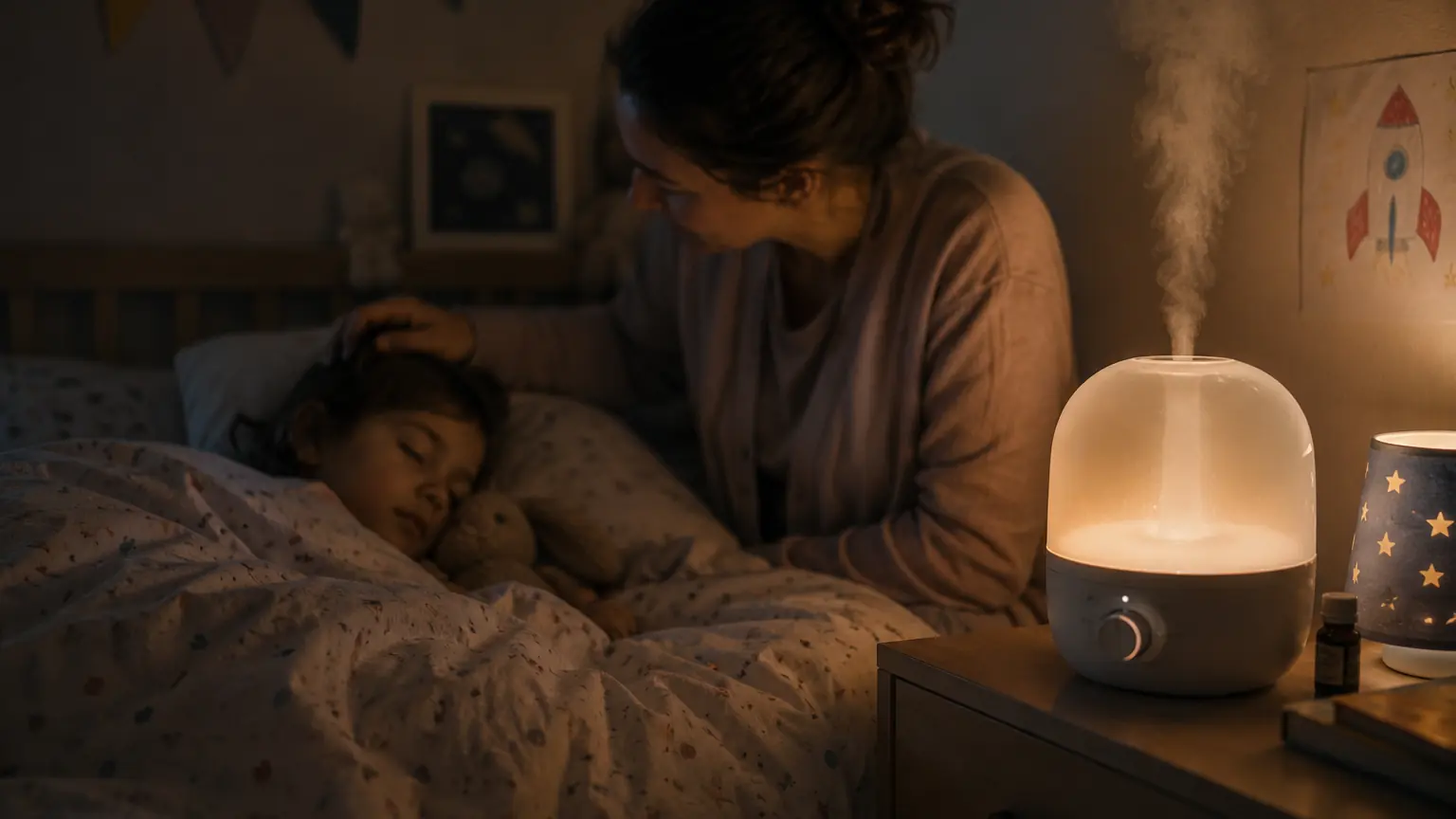
By the third night you know this cough by its sound alone. Wet and rattly, not the dry bark you braced for after last winter’s croup scare. She is two. What started Monday as a runny nose and a low fever has turned into something that makes you sit up and actually listen.
The humidifier in the corner has been running since Tuesday. You have topped off the water twice tonight already. Mostly it gives your hands something to do besides hovering over her chest, watching it rise and fall.
What does RSV look like in a toddler?
Respiratory syncytial virus. Every parent learns the full name eventually, usually while searching it at 1 a.m. In a baby under six months it can turn serious fast. In a toddler who was healthy going in, it is usually just a bad cold that hangs on longer than most.
The CDC says symptoms usually show up 4 to 6 days after your child catches the virus. They tend to arrive in stages, not all at once. Runny nose and congestion first. Then the cough, maybe a fever, maybe wheezing. A harsh, barky cough that is worse at night, with a hoarse voice, points more toward croup than RSV. RSV’s cough tends to sound wetter.
Appetite often drops too. If yours barely touches dinner for a few days, that is the illness talking, not a new picky streak, and it is not a week to fight about food. The division-of-responsibility approach to eating still applies: you offer, she decides how much.
How long does it last, and which days are the worst?

Most RSV infections, per the CDC, go away on their own in a week or two. That is the honest range. It feels much longer than it sounds when you are living inside it.
The American Academy of Pediatrics says RSV symptoms are typically worst on days 3 through 5. The whole course usually runs 7 to 14 days. So a mild start that gets noticeably worse by Wednesday or Thursday, then turns a corner, is the normal shape of it. It is not a sign that something new has gone wrong.
What matters more than the calendar is the trend within each day. A cough that is loosening, a child who still wants to be held and will still drink, is heading the right way, even on a loud night. A child working harder to breathe with each passing hour is a different story.
Which breathing signs mean call now or go in?
RSV hits infants hardest. The CDC notes that 2 to 3 out of every 100 infants under 3 months are hospitalized with RSV each year. A toddler’s airway has more room to spare, which is why most 1- to 4-year-olds get the cold version, not the emergency one. Still, know the signs. A smaller number do not stay mild.
Watch for retractions: the skin between the ribs or at the base of the throat pulling in tight with each breath. Watch for breathing that is fast or shallow, nostrils flaring, or a grunting sound at the end of each breath. Any pause in breathing is an emergency room visit. So is skin, lips or nail beds that look pale, gray or blue.
Dehydration is the other half of it. Children’s Hospital of Philadelphia puts it plainly: most kids urinate every three to six hours. A child going far less than their normal baseline, or one who cannot breathe and drink at the same time, needs to be seen. It is the same wet-diaper math you would use for a stomach bug, just triggered by a different virus this time.
What helps at home?
Nothing cures RSV. There is no medicine that shortens it, so the job is comfort and watching, not fixing. CHOP recommends a drop or two of nasal saline in each nostril, followed by a bulb syringe, before feeds and before sleep.
A cool-mist humidifier in the bedroom loosens congestion, and a steamy bathroom works in a pinch too. The important word is cool. A hot-steam vaporizer is a real burn hazard around small hands, with no benefit over cool mist. If you need one, our rundown of the sleep tools worth buying covers which type holds up.
Keep the fluids coming in small, frequent amounts rather than one big cup she will refuse. The same dry indoor heat drying out her airway often cracks cheeks and hands too. If that is happening, the winter eczema guide covers the rest.
Is it contagious, and what about daycare?
Very. The CDC explains RSV spreads through coughs and sneezes, through direct contact like kissing a child’s face, and through touching a contaminated surface, then touching your own face. People with RSV are usually contagious for 3 to 8 days. Some infants and anyone with a weak immune system can keep shedding the virus for 4 weeks or longer after symptoms clear.
On surfaces, the virus can survive for hours on something hard like a table or a crib rail, and for a shorter stretch on tissues or hands. Regular hand washing, not sharing cups, and wiping down shared surfaces all pull real weight here.
The American Academy of Pediatrics keeps the school and daycare rule simple: keep a sick child home. Exactly how long feels like its own decision most nights, and that is really a separate question from RSV itself.
What does prevention look like this year?
There has been real progress here, almost none of it aimed at toddlers. The CDC recommends a maternal RSV vaccine, given during weeks 32 through 36 of pregnancy, that protects a baby through roughly their first 6 months. Newborns can also get an antibody dose called nirsevimab shortly before RSV season, or within a week of birth if born between October and March.
For older babies, nirsevimab is recommended again for a small, high-risk group heading into their second RSV season: children 8 to 19 months old who were born very premature with ongoing lung disease, are severely immunocompromised, live with severe cystic fibrosis, or are American Indian or Alaska Native. Outside that slice, most toddlers 1 to 4 are not eligible for any RSV shot. If your child fits one of those categories, ask your pediatrician.
For everybody else, prevention is the boring basics: hand washing, keeping distance from an obviously sick relative over the holidays, not sharing cups. None of that changes what tonight looks like. Watch the breathing, keep the fluids going, and trust that day 3 to 5 is the hard part, not the whole story. If you are doing this solo tonight, the burnout piece for single parents has a few honest ideas for weeks exactly like this one.
Leave the first comment
Share your thoughts
Frequently asked questions
Runny nose, congestion, coughing, sneezing, fever and a drop in appetite, usually arriving in stages over the first few days rather than all at once. Some toddlers also develop wheezing. Most symptoms show up 4 to 6 days after exposure, according to the CDC.
Most RSV infections clear on their own in one to two weeks. The American Academy of Pediatrics notes that symptoms are typically worst on days 3 through 5, with the full course usually running about 7 to 14 days from start to finish.
There is no medicine that cures RSV itself, so care is supportive: nasal saline with gentle suctioning, small frequent fluids, and a cool-mist humidifier to loosen congestion. Avoid hot-steam vaporizers, which are a burn risk, and skip cough and cold medicines.
Yes. The CDC says people with RSV are usually contagious for 3 to 8 days, though infants and those with weakened immune systems can shed the virus for 4 weeks or longer. It spreads through coughs, sneezes, close contact and contaminated surfaces.
Call right away for fast or labored breathing, retractions (skin pulling in around the ribs or throat), flaring nostrils, grunting, any pause in breathing, or lips and nail beds that look pale, gray or blue. Sharply fewer wet diapers is also a reason to call.

I'm for the parent watching a feeling they can't name and wondering if it's normal. I've spent years close to the child-mental-health research and the specialists behind it, and I carry the heavy parts into plain language. I won't diagnose your child - I'll help you see what you're looking at, and say honestly when it's time to ask someone in person.
More from SofiaWhat's the one thing that actually calmed the chaos in your house?
No right answers here - tell us how it actually went. Someone reading needs to hear it.
Join the conversation