
He Picked the Eyes, You Held the Knife
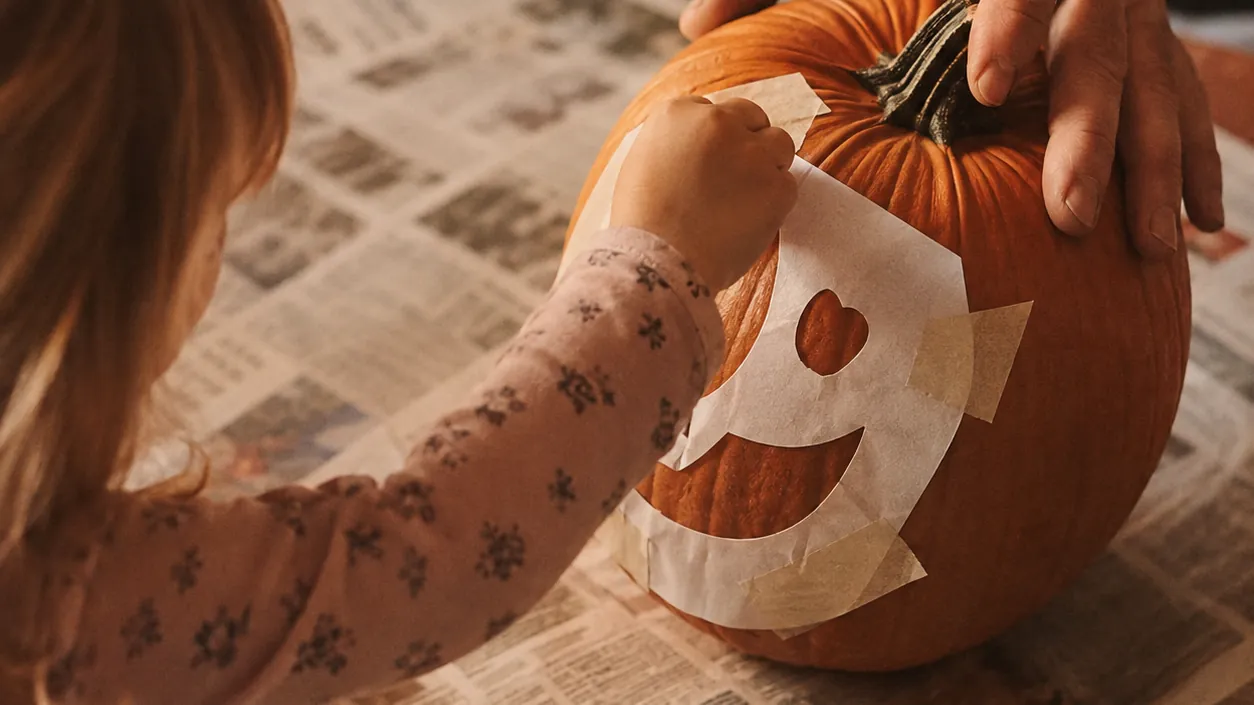
Your son wants to hold the knife. He has wanted to hold the knife since the pumpkin hit the counter, and no amount of “in a minute” is buying you more time. You already know how this goes if you let it drag on much longer, and tonight is not the night to win that fight through sheer exhaustion.
Here is the trade that works. He does not get the knife. He gets almost everything else, and for a kid between two and four, that is most of the fun anyway.
Why the knife stays in your hand
A pumpkin patch trip is mostly about the wagon and the hay bales, not the pumpkin itself. Carving night is a different kind of evening. It happens at your own kitchen table, after the pumpkin gets hauled home. Maybe that was the farm with the wagons, or maybe it was the bin outside the grocery store.
At home, the knife is the whole risk. A blade sharp enough to cut through a pumpkin wall is sharp enough to cut a two-year-old’s palm. It takes about as long as looking away to grab a paper towel. That is the whole reason this night looks so different from the trip that got you the pumpkin in the first place.
Doctors say it plainly because the numbers back them up. A federal safety count puts Halloween injuries at about 4,500 a year in emergency rooms. Pumpkin carving alone causes 44% of them. Most of those cuts land on a hand that was holding a blade it had no business holding.
What can a toddler do at the pumpkin?
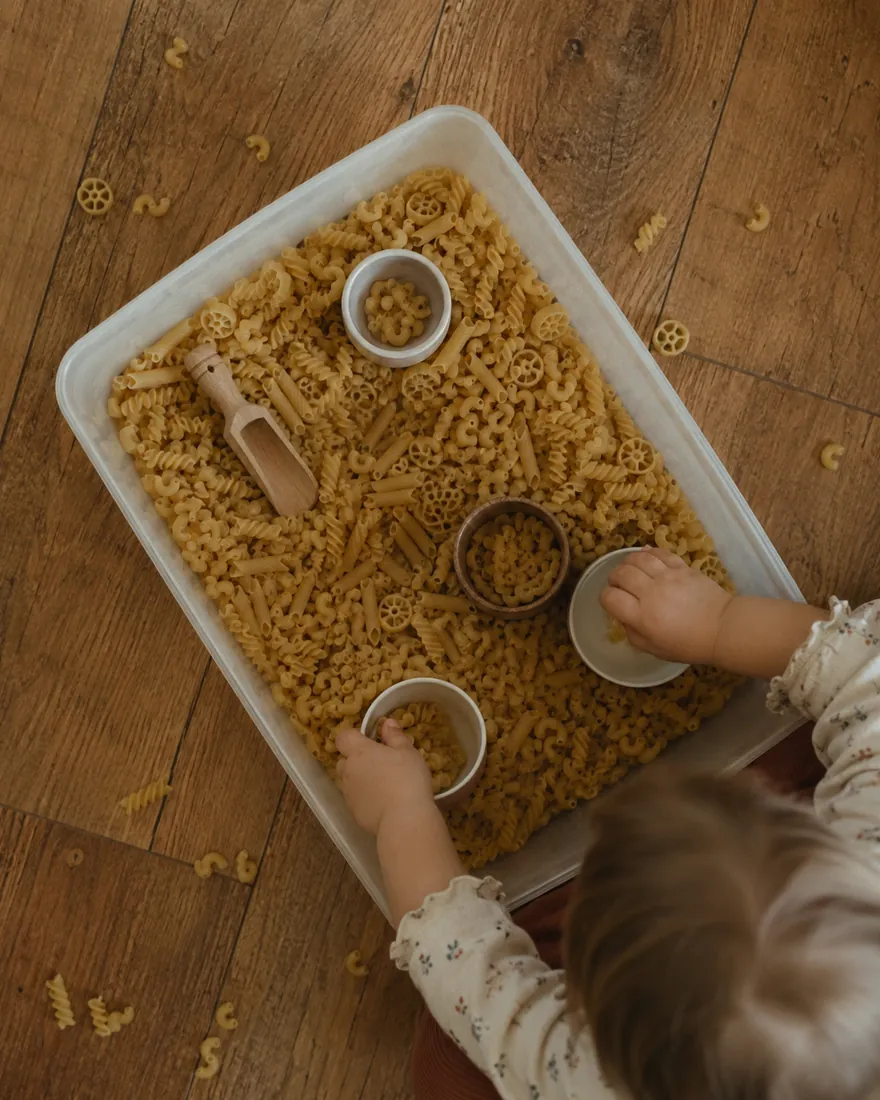
Scooping is the job almost every toddler in this age range can handle well. Hand over a big metal spoon or an old ice cream scoop and let them dig in. Half the pulp will land on the table instead of the bowl, and that part is fine.
Drawing the face comes next. A washable marker traced over your light pencil lines gives a two-year-old the feeling that the face is hers. A three or four-year-old might draw the whole thing without any help at all. Push-pins poked along a line work too, and they leave a dotted outline for you to cut later once the kids are in bed. Stickers and stick-on gems skip cutting on your part completely and still make a face that holds up fine on the porch.
If knives feel like too much this year, skip them on purpose. Washable paint turns the pumpkin into a plain canvas, no blade required at any point in the evening. It sits right alongside the other fall crafts sized for small hands that you might already have out on the table this week.
How long will the interest last?
Ten to fifteen minutes is the honest number for most toddlers, not the forty-five your Pinterest board is picturing. Sketch the design before your kid sits down and lay your tools out first. A two-year-old will not wait around while you go hunting for the marker.
When the interest runs out mid-face, that is not a failure on your part. Let your child wander off to the seed bowl or a different toy. Finish the cutting yourself later, even after bedtime if that is what it takes. A meltdown over “I’m not done yet” from a kid who is, in fact, done, is worth knowing how to read. Our guide on telling a tantrum from a true meltdown covers exactly that moment and what to do next.
How do you set up for the mess?
An old sheet or a stack of newspaper goes under the pumpkin. Add a big bowl for the guts, a wet rag within arm’s reach, and a shirt nobody minds staining. That short list covers most of it. Skip the fancy tarps and the special smocks; a dish towel tucked into a collar works just as well. If the sludge starts sliding toward the edge of the table, wipe it down halfway through instead of waiting for the finish line.
Cut the actual opening, at least the lid, before your toddler gets to the table. A pumpkin already open at the top means small hands can start scooping the second they sit down. Nobody has to stand around watching you saw through a tough stem for five long minutes.
What do you do with all the seeds?
Scooping pulp and picking seeds out of the stringy mess is, on its own, a fine bit of sensory play. Slimy hands and all, some toddlers will happily sort seeds from pulp for ten straight minutes once the spoon work winds down.
Rinse a cup or two in a colander, which is faster than picking through a plain bowl by hand, then toss them with a little oil and salt and roast at 300 degrees for 30 to 40 minutes. That gives you a snack that came out of tonight’s project. The rest can go in the compost bin or the trash. Nobody needs to save every single seed out of guilt over food waste.
Where the finished face goes
Set it somewhere your toddler can see it without touching it every ten minutes. A porch step or a windowsill works fine for most homes. If the finished face looks scarier by porch light than it did at the kitchen table, that is worth watching for. Some toddlers who were fine with markers at four in the afternoon want the lights off and the face turned around by eight that night. Our piece on a toddler who is suddenly scared of Halloween decorations walks through what that reaction usually means and what tends to help.
Let this one stay a little imperfect. A lopsided face made almost entirely by a three-year-old is the part of pumpkin carving with toddlers you will remember once November settles in, long after the store-bought decorations have gone back in a bin somewhere.
Leave the first comment
Share your thoughts
Frequently asked questions
Skip the knife and let your toddler draw a face with a washable marker, or press on stickers and dot-marker circles for eyes. An adult scoops the pulp and does the actual cutting based on that design. It keeps the fun part in small hands and the blade well out of them.
Toddlers can scoop pulp, draw the face and decorate with stickers or paint, but pediatricians say small children should never handle the actual cutting. An adult does every cut, using the child’s drawn or taped-on design as the guide for where the blade goes.
A baby or young one-year-old mostly explores by touch, patting a small pumpkin or dipping fingers into cool, already-scooped pulp under close supervision. Skip tools, paint that isn’t labeled safe for skin, and anything small enough to be a choking hazard, like loose seeds.
Plan for about 10 to 15 minutes of real participation from a toddler, even if the whole project takes you longer to finish once they wander off. Have the design sketched and the tools laid out first, since a young child’s attention will not wait around for setup.
Rinse the seeds in a colander, toss them with oil and salt, and roast at 300 degrees for 30 to 40 minutes for a simple snack. Or skip roasting and let a toddler spend a few extra minutes sorting seeds from pulp as its own bit of messy play.

I'm for the parent standing in the bookshop, overwhelmed. I read them all - the wise, the smug, the single good idea stretched to 240 pages - so your nightstand stack stays short. I'll point you to what's truly worth it, and kindly, what to put back.
More from MeiWhat's the one thing that calmed the chaos in your house?
No right answers here - tell us how it went. Someone reading needs to hear it.
Join the conversation