
The Second Set of Sheets Is Already in the Dryer
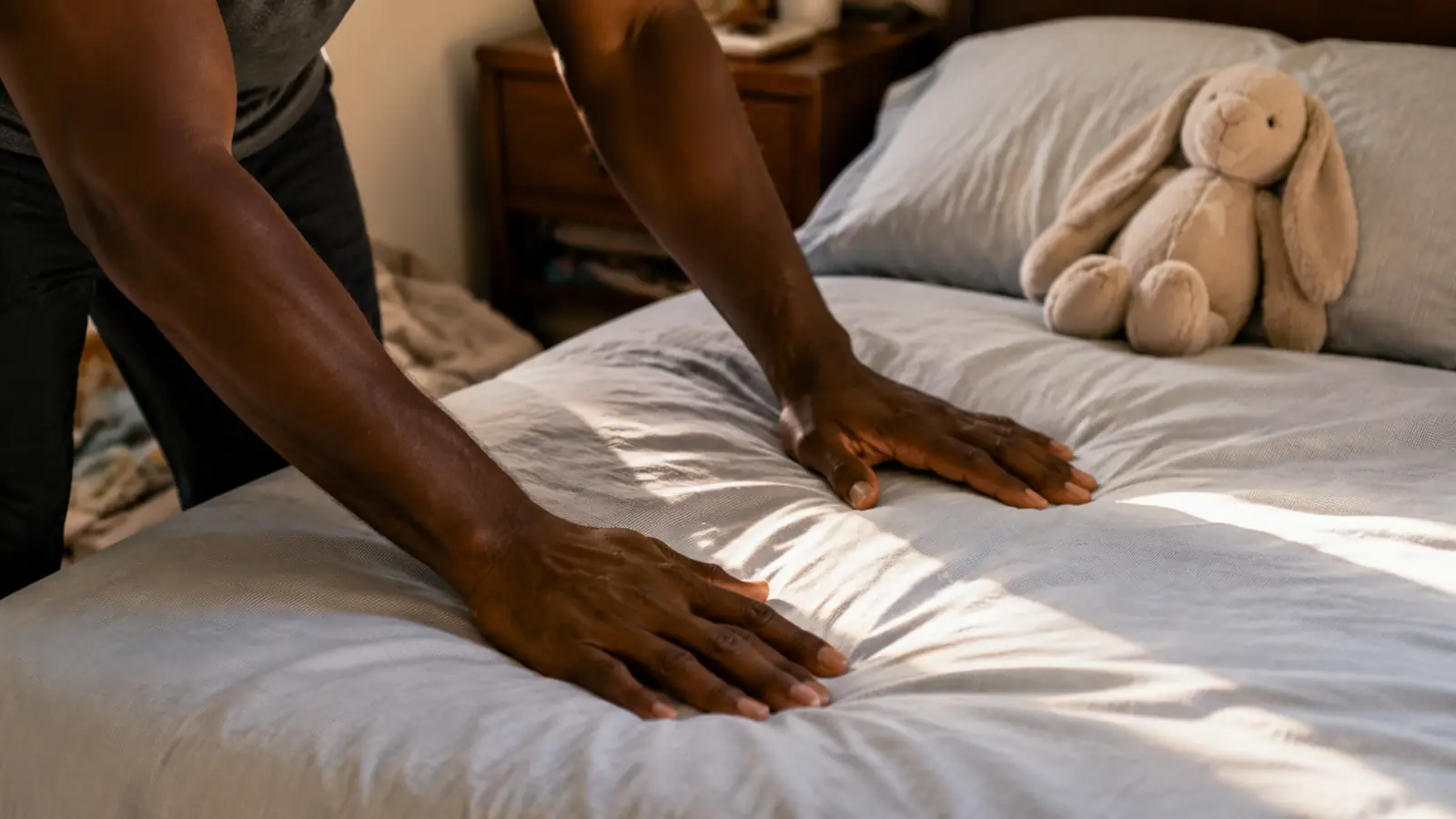
So the first time was at 1:40, all over the bunny. You changed the bed, did a quick wipe, and had just gotten back under your own covers when you heard that little cough again.
Now it is past two, the second set of sheets is spinning in the dryer, and your toddler is asleep on your chest smelling faintly of sick. You are wondering how bad this gets and when you should worry.
How long does a stomach bug last in a toddler?
Shorter than tonight feels. The CDC says most people with norovirus get better within one to three days. Symptoms usually start 12 to 48 hours after your child met the virus, which is why you can often trace it back to a playdate or a daycare day.
The NHS puts it this way for kids: vomiting usually stops in one or two days, and diarrhea usually stops within five to seven. The CDC lists fever, headache and body aches as possible extras, so a bug with no fever is still a bug.
What matters more than the clock is the trend. A child who throws up four times tonight and twice tomorrow morning is heading the right way. A child who keeps getting worse, or who is still vomiting after a full day, is one your pediatrician should hear about. (Yes, even if it is Saturday.)
What should a toddler drink after throwing up?
Your child is thirsty, you hand over a big cup, they gulp it, and it comes straight back up. So go slow on purpose.
Nemours KidsHealth suggests starting with small sips of an oral rehydration solution, about one or two teaspoons every few minutes. If that stays down, slowly offer a bit more. The AAP notes these solutions also come as ice pops, which is a sneaky way to get fluid into a toddler who refuses to drink.
Skip the full-strength juice, soda and sports drinks. KidsHealth says they have too much sugar and can make some symptoms worse. The AAP also warns that sports drinks can carry a lot of sugar, which can make diarrhea worse, and suggests mixing them half and half with water if you use one.
For a baby under one, KidsHealth says to call if they have had only rehydration solution, with no breast milk or formula, for 24 hours.
When can they eat again, and what?
Sooner than your grandmother told you. KidsHealth says kids can keep eating their regular diet unless the doctor recommends a change.
They may not want food at first, and that is fine. As long as your child is drinking, it is OK if they are not eating much solid food. When the vomiting stops, small amounts of toast, crackers, rice or mashed potatoes are a gentle start. Yogurt, fruit, vegetables and plain chicken are also fine. If your toddler barely eats on a good day anyway, this is not the week to push.
One thing to keep in the back of your mind: KidsHealth says to call the doctor if your child has not started eating some food within three to four days.
Which signs mean you call your pediatrician now?
Most stomach bugs are miserable and nothing more. These are the signs that change that.
- Dehydration. A dry or sticky mouth, few or no tears when crying, sunken eyes, darker pee or fewer wet diapers than usual. The AAP says to call right away if your child is too sick to drink or shows any sign of it.
- Very sleepy. KidsHealth says to go to the ER if your child is very sleepy or is not responding to you.
- The color of the vomit. Bright green, red or brown vomit needs a call. The NHS lists green vomit and vomiting blood as reasons for urgent help.
- Pain or a stiff neck. Severe stomach or back pain, a headache, a stiff neck, or vomiting after a bump on the head.
- It will not quit. Vomiting for more than 24 hours, bloody diarrhea, or a child who will not drink anything for more than a few hours.
If your gut says something is off, call. You are not bothering anyone.
Also, not every sore tummy is a bug. A child who gets a stomach ache every school morning and is fine by lunch may be telling you something else, which is what this piece on stomach aches before school is about.
How do you keep it from spreading through the house?
You reach for the pump bottle by the sink, because it feels like doing something.
Soap, water and a proper scrub are what count, for you and for your toddler, every time after a diaper or a bathroom trip. The CDC also says the virus can stay in poop for two weeks or more after your child feels better, so keep up the hand washing long after the drama ends.
For surfaces, the CDC advises a chlorine bleach solution, left on the area for at least five minutes. Wipe the toilet seat, the flush handle, the taps and the door handles. For laundry, use detergent and hot water on the longest cycle, then dry on the highest heat.
How long they stay out of daycare is its own question, and the CDC and NHS both talk about waiting 48 hours after symptoms stop. The full decision lives in our guide on keeping a child home, so we will leave it there.
How do you get through it yourself?
Fair warning. There is a good chance you will get it too, probably about two days from now, right when your toddler is bouncing around again.
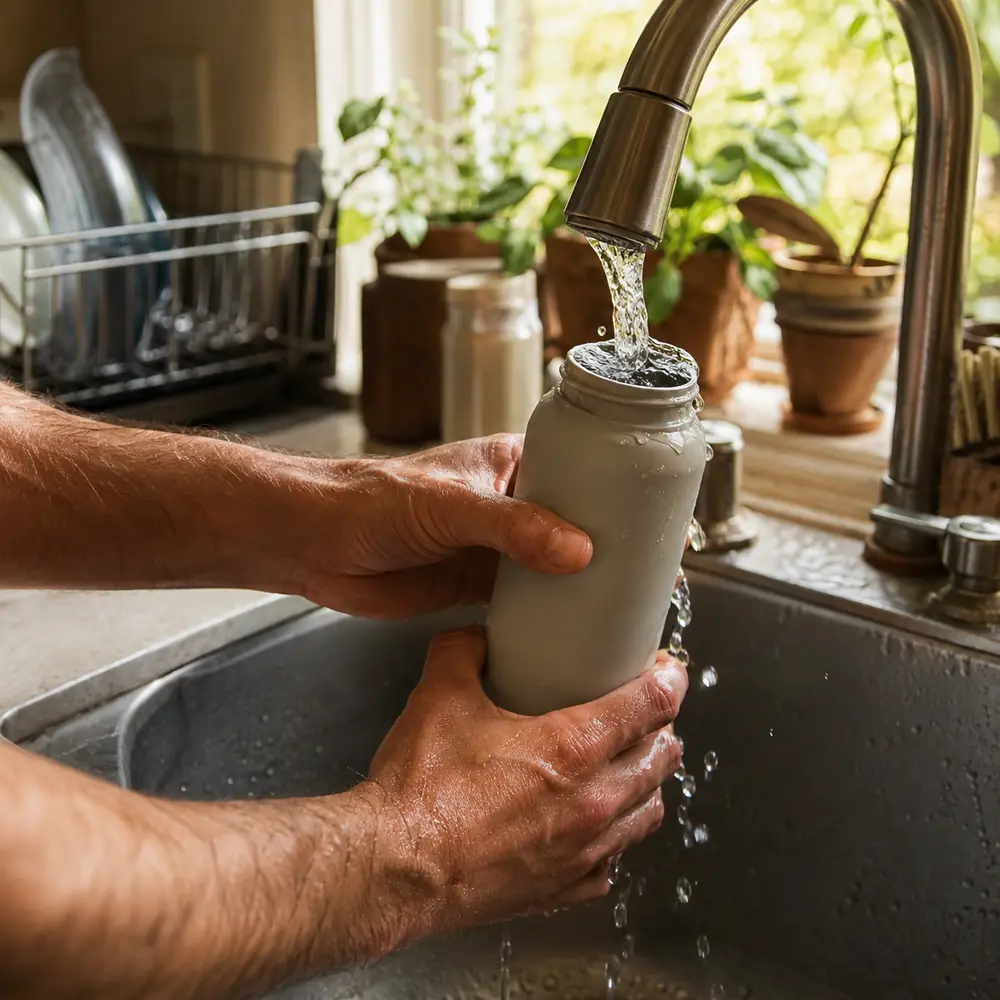
So get ready while you still feel fine. Put a towel and a bowl by your own bed. Fill your water bottle every time you fill theirs. Pick the easy dinner for the next three nights and stop feeling bad about it.
If there is another adult in the house, take shifts. One of you sleeps, one of you is on duty, and you swap at four. If you are doing this alone, lower every bar you have. Screens are allowed. The burnout piece for single parents has a few ideas for weeks like this one.
And winter tends to stack these things. The bug clears and then their cheeks crack from the dry heat, in which case the winter eczema guide is waiting. For tonight, drink some water and lie down next to the dryer if you have to.
Leave the first comment
Share your thoughts
Frequently asked questions
The CDC says most people with norovirus get better within one to three days. The NHS says vomiting in children usually stops in one or two days, while diarrhea can last five to seven. Call your pediatrician if your toddler is still vomiting after 24 hours or seems to be getting worse.
Kids can keep eating their regular diet unless your doctor says otherwise. Once the vomiting stops, start with small amounts of toast, crackers, rice or mashed potatoes. Yogurt, fruit, vegetables and lean chicken are also fine. Drinking matters more than eating in the first day.
Offer small sips of an oral rehydration solution, about one or two teaspoons every few minutes, and slowly give more if it stays down. Avoid full-strength juice, soda and sports drinks, because the sugar can make diarrhea and other symptoms worse.
Yes. Fever is only one possible symptom on the CDC list, so its absence tells you little. The CDC says norovirus can stay in poop for two weeks or more after a child feels better, so keep washing hands with soap and water, since hand sanitizer does not work well against it.
Call your pediatrician for fewer wet diapers, few or no tears, a dry mouth, bloody diarrhea, severe belly pain, or green, red or brown vomit. Go to the ER if your child is very sleepy or is not responding to you. Trust your gut if something feels wrong.

I started Decoded Kids because the calm, straight answer I needed at 2 a.m. just didn't exist. I'm a parent of two, still figuring it out - and I hold this whole place to one promise: real help, in plain language, with no one talked down to.
More from MayaWhat's the one thing that calmed the chaos in your house?
No right answers here - tell us how it went. Someone reading needs to hear it.
Join the conversation