
The Skeleton in the Lawn Chair Was Not There Yesterday
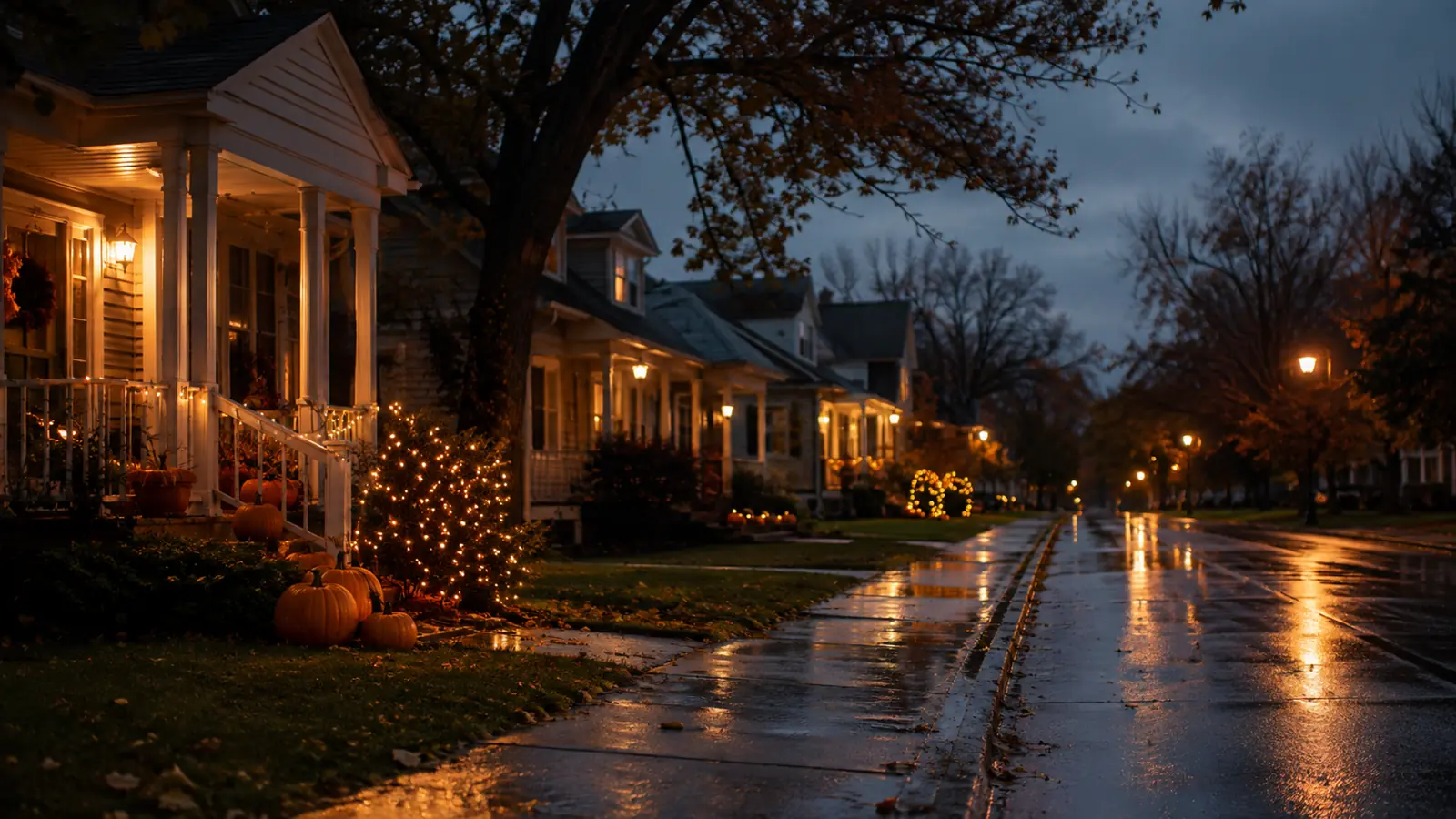
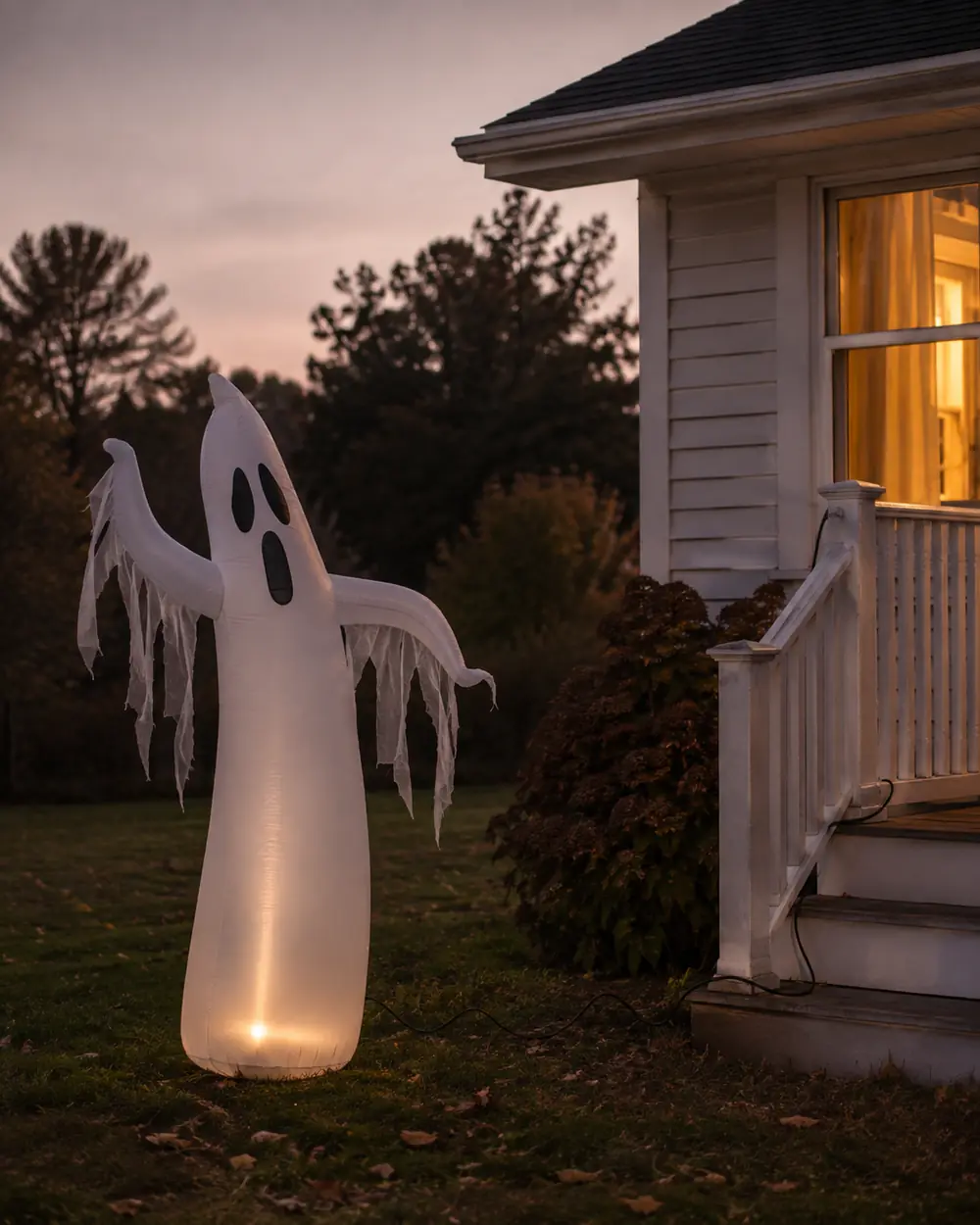
He was fine with the pumpkins. He was fine with the orange lights. Then the neighbor’s twelve-foot ghost filled up with air, and your three year old planted his feet on the sidewalk like a mule.
Now he wants to be carried past that house. Every time. Even at noon, when the ghost is lying flat on the grass like a dropped bedsheet.
Why does a plastic skeleton feel so real to him?
Because to him, it might be. The folks at ZERO TO THREE put it plainly: at this age the line between real and pretend is blurry. A dragon from a bedtime story can feel as real as the family cat.
Your toddler also has firm ideas about how things should look. People have faces. Houses have doors and flower pots, not a witch crashed into the tree. Halloween breaks those rules all at once, and it does it on the one street he knows best.
Then add the extras. Some props move when you walk past. Some scream. Fog machines hide the path. A child who is still learning what the world is supposed to be gets a surprise from every direction, often in the dark, usually while a stranger is holding out a bowl.
His memory is growing too, which is why the fear sticks around. He remembers the ghost from yesterday, so now he expects it. That is the reason he may cry before you even turn the corner (and why the ghost can seem worse from two houses away than up close).
None of this means he is anxious by nature. It means his brain is working the way a three year old’s brain should.
What helps before the big night?
The best move is boring. Go for a walk in daylight, on the same route you’ll take for trick-or-treating, and look at everything together.
Walk up to the skeleton. Tap its plastic foot if he wants to, or let him watch you do it. Say how it’s made. “This is plastic. Somebody bought it at a store and put it here.” Children this age trust things they can touch far more than things they are told.
If there’s a prop that moves or shrieks, trigger it on purpose while he stands a safe distance away. Then do it again. The Child Mind Institute suggests showing kids how motion-activated props work so they’re less scary when they meet them at night. You’re turning a jump scare into a gadget.
At home, play with the idea. Put a sheet over your own head and let him pull it off. Wear a silly hat and ask him to tell you who is underneath. If costumes are part of the trouble, starting with a soft, easy costume takes one fight off the table.
Can we skip houses without making a thing of it?
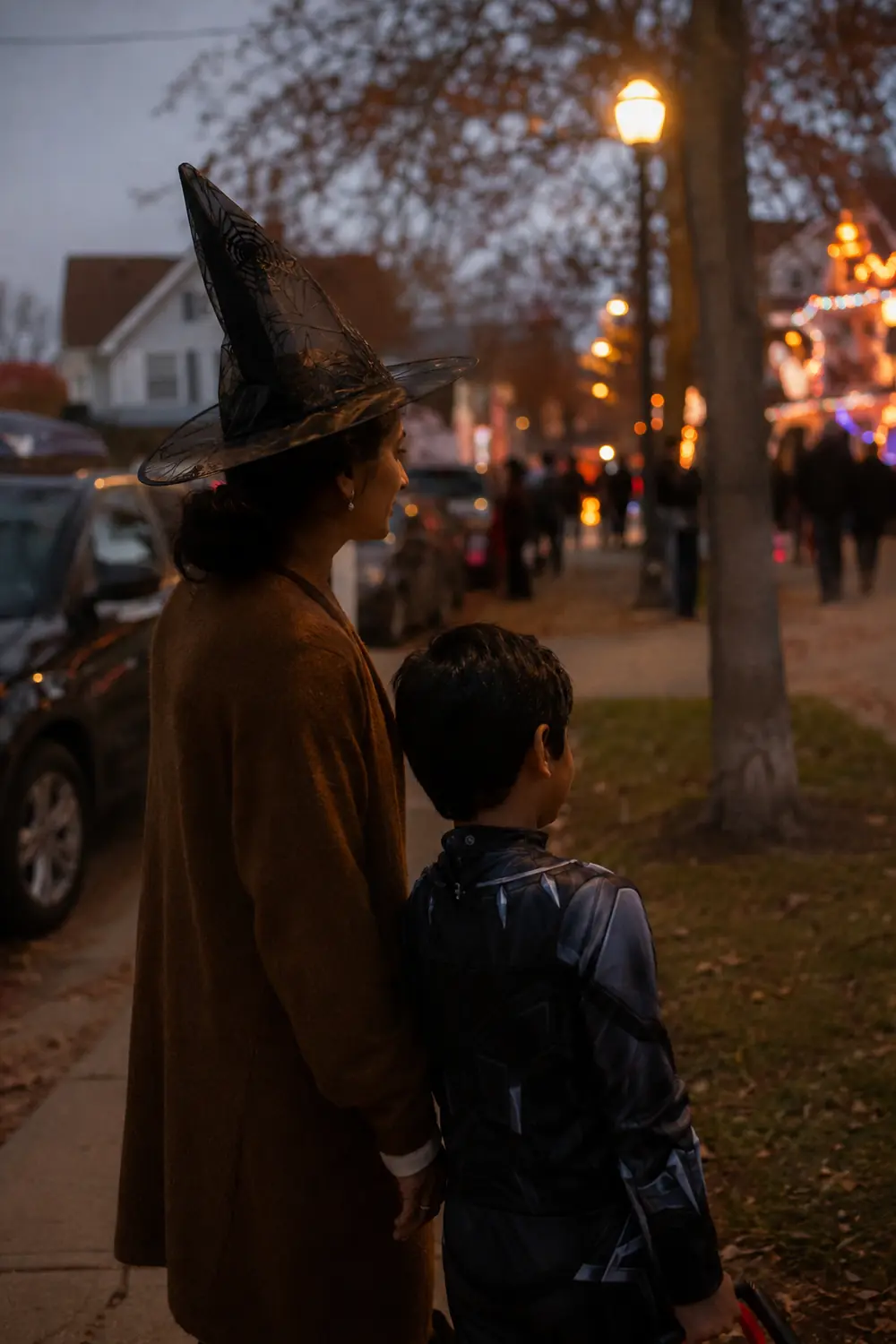
Yes, and you should. Before you leave, agree on which houses are on the list and which ones you’ll walk past. Let him point. A child who gets a vote feels far less trapped than a child who gets dragged.
Give him a signal too. It can be a squeeze of your hand, or a silly code word like “pickles.” When he uses it, you turn back. No questions and no bargaining. The signal only works if it works every single time.
Some families cross the street early. Others do five houses and head home for cocoa. Plenty of families skip the street and throw a small Halloween party at home, which counts. There’s no prize for the most doorbells.
Watch his body more than his words. Kids this age don’t always say “I’m scared.” They go quiet, hold on to your leg, or suddenly need to be carried. That’s your cue, even if he says he wants to keep going.
And if the whole plan falls apart at house three, fine. Carry him home. He learned that you listen, and that matters more than a full bucket.
What should I say when he’s scared?
Name the feeling first. “That ghost is really big. It made you jump.” All you’re doing is showing him you noticed.
Then add the facts, short and plain. “It’s full of air, like a balloon. A fan keeps it up.” Kids don’t need a long talk. They need one true sentence they can hold on to.
Skip “there’s nothing to be scared of.” To him there clearly is, and the sentence tells him his feeling is wrong. It’s the same trap people fall into with a toddler who screams at Santa, where the costume is the problem and the push only makes it bigger.
If he brings it up at bedtime, keep your answers the same as in daylight. Calm, short, boring. A soft night light can help if the dark room suddenly feels full of ghosts.
When is the fear bigger than normal?
For many kids, the fear eases once the decorations come down. Some ask about the skeleton for a while, then move on to the next thing.
Keep an eye out if the fear sticks. KidsHealth advises talking to your pediatrician or a mental health provider when a child’s fears seem extreme or last past the normal age. Other flags are fears that cause big tantrums, stop your child from sleeping alone or being apart from you, or bring stomachaches, headaches or a racing heart.
A few other things are worth a call. He won’t go outside at all anymore. He wakes up from nightmares about it most nights for weeks. Or his daycare teacher notices a change too. None of these mean something is wrong with him. They just mean he could use more help than a daylight walk can give.
For most kids, though, this is a one-season story. Next October he’ll likely be the one pulling you toward the ghost, and you’ll miss the part where he wanted to be carried. Mostly.
Leave the first comment
Share your thoughts
Frequently asked questions
Yes. Toddlers and preschoolers can’t always tell what is pretend from what is real, and Halloween props break their ideas of how faces and houses should look. Sudden noises and moving props add surprise. For most children this fear is a normal part of growing up, and it fades with time and gentle support.
Walk your trick-or-treat route in daylight and look at the decorations together. Touch a prop, explain what it is made of, and trigger moving props from a safe distance. Let your child choose which houses to skip and agree on a signal that means you turn back right away.
No. Carrying a scared child up to a prop usually makes the fear bigger and teaches them that telling you backfires. Small, slow steps work better, such as looking in daylight from wherever they feel safe. It is fine to skip a house, a street or trick-or-treating this year.
Name the feeling first, such as “That ghost is really big and it made you jump.” Then give one plain fact: “It is full of air, like a balloon.” Avoid saying there is nothing to be scared of, because it tells your child their feeling is wrong.
Talk to your pediatrician if the fear seems extreme, lasts long after Halloween, causes big tantrums, or stops your child from sleeping alone or being apart from you. Stomachaches, headaches or a racing heart linked to the fear are also worth mentioning to your child’s doctor or a mental health provider.

I'm for the parent watching a feeling they can't name and wondering if it's normal. I've spent years close to the child-mental-health research and the specialists behind it, and I carry the heavy parts into plain language. I won't diagnose your child - I'll help you see what you're looking at, and say honestly when it's time to ask someone in person.
More from SofiaWhen did you last feel out of your depth - and what helped, even a little?
No right answers here - tell us how it went. Someone reading needs to hear it.
Join the conversation