
Your Child Won’t Use the School Toilet. Here’s What They’re Holding In
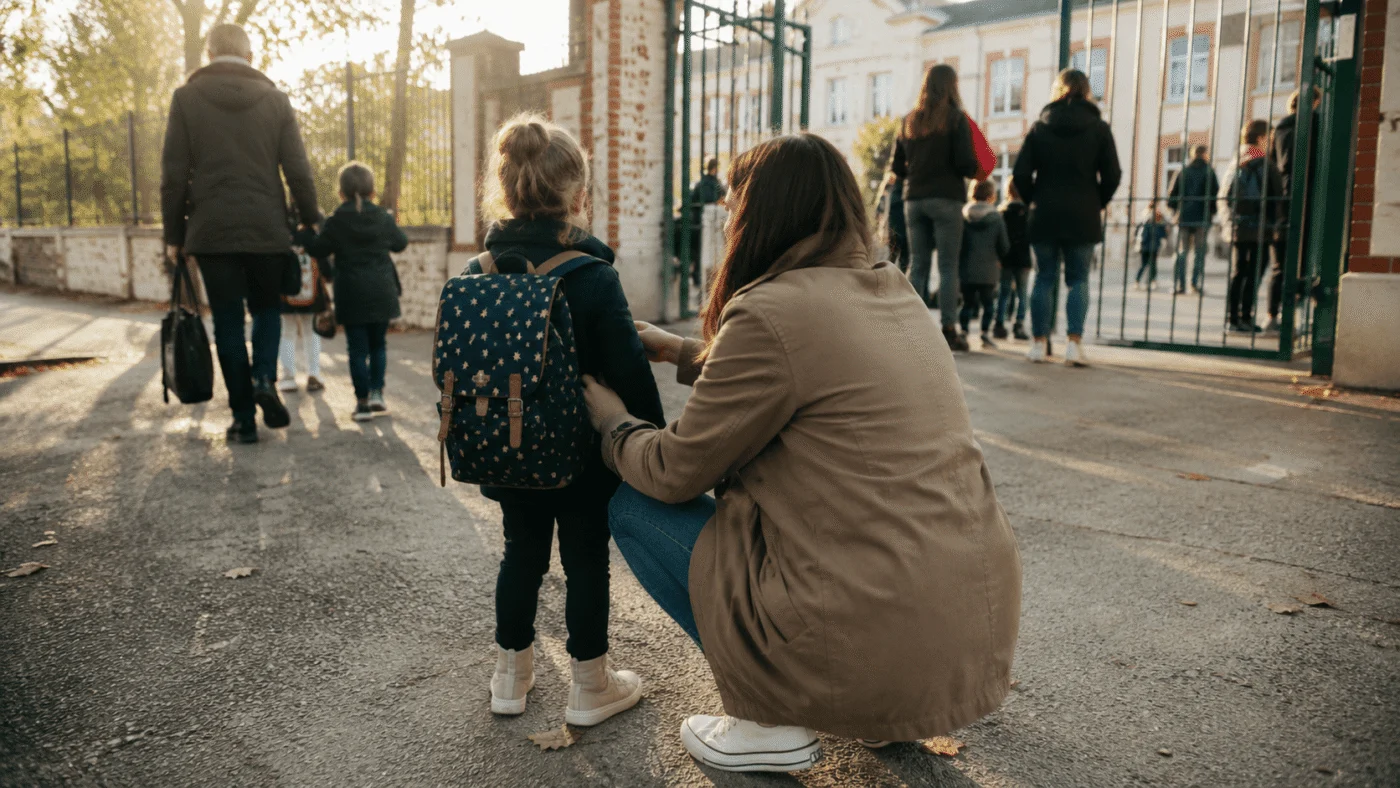
Your child uses the bathroom at home, at Grandma’s, and even at the library. At school, they hold everything until the front door closes behind them. Maybe they sprint to the toilet the moment they get home. Maybe underwear comes back stained. Maybe stomachaches appear every weekday morning and disappear on Saturday. Home being the easy one is not an accident, and how the bathroom at home is set up is a large part of why.
When a child is scared of the school toilet, adults often focus on the final step: “Just go.” But holding is not the whole problem. It is the clue. Somewhere between noticing the body signal and returning to class, the bathroom feels too loud, exposed, dirty, rushed, unpredictable, or socially risky.
Map the whole bathroom trip, stall included
Pick a calm time and draw the route: noticing the urge, asking the teacher, walking through the hall, entering the bathroom, choosing a stall, locking it, wiping, flushing, washing, and returning. Ask your child to mark each step green, yellow, or red.
The answer may surprise you. Some children fear the explosive flush or hand dryer. Others worry that a lock will jam, a door gap will expose them, classmates will comment, or the teacher will say no in front of everyone. A child who moves slowly may not finish during a short break. A child with sensory sensitivity may find the smell and echo unbearable.
A 2026 study of 1,000 children in the Netherlands found that stool withholding at school was reported by 51.2 percent of primary-school children and 71.4 percent of high-school students. Hygiene and privacy were the most common reasons. The study in JAMA Network Open also found that abdominal pain was common among children who held stool at school. The sample was Dutch and the study was cross-sectional, so it cannot explain every child. It does show that school-toilet avoidance is a real health and access issue, not a parenting failure.
n
“Improving hygiene and privacy of school toilet facilities may reduce stool withholding.”van Streun et al., JAMA Network Open, 2026
n
Use your child’s map to name the obstacle precisely: not “toilet anxiety,” but “the hand dryer starts without warning” or “I have to ask while everyone is listening.” Specific problems give school something concrete to change.
Understand why holding can become a body loop
When a child repeatedly holds stool, the bowel can absorb more water from it. The stool becomes harder, passing it hurts, and the next urge feels more threatening. The National Institute of Diabetes and Digestive and Kidney Diseases lists withholding among common contributors to constipation in children.
You might see tiptoe standing, stiff legs, hiding, rocking, crossed legs, tiny stool marks, a swollen belly, or very large bowel movements. These can look like attempts to push, but sometimes they are attempts to hold.
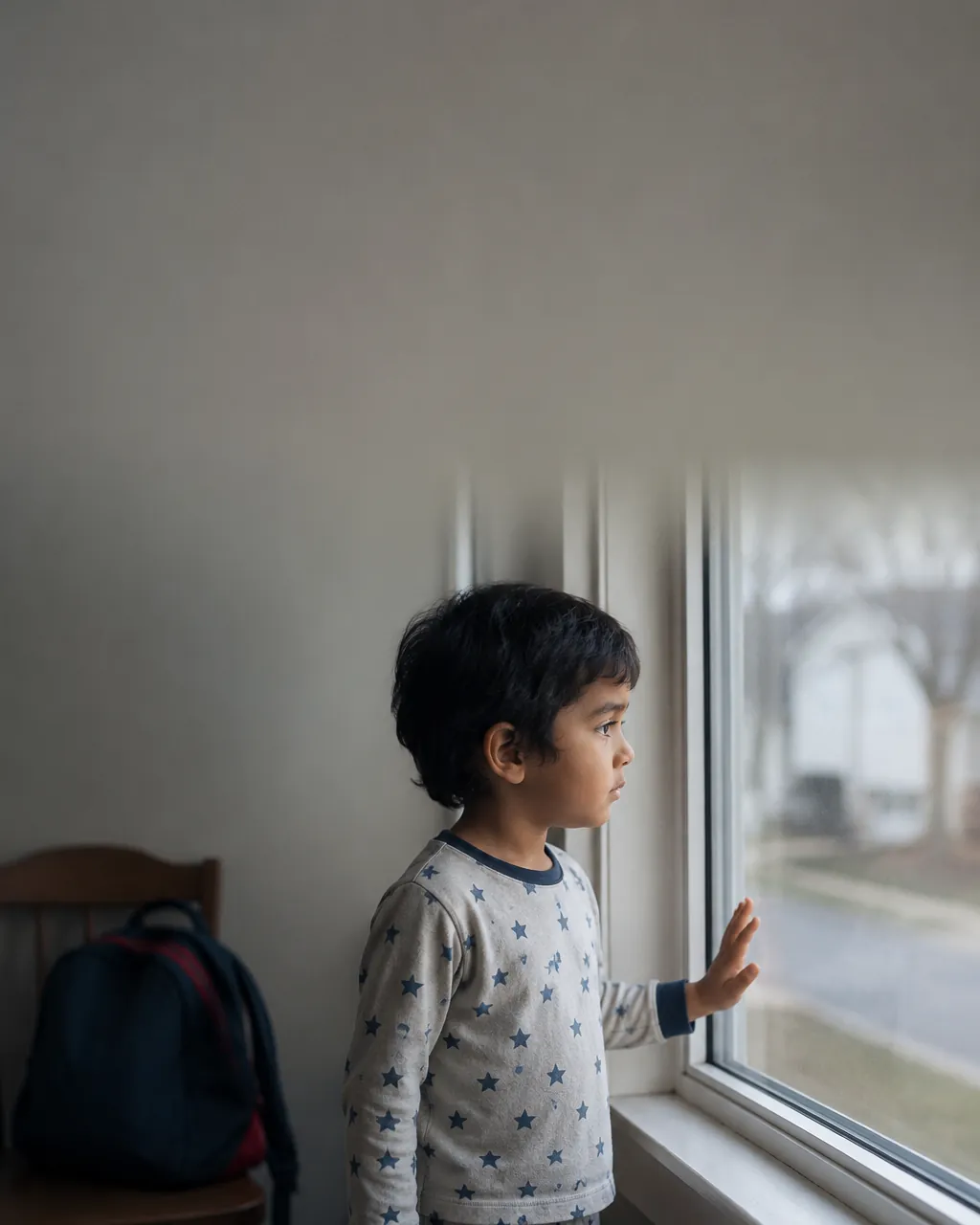
Do not diagnose constipation from a blog post. Call your pediatrician if there is ongoing pain, blood, vomiting, fever, a very swollen belly, urinary pain, repeated urinary infections, new daytime wetting, or a pattern that is not improving. Medical treatment and a school access plan may need to happen together.
If toilet skills have recently moved backward in other settings too, read our guide to potty-training regression. Regression is information, and the context often tells you what changed.
Ask school for a discreet access plan
Email the teacher without copying a large group at first. Keep it factual: “Sam is avoiding the school bathroom and coming home in pain. We are addressing the health side. Could we set up a private bathroom-access plan for the next two weeks?”
A practical plan can include:
- a hand signal or card instead of asking aloud;
- permission to leave at the first body signal;
- access to a quieter single-user or staff-adjacent bathroom where appropriate;
- a trusted adult who can check the space without hovering;
- scheduled chances before the busiest break;
- extra time, soap or wipes if permitted, and backup clothes stored privately;
- a way to report broken locks, mess, or teasing.
Ask who owns each step. “They can use the nurse’s bathroom” is not a plan if the nurse is often away or your child must explain the situation to three adults. Walk through the route with your child and school contact if possible.
Practice safety, not forced performance
At home, rehearse the exact school steps with clothes on and no demand to produce anything. Practice the signal, walking to the bathroom, testing a lock, covering ears for a flush, and using a sentence such as, “The lock is broken. I need another bathroom.” Predictability reduces the amount your child must invent while anxious.
Do not promise that nobody will ever tease or that every bathroom will be clean. Promise what you can control: “If the plan does not work, you can tell me and we will change it.” That builds trust without pretending the environment is perfect.
Review after two weeks using three measures: fewer painful arrivals home, less morning fear, and more successful access at school. Do not make “used the toilet every day” the only win. Entering the bathroom, checking the stall, or using the private signal can be meaningful steps.
If the fear spreads to all of school, or your child cannot enter the building, our guide to school refusal and fear can help you build a wider return plan. Bathroom access may be one piece of a larger anxiety pattern.
Your child is not trying to make a simple body function complicated. Their body has learned that school is not a safe place to release. A good plan changes the environment enough for the body to learn something new.
Frequently asked questions
Common triggers include loud flushing or hand dryers, smells, dirty stalls, unreliable locks, gaps around doors, teasing, crowded breaks, fear of asking permission, or a previous accident. Ask which exact part feels unsafe instead of assuming your child is embarrassed.
Yes. Repeated stool withholding can make stool harder and more painful to pass, which can strengthen the urge to avoid going. Urine holding can also cause discomfort. Speak with your pediatrician about pain, blood, accidents, recurrent urinary symptoms, or ongoing constipation.
A useful plan may include a discreet signal, permission to leave without public discussion, access to a quieter bathroom, a trusted adult, scheduled opportunities, extra time, and a backup set of clothes. The plan should protect privacy and be reviewed with your child.
Offer an unhurried opportunity, but avoid a power struggle or repeated forced sitting. Pressure can make the body tighten and increase fear. A calm home routine helps, but it does not replace making the school toilet accessible when your child needs it.
Leave the first comment
Share your thoughts

I'm for the parent mid-meltdown - theirs or the kid's. I write from the actual floor of it: the crying that won't stop, the dinner thrown, the bedtime that unravels. Blunt because I respect you too much to pretend it's easy. Just what tends to work.
More from NourWhat's the one thing that calmed the chaos in your house?
No right answers here - tell us how it went. Someone reading needs to hear it.
Join the conversation