
WEATHER
The most evidence-backed foundation is a consistent pre-sleep sequence that is identical every night: a brief wind-down, feed, a darkened room, and a consistent settling signal such as white noise. The sequence matters more than its length; babies learn to expect sleep based on cues, not duration.
If you have tried multiple approaches and nothing has stuck, focus on just two changes at once. Doing everything simultaneously makes it impossible to tell what is working.
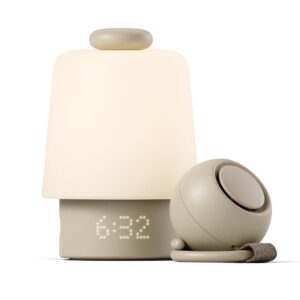
Read: Baby Sleep Tips That Work →The products with the strongest evidence base are a dedicated white noise machine (better than a phone app for parent sleep too), blackout blinds, and a safe sleep environment with a firm mattress and a clear cot. A light-and-sound soother can help for some babies.
Skip anything claiming to guarantee sleep; no product does that. But the right environment gives you the best odds of a consistent settling signal that the baby learns to associate with sleep.
The most effective in-the-moment response is calm, brief, and physical: move the child away from the situation without anger, name the feeling (you are very angry), and wait for regulation before any conversation. Do not rush the debrief; a toddler cannot process a lesson in the middle of a meltdown.
The behavior usually reduces as the child develops enough language to express what the hitting was trying to say.
Read: When Your Child Hits or Bites You →Food refusal in children is overwhelmingly sensory and temperament-driven rather than defiance. The most effective strategy is repeated, pressure-free exposure: the refused food is on the plate but never forced, and eating it is never made a condition for anything else. Research suggests it can take 15 to 20 exposures before a food is accepted, so keeping it in rotation without comment is itself a strategy.
Stress at the table is the biggest barrier; reducing it usually does more than changing the food.
Read: Why Children Become Fussy Eaters →Because yelling has inadvertently become the signal that you mean it. Children calibrate very quickly to the actual threshold at which consequences appear, and if normal-voice requests have historically come without follow-through, they learn to wait. The fix is not to yell less but to follow through calmly and immediately on the very first request, every time, for two to three weeks.
That resets the calibration. It is hard in the short term and very effective in the medium term.
Read: When Your Child Will Not Listen →Reduce everything: less light, less sound, less stimulation, less talking. For young babies, rhythmic movement combined with white noise at a consistent level is often the fastest route to calm. For older babies, sometimes the most counterintuitive move is to put them safely in their cot for three minutes while you reset your own nervous system.
A regulated parent is the most powerful calming tool available in this moment.
Read: When Your Child Will Not Stop Crying →Sleeping through (typically five to six consecutive hours) can happen from around three to four months but is still common not to happen until 12 months or later. Night feeds are biologically normal well into the first year, and developmental leaps reliably disrupt sleep that was previously settled.
Normal variation between babies is enormous. Focus on the trend improving over weeks rather than the result of individual nights; that is a far more useful signal.
Read: Why Your Child Will Not Sleep →The evidence base on graduated extinction (sometimes called controlled crying) is reassuring: multiple long-term studies have found no lasting psychological harm and significant improvement in both infant and parent sleep. That said, it does not work for all temperaments, and many parents are not comfortable with it, both of which are valid reasons to choose a gentler method.
No-cry approaches such as fading or pick-up-put-down take longer but work for some babies. The right method is the one you can implement consistently.
Read: Baby Sleep Tips That Work →Most fussy eating in children aged two to seven is within the developmental range and resolves over time with a low-pressure approach. Seek a referral to a pediatric dietitian or feeding specialist if: the child is losing weight or not gaining appropriately, the diet has narrowed to fewer than ten foods, mealtimes are causing significant family distress consistently, or there is a texture sensitivity that extends beyond food to touch (which can indicate sensory processing differences).
Read: Why Children Become Fussy Eaters →Two things help most: extending the gap between trigger and response (three slow breaths, or leaving the room for 90 seconds if safe) and naming the feeling aloud rather than just expressing it: I am very frustrated right now, I am going to take a moment. Neither requires you to stop feeling frustrated; they interrupt the automatic chain between feeling and yelling.
Long-term, tracking which time of day and which specific situations reliably push you over the edge gives you something concrete to change rather than trying to manage every moment individually.
Read: When Your Child Hits or Bites You →Still not finding what you need?