
Tantrum or Meltdown: The Question That Changes What You Do Next
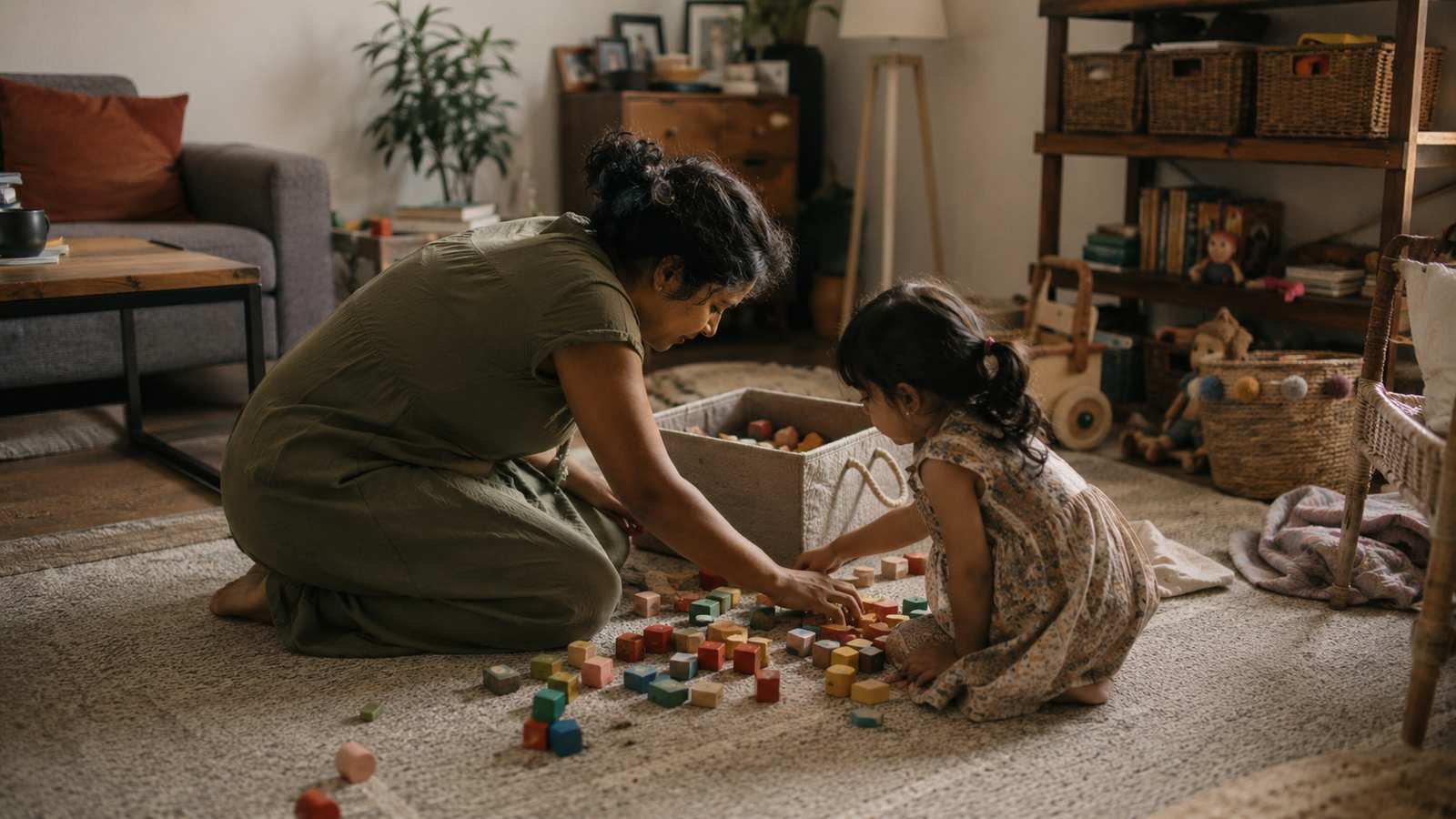
From the doorway they look the same. A child on the floor, a noise you can hear from the next street, and you with a bag of shopping you have not put down.
They are not the same, and telling them apart is not a labeling exercise. It decides whether the next thing you say helps or pours gas on it.
Here is the short version, and then the longer one, because the short version is not always enough at half past four on a Tuesday.
The four things that separate them

What set it off. A tantrum has a trigger you could put in a sentence: the wrong cup, no more screen, a sibling got there first. A meltdown often has a build up rather than a trigger. School, then noise, then hunger, then a sweater that itched, and the last one gets the blame.
Whether they are checking on you. During a tantrum most children glance over. Not because they are calculating, but because the whole thing is a communication and they want to know if it landed. In a meltdown that checking stops. There is nobody home to look.
What happens if you give in. Hand over the cookie and a tantrum stops within a minute or two. Hand it over mid meltdown and nothing changes, which is the moment most parents realize they are dealing with something else.
How it ends. A tantrum ends. A meltdown fades, then leaves a child wrung out, sometimes tearful in a different way, often needing to sleep or be silent for a while.
None of these is perfect on its own. Together they are usually enough to know within thirty seconds, and thirty seconds is all you get.
Why the response has to be different
A tantrum is asking a question about the boundary. The useful answer is calm, short and unchanged: I know, and the answer is still no. You are not being cruel by holding it. You are being predictable, which is the thing that eventually makes the tantrums shorter.
A meltdown is not asking anything. There is no boundary being tested, so there is nothing to hold. The job is to lower the input and wait: fewer words, less light and noise if you can manage it, no audience, no reasoning, no questions. Reasoning with a flooded child is like talking to someone through a closed window and getting louder because they cannot hear you.
Once it has started, what you say matters far less than how much you say. We went into that properly in why words make the meltdown worse.
Age is a clue

Tantrums peak between about eighteen months and four years, and they are supposed to. A two year old has strong opinions, no vocabulary for them, and a brain that has not built the brakes yet. That is developmental, not behavioral.
They should get shorter and rarer through the school years. If your eight year old is still having several a week, that is worth paying attention to, not because something is wrong with them but because whatever is driving it is unlikely to be about the cookie.
Meltdowns are not tied to age in the same way. They track overload, and overload arrives whenever the day asks more of a nervous system than it has. Plenty of adults have them. We just call it something more dignified and do it in the car.
If your child holds it together all day at school and falls apart the moment they see you, that is its own specific pattern, and it is a compliment even though it does not feel like one. We wrote about it in fine at school, falling apart at home.
What to do in the hour after
Repair, not review. Sit near them, offer water and something to eat, and let the conversation about what happened wait until you have both had a normal exchange about something else. The lesson does not land in the wreckage, and trying to plant it there teaches only that the aftermath is another place to be told off.
Then, when everyone is flat and calm, name it once and briefly. That was a hard one. What made it hard? Some children will tell you something useful. Many will not know, and that is normal, especially if it was a meltdown.
For the ones you can see coming, the work happens earlier in the day rather than during. Food, sleep, a warning before transitions and somewhere to land when they get home does more than any technique in the moment. There is a set of practical options in the emotional regulation piece.
When it is neither
Two patterns sit outside this pair, and they matter because the advice above will not shift them.
The first is a sensory driven pattern, where the storms cluster around supermarkets, assemblies, hand dryers, labels and crowds. That is a meltdown, but the fix is environmental and the right starting point is the sensory version of the calm down corner. The autistic meltdown piece goes further into it.
The second is when the outbursts are frequent, long, out of proportion, and the mood in between them is angry rather than sunny. That combination has a name and a body of research behind it, and we walk through it in when the outbursts stop looking like tantrums.
If someone in the house is regularly getting hurt, or if you find yourself frightened of your own child, that is the point to ask for help rather than a better technique. Wanting help is not the same as having failed.
Leave the first comment
Share your thoughts
Frequently asked questions
Look at four things: whether there was a single clear trigger or a build up, whether the child glances at you, whether giving in stops it, and how it ends. A tantrum has an aim and stops when the aim is met. A meltdown has no aim, does not respond to what is offered, and leaves the child exhausted.
Ignore the demand, not the child. Stay nearby, stay calm and keep your answer the same, but do not argue or lecture while it is happening. Ignoring a meltdown, on the other hand, does not work at all, because there is no demand being made and the child needs less input rather than less attention.
They peak between roughly eighteen months and four years and usually become shorter and less frequent through the early school years. Occasional ones at seven or eight are normal, especially when a child is tired or ill. Several a week at that age is worth looking into, since something else is usually driving them.
Yes, and most do. The same child can push a boundary at breakfast and be genuinely overwhelmed by bedtime. That is why the question is asked fresh each time rather than decided once about the child, and why labeling a child as one type or the other tends to make things harder.

I'm for the parent mid-meltdown - theirs or the kid's. I write from the actual floor of it: the crying that won't stop, the dinner thrown, the bedtime that unravels. Blunt because I respect you too much to pretend it's easy. Just what tends to work.
More from NourWhat's the one thing that calmed the chaos in your house?
No right answers here - tell us how it went. Someone reading needs to hear it.
Join the conversation