
WEATHER
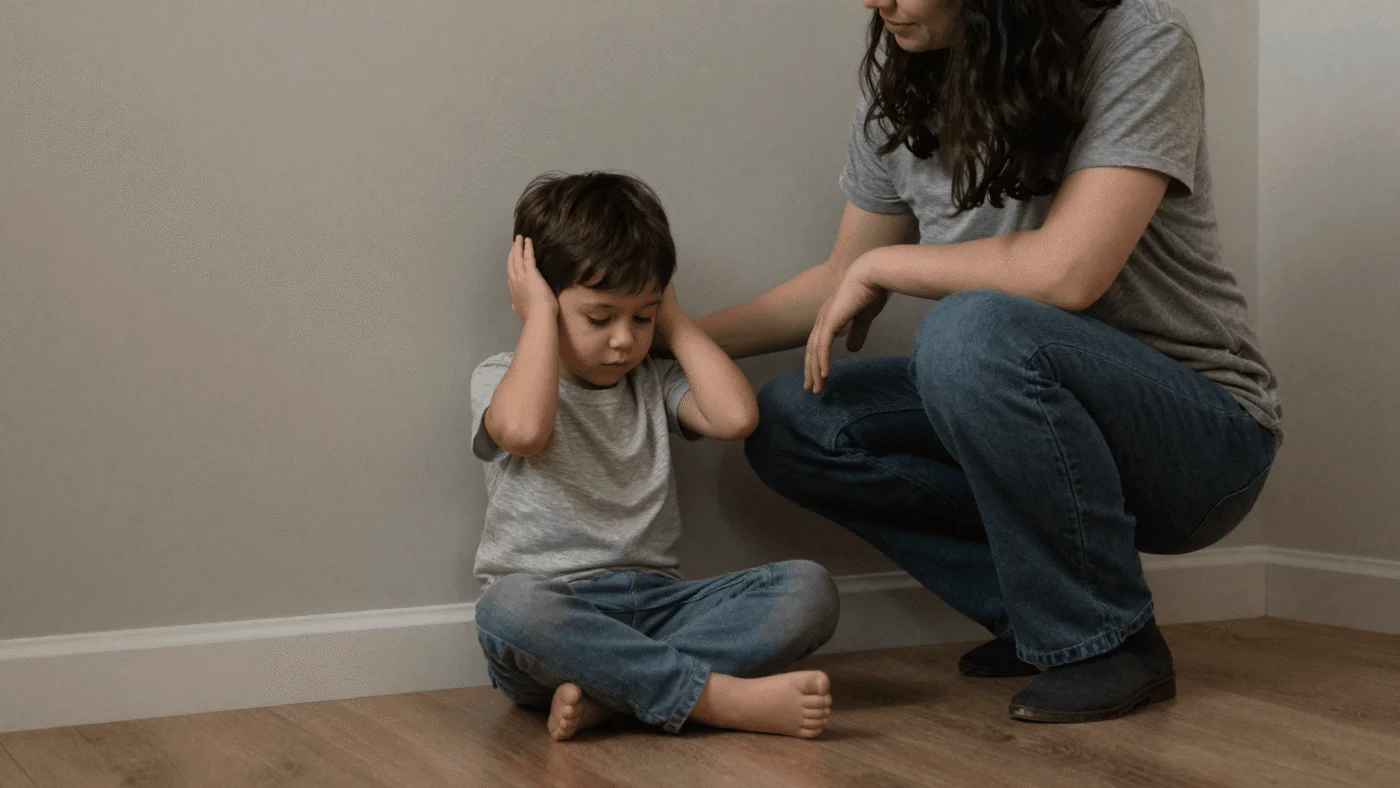
The first thing to get straight, while everything in you is screaming to make it stop: a meltdown isn’t a tantrum, and treating it like one makes it worse every single time. A tantrum has a goal. A meltdown is a nervous system that has hit full capacity and tipped over. There’s no negotiating with a circuit that’s already blown. So this was never about managing behavior. It’s about helping a body get back to safety, and the five steps below are how you do that without pouring on more fuel.
Cut the input, don’t add to it
Your instinct will be to talk: to explain, soothe, ask what’s wrong. Resist it. During a meltdown the brain can’t process language the way it usually does, so every extra question, instruction, or ‘use your words’ just piles more onto a system that’s already buried. Go the other way entirely. Drop your voice to almost nothing, or stop talking altogether. Dim the lights, kill any music, move other people gently out of the space. You’re trying to shrink the sheer amount of information his brain has to deal with, and shrink it fast. Less really is the whole strategy here, even though doing less feels profoundly wrong when your kid is in that much distress.
Get him safe, not still
Forget about making the flapping, rocking, or pacing stop. Those are often the exact things helping him regulate, and blocking them tends to spike the panic. Your only job is safety. Clear the hard edges and anything that could hurt him, put your body between him and the staircase or the road, and give him space instead of crowding in for a hug he may not be able to tolerate right now. Some kids crave deep pressure in this state; plenty want no touch at all. Follow the child in front of you, not the tip that worked on someone else’s kid. If he’s rocking in the corner with his hands clamped over his ears, he’s doing something right, not something you need to correct.

Become the calmest thing in the room
On some level he’s reading your nervous system to work out whether the world has gone safe again yet. So your task is to be almost boringly steady on the outside, whatever’s detonating on the inside. Slow your breathing down on purpose. Unclench your hands. Lower yourself so you’re not looming over him. You don’t need anything clever to say. A few quiet, repeated words like “you’re safe, I’m here” can work as an anchor even when he can’t fully follow them. This part asks a lot of you, honestly, because holding calm while your child screams runs against every wire in your body. Do it anyway. It’s the single most useful thing in the room.
Wait it out without a clock
A meltdown has to discharge, the way a storm has to rain itself out, and pushing for a quick finish only drags it longer. Give him the time. Stay close, keep the space quiet, and let the wave crest and fall on its own schedule rather than yours. Try not to count the minutes or clock the strangers watching. Their opinions genuinely are not your problem today. As things begin to ease, hold the calm a little longer than feels strictly necessary, because a child surfacing from a meltdown is fragile and tips back in easily. Coming down takes exactly as long as it takes. Rushing the landing is how you end up back in the air.
Reconnect and rebuild, much later
Once he’s genuinely settled (not five minutes after, sometimes hours after), come back gently and warmly, with zero lecture attached. He very likely feels embarrassed or completely wrung out, and he needs to know the meltdown didn’t change how you see him. Offer water, a quiet cuddle if he wants one, something low and undemanding to do. Save any problem-solving about triggers for a properly calm day, and keep it on his side: what felt like too much, what might take the edge off next time. Anyway, the meltdowns usually shrink as his tools grow and as the people around him stop reading them as misbehavior. You’re already doing that second part, right now, just by being here.
They absolutely can, and it catches a lot of people off guard who expect meltdowns to fade with age. An overloaded nervous system doesn't check a birth certificate. Teens often mask all day at school and then come apart at home, where it's safe, which is draining for them and bewildering for you.
Resist the urge to debrief right away. Their body is still washing out a flood of stress chemicals, so a drink and somewhere quiet do more than any words right now. Reconnect gently, no lecture, no 'why did you do that'. The unpicking, if it happens at all, comes much later. Let them feel you stayed.
That hot prickle of being judged in the cereal aisle is the worst part for a lot of us. You owe strangers nothing, though a short line helps if you want one: 'he's overwhelmed and we've got it.' Said once, calmly, then straight back to your kid. People you'll never see again can keep their opinions.
Often they are. A sudden spike usually means something has outgrown its current support, whether that's school or a sensory setup that's quietly stopped working. Worth jotting down when they happen for a week or two. Patterns you can't spot in the heat of the moment have a way of showing up on paper.

© 2026 DECODED KIDS · PARENTING, DECODED.

I'm for the parent watching a feeling they can't name and wondering if it's normal. I've spent years close to the child-mental-health research and the specialists behind it, and I carry the heavy parts into plain language. I won't diagnose your child - I'll help you see what you're looking at, and say honestly when it's time to ask someone in person.
More from SofiaNo right answers here - tell us how it went. Someone reading needs to hear it.
Join the conversation