
They Hold It Together All Day. You Get What’s Left.

You sat in the parent-teacher conference and listened to someone describe a child you have never met. Settled and polite. No concerns at all.
Then you picked that same child up and watched the whole thing come apart before you reached the car.
You are not imagining it, and the teacher is not lying to you. Both of those can be true at once, and there is a specific reason why.
Why the two of you are describing different children

When researchers compare what parents and teachers say about the same child, they do not find agreement. They find a correlation of about 0.28 across child mental health generally, which is weak. For the acting-out behaviors that get kids noticed, it is around 0.30.
That number has held up for decades. The people who study it argue the gap is not error and not one side being wrong. It is real information about how much a child’s behavior depends on the room they are standing in.
So the teacher who says your daughter is fine is reporting her classroom accurately. You are reporting your kitchen accurately. Nobody in that meeting is the unreliable one, even though you probably left it feeling like you were.
The pediatrician’s short version is the one worth keeping: the collapse tends to happen with the person a child feels safest with, which is why you get it and the classroom does not.
The sentence worth taking to the appointment
Here is where parents get stuck. Plenty of families are told that without problems showing at school, an assessment cannot go ahead. That is a real thing clinicians say, and it sends people home to wait.
It is worth knowing what the actual criterion says.
Read that closely. It asks for two or more settings, and the examples it gives are home, school or work, with friends or relatives, and other activities. School is one item on a list of examples. It is not named as compulsory. The criterion also says several symptoms, not all of them, and nothing in it says the picture has to look the same in both places.
The American Academy of Pediatrics tells doctors to gather information from parents, teachers, other school staff and any mental health clinicians involved. The requirement sits on impairment showing up in more than one major setting. It does not sit on a clean teacher form canceling out everything a parent has seen.
None of that means a clinician is obliged to agree with you. It does mean “we need it to show at school” is a choice being made in that room, and you are allowed to ask about it.
So is it masking, or is it something else?
Ask this in a room full of ADHD parents and you get two answers, both delivered with total confidence.
The popular one is masking. Your child spends the day holding themselves in a shape that school rewards. It costs enormous effort. The moment they reach a safe person, the effort stops. Under that reading the collapse in your hallway is the price of the day, and it is a sign of trust rather than disrespect.
The other answer pushes back, and it deserves a hearing. It says young children have nowhere near the executive control that deliberate masking would take. What differs is the room. School is structured and predictable, and the relationships there have to be earned. Home is unstructured, full of gray areas, and the love does not have to be earned. That is the setting where a child stops performing, and it is also the setting where conflict itself becomes interesting to a brain hunting for stimulation.
Honest answer: the research is thinner than the confidence on either side. Masking is a genuine, measured thing. But the tools were built for autism and validated on people aged sixteen and up. They have been applied to ADHD almost entirely in adults. One 2024 study looked at neurodivergent girls aged eleven to fourteen and found camouflaging strongly linked to anxiety and depression. For a six-year-old with ADHD, there is essentially nothing measuring it. The word has run ahead of the evidence.
For your next decision it matters less than you would think. Both explanations agree that the school report is not proof of absence. Where they differ is what you try at home. Under one reading, the first twenty minutes after school call for recovery. Under the other, they call for predictability. Most families end up needing some of both.
What moved things for other parents
The workaround that comes up again and again is simple, and it is not “argue harder with the school”.
It is finding a second adult who sees your child somewhere that is neither home nor a classroom. Then you ask that person to fill in the assessment forms. A sports coach. A grandparent who does the childcare two days a week. A therapist your child already sees. An occupational therapist, which sometimes counts twice if the sessions happen on school grounds.
That is the criterion satisfied honestly. Two or more settings, evidenced, without waiting for the classroom to break. Parents describe this as the thing that finally moved their file. Worth saying plainly: that is what people report, not a route with a guarantee on it.
The other move is unglamorous. Write things down as they happen, with dates. A pattern you can hand over reads very differently from a parent describing a bad month from memory, and it is the same evidence either way.
The kid this hits hardest
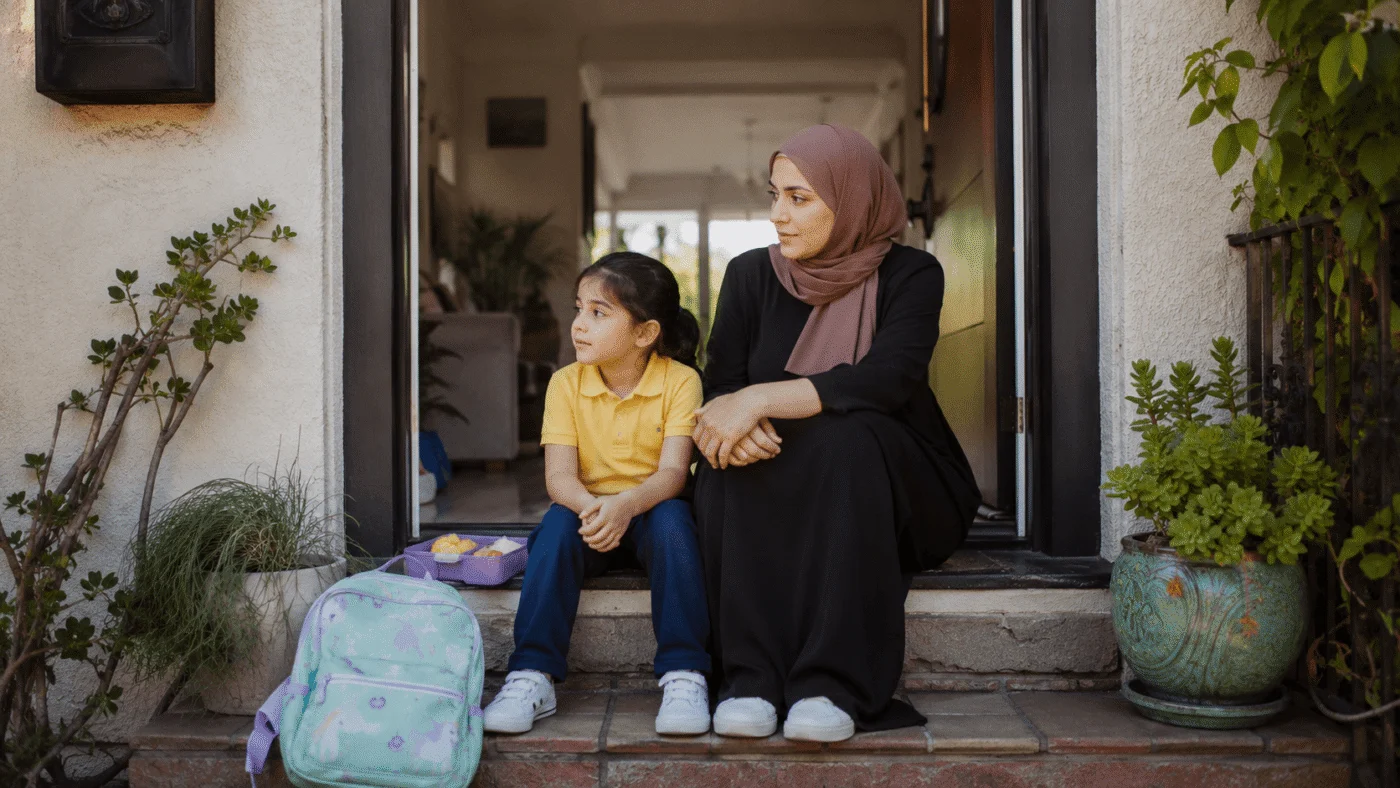
There is one group this happens to most, and they are the least likely to get looked at. Bright kids can lean on reasoning and sheer effort to stay at grade level, which means the grades stay fine while the effort quietly doubles.
The National Association for Gifted Children puts the trap plainly. A capable child with a disability can look not impaired enough for support and not gifted enough for enrichment, and so lands in neither. They also suggest schools look at students whose performance in class differs sharply from what parents describe outside it. That is exactly the child you came here about.
Maybe your child is struggling in ways school does not register. Maybe they have stopped telling you anything about their day. Either way, the gap is the thing to bring, not the report card.
What to do with all this on Monday
Book the appointment you were talking yourself out of. Bring your written notes, and bring someone other than you who can speak for what they see. If you get told it has to show at school, bring the wording.
And in the meantime, stop reading the after-school hour as the real child and the school day as the performance. Both are your child. One of those versions is just costing them far more than anyone is counting. If you want a map of who assesses what before you start booking, we reviewed the book that lays out the whole field.
Frequently asked questions
Two explanations circulate among parents. One is masking, where a child holds themselves together all day and releases once they reach a safe person. The other is that school is structured and predictable while home is unstructured and unconditional, so behavior naturally differs. Both agree that a calm school report does not mean nothing is wrong.
The DSM-5 criterion asks for several symptoms in two or more settings, and lists home, school or work, being with friends or relatives, and other activities as examples. School is not named as compulsory. Many parents get there by having a coach, relative or therapist who sees the child regularly complete the assessment forms instead.
Yes, and it is the usual finding rather than the exception. Studies comparing parent and teacher reports on the same child find only weak agreement, around 0.28 on average. Researchers treat that gap as real information about how much behavior depends on setting, not as evidence that one adult is wrong.
Less than the word’s popularity suggests. Camouflaging measures were developed for autism and validated on people aged sixteen and over, and ADHD research using them has been mostly in adults. A 2024 study of neurodivergent girls aged eleven to fourteen linked camouflaging to anxiety and depression, but there is almost no measurement in younger children.
Because their results stay acceptable. The National Association for Gifted Children describes capable students with a disability appearing not impaired enough for support and not gifted enough for enrichment, so they receive neither. Their ability to compensate hides the difficulty until the work gets harder and the compensation stops covering it.
Leave the first comment
Share your thoughts

I'm for the parent whose mornings keep falling apart. I didn't train in ADHD - I lived it with three kids, then read the actual studies, so what you get here holds up in a real kitchen at 7:50 a.m. Specific, tested at home, never preachy.
More from MarcusWhat finally made your child's focus click - even a little?
No right answers here - tell us how it went. Someone reading needs to hear it.
Join the conversation