.dkp-wrap{padding:22px 16px 60px;}
.dkp-panel{max-width:900px;margin:0 auto;background:#A1A434;border-radius:22px;box-shadow:0 50px 140px -20px rgba(0,0,0,.7);padding:clamp(26px,5vw,46px) clamp(20px,5vw,48px) 50px;color:#141414;font-family:Marcellus,Georgia,serif;}
.dkp-htop{display:flex;align-items:center;justify-content:space-between;margin-bottom:26px;}
.dkp-pill{display:inline-block;border:1.5px solid rgba(10,10,10,.5);border-radius:999px;padding:6px 16px;font-family:Marcellus,serif;font-size:12px;letter-spacing:.06em;text-transform:uppercase;color:#0A0A0A;text-decoration:none;}
.dkp-pill:hover{background:#0A0A0A;color:#A1A434;}
.dkp-close{display:inline-flex;width:42px;height:42px;border:1.5px solid rgba(10,10,10,.4);border-radius:999px;align-items:center;justify-content:center;font-size:16px;color:#0A0A0A;text-decoration:none;transition:background .3s,color .3s;}
.dkp-close:hover{background:#0A0A0A;color:#A1A434;}
.dkp-title{font-family:Fraunces,’Cormorant Garamond’,serif;font-weight:600;font-size:clamp(31px,5.4vw,50px);line-height:1.04;letter-spacing:-.015em;color:#0A0A0A;margin:0 0 14px;}
.dkp-byline{font-family:Marcellus,serif;font-size:12px;letter-spacing:.05em;color:rgba(10,10,10,.6);margin:0 0 26px;text-transform:uppercase;}
.dkp-herofig{margin:0 0 30px;}
.dkp-herofig img{display:block;width:100%;height:auto;border-radius:16px;box-shadow:0 30px 70px -34px rgba(0,0,0,.55);}
.dkp-herofig figcaption{margin-top:.7em;font-family:’Cormorant Garamond’,serif;font-style:italic;font-size:1rem;color:rgba(10,10,10,.58);text-align:center;}
.dkp-body{font-size:1.16rem;line-height:1.82;color:#1b1b18;}
.dkp-body p{margin:0 0 1.25em;}
.dkp-body h2{font-family:Fraunces,’Cormorant Garamond’,serif;font-weight:600;font-size:clamp(24px,4vw,33px);line-height:1.13;color:#0A0A0A;margin:1.95em 0 .5em;clear:both;}
.dkp-body a{color:#15397F;text-decoration:underline;text-underline-offset:3px;text-decoration-thickness:1px;}
.dkp-body a:hover{color:#0A2257;}
.dkp-body ul{margin:1.3em 0;padding:0;list-style:none;}
.dkp-body ul li{position:relative;padding:0 0 0 1.6em;margin:0 0 .8em;}
.dkp-body ul li::before{content:”;position:absolute;left:.2em;top:.6em;width:7px;height:7px;border-radius:50%;background:#0A0A0A;}
.dkp-body strong{color:#0A0A0A;}
.dkp-quote{margin:2.1em 0;text-align:center;padding-top:.4em;font-family:’Cormorant Garamond’,serif;font-style:italic;font-size:clamp(22px,3.4vw,30px);line-height:1.32;color:#0A0A0A;position:relative;clear:both;}
.dkp-quote span{display:block;width:46px;height:2px;background:rgba(10,10,10,.5);margin:.7em auto 0;}
.dkp-quote cite{display:block;margin-top:.6em;font-family:Marcellus,serif;font-style:normal;font-size:13px;letter-spacing:.05em;text-transform:uppercase;color:rgba(10,10,10,.6);}
.dkp-key{margin:1.9em 0;padding:1em 1.3em;background:rgba(10,10,10,.08);border-left:3px solid rgba(10,10,10,.6);border-radius:14px;font-family:’Cormorant Garamond’,serif;font-style:italic;font-size:1.3rem;line-height:1.42;color:#0A0A0A;clear:both;}
.dkp-callout{margin:1.9em 0;padding:1.1em 1.35em;background:rgba(10,10,10,.08);border-radius:16px;font-size:1.04rem;line-height:1.68;color:#1b1b18;clear:both;}
.dkp-callout strong{color:#0A0A0A;}
.dkp-fig{margin:1.9em 0;}
.dkp-fig img{display:block;width:100%;height:auto;border-radius:16px;box-shadow:0 30px 70px -34px rgba(0,0,0,.5);}
.dkp-fig figcaption{margin-top:.7em;font-family:’Cormorant Garamond’,serif;font-style:italic;font-size:1rem;color:rgba(10,10,10,.58);text-align:center;}
.dkp-fig–right{float:right;width:46%;margin:.3em 0 1.3em 1.9em;}
.dkp-fig–left{float:left;width:46%;margin:.3em 1.9em 1.3em 0;}
.dkp-cmpwrap{background:#141418;border-radius:18px;padding:22px clamp(16px,3vw,26px);margin:24px 0;clear:both;}
.dkp-panel .pk-faq{margin:34px 0 4px;clear:both;}
@media(max-width:600px){.dkp-panel{padding:22px 18px 32px;border-radius:18px;}.dkp-body{font-size:1.08rem;}.dkp-fig–right,.dkp-fig–left{float:none;width:100%;margin:1.9em 0;}}

Emotional Regulation Activities for Kids With ADHD: Small Things That Help Big Feelings Pass

Mother and child use playdough at the kitchen table for a calm emotional regulation activity
A regulation activity works best when it is small enough to start before the storm.

The chair scrapes, the pencil snaps, and suddenly your child is under the table saying everyone hates them.

You had asked for one tiny thing. Shoes. Homework. Teeth. Five more minutes off the tablet. Now the whole room has gone hot, and you are trying to decide whether to comfort, correct, ignore, or hide in the pantry for forty-seven seconds.

For ADHD kids, emotional regulation activities work best when they are practiced before the big feeling takes over. Think body first, words second: heavy work, naming feelings, co-regulation, visual choices, and a tiny repair ritual after the storm.

If you only remember one thing, make the activity smaller. A child with ADHD is not usually calmed by a lecture in the red zone. They need a rehearsed body cue, a safe adult nervous system, and one visible next move.

Why ADHD feelings can arrive so fast

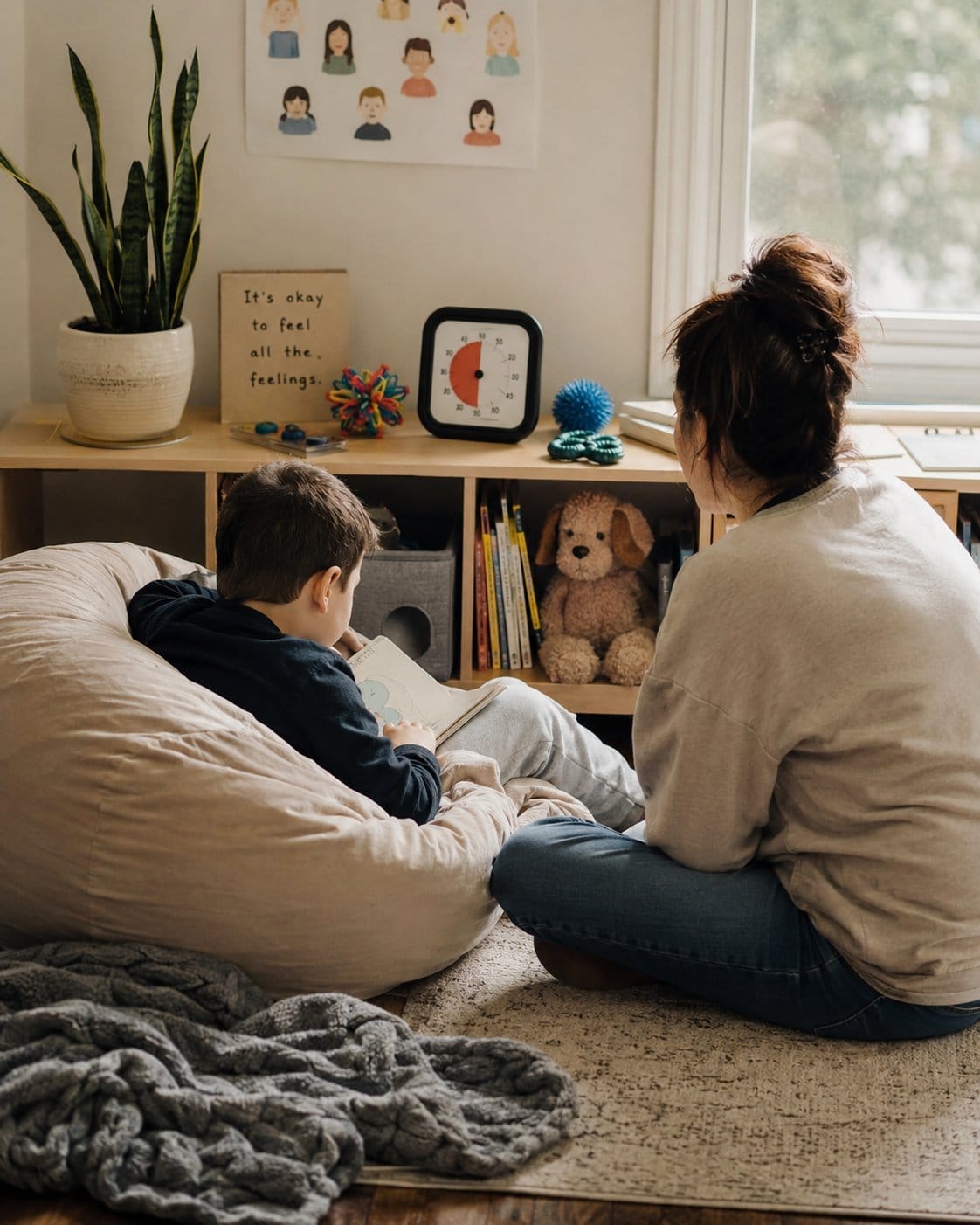
Mother and son read together in a calm corner with a visual timer and feelings tools nearby
The calm corner is practice space, not a punishment spot.

ADHD is not only about focus. The same brain systems that help a child pause, shift, wait, and stop also help them slow a feeling before it becomes the boss of the room.

The CDC reported that 12.0% of U.S. children ages 3 to 17 had ever been diagnosed with ADHD in 2024. That is a lot of families living with the same confusing pattern: the child can explain the rule later, but cannot reach it in the moment.

CHADD describes emotion regulation as a real part of ADHD for many kids, and the Child Mind Institute notes that self-regulation can be taught in small, manageable steps. That is the good news. The awkward news is that the steps have to be boringly repeatable.

Kids do well if they can.Ross W. Greene, PhD

The activities that help before the feeling peaks

Start when your child is only a little prickly, not when they are already gone from you. Once they are screaming, hiding, bolting, or throwing, your job is safety and co-regulation. Skill-building waits.

  • Wall pushes or chair pushes. Ask for ten strong pushes against a wall, or let them push both hands into the seat of a sturdy chair. Heavy work gives the body a clear job.
  • Animal walks to the next room. Bear walk to pajamas. Crab walk to the backpack. It sounds ridiculous until you notice the transition happened without a duel.
  • Blow the soup. Hold an imaginary spoon and say, “Cool it down.” Long out-breaths are easier for kids than formal breathing scripts.
  • Name, number, next. “Mad, eight, couch.” One feeling word, one intensity number, one safe place. No speech required.
  • The repair card. Afterward, offer two choices: draw what happened or say one sentence. Repair is a skill too.

For more on the shame spiral that can sit under a huge reaction, our piece on rejection sensitive dysphoria in ADHD kids may help you read the moment with softer eyes.

Read nextWhen the big feeling is mostly about feeling rejected: Rejection Sensitive Dysphoria: Why a Small “No” Feels Huge to Your ADHD Kid

Make a calm corner your rehearsal space
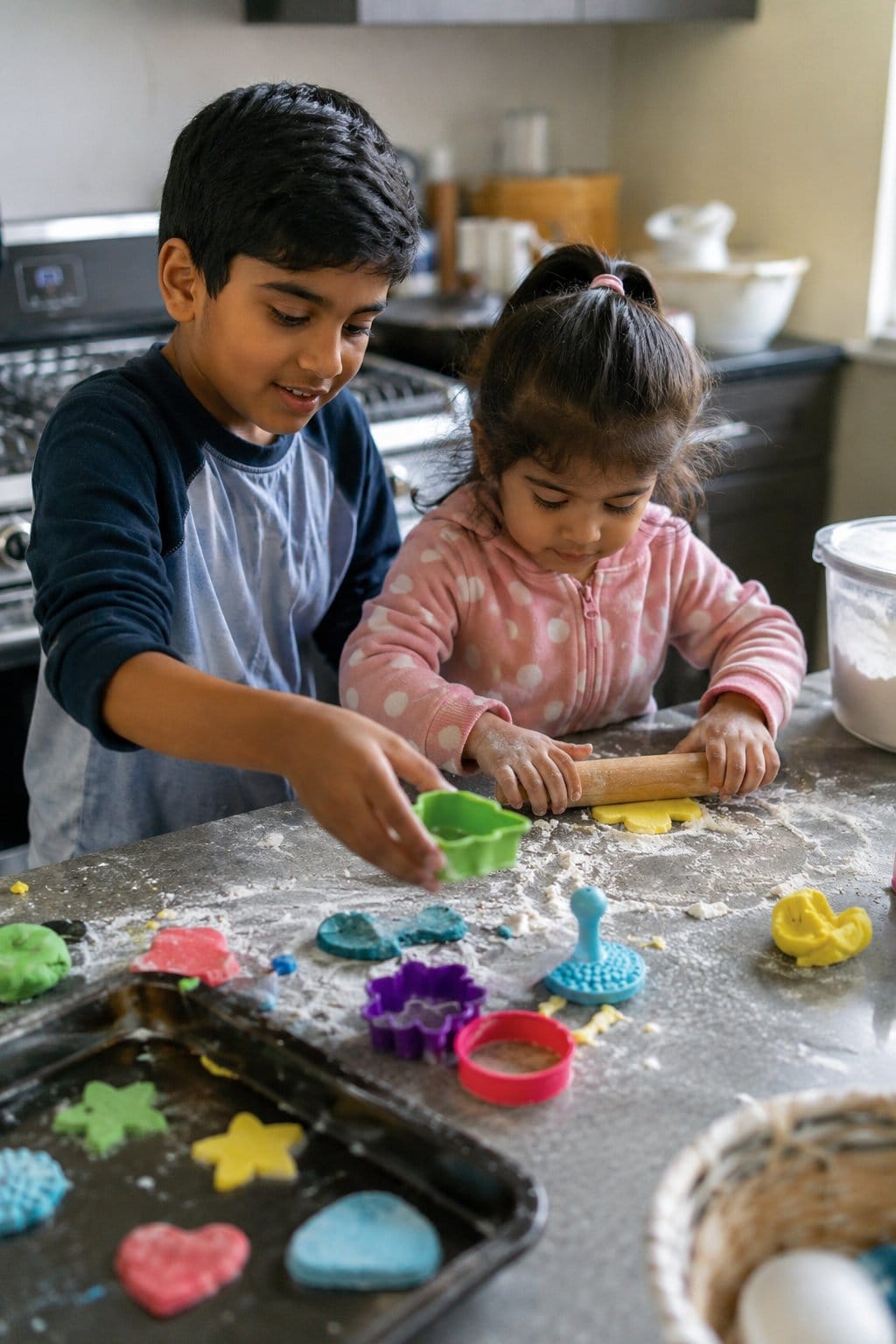
Two children use playdough and cookie cutters at a kitchen counter as a quiet body reset activity
Hands busy, body quieter. That is often the whole point.

A calm corner should not feel like banishment. If your child only sees it when they are in trouble, their brain files it under punishment and refuses to go there. Very fair, honestly.

Set it up when everyone is calm. Put two or three tools there: a feelings chart, a soft seat, a book, a timer, a chew or fidget if your child uses one safely, and one card that says, “Body first. Words later.” Practice visiting it for two minutes after school or before dinner.

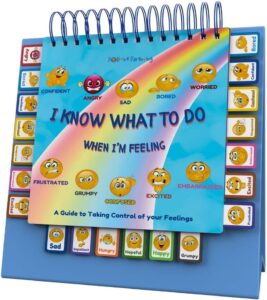
If your child needs visual words more than spoken ones, a flipbook can help them point instead of perform language on demand.
PREMIUM TOOL★ 4.6

I Know What to Do Flipbook

DoesEmotion wheel plus coping choices
Best forCalm corner or kitchen table
UsePoint first, talk later
Why it worksGives words when your child has none

This is the kind of tool I would keep visible, not tucked away in a therapy drawer. It gives your child a way to name the feeling and choose a next move without having to invent language while their brain is already flooded.

Check price on Amazon

As an Amazon Associate, Decoded Kids earns from qualifying purchases. Price checked live on Amazon.

What to say while you co-regulate

Your voice is part of the activity. Not the fancy words. The pace, volume, and amount.

Try one sentence and then stop. “I am here.” “Your body is having a hard time.” “Push my hands.” “Point to the feeling.” If you add seven more sentences because the first one felt too small, your child now has to process you too.

The CDC recommends parent training in behavior management as a key ADHD treatment, especially for younger kids, because the adult response becomes part of the treatment plan. That can feel unfair when you are already tired. It is also the part you can practice in tiny pieces.

What not to do: do not ask for insight while your child is still flooded. “Why did you do that?” often turns shame into defense. Keep the lesson for later, the same way we talk about in why words can make the meltdown worse.

After the storm, keep the repair tiny

The best emotional regulation activities for kids with ADHD do not end with a perfect apology. That is too much theater for a child who may already feel awful.

Try a two-minute repair instead. “Show me where it started.” “Which tool might help next time?” “Do you want to fix the paper or bring your brother the marker?” One repair move is enough. Anyway, enough is a beautiful parenting word.

If your child likes stories, feelings books can give you language without turning every hard moment into a lecture. Our big-feelings book guide is a good shelf to steal from.

Read nextFor the child who can learn a feeling word through story before they can use it in real life: Books for When the Big Feelings Are Bigger Than Both of You

Try one, not all of them

Pick one activity for this week. Wall pushes before homework. Blow-the-soup breathing before screens end. Pointing to the flipbook after school. Small enough that you will actually do it on a Tuesday when the sink is full and someone has lost a shoe.

The aim is not a calm child all day. The aim is one more tiny bridge between feeling and action. Some days that bridge is wobbly. Fine. Build it anyway.

FAQMental Health

Frequently asked questions

The best activities are short, physical, and easy to repeat: pressure work, animal walks, breathing with a visual cue, feelings naming, calm-corner practice, and a repair routine after the feeling passes. ADHD kids usually do better with body-first tools than long talks.

ADHD affects attention, impulse control, and emotional brakes. A small frustration can feel urgent before your child has time to pause. That does not excuse hurtful behavior. It changes the help they need: fewer lectures in the moment and more practice outside the storm.

Teach it before the meltdown, then cue it gently during one. A child who is already flooded may not copy a new breathing pattern yet. Practice when they are calm with bubbles, a pinwheel, or your hand on their back, then use the same cue later.

Tiny daily practice works better than one long lesson. Try two minutes after school, before homework, or before screens end. The goal is not perfect calm. The goal is making the skill familiar enough that your child can reach for it when the feeling starts rising.

Get support if reactions are unsafe, very frequent, last a long time, or affect school, friendships, sleep, or family life most days. A pediatrician, child psychologist, occupational therapist, or ADHD-trained therapist can help you sort sensory needs, anxiety, medication questions, and parent training.

WHILE YOU’RE HERE…

Chore Chart for Kids With ADHD: A No-Nag Setup That Actually Gets Used

Parental Control Apps That Don’t Make You the Enemy: What We’d Actually Install

Referee, Judge, or Bystander: What Actually Works When Your Kids Fight

Children’s Reading Statistics 2026: What Every Parent Needs to Know

When You Have a Child From an Affair and a Wife You Never Wanted to Hurt

Parallel Parenting: How to Co-Parent Without Co-Operating

Outdoor Activities for Kids With ADHD: Screen-Free Summer Ideas That Actually Work

Yogasleep Hushh Review: The $25 Sound Machine That Goes Where Your Baby Goes

The Two Weeks Before School That Actually Matter

Books for When the Big Feelings Are Bigger Than Both of You

JOIN THE CONVERSATION

Leave the first comment

Share your thoughts

{“@context”:”https://schema.org”,”@type”:”BlogPosting”,”headline”:”Emotional Regulation Activities for Kids With ADHD: Small Things That Help Big Feelings Pass”,”description”:”Practical emotional regulation activities for kids with ADHD, with body-first ideas, co-regulation scripts, calm-corner practice, and parent-friendly ways to help big feelings pass.”,”datePublished”:”2026-07-05″,”dateModified”:”2026-07-05″,”author”:{“@type”:”Person”,”name”:”Sofia Moreau”},”publisher”:{“@type”:”Organization”,”name”:”Decoded Kids”,”url”:”https://parents-and-kids.com/”},”mainEntityOfPage”:”https://parents-and-kids.com/emotional-regulation-activities-kids-adhd/”,”image”:[“https://parents-and-kids.com/wp-content/uploads/2026/07/mom-toddler-playdough-cookie-cutters-rolling-pin-kitchen-table-latina-16×9-1.jpg”,”https://parents-and-kids.com/wp-content/uploads/2026/07/mom-son-reading-beanbag-calm-corner-time-timer-feelings-white-2.jpg”,”https://parents-and-kids.com/wp-content/uploads/2026/07/siblings-playdough-cookie-cutters-kitchen-counter-rolling-pin-southasian.jpg”]}
{“@context”:”https://schema.org”,”@type”:”FAQPage”,”mainEntity”:[{“@type”:”Question”,”name”:”What are the best emotional regulation activities for kids with ADHD?”,”acceptedAnswer”:{“@type”:”Answer”,”text”:”The best activities are short, physical, and easy to repeat: pressure work, animal walks, breathing with a visual cue, feelings naming, calm-corner practice, and a repair routine after the feeling passes. ADHD kids usually do better with body-first tools than long talks.”}},{“@type”:”Question”,”name”:”Why does my child with ADHD get upset so fast?”,”acceptedAnswer”:{“@type”:”Answer”,”text”:”ADHD affects attention, impulse control, and emotional brakes. A small frustration can feel urgent before your child has time to pause. That does not excuse hurtful behavior. It changes the help they need: fewer lectures in the moment and more practice outside the storm.”}},{“@type”:”Question”,”name”:”Should I teach breathing during a meltdown?”,”acceptedAnswer”:{“@type”:”Answer”,”text”:”Teach it before the meltdown, then cue it gently during one. A child who is already flooded may not copy a new breathing pattern yet. Practice when they are calm with bubbles, a pinwheel, or your hand on their back, then use the same cue later.”}},{“@type”:”Question”,”name”:”How often should we practice emotional regulation activities?”,”acceptedAnswer”:{“@type”:”Answer”,”text”:”Tiny daily practice works better than one long lesson. Try two minutes after school, before homework, or before screens end. The goal is not perfect calm. The goal is making the skill familiar enough that your child can reach for it when the feeling starts rising.”}},{“@type”:”Question”,”name”:”When should I get extra help for ADHD emotional regulation?”,”acceptedAnswer”:{“@type”:”Answer”,”text”:”Get support if reactions are unsafe, very frequent, last a long time, or affect school, friendships, sleep, or family life most days. A pediatrician, child psychologist, occupational therapist, or ADHD-trained therapist can help you sort sensory needs, anxiety, medication questions, and parent training.”}}]}
{“@context”:”https://schema.org”,”@type”:”BreadcrumbList”,”itemListElement”:[{“@type”:”ListItem”,”position”:1,”name”:”Home”,”item”:”https://parents-and-kids.com/”},{“@type”:”ListItem”,”position”:2,”name”:”Mental Health”,”item”:”https://parents-and-kids.com/category/mental-health/”},{“@type”:”ListItem”,”position”:3,”name”:”Emotional Regulation Activities for Kids With ADHD: Small Things That Help Big Feelings Pass”,”item”:”https://parents-and-kids.com/emotional-regulation-activities-kids-adhd/”}]}

Marcus Webb
Mental Health
Hey, I'm Marcus
Marcus Webb
Dad of threereads the research, not the hot takesADHD lived at home, daily

I'm for the parent whose mornings keep falling apart. I didn't train in ADHD - I lived it with three kids, then read the actual studies, so what you get here holds up in a real kitchen at 7:50 a.m. Specific, tested at home, never preachy.

More from Marcus
Your turn

When did you last feel out of your depth - and what helped, even a little?

No right answers here - tell us how it actually went. Someone reading needs to hear it.

Join the conversation