
The Riddle Was for the Ten-Year-Old. The Toddler Found Every Card.
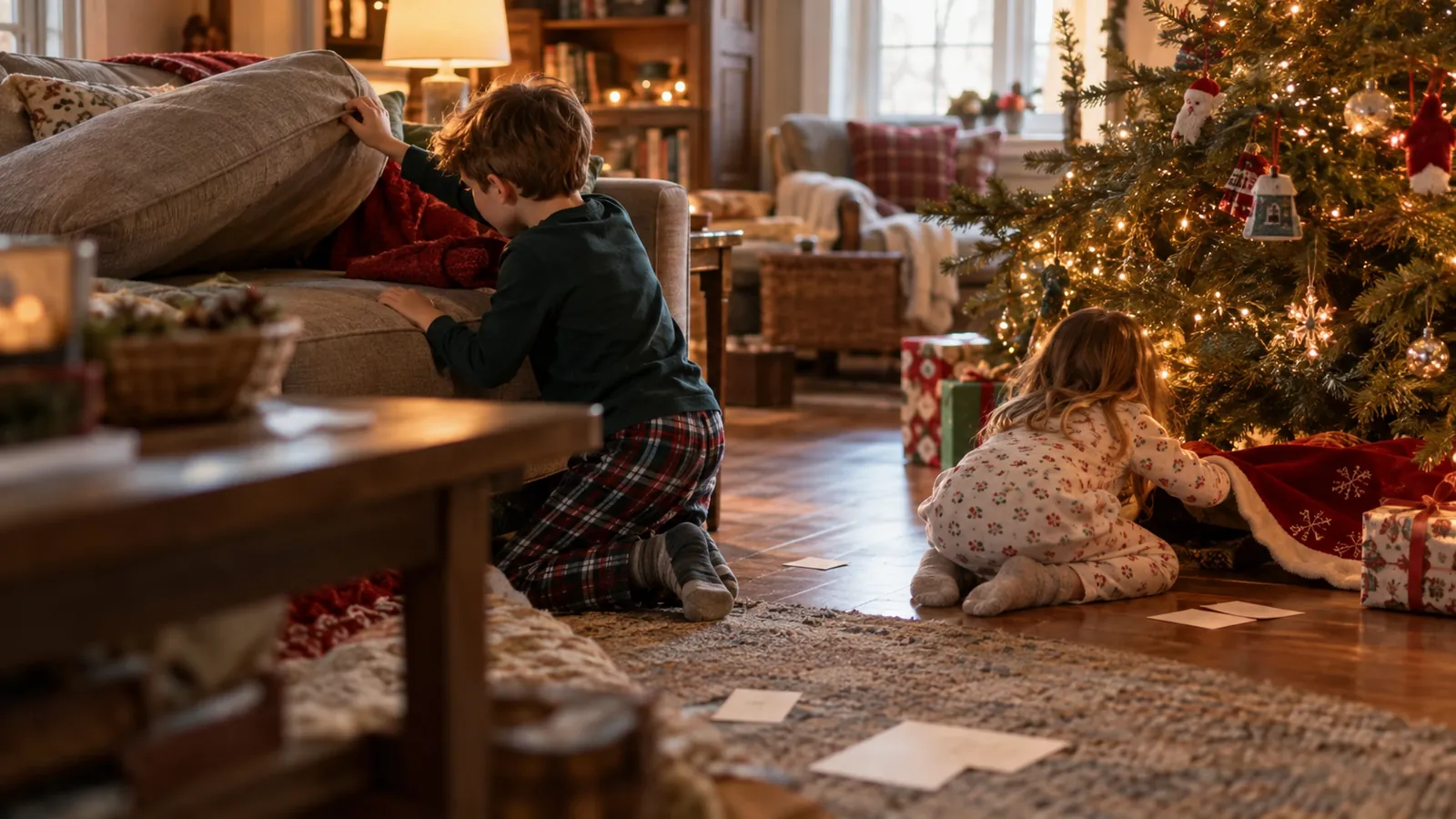
It is 6:40 on Christmas morning, and the hunt you stayed up until midnight building is going badly. Your ten-year-old solved the first riddle in four seconds and is already bored. Your five-year-old cannot read half the words on the cards. Your two-year-old found all six of them in about 90 seconds and is holding the whole stack in her fist.
Three kids can’t share one reading level. The fix takes a pencil, some index cards and an hour.
A good hunt is a short walk through your own house, and every clue promises the next stop is close.
How do you plan a Christmas scavenger hunt for kids at home?
Ten minutes is the target. The CDC lists paying attention for 5 to 10 minutes during activities as a milestone at age 5, so a twenty-minute hunt will lose a 5-year-old halfway through. Count clues instead of minutes. Five to seven cards at about a minute and a half each lands right on time.
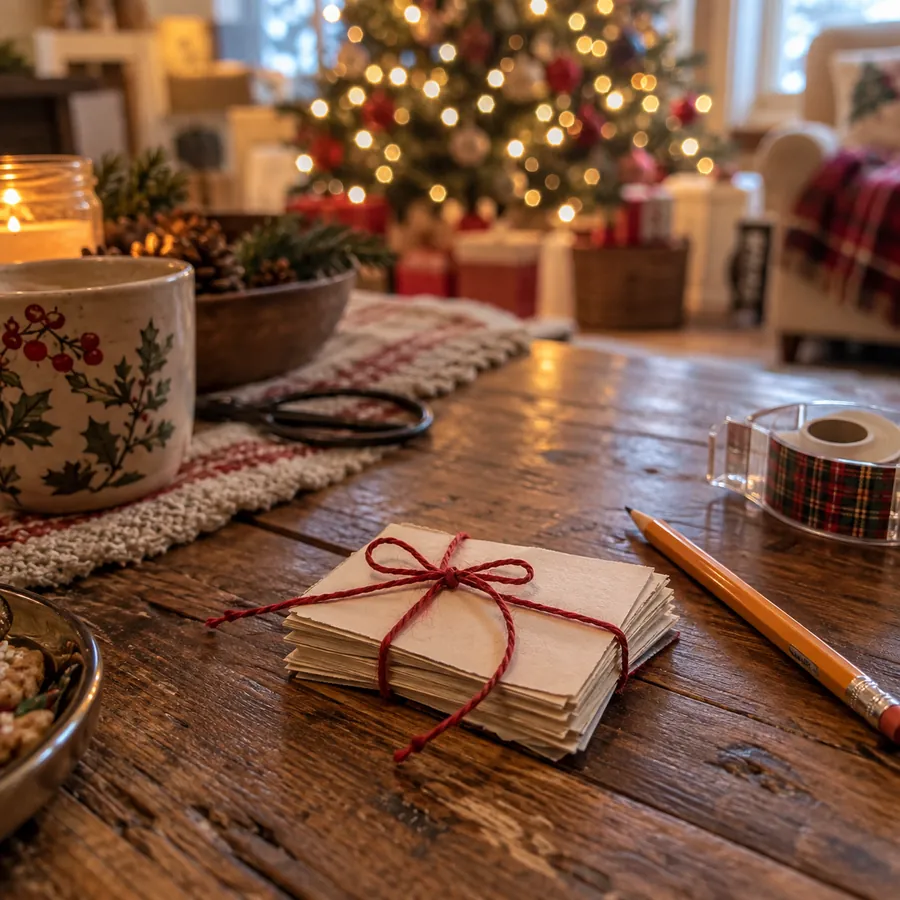
Walk the route before you write a word. Stand in each doorway, pick one spot per room, and crouch down to see it the way a small kid would. Then write each clue on an index card and number the backs in pencil. At 6 a.m. you will not remember which spot comes fourth.
This trail is for your own kids. A crowd needs something louder, and our post on Christmas party games for a full living room covers that.
That list from the AAP reads like a clue trail. One kid reads while another plans the search. Somebody always waits a turn.
What should the clues say at each age?
Write for your youngest player. For mixed ages, draw a picture on the front of each card and a rhyme on the back, and let the oldest read them aloud.
For 3- and 4-year-olds, draw the spot. Card one is a drawing of a red boot. Card two is a photo of the tree skirt, taken an hour ago.
Rhymes work for 5- to 7-year-olds, as long as the pairs stay plain. The CDC lists using or recognizing simple rhymes, like bat and cat, as a milestone at age 5, so tree and me will land, and evergreen and seen will lose them. Read them aloud to a 5-year-old.
- Red and white and round the tree, lift my edge and look for me.
- Stomp, stomp, stomp, out in the snow. Look in my boot, that’s where to go.
- Soft as a pillow and flat as a hat, lift up the cushion and look under that.
- Where do you sleep when the day is done? Look under the pillow, the hunt has begun.
From 8 up, write riddles that name the spot without saying it.
- I have a face but I never smile, and two hands but I cannot clap. Look behind me.
- You sit on me every night and never say thanks. Lift me up.
If reading is a sore spot, draw every clue. Our post on a child who is struggling with reading covers what helps at home.
Where do you hide clues in a small house?
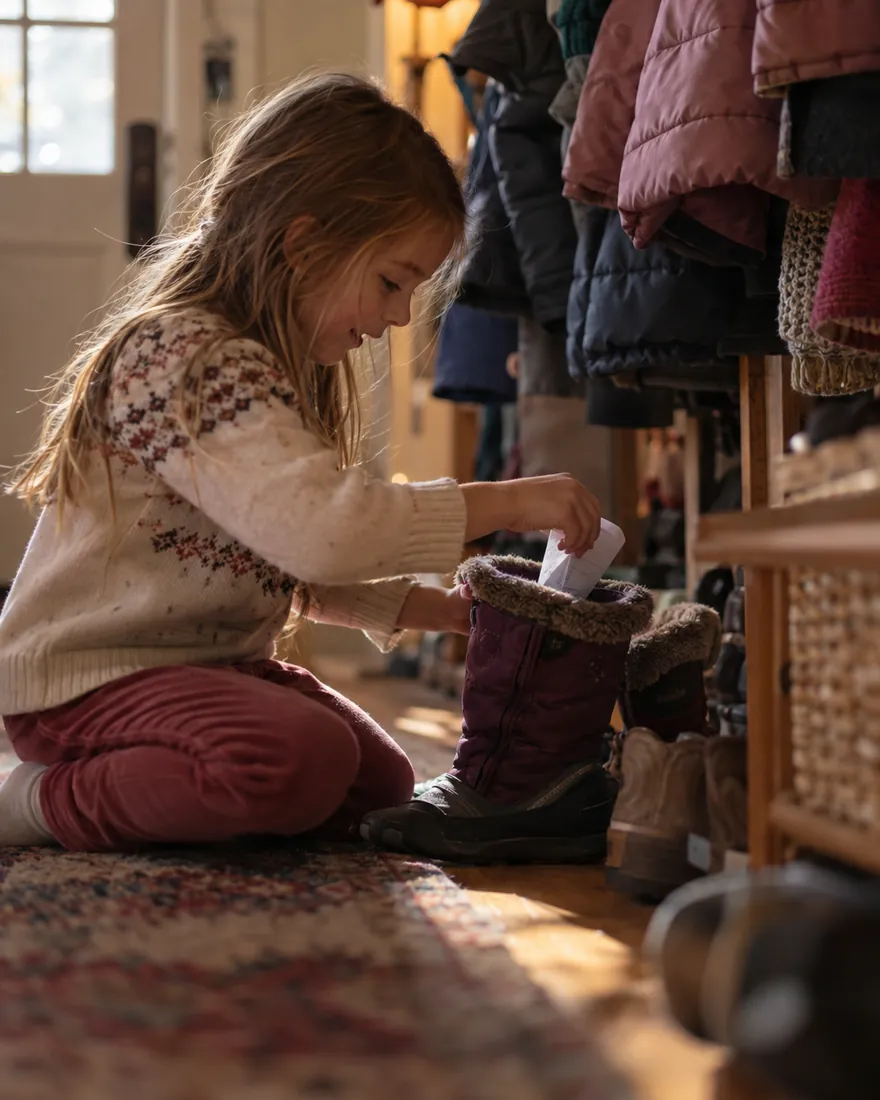
Use the spots kids already check by habit. A sofa cushion, a boot by the door, the pillow and the tree skirt are all places kids have searched before. The clue only has to point, and habit does the rest.
In a small house, pick one spot per room and keep every card where a kid can reach it standing flat on the floor. The fridge door and a low bookshelf also work. Leave a corner showing on the cards for 3- and 4-year-olds, and tuck the oldest kid’s cards all the way in.
One safety rule covers every spot. Keep cards away from outlets, plugs, tree lights, the fireplace and any lit candle, and off any shelf a child would climb to reach. The CPSC says to keep burning candles in sight and away from flammable items, and an index card is a flammable item. If a power strip or a cord sits under the tree skirt, pick another spot. Our post on a toddler-proof Christmas tree explains why.
How do you stop a two-year-old from finding every clue in 90 seconds?
A two-year-old does not search. She scans the room, grabs whatever is new and brings you the pile. A scavenger hunt for toddlers works when it is a guided walk with a basket, and three stops in three different rooms is plenty, since the walk between rooms eats the minutes.
Hand her the first card yourself, then walk with her and hide only one card per room. She can’t grab what is not in the room. Draw each clue and ask “Where is the boot?” the way you would over a picture book. Let her drop each find into the basket, and when she runs ahead, take her hand.
End on something with no small parts. The CPSC says to keep toys with small parts away from children younger than three, so skip the coins and tiny figures. A board book or a soft animal makes a better prize. Our post on advent activities for toddlers has more five-minute ideas.
Should you run it on Christmas Eve or Christmas morning, inside or out?
A Christmas Eve scavenger hunt works best in the late afternoon, before the bath and the pajamas. The wild energy burns off with a whole evening left to settle it. End the trail with something calm, like hot chocolate or a book. Our post on what to do on Christmas Eve with kids covers the rest of that day.
Christmas morning is different. The trail is a buffer between waking up and the tree. Hide the cards after the kids are asleep, start with a clue under the pillow, and end at the stocking. Our post on Christmas morning traditions that slow the morning down covers how to space out the presents.
Outside, seal each card in a zip bag so snow cannot wreck it, and keep the route short, since cold hands end a hunt faster than a hard clue. At a relative’s house, the same trail works in rooms the kids do not know, as in our Friendsgiving with kids post.
Write the last clue first
This week, write the last card first, hide the prize before you do anything else, and build the trail backward from there so you cannot run out of ideas at 6 a.m. Number the backs, put the first card under a pillow, and go to bed.
Leave the first comment
Share your thoughts
Frequently asked questions
You do not need one. A printed list names rooms and objects your house may not have, while index cards let you write clues for the spots you do have. Copy the sample rhymes and riddles from this post onto cards, draw a picture on the front for the youngest kid, and number the backs.
Pick objects your kids touch every day and describe them without naming them. “What has four legs but never walks?” points to a table. “What runs but never walks?” points to a faucet. Keep each riddle to one or two sentences, and give the easiest one to the final card.
Hide five to seven cards during a quiet hour in the afternoon, then start the hunt once everyone is dressed and fed. Finish with a calm reward, such as hot chocolate, new pajamas or a picture book, so the excitement drops before bedtime instead of climbing.
Plan on about five minutes, with three stops in three rooms. Anything longer or closer together turns into a race. Hand a two-year-old one picture card at a time, let her carry a basket, and end with a board book or soft toy, since small parts should stay away from children under three.
Yes, with a few changes. At school, pair kids up and keep every card inside one room or hallway so nobody waits alone. Outside, seal each card in a zip bag and keep the route close to the house. Either way, hide the prize before you write the first clue.

I started Decoded Kids because the calm, straight answer I needed at 2 a.m. just didn't exist. I'm a parent of two, still figuring it out - and I hold this whole place to one promise: real help, in plain language, with no one talked down to.
More from MayaWhat's the one thing that calmed the chaos in your house?
No right answers here - tell us how it went. Someone reading needs to hear it.
Join the conversation