
Oppositional Is What It Looks Like. It Isn’t Why.
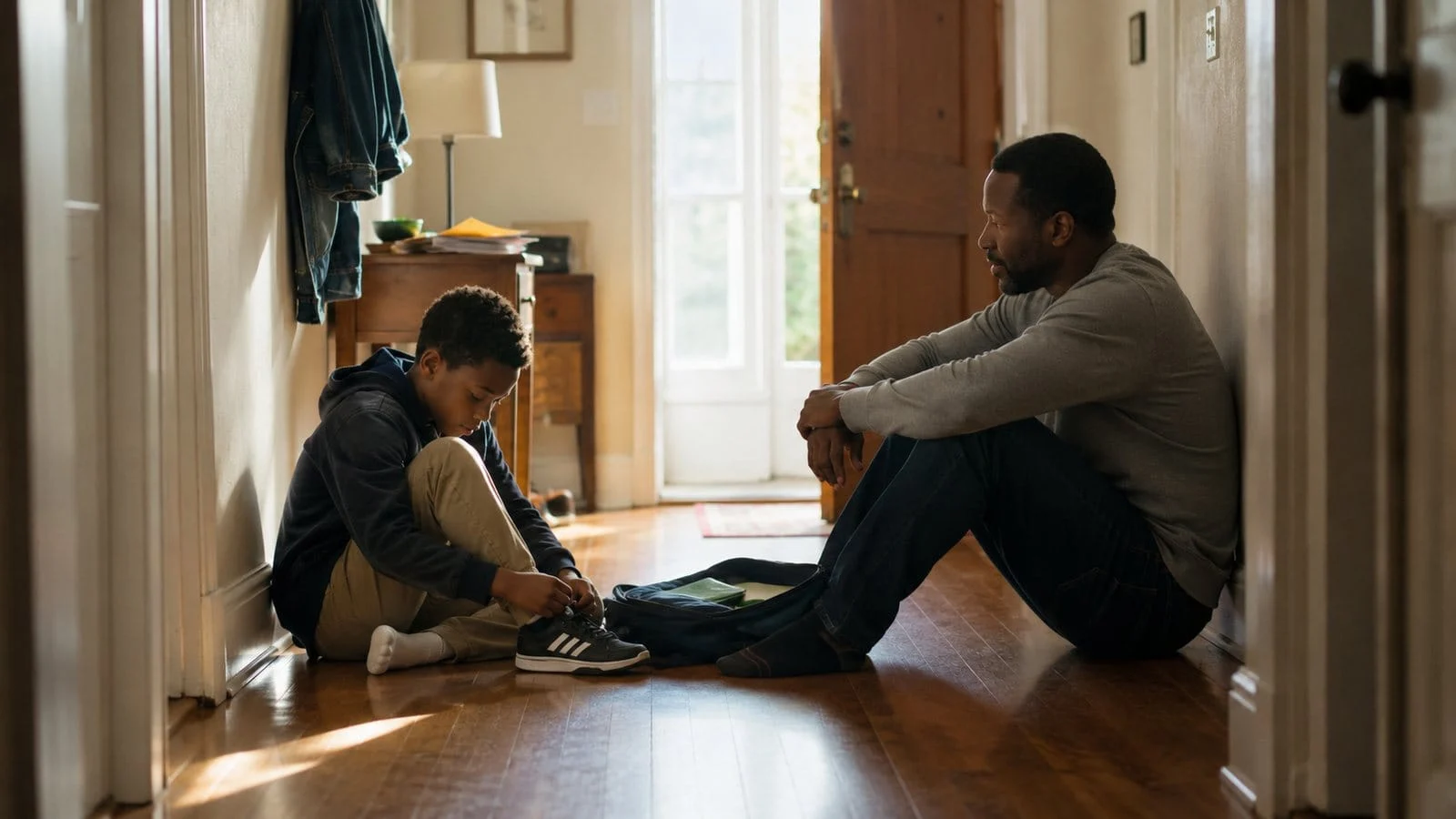
The report comes back and there it is in the summary line. Oppositional defiant disorder. You read it twice. Somewhere under all that paperwork is a seven year old who would not put their shoes on this morning, and now there is a word for it that sounds like a verdict.
You were hoping for an explanation. What arrived was a description, set in a clinical font.
That gap is the whole problem, and no, you are not imagining it. Ask three different rooms of people what this label means and you get three genuinely different answers. So I went and read all three.
Three rooms, three completely different conversations

Where clinicians talk shop, the argument is whether this diagnosis explains anything at all. Several describe hundreds of intakes without once reaching for it, because they could always find the change, the loss, or the stressor sitting underneath. One called it useful mainly for billing. Others push back, and their point is fair: the category carries decades of research behind it, and not every child who fights the world has been through something terrible.
Where parents talk, nobody is debating anything. They are wrung out. The same story repeats: a long wait, an expensive appointment, a label handed over, then silence. No plan, no next step, see you in six weeks. Parents describe the word landing like a life sentence, partly because the leaflets warn it may not be outgrown.
And in a third set of rooms, people talk about demands. Not defiance. Demands. That is where the phrase pathological demand avoidance keeps surfacing, usually shortened to PDA.
Reading all three back to back, one thing stood out. The grown-ups are having an argument about a word. The kid is having a Tuesday.
What the diagnosis actually says, and what it leaves out
It helps to know what is under the hood. The criteria describe three clusters: an angry or irritable mood, arguing and refusing, and spiteful behavior. A clinician looks for at least four of those signs across six months, showing up with someone who is not a sibling.
Here is the part almost nobody explains to parents. Severity is graded by how many settings the behavior appears in, and the mildest grade is one setting. One. Home counts on its own. So your child can fit this description while their teacher insists everything is fine, and that is not a contradiction in the file. That is the file working exactly as written. If that sounds like your house, we wrote a whole piece on the child who holds it together all day and falls apart at your door.
What the criteria never do is say why. They describe the weather. They say nothing about the pressure system underneath it. You can read the full criteria and severity grades yourself, and I would, before the next appointment.
Why so many parents end up reading about demand avoidance
Once you are awake at midnight searching, PDA turns up fast, and the appeal is obvious. It moves the story from a child who will not to a child who cannot, and it puts anxiety at the center instead of attitude.
The mechanism people describe is autonomy. A demand is anything that takes your control away, and the surprising part is that it includes the demands you place on yourself. Adults who live with it describe setting their own alarm and then dreading it. Several describe wanting to do the thing, badly, and still being unable to start.
One detail corrected an assumption I had walked in with. This is not an allergy to authority. People described following a coach or an instructor perfectly well, then coming apart at home, or with themselves. Which is worth sitting with, because it is the opposite of what the word defiant implies.
Be careful here, though. Demand avoidance is not in the American diagnostic manual, and it is not in the international one either. It grew up mostly in the UK, the research base is thin, and there is no agreed test. The PDA Society, the main organization behind the term, describes it as best understood as a profile of autism and says plainly that the field is still evolving. It can be a genuinely useful lens. It is not a diagnosis you can go out and get.
The uncomfortable part that never makes the leaflet
There is also a question about who ends up carrying this label. In 2025 the American Academy of Pediatrics ran a paper in its own journal arguing that the diagnosis is applied unevenly and feeds school discipline gaps. The research it draws on found the label is roughly a third more common among Black people than white people, with a wider gap again for the related conduct diagnoses.
None of that makes the diagnosis worthless, and it does not mean your child’s is wrong. It does make it fair to ask what the person in front of you actually observed, for how long, and in how many places. If you are not sure who you should even be asking, this walks through which appointment does what.
What actually changes on a Tuesday morning
Here is what made all that reading worth it. Whichever room you sit in, the practical advice lands in the same place. Lower the demand. Offer a real choice instead of an instruction. Refuse the escalation, because it is a fight you can only win by frightening someone smaller than you. Look for the skill that is missing before you assume a motive.
The adults who had lived it as children kept circling one idea: how powerless they felt, and how much of the storm went to the person they were most certain would never leave. That reframes a lot of what feels personal at eight in the morning, and it is the same mechanism behind the sentence that guts you most.
Fewer words help too, which is not the same thing as giving in. We have gone deep on why explaining harder makes it worse, and on what it looks like when fear comes out as fury. If no single label has ever quite fit your kid, Child Decoded is the book written for exactly that.
Keep the word, treat it as a door
You do not have to accept or reject the label today. Use it as an opener. Take it back to whoever wrote it and ask what they saw, what they ruled out, and what happens next. Your kid is the same person they were before that appointment. The report just gave everyone else a shorter way to talk about them, and shorter is not the same as truer.
One last thing, because it came up again and again in those parent rooms. If the anger at home has started to frighten you, or your child talks about not wanting to be here, that is the point to call your pediatrician rather than wait for the next appointment. In the U.S. you can call or text 988. Asking early is not an overreaction.
Frequently asked questions
Yes. It sits in the American diagnostic manual with defined criteria: four or more signs of angry mood, arguing and refusing, or spite, over at least six months, with someone other than a sibling. What it describes is a pattern of behavior, not its cause.
The first is a formal diagnosis describing defiance toward authority. Demand avoidance is an informal profile describing anxiety about lost autonomy, including demands a person places on themselves. People who live with it often follow a coach or teacher easily, then struggle most at home.
Yes. Severity is graded by how many settings the behavior appears in, and the mildest grade is a single setting. Home on its own counts. A teacher saying they see nothing does not rule the pattern out, though it is worth asking the clinician about.
No. Pathological demand avoidance is not in the American or the international diagnostic manuals, and there is no agreed assessment for it. It developed largely in the UK. The PDA Society describes it as best understood as a profile of autism while research continues.
Lower the demand and offer a genuine choice instead of an instruction. Use fewer words during the storm and save the teaching for afterwards. Look for the missing skill rather than assuming a motive, and ask whoever diagnosed your child for an actual plan.
Leave the first comment
Share your thoughts

I'm for the parent whose mornings keep falling apart. I didn't train in ADHD - I lived it with three kids, then read the actual studies, so what you get here holds up in a real kitchen at 7:50 a.m. Specific, tested at home, never preachy.
More from MarcusWhen did you last feel out of your depth - and what helped, even a little?
No right answers here - tell us how it actually went. Someone reading needs to hear it.
Join the conversation