
Fourteen Kids in Your Living Room and Nobody Has a Plan
You said yes in October. It seemed fine in October.
Now it is the third week of December, fourteen children arrive at two o’clock, and the plan in your head is the word “games”. That is a noun, not a plan. The useful thing to know is that a party like this needs about four games in total, and the ones that work are the ones you can explain in one sentence while somebody is already upset about a hat.
Why the best party game needs no explaining
Watch what happens when you gather fourteen kids and start a sentence with “okay so first everyone gets into two teams and then”. You lose them somewhere around the second “and then”. Half of them are still holding a coat.
A game that needs a paragraph of setup spends its energy on the setup. By the time everybody understands it, the mood you were trying to catch has moved on. The ones that land are dumb in the best way: pass this, hold that, do not drop it, go. Kids can join late without being caught up, which matters because somebody always arrives late.
There is another reason to keep it loose. The most successful thing at most parties is the twenty minutes where the children stop doing your activity and start doing one of their own. That is not the party failing. That is the party working, and your job at that point is to stay out of it and refill the chips.
Aim for four short games with gaps in between, not a timetable. A gap is where the good stuff happens.
The game that starts before everyone has arrived
The worst stretch of any kids’ party is the first fifteen minutes, when four children are there and ten are not. They stand around. One asks when it starts. Somebody’s parent lingers in the hall.
So have something running on the floor from the moment the door opens, something with no start and no end. A sheet of paper per child and a bowl of stickers works. So does a pile of paper chains to make, or one long roll of lining paper taped down the hallway with markers at both ends.
Nobody has to win. People can join at any point. When the fourteenth child arrives, you already have a room that looks like a party instead of a waiting area.
One loud one, and then get it back
Around the forty minute mark you want one properly loud game, because the energy is going to come out somewhere and you would rather choose where. Musical statues still works. Pass the parcel still works. A relay where they carry a wrapped present on a serving spoon works and takes ten minutes to go wrong in a funny way.
The bit people get wrong is what comes after. A loud game that just stops leaves fourteen overstimulated children and no next thing, and that is the moment somebody ends up in tears in the kitchen. Decide in advance what follows it, and make that thing quiet.
Rounds also run long because nobody is watching a clock. Set a visible timer where the kids can see it, call the round when it goes, and you are not the one arguing about whether that was really the end.
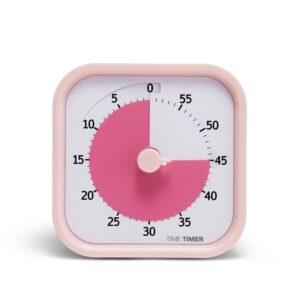
TIME TIMER Home MOD 60-Minute Visual Timer Home Edition
As an Amazon Associate, Decoded Kids earns from qualifying purchases. Price checked live on Amazon.
If the room going loud is the part you actually dread because one of your children cannot take it, that is worth planning around separately. We went through what that looks like in the December noise problem, and a quiet room with the door shut is a completely legitimate part of a party.
When the ages are all over the place
A class party is easy because they are all seven. A family party in December is four to twelve, and that is a different job.
The trick is picking games where being older does not help much. Musical statues does not reward height. Guessing how many chocolate coins are in a jar does not reward reading age. Anything involving speed, reach or reading will be won by the same eleven year old four times running, and the four year olds will drift off to the stairs.
Short rounds help too. If a game lasts ninety seconds, the child who is bad at it is only bad at it for ninety seconds. Our list of sixty second games is built entirely on that idea, and most of them need things you already own.
The prize problem
Prizes turn a nice afternoon into a scoreboard faster than anything else. One child wins three times, two children win nothing, and somebody goes home having quietly decided they are bad at parties. If the two who fall out hardest are your own, the sibling referee problem does not switch off because there are guests in the house.
How it ends
Decide the last game before the party starts, and make it a slow one. Everybody on the floor while you read something short, or the lights off and one flashlight going around. Parents arrive into a calm room instead of a chase, and the children leave on a downbeat rather than at full volume. The same trick is what makes a midday New Year party work for small children.
Then let it be a bit lousy in places. A party where two games flopped and the kids spent an hour under a duvet on the sofa is a party they will talk about. Nobody has ever remembered a timetable.
Leave the first comment
Share your thoughts
Frequently asked questions
Four is plenty. One running as they arrive, one loud one around the middle, one quiet one after it, and one slow one to finish. Leave gaps between them on purpose, because free play fills those gaps and it is usually the part the children enjoy most.
Pick games where being older gives no advantage. Musical statues, guessing how many candies are in a jar, and anything decided by luck all work. Avoid speed, reach and reading, because the oldest child will win every round and the youngest ones will wander off.
No, and a prize per game usually causes trouble. Give the winner something tiny and immediate, then give every child the same thing at the door on the way out. That removes the running scoreboard and means nobody leaves empty handed.
Plan the quiet thing before you need it rather than after. Follow every loud game with something low, like sitting down for food or a story. Keep one room free with the door shut for any child who needs to step out for a few minutes.
Let them. Children inventing their own game is the sign the party is going well, not badly. Keep your plan in your pocket for when that runs out of steam, and use the time to put food out instead of trying to win the room back.

For nearly two decades I was the youth mentor across from the angry kid, the silent one, the parents out of ideas. I write the way I listened - slow, steady, never from above. If tonight feels heavy, I hope this felt like having someone in the room.
More from TheoWhat's the one thing that calmed the chaos in your house?
No right answers here - tell us how it went. Someone reading needs to hear it.
Join the conversation