
Your ADHD Kid Isn’t Giving You a Hard Time. They’re Having One
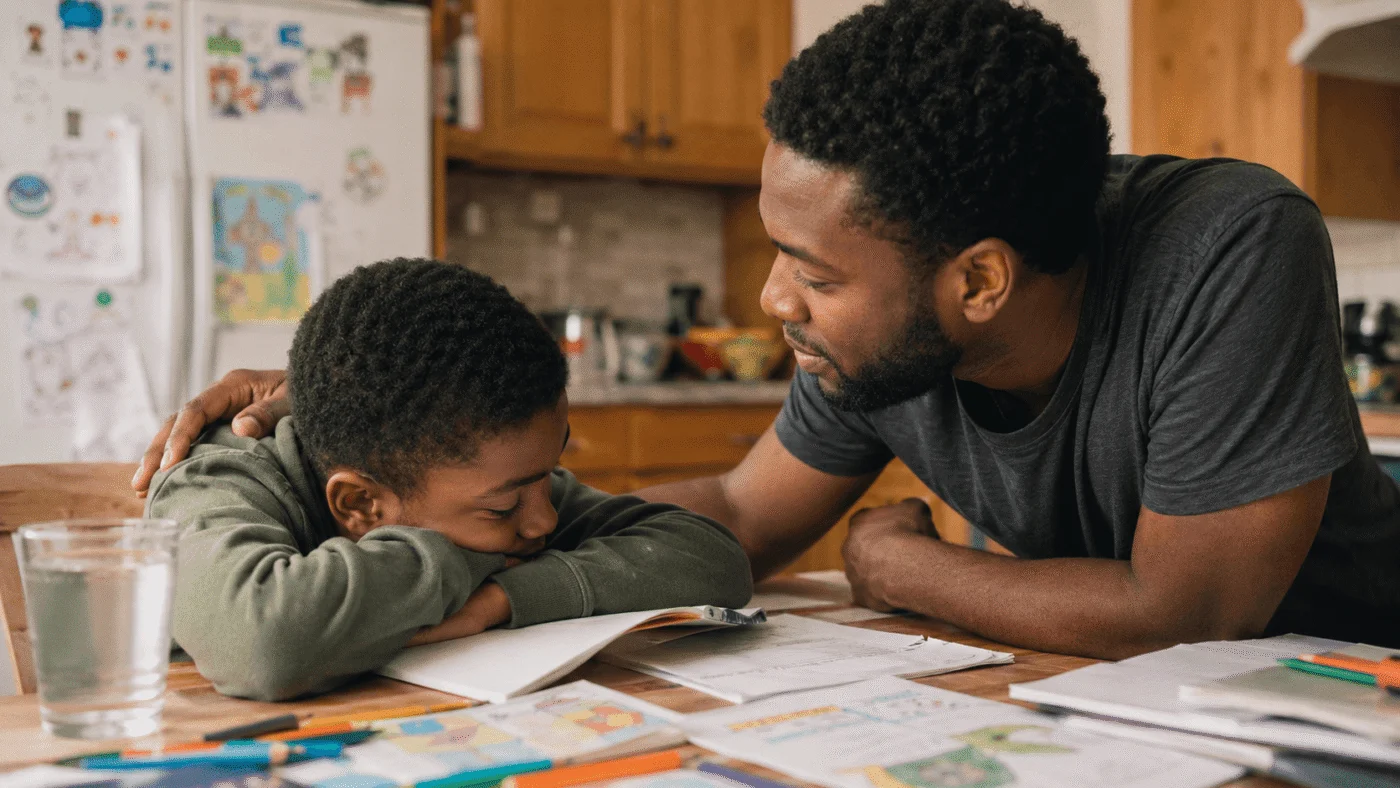
The pencil’s on the floor again, the homework hasn’t moved in twenty minutes, and you can feel it climbing up your own chest, that hot, why-won’t-you-just-do-it feeling. Right before you say the thing you’ll regret, try one swap that changes everything: your child isn’t giving you a hard time. They’re having one, and they don’t have the words for it yet.
That reframe comes straight from the way Dr. Gabor Maté talks about these kids not as difficult or defiant, but as unusually sensitive, with a nervous system that floods faster and recovers slower than most. The fidgeting, the tuning out, the explosion over a sock seam: that’s not manipulation. It’s a small person underwater, doing the only thing their brain knows to do when it’s overwhelmed.
Behavior is the language they have right now
Here’s the part that took me years to really feel, not just nod along to: a meltdown is not a choice your child is making at you. It’s what a flooded brain looks like from the outside. The thinking part (the bit that plans, waits, reasons) has gone offline, and no lecture can reach a brain that’s offline. You’re talking to the smoke alarm and wondering why it won’t discuss the fire.
Psychologist Ross Greene puts it in five words worth taping to your fridge: kids do well if they can. Not “if they want to.” If they can. When your child can’t, it’s because something (the task, the noise, the transition, the shame) is bigger than the skills they have in that exact second. The job stops being “make them comply” and becomes “find what’s too hard, and help.”
Why connection reaches them when consequences don’t
An ADHD kid usually feels everything louder, including criticism. Many of them carry a quiet, brutal certainty that they’re the bad one, the lazy one, the disappointment. And the smallest sharp look can set off a shame spiral that looks, from the outside, like rage or shutdown. Pile a punishment on top and you haven’t taught a lesson; you’ve confirmed their worst story about themselves. Parents carry an unsaid version of that too, and it gets admitted more often than you would think in the threads where parents say the hardest part out loud.
Connection does the opposite. When you stay calm beside a dysregulated child, your steady nervous system literally lends theirs some of its calm. Co-regulation, the researchers call it, and it works long before any words do. They borrow your okay-ness until they can find their own.
What helps
None of this is soft or permissive. It’s just aimed at the real target (the overwhelmed nervous system) instead of the smoke. A few things that move the needle:
- Name the need under the behavior. “This feels too big right now” lands better than “why are you being like this.” You’re showing them what’s happening inside, which is the first step to managing it.
- Co-regulate before you correct. Lower your voice, drop your shoulders, get on their level. Your calm is the intervention; the talk comes once they’re back.
- Shrink the moment. One sock, one line of homework, one small next step. A flooded brain can’t see the whole mountain, so give it the one stone in front of it.
- Repair after a rupture. You’ll lose it sometimes; everyone does. Going back (that was a lot for both of us, I’m sorry I shouted”) is not weakness. It’s the most powerful thing they’ll watch you do.
- Protect the relationship over the win. A clean kitchen is forgotten by morning. How they felt about themselves at that table is not.

When you lose it too
You will. Parenting a child whose nervous system runs hot will run yours hot as well, and there is no version of this where you stay serene every night. Maté’s whole point is that this isn’t a blame story, not for the child, and not for you. What your kid needs isn’t a perfect parent who never cracks; it’s one who comes back. The rupture, then the repair. That loop, over and over, is how a child learns they’re worth returning to.
So the next time the pencil hits the floor, see if you can read it as a flare, not a fight. Behind almost every “won’t” is a quiet “can’t”, and that’s a problem you can help with, together. It’s the same reframe that helps when anxiety looks like anger.
If you want to go deeper
- Scattered Minds · Gabor Maté (the lens this whole piece borrows)
- The Explosive Child · Ross Greene (“kids do well if they can”)
- Taking Charge of ADHD · Russell Barkley (the practical, authoritative guide)
- Mindful Parenting for ADHD · Mark Bertin (calming your side of the loop)
Books & tools for the hard moments
What helps when it is a hard time, not a hard kid. Honest picks, real Amazon ratings.
Ross Greene’s “kids do well if they can” approach, the reframe that finally makes the meltdowns make sense. As an Amazon Associate, Decoded Kids earns from qualifying purchases. Price checked live on Amazon.The Explosive Child

48 short, do-tonight strategies for focus and emotional regulation.
Steadies your own nervous system first, because calm is contagious.
Quiet compression that helps some kids settle when everything feels too big.
Frequently asked questions
No. What looks like defiance is usually a nervous system that has flooded. The thinking, planning part of the brain goes offline under stress. Kids do well when they can; when they can’t, something (a task, a transition, shame) has outgrown the skills they have in that moment. The behavior is a signal, not a choice made at you.
Children with ADHD tend to be more sensitive and to flood faster, so ordinary demands (noise, transitions, criticism, a hard task) can tip them over more quickly than other kids. That is also why the best gifts for an ADHD child tend to lower demand rather than add to it. They also often feel rejection and failure intensely, so a small sharp moment can trigger a shame spiral that looks like rage or withdrawal.
Punishment during a meltdown doesn’t teach (a flooded brain can’t take in the lesson), and it tends to add shame to a child who already feels like the “bad one.” Calm co-regulation first, then a conversation later when everyone’s settled, builds the skills far more effectively than consequences in the heat of the moment.
Connection and co-regulation: staying calm beside them lends their nervous system some of your steadiness. Name the need under the behavior, shrink the task to one small step, repair after the hard moments, and protect the relationship over winning the standoff. The strong relationship is what carries the skills.
3 comments
Good to know im not alone in this!
Good to know im not alone in this!
Share your thoughts

I'm for the parent whose mornings keep falling apart. I didn't train in ADHD - I lived it with three kids, then read the actual studies, so what you get here holds up in a real kitchen at 7:50 a.m. Specific, tested at home, never preachy.
More from MarcusWhat finally made your child's focus click - even a little?
No right answers here - tell us how it went. Someone reading needs to hear it.
Join the conversation
Years into this work and I still have to remind myself of it daily: the meltdown isn’t aimed at you, it’s happening to a child who has run out of room. If you’re here trying to understand instead of only correct, your kid is luckier than they know. Be as gentle with yourself tonight as you’re learning to be with them.