
Sensory Play Ideas That Calm a Wound-Up Kid
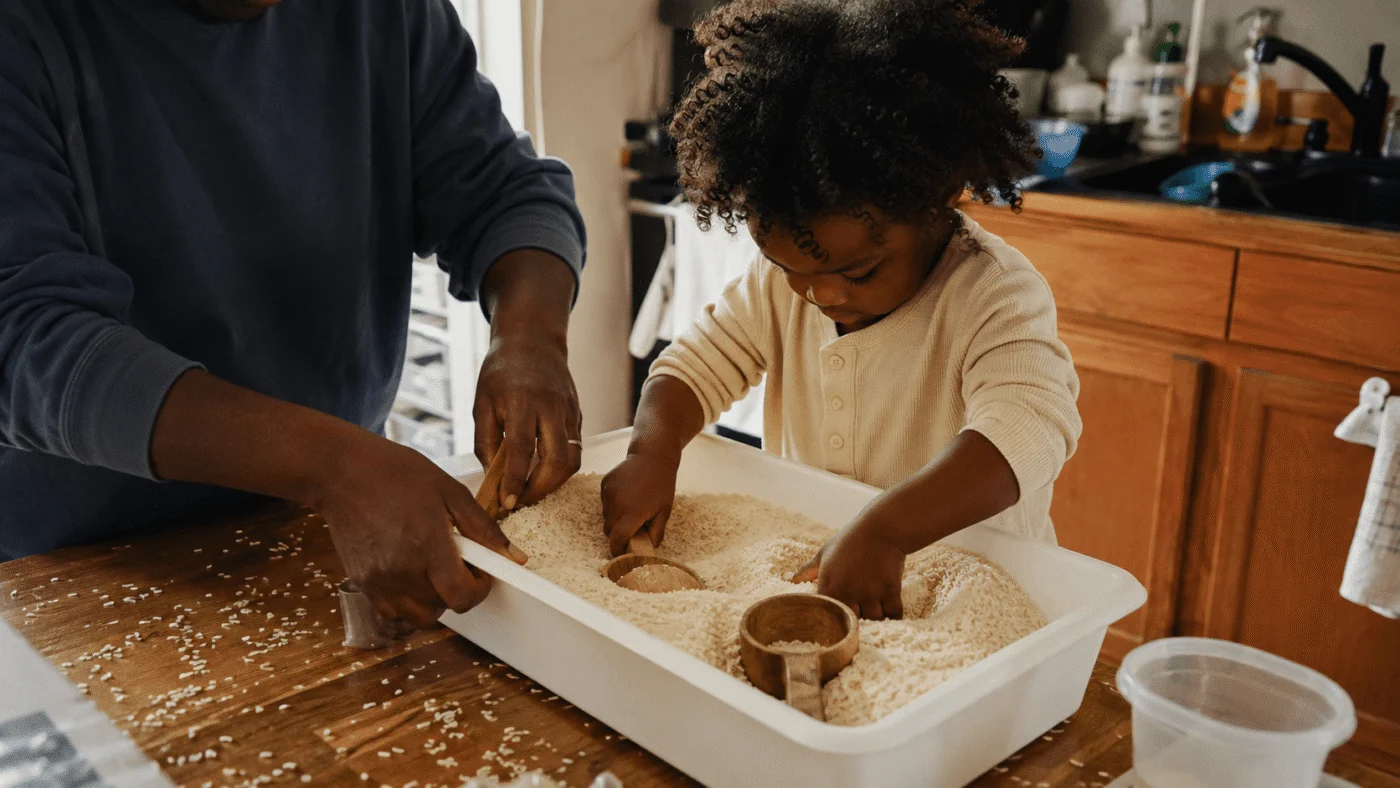
Some afternoons the air in the house just gets too loud, even when nobody is actually shouting. Everyone is wound a notch too tight, the TV is a battle, and you can feel a meltdown circling the kitchen like weather. This is the exact moment a tub of dried rice can quietly save your evening. Sensory play sounds like a Pinterest project you have no time for, but at its simplest it is just handing busy little hands something repetitive and satisfying to do, then watching a frazzled nervous system slowly come back down to earth.
Why does sensory play calm kids down?
It works on the body before it touches the mood. When a child runs their hands through rice, squishes a lump of dough or pours water back and forth between two cups, they are feeding the brain a steady stream of touch-and-movement information, the kind occupational therapists call regulating input. A scattered, overstimulated brain finds that repetition genuinely grounding. The American Academy of Pediatrics keeps pointing back to exactly this sort of unstructured, hands-on play as a real driver of self-regulation. You can almost watch the shoulders drop. That is a nervous system downshifting, not boredom setting in.

Ooly Chunkies 6 Mess Free Paint Sticks For Kids, Tempera Paint Sticks Kid Safe Colors, No Mess…
As an Amazon Associate, Decoded Kids earns from qualifying purchases. Price checked live on Amazon.
Easy sensory play ideas you can set up in five minutes
You do not need a craft closet or a single thing with the word “Montessori” on the label. Almost all of this already lives in your kitchen.
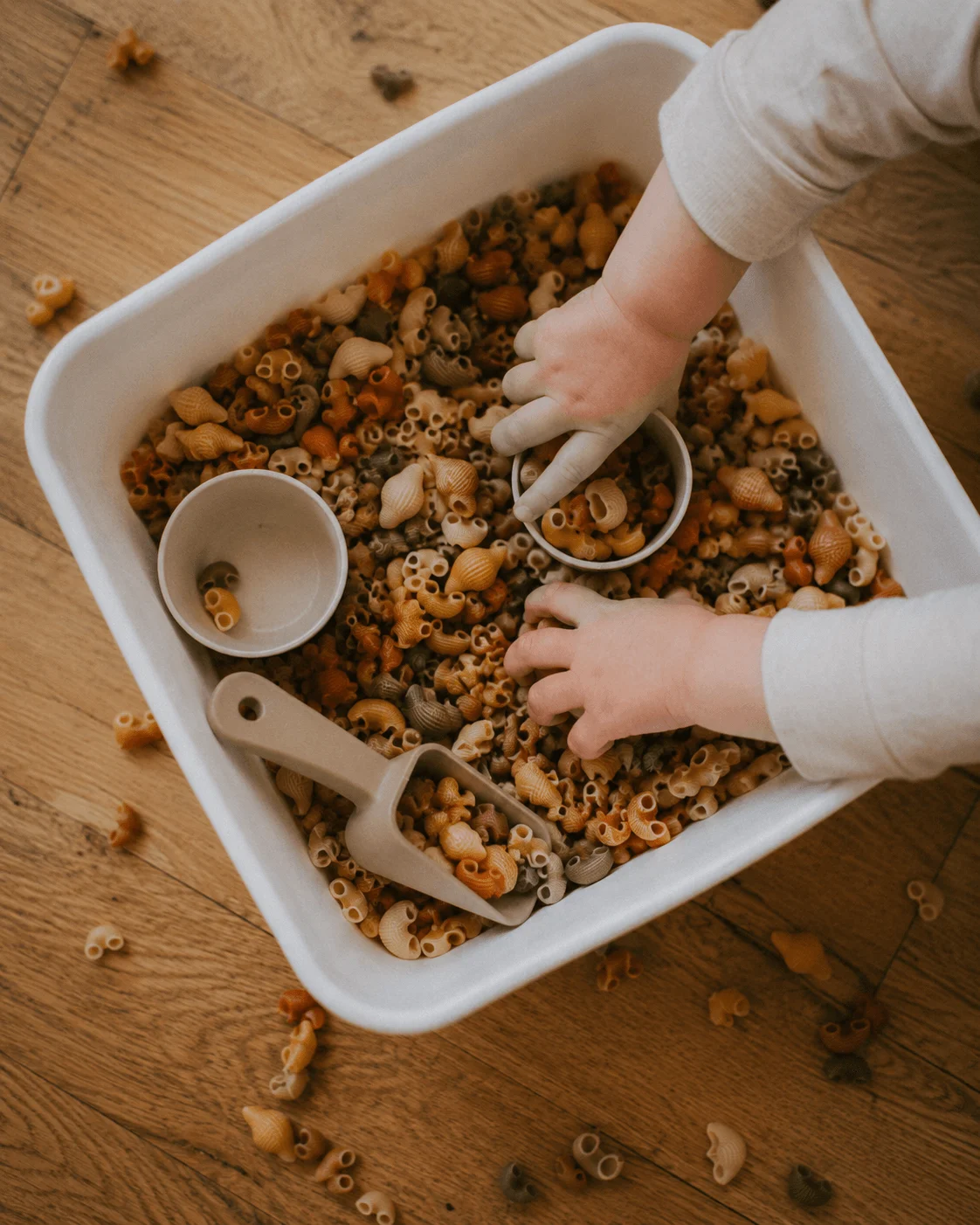
- A dry rice or pasta bin: a dish tub, a few cups of dried rice or pasta, a couple of scoops and little pots. That is the whole setup. (Toss the pasta with a drop of food coloring the night before if you want it to look pretty.)
- Water play at the sink: warm water, a few containers, a sponge, sleeves shoved up. Put a towel down and let them pour for as long as it holds.
- Playdough, store-bought or the two-minute flour-and-salt kind, for the child who just needs to squeeze something hard.
- A calm-down jar: water, a squirt of glitter glue, lid on tight, a good shake. They watch the glitter settle and their breathing tends to quietly follow it down.
- A scoop-and-pour tray of dried beans or oats when you want something chunkier and easier to sweep up.
The whole point is the repetition and the sitting-together, not the materials. A tub of rice does most of what a forty-pound kit promises.
When sensory play helps the most
It really earns its keep on the hard days. A child who comes home from school overstimulated and prickly, a kid with ADHD whose body cannot seem to find the off switch, a little one circling a big feeling they have no words for yet, those are the moments a sensory tray does its quiet work. It is also a low-pressure way to sit beside your child without needing them to talk to you. If the meltdowns run deeper than ordinary tiredness, it is worth understanding why a child’s anxiety can look like anger, but for the everyday end-of-day frazzle, a tub of rice is often genuinely enough.
Do you need to buy a sensory kit?
Honestly, no. The magic is in the repetition and the company, not the brand on the box, so save your money for the one or two things that genuinely earn it. If your child is sensory-seeking in a bigger, all-day way, the calming and sensory tools that get used are worth a look, and our round-up of the sensory tools worth buying covers the few that pull their weight. For most kids on most days, though, the kitchen cabinet has you covered.
So next time the house gets that wound-up hum, before you reach for the screen, try the rice. Tip it into a tub, hand over a scoop and sit down next to them for a bit. Some evenings that small, slightly messy ten minutes is the entire reset everybody needed. The vacuuming can wait.
Frequently asked questions
Sensory play is any activity that engages a child’s senses, mostly touch, but also sight and sound, through hands-on materials like rice, water, dough or sand. The repetitive input helps with focus, calm and early development.
From around 6 months with close supervision, right through elementary school. Just match the materials to the age and avoid small, swallowable items (like dried rice or beans) for children under 3 who still mouth things.
Yes. The steady, repetitive touch-and-movement input helps a busy nervous system settle, which can improve focus and ease the end-of-day overload many ADHD kids feel. It works well as a wind-down before homework or bed.
Plenty. Dried rice or pasta, warm water and cups, flour, oats, dried beans, homemade or store-bought playdough, and a glitter calm-down jar all work brilliantly. You almost never need a special kit.
Leave the first comment
Share your thoughts

I'm for the parent about to spend money they're not sure about. I buy the gadget, live with it, and give you the honest verdict - including the 'don't'. I've burned through enough hype to save you the cash, and when something truly earns its place, I'll show you exactly why.
More from TylerWhich tool earned its place - and which was a waste of money?
No right answers here - tell us how it went. Someone reading needs to hear it.
Join the conversation