
She Counted His Pile, Then She Counted Hers

She counted his pile, then she counted hers, and she did it twice to be sure.
Nobody teaches a child to do that. It arrives on its own somewhere around four, and once it has arrived you are no longer buying presents, you are managing an audit. Which is why the question of how many is not really a shopping question at all.
That last part catches people out every year, so it gets its own section further down.
What happens when the pile gets big

There is a small, tidy study on this that keeps coming back every December. Researchers at the University of Toledo watched 36 toddlers aged 18 to 30 months play on their own. Each child played once in a room holding four toys and once in a room holding sixteen. Same children, same room, different amount of stuff.
With four toys they played roughly twice as long, and they used each toy in more ways. Dumping, pretending, matching, stacking. With sixteen they skimmed.
Metz is careful about what this does and does not mean, and so should we be. It is not an argument for a sad Christmas. Her own advice is that if a child does receive a lot, you do not have to hand it all over on the same morning. Open some, put some away, bring it out in February when the weather is grim and everything is boring.
Which is a much easier sell than telling a grandparent to buy less.
The number that usually works
Ask around and you will get four gifts, or one for each of five categories, or a pile as tall as the child. None of them are wrong and all of them are somebody else’s family.
What tends to hold up is this. Three to six things opened on the day, of which one is the thing they actually asked for, one is something they did not know existed, and the rest are small. Then a separate small pile from other people, opened at a different time so it does not all become one blur.
If you want a structure rather than a number, the four-part version, want, need, wear and read, is popular for a reason and it also breaks in three specific ways. Those are set out in full in where the four gift rule stops working. Read it before you commit to it with two children of very different ages.
The money question is a separate one and it deserves to stay separate. A pile of six cheap things and a pile of six expensive things look identical to a five year old. If the amount is what is keeping you up, the number in your head probably belongs to somebody else.
Santa is a bookkeeping decision
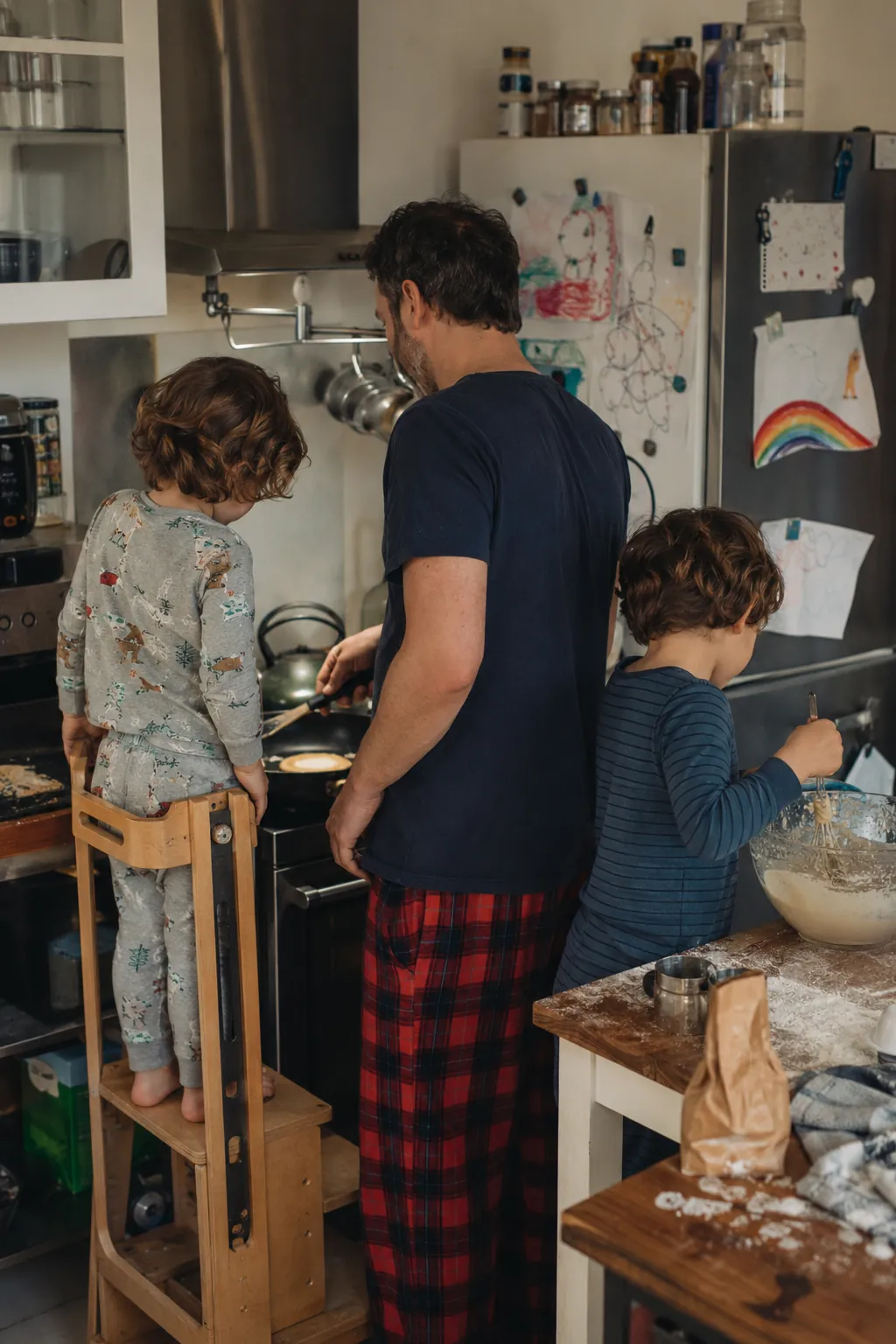
Here is the part that causes more damage than the total ever does. Who the gift is from.
If Santa brings the big present in your house, your child will find out in January that Santa brought her friend a games console and brought her a scooter. She will not conclude that her friend’s family has more money. She will conclude something about herself, or about whether she was good enough, and she will not say either of those out loud.
So a lot of families land on the same quiet rule. Santa brings something small and lovely, the stocking, one modest thing. The expensive item comes from the people in the house, who can be asked about it and thanked and, crucially, compared to nobody.
It also solves a problem inside your own family. Two children, four years apart, get very different value from the same amount of money. If Santa is the one handing it out, you cannot explain the gap. If you are the one handing it out, you can.
Siblings, and the counting
Equal is not the same as identical, and children under about seven do not agree with that sentence.
Three practical things. Keep the number of presents the same even when the contents differ wildly, because the number is what gets counted. Wrap them so the piles look alike from across the room. And if one child is getting a big single item, break the other child’s pile into more presents rather than adding more stuff.
In some houses the comparing is a daily event rather than a Christmas one. That has deeper roots than gift-wrap, and there is a full piece on why the fighting is rarely about the thing itself.
One thing worth over-spending on
If you are going to break your own rule for one item, break it for something still out on the floor in February. Toys with no fixed ending beat novelty every time, and the research above is a long way of saying so. If your child has reached the stage of not wanting toys at all, there is a version of this with almost nothing to unwrap.
A construction set with enough pieces to build more than one thing is the reliable version of that. It gets rebuilt, it survives siblings, and it does not stop being interesting the second week.
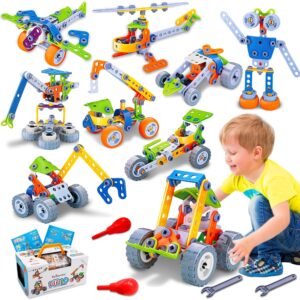
Tsomtto 10 in 1 STEM Toys for 4 5 6 7 8+ Year Old Boy Girl Birthday
As an Amazon Associate, Decoded Kids earns from qualifying purchases. Price checked live on Amazon.
The wider case for buying fewer, better things, and what to do with everything that is already in the house, sits in the piece about the volume problem.
Count on the twenty third, not the twenty fifth
Their own wish list is a coordination document more than a shopping order, and it helps to read it that way before you buy.
Lay it all out somewhere the children cannot go, a few days early, and look at it as piles rather than as a list. You will almost always find you have more than you thought and that one child has ended up with three more presents than the other by accident.
Fix it then, while fixing it is free. And if there is too much, put two things away for a wet Saturday in March. Nobody will miss them, which tells you something.
Leave the first comment
Share your thoughts
Frequently asked questions
There is no correct number, but three to six things opened on the day causes the least trouble in most families. One thing they asked for, one they did not know existed, and the rest small. Gifts from other people work better opened separately rather than all at once.
Most families find it easier when Santa brings something small. A child who gets a modest gift from Santa while a friend gets an expensive one draws conclusions about herself, not about household income. When the big item comes from you, it can be explained, thanked for and compared to nobody.
Keep the number of presents the same even when the contents differ. Under about seven, children count rather than value. If one child is getting a single large item, split the other child's pile into more presents instead of buying extra things to even it up.
A University of Toledo study watched toddlers play with four toys and then with sixteen. With four they played about twice as long and used each toy in more ways. It is not an argument against a good Christmas, more an argument for opening some of it in February.
Do not hand it all over on the same morning. Open some, put some away, and bring the rest out in late winter when everything in the house has stopped being interesting. That protects the quality of the play and gives you something for the grim weeks after the holidays.

I'm for the parent watching a feeling they can't name and wondering if it's normal. I've spent years close to the child-mental-health research and the specialists behind it, and I carry the heavy parts into plain language. I won't diagnose your child - I'll help you see what you're looking at, and say honestly when it's time to ask someone in person.
More from SofiaWhen did you last feel out of your depth - and what helped, even a little?
No right answers here - tell us how it went. Someone reading needs to hear it.
Join the conversation