
Nineteen Items, One of Them a Puppy

The list is nineteen items long. Four of them are the same toy in different colors, one is a puppy, and one is written so small you cannot read it and he will not tell you what it says.
Your mother has already texted asking what he wants. You send her a photo of the list. She replies with a question mark.
The template is not the hard part. What the list is for is the hard part, and almost nobody says it out loud.
Who the list is for

It is for the grandparents, the aunt, the godparent and the family friend. Every one of them is going to buy something. Without a list they buy the loudest thing in the store, or the thing your child already has, or a size they last saw him wearing in April.
Which means a good list is short, specific, and spread across price points. Two things under fifteen dollars, two around thirty, one bigger that several people could go in on together. Sizes written down. Links where a link exists. If you need somewhere to start, the wider gift guide is sorted by the same logic.
It also means the list is not a promise. Say that out loud to your child before they write it, in one sentence: this helps people choose, and not everything on it will come. Said in November it is information. Said on the morning of the twenty fifth it is an excuse.
The cap matters more than the categories
You have probably met the four slot version. Want, need, wear, read. It works, and we have written the case for it out in full in the piece on the four gift rule. What matters on a wish list is the part underneath it, which is the number.
The cap is doing more work than the categories. A nineteen item list produces a child who is scanning for what is missing. A four item list produces a child who gets the thing he asked for. It is the same argument as the one about the size of the pile, arriving a month earlier.
Schwartz was writing about adults in supermarkets, and it lands harder on a seven year old with a tablet. Narrowing the field is not meanness. It is the only way the choosing gets to mean anything.
How to get it written
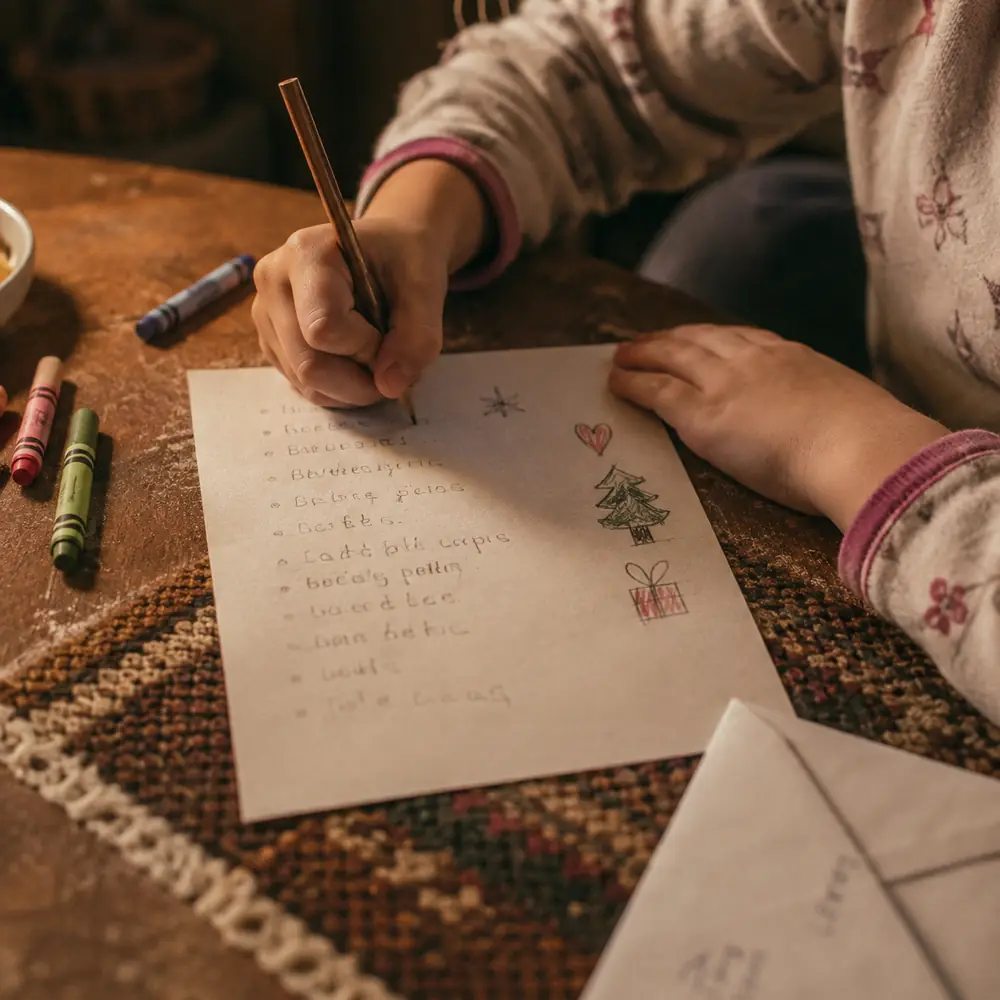
Do it in early November, before the advertising properly starts. Sit at a table with paper and no screen, because a list written while scrolling is a list of whatever was on screen.
Write the four headings first, then ask them out loud and scribe for anyone under about eight. Let the want slot be genuinely theirs, including the thing you find baffling. Argue with the price if you have to, never with the taste.
Then read it back the next day. Half the items will have quietly fallen off, which is the most useful thing that happens in this whole process. What survives a night’s sleep is what they actually want.
For a child who cannot think of anything, run it the other way. What did you use most this year? What broke? What did you borrow from somebody and not give back? That gets a real list out of a child who freezes at an open question, and the same approach works for the kid who says they do not want toys.
Templates, apps, and whether you need either
The free printable ones are fine and mostly identical. Four headings, a box each, a place for sizes. You can draw the same thing on a sheet of paper in thirty seconds, and a hand-drawn one gets kept.
The apps and shared registries have one real advantage, which is that relatives can mark an item as taken and stop the duplicates. Worth it if your family is big or spread out. Not worth the setup for two grandparents who will phone you anyway.
Whatever you use, keep one copy on the fridge and one in your notes app. The fridge one is for you and the child. The phone one is what you send when somebody asks, at the moment they ask, which is usually while you are doing something else.
How much any of it costs is a separate argument, and a real one. The number in your head about what is normal to spend is usually somebody else’s number, and it is worth checking before you price a list.
Keep the list after Christmas
Put it in a drawer rather than the recycling. In February, when a birthday comes around or somebody asks, you have a document written by the child themselves about what they wanted, and it is more accurate than anything you will remember.
And the unread one, the item written too small to read? Ask him again in January. He will tell you then, when nobody is going to buy it, which is usually when children say the true thing anyway.
Leave the first comment
Share your thoughts
Frequently asked questions
Four slots covers it: something they want, something they need, something to wear, something to read. The want slot is genuinely theirs, including the thing you find baffling. The other three absorb what you were buying anyway, which shrinks the pile without shrinking the morning.
Around four, and the cap matters more than the categories. A nineteen item list produces a child scanning the pile for what is missing. A four item list produces a child who gets the thing they asked for. Include a range of prices so relatives can pick something that suits what they meant to spend.
Early November, before the advertising really starts, at a table with paper and no screen. A list written while scrolling is a list of whatever was on screen. Read it back the next day, because what survives a night’s sleep is what they want.
Neither, unless your family is large or spread out. Four headings drawn on a sheet of paper does the same job and gets kept. Shared registries earn their setup only when several relatives need to mark items as taken to stop duplicates.
Say it once, in November, in a sentence: this helps people choose, and not everything on it will come. Said early it is information the child can plan around. Said on Christmas morning, the same sentence is an excuse, and it lands that way.
Which tool earned its place - and which was a waste of money?
No right answers here - tell us how it went. Someone reading needs to hear it.
Join the conversation