
The Number in Your Head Belongs to Somebody Else

Somebody at work says what they spent per kid and you do the math on the way to the car.
Not out loud. Just quietly, against your own number, and then all the way home you are working out whether yours is mean.
What follows is not a budgeting sermon. It is the three or four decisions that change the number, and the one that changes how the day feels. One of those decisions is fewer but better, which is the argument for a personalized baby gift over another pile.
What everyone else is really spending
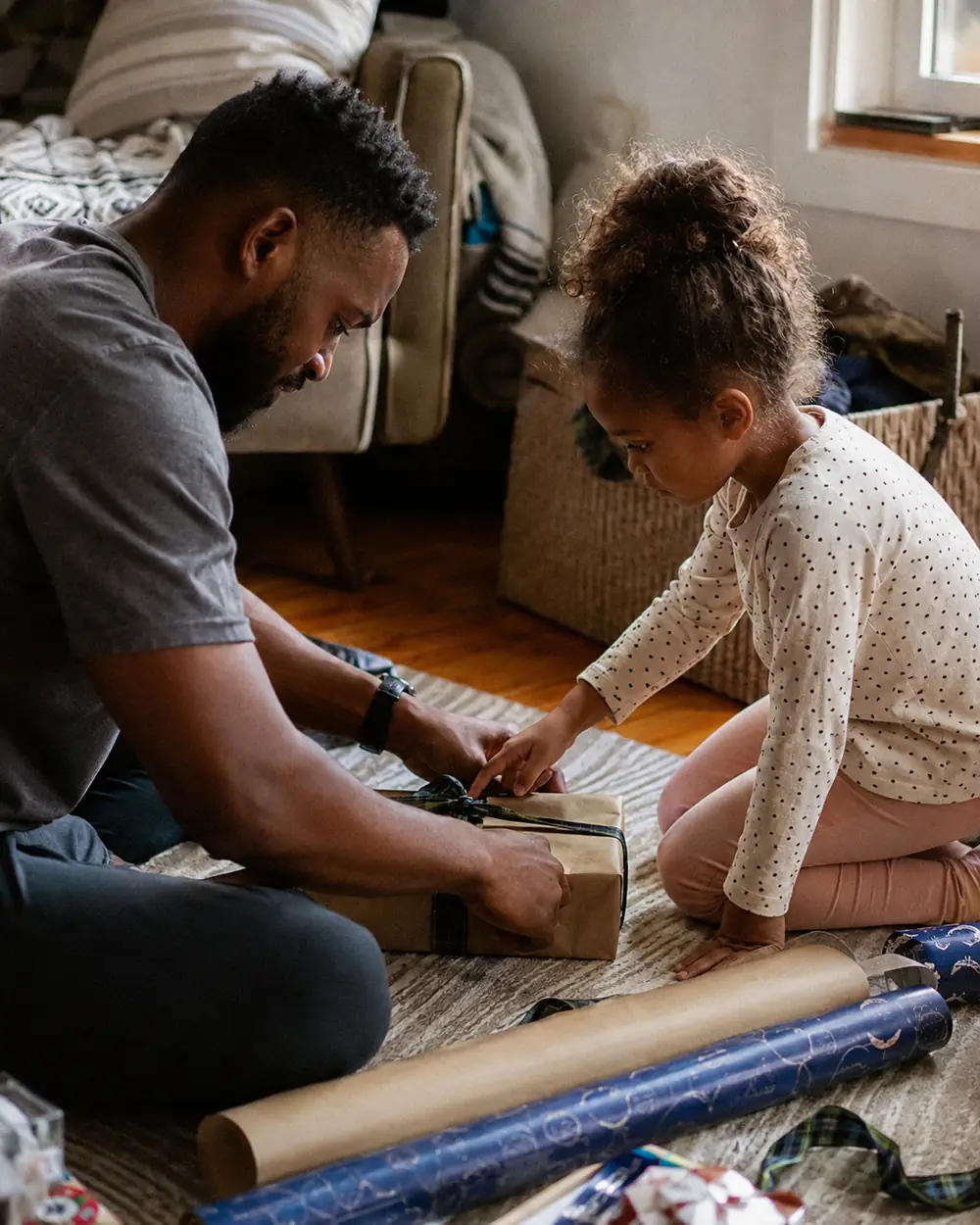
Less than they say, and less than last year.
Deloitte asked 4,270 shoppers at the end of last summer what they planned to spend. The answer came back at about $1,595 for the season, which sounds enormous until you notice it covers everything: presents, the food, the travel, the socks for the school concert. It is not per child. It is the whole of December. The quickest way to cut that number across a big family is to change the format, and a family gift exchange does exactly that.
The other number in that survey is the one that made me sit up. The average shopper expects to buy eight gifts this year. Last year it was nine. That is one fewer present, across a whole country, and it is the clearest signal in the data that the pressure you feel is not coming from what other families are doing.
The pull of tradition is a polite way of saying most of us overspend on purpose, then feel bad about it in January. Worth knowing that the feeling is designed, not personal. It is also worth knowing that a bigger pile does not buy a better morning, and sometimes buys the flat face at the third present instead.
Pick the number before you see anything
October, or the first week of November at the latest. Before the adverts start and before anyone at school mentions what they got.
One number for the whole household, not one per child, because per child budgets quietly climb every time you look at them. Then split it: presents, food, travel, the extras nobody plans for. School concert outfit. The teacher gift. Gas to your mom’s. Those extras are where a good budget usually dies, and they are the reason the honest figure covers all of December rather than just the pile under the tree.
Write it on paper and put it somewhere annoying. The fridge, the back of the front door. A number you can see is a number that argues back at eleven at night when the app is open.
If money is genuinely tight this year rather than just uncomfortable, the wider picture is worth an hour of your time, and we went through it properly in the piece on running a household on one income.
Four to five things, and one of them is boring
The version that works in most houses is small and repeatable. Something they want. Something they need. Something to wear. Something to read. Some families add one to share.
The structure does two useful jobs. It caps the pile without you having to say no five times in December, and it gives relatives a slot to aim at when they ask what to get, which is the moment most budgets get blown by somebody else’s generosity.
It also protects you from the thing that actually goes wrong, which is not spending too little. It is spending a lot on quantity and ending up with a room that nobody can walk through by February. If that is already your house, the toy pile has its own piece.
The bit nobody costs in
The other thing that gets skipped is what the spending is meant to buy. Nobody is spending $1,595 on plastic. They are spending it on a feeling, and the feeling is mostly produced by the free parts of the day. That is not a consolation prize, it is what the research on family traditions keeps finding.
If it is still not enough

Then say a true thing rather than a brave one. “We are doing a smaller Christmas this year and I have picked the best bits” lands better with a nine year old than a strained performance of plenty, and children are much better at detecting the strain than at counting packages.
Buy secondhand for the big item and new for the small one, because the small one is the one that gets opened in front of everybody. Start in October if you can. Check what is already in the loft, because roughly one in three of us has hidden something so well we forgot it.
And when somebody at work says their number, let it be their number. They have a different mortgage, a different set of grandparents, and possibly a different January than the one they are letting on about. If you want an easier version of that conversation, the piece on what to ask for yourself covers the other half of it.
Mine was written on the back of an envelope. It survived until the twelfth of December, which I am told is respectable.
Leave the first comment
Share your thoughts
Frequently asked questions
There is no correct figure, and per child rules climb every year you use them. Set one number for the whole household in October, split it between presents, food, travel and extras, and write it down. US shoppers expect to spend about $1,595 across the entire season, not per child.
Published averages are almost always household totals rather than per child figures, which is why they feel so high. Deloitte puts the 2025 season at roughly $1,595 per shopper for everything, down 10 percent on the year before, with eight gifts bought instead of nine.
Four or five is the structure most families settle on: something they want, need, wear and read, plus one to share. It caps the pile without a fight and gives relatives a slot to aim at, which is where most budgets get broken.
Say it plainly, early, and without apology. Children cope well with a smaller Christmas that was explained and badly with a strained performance of plenty. Name what you are keeping rather than listing what is gone, and give them one thing to look forward to by date.
Do not try to match it, because matching is how a budget doubles in two seasons. Children register atmosphere more than totals, and the parent who was calm is the one they describe years later. Keep your own number and let the gap exist.

I'm for the parent doing it largely alone. I've done the single-dad decade - two homes, one income, the handovers, the very quiet Tuesdays - and I write from the far side of most of those days, with humor and hard-won calm. Not advice from above; a hand back from a few steps up the road.
More from DiegoWhat's getting you through right now? Be honest - we're all figuring it out.
No right answers here - tell us how it went. Someone reading needs to hear it.
Join the conversation