
Two Lines in the Nativity and She Has Been Sick Twice
Two lines. She has known them since October. She says them to the dog.
And on Tuesday morning her stomach hurt, and on Thursday she cried getting into the car, and now it is the day and she is white and asking whether she has to.
What follows is the version that works when there are three days left, not the version that assumes you had a term to prepare.
Why the stomach goes first
Because children feel fear in the body long before they can name it in the head.
Ask a seven year old if she is nervous and she will say no, quite honestly. Then she is sick in the hall.
The stomach ache. The sore head. The sudden need for the toilet at twenty to nine. All of it is one alarm system, doing its job in the only language it has.
It is also very common. The biggest survey of its kind asked 10,123 American teenagers, and worry of some kind came out top, at just under a third of them.
Stage nerves sit at the mild end of that. Most children who get them need nothing more than a bit of practice and a parent who does not panic.
The bit that trips families up is that the fear was never about the lines. It is about being watched while getting it wrong. In front of everyone. For ever.
Which is a fair thing to be scared of. Say that to her, out loud, in roughly those words.
Four clauses, and every one of them is doing work. It names the feeling, it declines to argue with it, it puts you in the room, and it points at getting through rather than getting out. Nothing in there promises she will enjoy it.
The week before
Rehearse in the actual conditions, not in comfortable ones. Reciting lines on the sofa is a different task from standing up. Have her stand at one end of the kitchen and say them to you at the other end, loudly, twice, then leave it alone.
Rehearse getting it wrong, too. Forget a line on purpose and show her what to do next.
The disaster she is picturing is not the mistake. It is the frozen silence after it. A child who has practiced the recovery has a plan. A child who has only practiced the perfect run has nothing.
Then speak to the teacher. Better still, have her ask while you stand nearby.
Teachers do this every year. Most are glad to move somebody to the back row, or to hand them a shepherd’s crook so their hands have a job. The ask costs one email and changes the shape of the day.
For a child who already has a hard time with school mornings, the physical symptoms will look familiar, and the piece on the stomach ache that arrives at 8:30 covers the same pattern in its everyday form.
What helps them name it
Younger children often cannot find the word for what they are feeling, and “I feel sick” is the nearest thing they have. Giving them a bigger vocabulary genuinely helps, because a feeling with a name is easier to sit with than a feeling that is just a stomach.
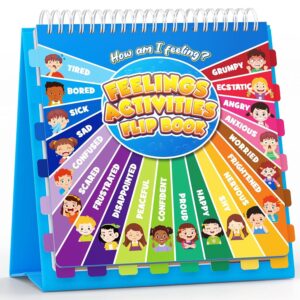
D-FantiX Feelings Wheel Emotions Book
As an Amazon Associate, Decoded Kids earns from qualifying purchases. Price checked live on Amazon.
Do it on an ordinary Tuesday, not ten minutes before the concert. Emotional vocabulary is learned in calm and used under pressure, never the other way round.
On the day
Keep the morning ordinary. Same breakfast, same route, no big talk about the big day. Say once, in the car, that you will be in the audience and that you will be there afterwards either way.
Then stop offering comfort on a loop. It feels kind and it acts as fuel, because every round tells her brain that this really is a thing worth checking. Answer once, warmly, and change the subject.
If the worry has started showing up as temper instead of tears, that is the same alarm wearing a different coat, and the piece on fear that arrives as anger unpicks it.
And if she talks herself into a state on the way in, keep your own words short. More explaining tends to make the moment bigger rather than smaller, which is the same mechanism we went through in the piece on talking during a meltdown.
Afterwards, whatever happened
Praise the going, not the performing. “You were scared and you went on anyway” is the sentence that pays off next November. “You were brilliant” is nice and does nothing, because she knows exactly how it went and now suspects your judgment.
If she froze, say so plainly and without weight. It happened, it was horrible for about nine seconds, and it is over.
Children take the temperature of a day from how the adults describe it later. Keep the description light and the memory stays light. That also matters for the child who is already sure that everyone is judging her, which is the ground covered in the piece on nobody likes me.
Book the next one sooner rather than later. A school assembly, a reading in class, anything small. The gap between performances is where the fear grows back, and one manageable go in February does more than a whole conversation in December.
Where it stops being ordinary nerves is when it starts to spread: refusing to answer in class, dropping the club she liked, avoiding birthday parties. That is worth a conversation with school and your doctor, and the wider piece on school anxiety maps out what that looks like.
She did the two lines. Said them far too fast, at the floor, and then beamed for the rest of the week.
Leave the first comment
Share your thoughts
Frequently asked questions
Shrink the job rather than removing it. One line instead of four, the back row instead of the front, a prop to hold. Rehearse standing up and rehearse forgetting a line, so they have a plan for the silence they are actually afraid of.
Try not to. Pulling out brings immediate relief and makes the next one harder, because relief teaches the brain that avoiding the thing worked. A reduced part they can manage is far better than either the full part or staying home.
Children register fear physically before they can name it. Stomach aches, headaches and sudden toilet urgency are the same alarm response adults feel as a racing heart. It is real physical discomfort, not an excuse, and it usually settles once the thing starts.
Name the fear, do not argue with it, and say you will be there. Avoid promising it will be brilliant or that nobody is watching, because both are untrue and undermine you. Then answer any reassurance seeking once and change the subject.
When it spreads beyond the stage. A child who stops answering in class, drops activities they used to enjoy, or begins avoiding parties and social events is showing a broader pattern worth raising with school and your doctor rather than waiting out.

I'm for the parent watching a feeling they can't name and wondering if it's normal. I've spent years close to the child-mental-health research and the specialists behind it, and I carry the heavy parts into plain language. I won't diagnose your child - I'll help you see what you're looking at, and say honestly when it's time to ask someone in person.
More from SofiaWhen did you last feel out of your depth - and what helped, even a little?
No right answers here - tell us how it went. Someone reading needs to hear it.
Join the conversation