
9 Things That Do the School-Morning Nagging For You

The school morning is hard for one boring reason. The plan lives in your head, and your child cannot see it.
So you read it out. Shoes. Teeth. Bag. Then again, louder. By the third round nobody is having a good time, and none of it was really about shoes.
Everything below moves one piece of that plan out of your head and onto a wall, a disc or a clock face. Nine picks in three parts, because a morning needs all three: something that says what comes next, something that shows time passing, and something that starts the day so you are not the alarm.
Ratings are live Amazon ratings, never ours.
- 1
 153-piece daily schedule magnetsBest for a fridge everyone walks past
 - 2
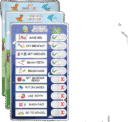 Sliding 3-in-1 routine chartBest for a child who likes to move a slider
 - 3
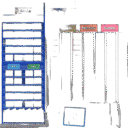 Pocket chart visual scheduleBest when the order changes day to day
 - 4
 Time Timer Home MODBest single thing for the 7am hour
 - 5
 Timer with a pre-alarmBest for a child who hates being surprised
 - 6
 Second timer for the bathroomBest cheap way to cover the slow room
 - 7
 LittleHippo MellaBest for a child who wakes the house at 5am
 - 8
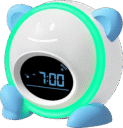 Budget ok-to-wake clockBest cheaper version of the same job
 - 9
 Magnetic token boardBest for the week the whole thing stalls
Part one
The part that says what comes next

A chart is not a motivation tool. It is a memory tool, and that difference decides whether you buy the right one.
Children under about eight lose the thread of a five-step job partway through. Not because they stopped caring, but because working memory is still being built. A chart holds the steps so their head does not have to.
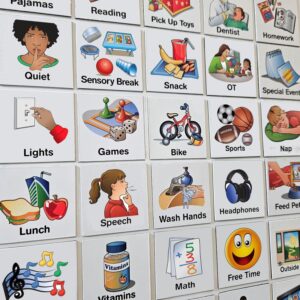
153 pc Daily Visual Schedule Magnets for Kids-Create Healthy
As an Amazon Associate, Decoded Kids earns from qualifying purchases. Price checked live on Amazon.
Two rules make the difference. Put it where the job happens, so shoes and bag live by the door, not in the bedroom. And keep it to four or five steps, because a chart with eleven boxes gets ignored by everyone including you.
Try it in paper first if you are not sure it will land. Our free printable visual schedule costs nothing and tells you within a week whether your child uses it. If you want the version built around chores rather than the clock, the chore charts that survive the week you buy them is the deeper comparison.
Part two
The part that shows time passing
Five more minutes means nothing to a six year old. It is a sound adults make before something annoying happens.
A visual timer fixes that by turning time into an amount you can see going away. It also moves the argument off you, because the disc is the one saying stop, and a disc cannot be negotiated with.
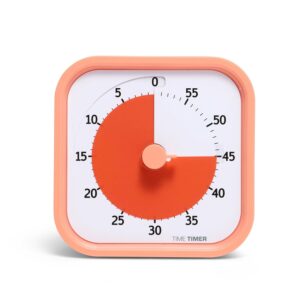
Silent matters more than you think. A ticking timer is a small stress machine for an anxious child, and half the cheap ones tick. So does the ending: a shrill beep can undo the calm the timer just built, which is why a soft chime or a light is worth paying for.
We have looked at a lot of these. If you want the head to head rather than the shortlist, read the visual timers we would buy, or the long Time Timer MOD review if you have already decided to spend properly.
Part three
The part that starts the day without you
A morning that starts at 5am is not a routine problem. It is a sleep problem wearing a routine costume.
An ok-to-wake clock gives a child one clear rule they can check themselves in the dark. Red means stay in your room. Green means come and find me. Most families see the change in about two weeks, and it fails mainly when the light is used as a punishment rather than a signal.
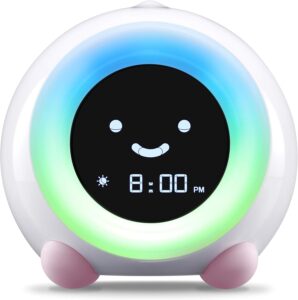
LittleHippo Mella: Kids Alarm Clock, Ready to Rise Children’s Sleep Trainer, Night Light, Sound…
We wrote a full Mella review because it is the one parents ask about most. The short version is that it earns its price if you need the night light and sound machine too, and does not if you only need the color to change.
The token board is the odd one out here, and it is deliberate. Every system stalls in week three. A board that makes progress visible for two weeks is usually enough to get the habit over the hump, and then you can quietly retire it.
What we would skip
Sticker charts that pay per step. They work for about ten days and then the price goes up. A chart that shows the order is doing something different from a chart that buys behavior, and only one of them still works in November.
Anything with a screen in it. A tablet on the wall as a family planner sounds tidy and turns into a negotiation about the tablet. The whole point is a thing that cannot do anything else.
The honest caveat: we have not tested every item here in our own homes. Ratings are live Amazon ratings. Picks are chosen on whether the thing does a job your voice is currently doing, and where we do not know something, we say so.
None of this is the routine
The kit is not the system. It is scaffolding for a system you still have to run for a couple of weeks before it runs itself.
What actually changes the morning is smaller than any of it. Decide the order the night before, put the chart where the job happens, and let the timer be the one who says no. Then say less. That last part is the hardest and the one that works.
The chart takes an extra beating in January, when two weeks off have wiped the habit and the whole thing has to start again from cold.
The rest of the routine toolkit
Frequently asked questions
Pictures work from about two and a half, once a child can match a photo to a real object. Words can be added around five or six. The useful window is roughly three to nine, and children who are still learning to hold several steps in their head keep getting value from it for years longer.
That is normal, and it usually means the chart became wallpaper. Move it, shrink it to four steps, or hand the job over by letting your child tick it off themselves. If it was a reward chart, the stall is the reward losing value rather than the routine failing.
They solve different problems. A chart answers what comes next. A timer answers how long have I got. If mornings stall on children forgetting the order, start with the chart. If they stall on one step going on forever, start with the timer.
Leave the first comment
Share your thoughts

I'm for the parent about to spend money they're not sure about. I buy the gadget, live with it, and give you the honest verdict - including the 'don't'. I've burned through enough hype to save you the cash, and when something truly earns its place, I'll show you exactly why.
More from TylerWhich tool earned its place - and which was a waste of money?
No right answers here - tell us how it went. Someone reading needs to hear it.
Join the conversation