
The First Week Back After Winter Break Is Its Own Sport

Two weeks off does not sound like enough time to lose a routine. It is.
By the second Tuesday of the break, bedtime has drifted an hour. Nobody has worn shoes with laces. The bag is somewhere. Then the alarm goes off in the dark and everyone is asked to do nine things they have not done since before Christmas.
The fix is not a stricter morning. It is putting a few decisions somewhere other than your own head, in the week before you need them.
Nine things in three groups, in the order the morning actually happens. Ratings are live Amazon numbers at the time of writing.
- 1
 A magnetic dry erase chartBest if you only buy one thing
 - 2
 An acrylic chart that lives on the wallBest when the fridge is already full
 - 3
 A light up note boardBest for a child who ignores paper
 - 4
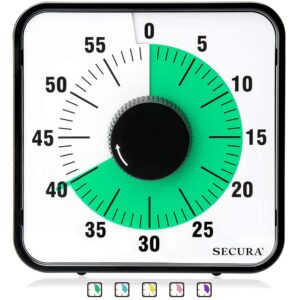
 A sixty minute visual timerBest for seeing time run out
 - 5
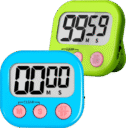 Two small digital timersBest for two children at once
 - 6
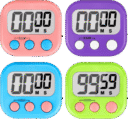 A quiet timer for homeworkBest for the evening restart
 - 7
 Folding noise canceling headphonesBest for a loud, dark bus stop
 - 8
 A two pound lap padBest for the four o’clock crash
 - 9
 A metal fidget cubeBest for the child who needs hands busy
Group one
The board that ends the morning negotiation
Most January mornings go wrong in the same way. You know the seven steps. Your child knows maybe three of them, in no order, and asks you to supply the rest one at a time. So you become the list. You say the list out loud, twice, and by step five you are saying it in a voice you do not love.
A board takes that job off you. Not because children love charts, but because pointing at a wall is a different act from telling somebody off. The child looks at the board instead of at your face, and the whole exchange loses its heat.
The plain magnetic version is the one to start with. It sticks to the fridge, it wipes clean, and you can rewrite the whole routine in February when it stops fitting. Nothing to charge, nothing to lose.
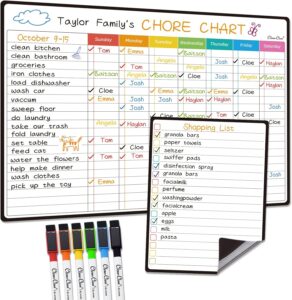
Magnetic Dry Erase Chore Chart
As an Amazon Associate, Decoded Kids earns from qualifying purchases. Price checked live on Amazon.
If your fridge is already covered in artwork and permission slips, the acrylic version hangs on a wall instead. It looks like something you chose rather than something you coped with. Same job, better in a kitchen where the fridge is not free real estate. We go deeper into what makes a chart survive past week two in the chore chart guide.
Some children walk straight past paper. A light up board buys you a few more weeks of the same idea, because a glowing note reads as a message rather than as a rule. It is the least serious item here and it works more often than it should.
Group two
The clock, because January is a time problem

Winter adds a layer to every part of the morning, and coats are the obvious one. What is less obvious is that your old timings are now wrong. The routine that worked in October assumed no snowsuit, no gloves, no defrosting anything.
Young children do not experience minutes. They experience a parent getting tense for no visible reason. A timer with a colored disc turns time into something with a size. The arguing stops being about fairness and starts being about a shape getting smaller.
Buy the big one first. It sits on the counter where both of you can see it, and it does not need a screen.
With two children the single timer gets fought over, which is its own small tax on the morning. A two pack costs barely more and lets each of them own their own countdown. The visual schedule piece covers how to pair a timer with a list without making the whole kitchen into a classroom.
Homework is the other January restart, and it usually arrives about four days after school does. A quiet timer matters here in a way it does not in the morning, because a ticking one gives an already reluctant child something to be annoyed at.
Group three
The walk in the dark and the crash after it
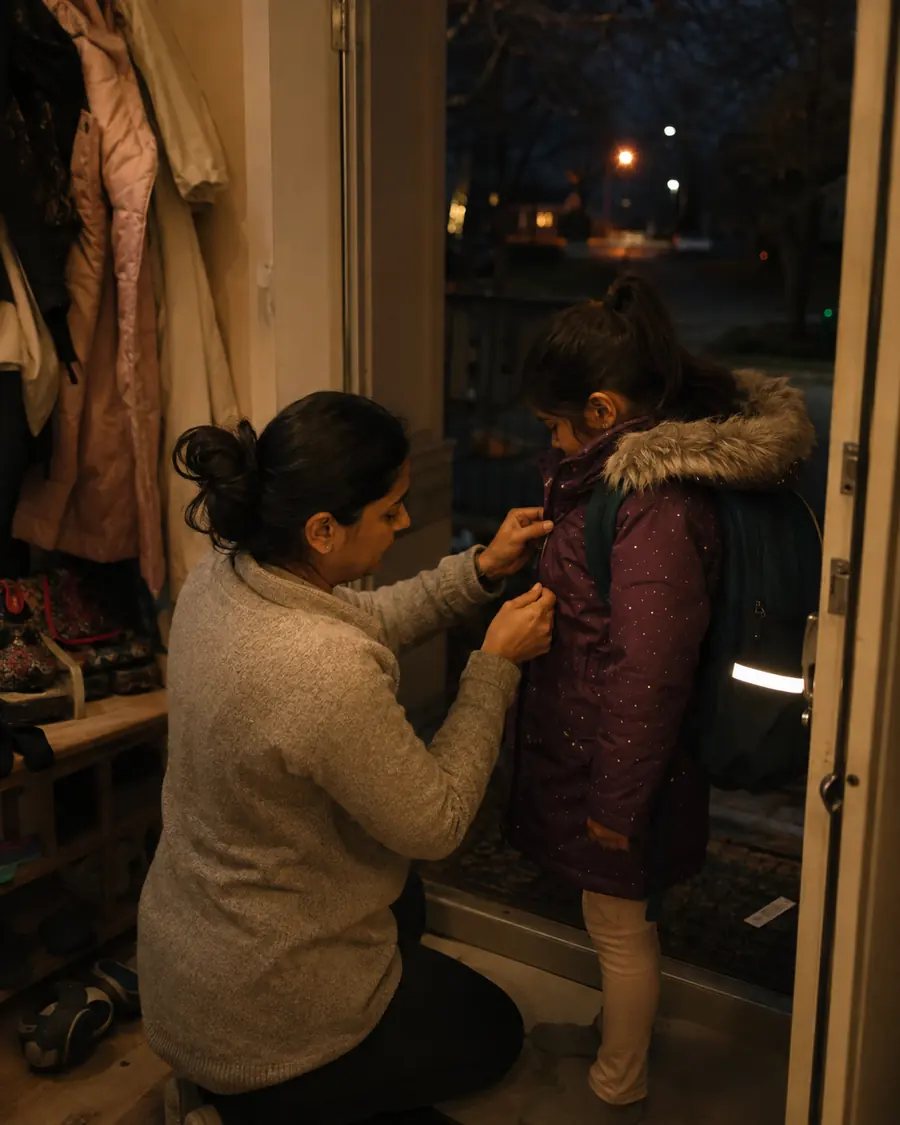
The bit nobody warns you about is that the day now starts and ends in the dark. A bus stop in December is a different place from a bus stop in September. Louder, closer, everyone in hoods, and for some children that is the hardest ten minutes of the day.
Folding headphones live in the bag and come out for exactly that ten minutes. They are not for the classroom and they are not a permanent solution to noise, but they turn a bad wait into a survivable one. If noise is a year round problem rather than a January one, our headphone comparison is the honest place to start.

Then there is the crash. Children who have been off for two weeks come home from the first days back completely empty, and it usually lands somewhere between four and five. A light lap pad on the sofa for twenty minutes is a small, low effort answer. We compared the weights properly in the lap pad review, and two pounds is the right starting point for most children.
For the child whose hands need a job while the rest of them sits still, a metal cube is quieter than most fidgets and less likely to end up confiscated. It is a school bag item rather than a desk item.
What we would skip in January
A new lunch kit to mark the fresh start.January is the worst month to introduce a container your child has to learn. If lunch is the problem, fix it in the warm lunch way rather than the new equipment way.
A sunrise alarm clock for a primary age child.They are lovely, and they mostly help adults. A child who is waking badly in January is usually short on sleep rather than short on light, and the fix is the bedtime end.
Starting all of this on the first morning back.Put the board up three days before term, while everyone is still relaxed. A system introduced at 7:40 on a Monday is not a system, it is an ambush.
The honest caveat:none of these makes a tired child less tired. They remove the arguments around the tiredness, which is a smaller job than it sounds and still worth doing.
More on getting the routine back
Frequently asked questions
Most children look normal again by the end of the first full week, and tired for about two. The sleep debt is the slow part. If bedtime drifted by an hour over the break, pull it back in fifteen minute steps across four nights rather than all at once, starting a few days before term.
Yes, and three days is usually enough. Run the wake up time and the morning steps while there is nowhere to be, so the first real morning is a repeat rather than a debut. It also lets you find out that the boots no longer fit on a day when that is merely annoying.
They are spending the whole day holding it together in a place with rules, after two weeks of not having to. What comes out at home is the leftover. Expect a short fuse between four and five, feed them early, and save any real conversation for after that window has passed.
Leave the first comment
Share your thoughts

I'm for the parent about to spend money they're not sure about. I buy the gadget, live with it, and give you the honest verdict - including the 'don't'. I've burned through enough hype to save you the cash, and when something truly earns its place, I'll show you exactly why.
More from TylerWhich tool earned its place - and which was a waste of money?
No right answers here - tell us how it went. Someone reading needs to hear it.
Join the conversation