
Cold Is a Layering Problem, Not a Coat Problem
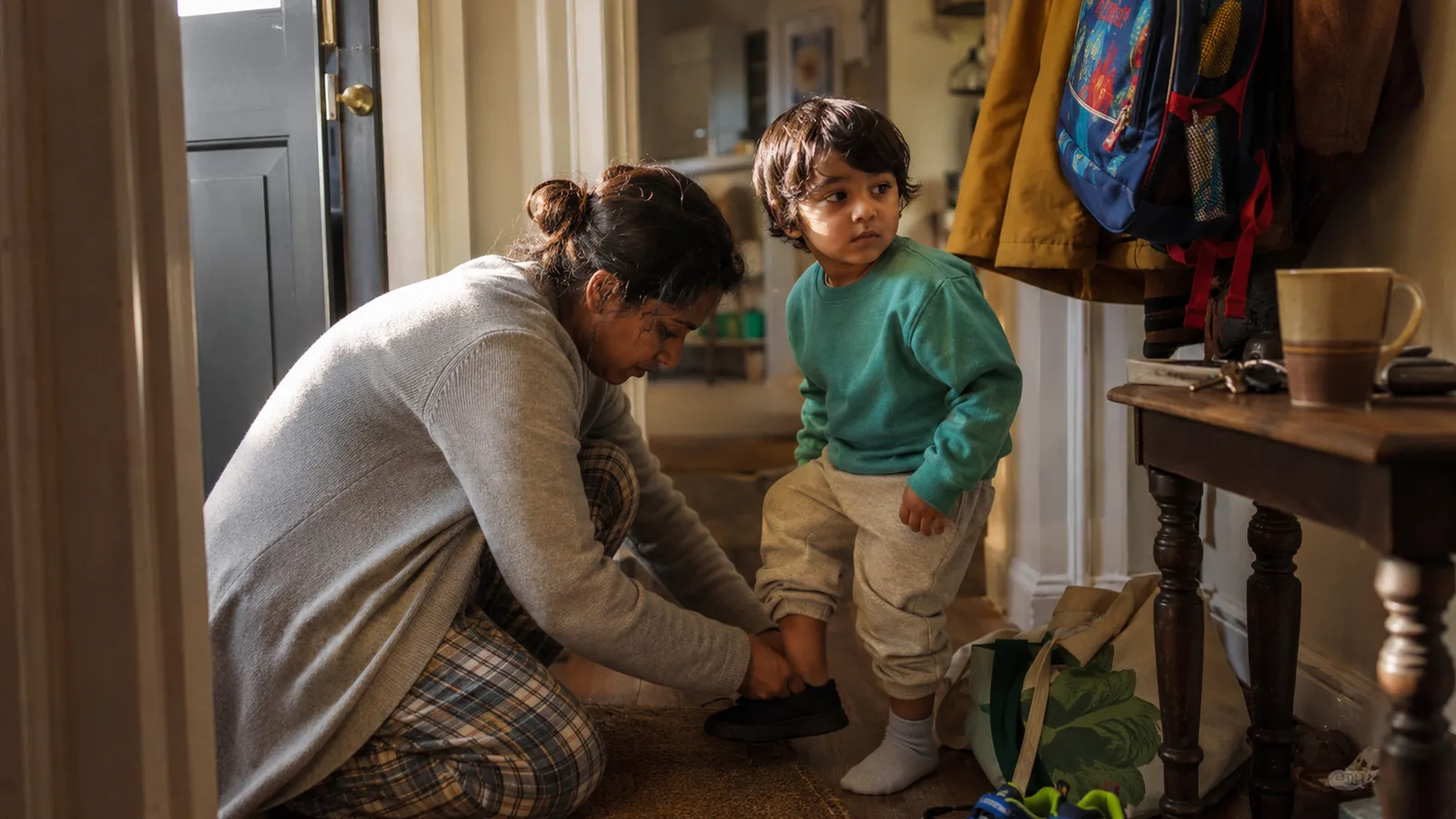
Eight minutes at the front door, every morning, from the end of October until roughly March.
That is what winter costs a household with small children, and most of it is spent on the wrong problem. We buy a bigger coat. The child is still cold, or boiling, or refusing, and the coat was never the thing that was going to fix it.
The rest of this is the detail, including the bits that are genuinely about safety rather than comfort.
Why one big coat does not work
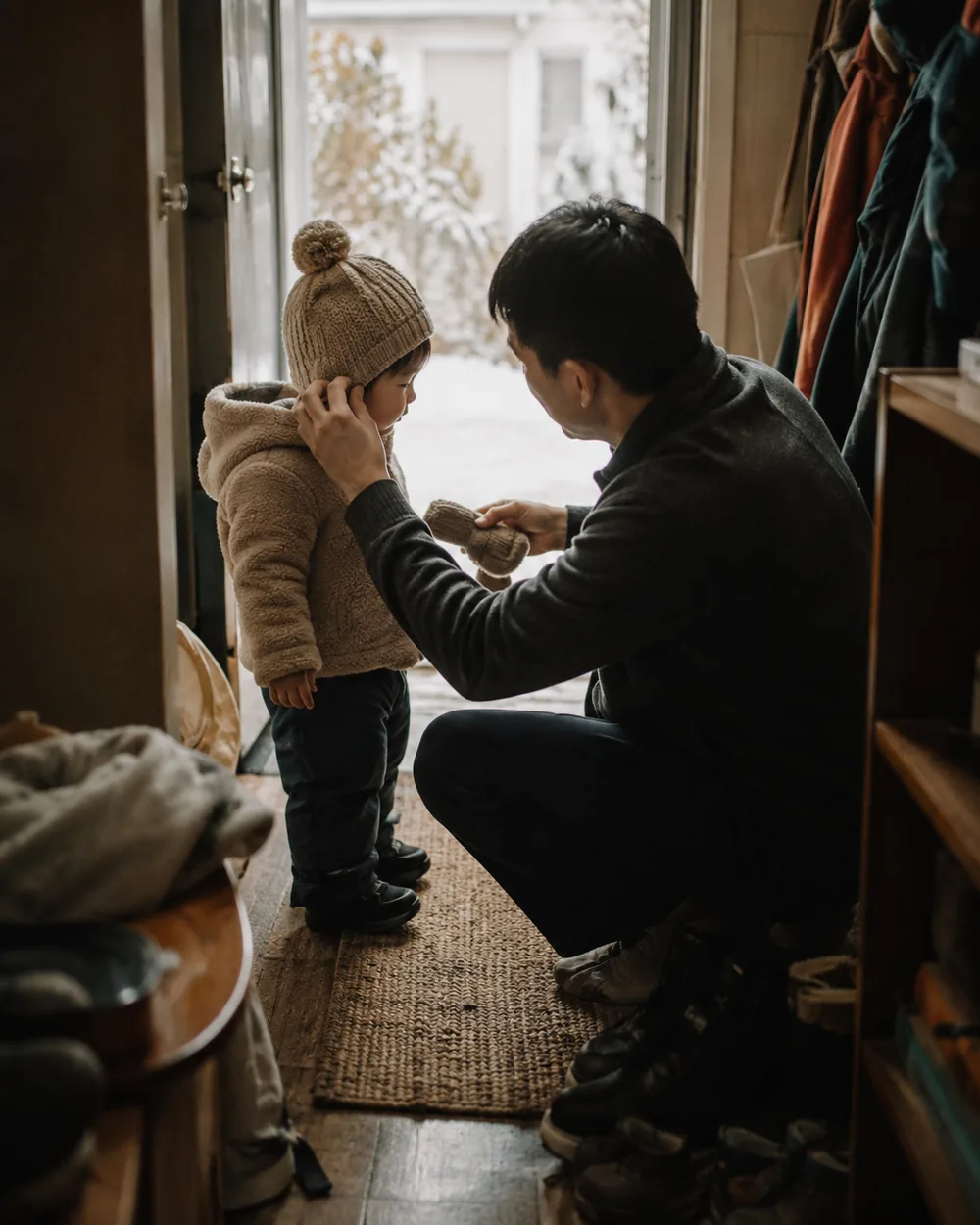
Insulation is trapped air. A single padded jacket traps one layer of it. Once your daughter has run to the gate she is sweating inside a sealed bag, and damp is what makes a child cold twenty minutes later.
Three thinner layers trap air three times over. They also come off one at a time when she goes from a freezing playground into a hot classroom. The American Academy of Pediatrics puts it plainly. Wearing several thin layers will help keep kids warm and dry.
Children also lose heat faster than you do. A small body has more surface for its size. That is the reason behind the rule of thumb repeated in every clinic in the country. For babies and young children, one more layer than an adult would wear comfortably in the same weather.
One more. Not three more. Three more is the other classic mistake, and it makes a red, furious, too-hot toddler who then gets cold the second she stops moving.
What each layer is actually for
Next to the skin. This layer’s whole job is moving sweat off the body. Cotton is the wrong choice here. It holds the damp against the skin and stays wet all day. Merino or a synthetic base layer, long sleeves and long legs, is the one change that does the most, and it costs less than a coat.
The middle. Warmth. Fleece, wool, a thick jumper, a lightweight down gilet. This is the layer that comes off indoors, so it wants a zip rather than a neck hole a four year old cannot get over her ears without help.
The outside. Wind and water. Wind is the part people forget. A fleece with a breeze through it is barely warmer than nothing. A shell does not need to be thick. It needs to be windproof, to have a hood that stays up, and to be long enough that it does not ride up when arms go over the head.
For a child who walks to school and then sits down for six hours, that is the whole system. For a child who is going to be out in snow for two hours, add waterproof over-trousers, and accept that you will spend part of your life looking for them.
Hands, head and feet, in that order of trouble
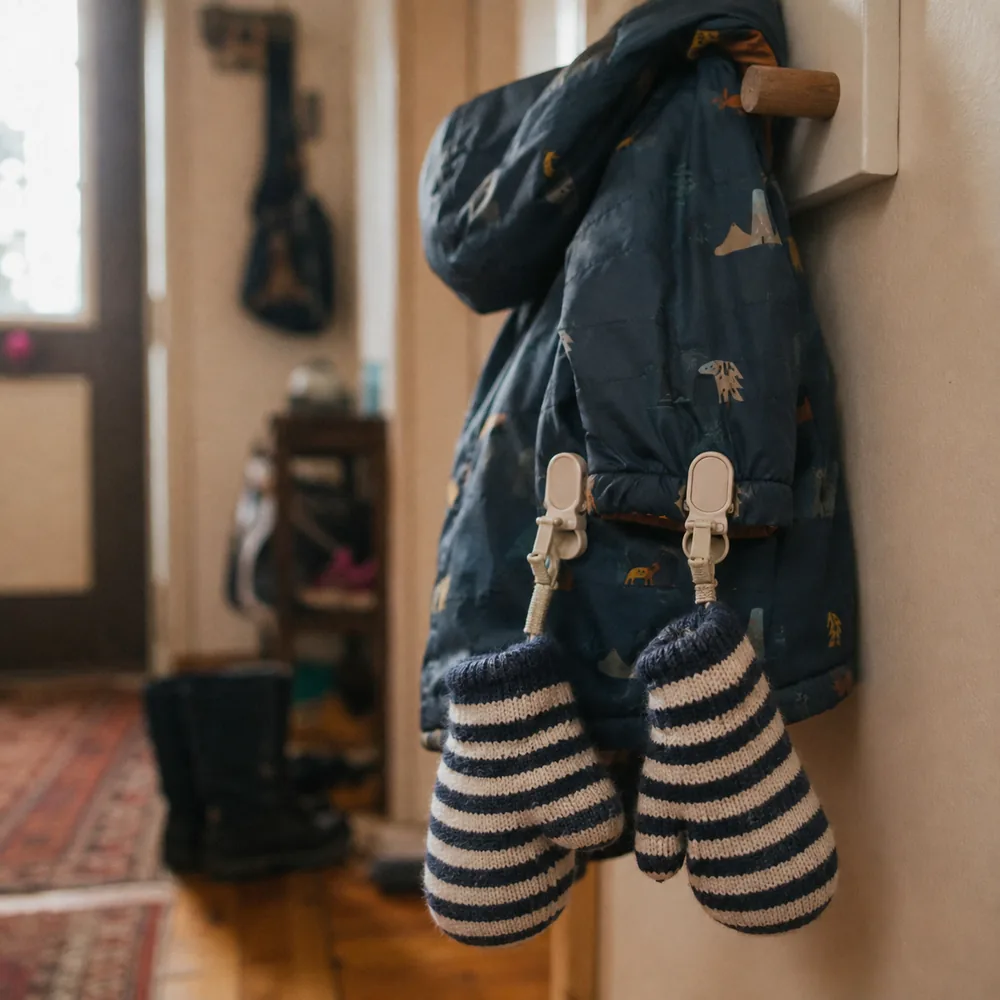
Mittens beat gloves for anyone under about six. Fingers keep each other warm when they are together, and a three year old cannot get five separate fingers into five separate holes without an adult and a small argument.
The real problem with mittens is not warmth. It is loss. Clip them, or thread them through the sleeves on a length of elastic. Solve it once in October rather than buying four more pairs. Waterproof matters more than thickness, because a wet woollen mitten is colder than a bare hand.
Heads next. A bare head loses heat fast, mostly because it is often the only bare part left. A hat that covers the ears is the difference between a walk that works and a walk that ends in shouting. Ears hurt in cold wind before anything else does.
Feet last, and boots want room in them. A boot crammed tight with a thick sock has no air in it. No air means cold toes, which is the opposite of what the thick sock was for. One good pair of socks, room to wiggle, and a spare pair in the bag.
Scarves are the one item worth thinking twice about. A long loose scarf on a young child in a playground can catch and pull tight. A neck warmer or a snood does the same job without the loop. The same goes for cords on a hood.
The car seat rule that catches everyone
This one is not about comfort. It is the reason a lot of the advice above has to change the second you open the car door.
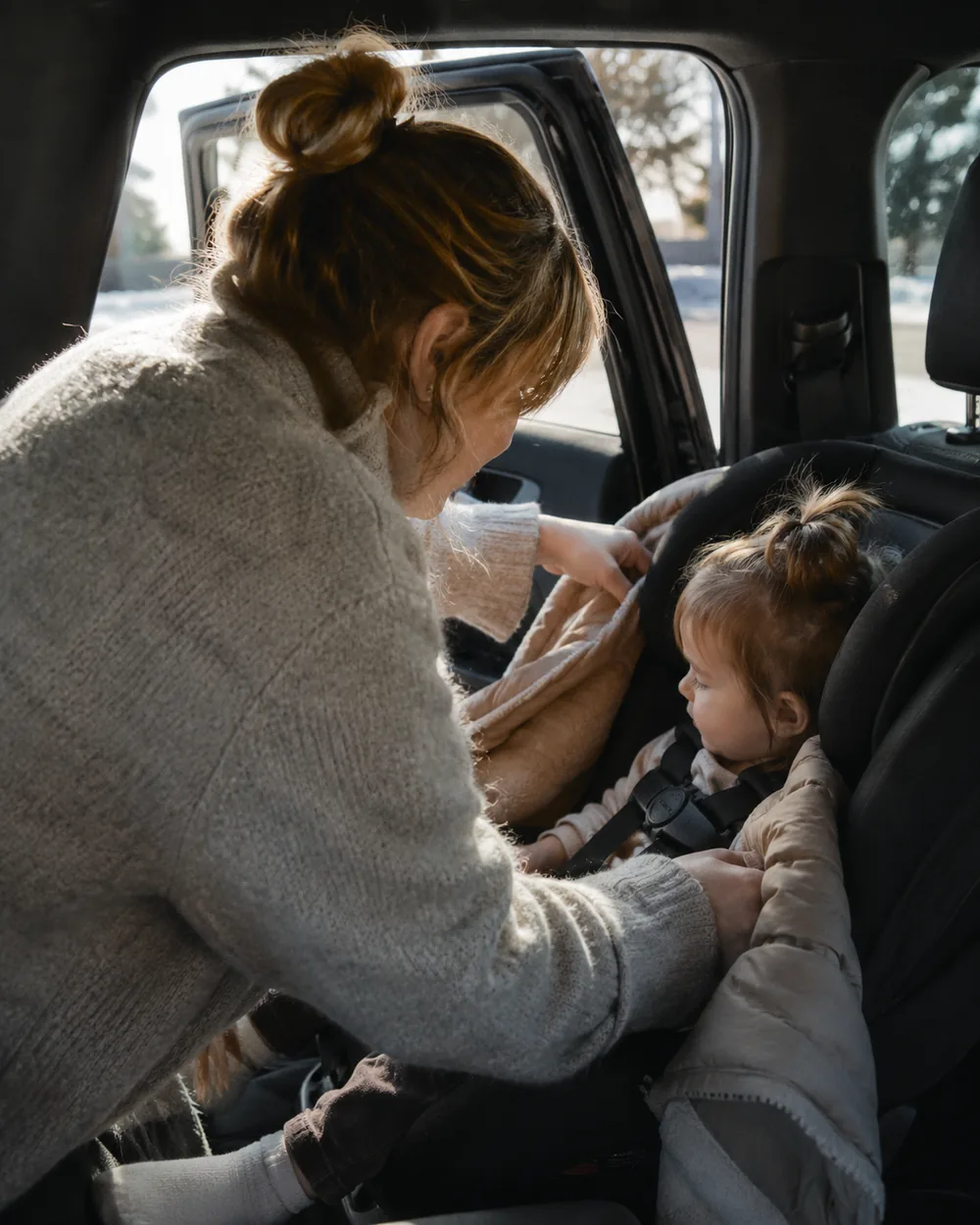
Bulky clothing, including winter coats and snowsuits, should not be worn underneath a car seat harness. In a crash the padding flattens at once under the force. The space it leaves is space the child can move in. The harness that felt tight in the driveway is suddenly loose enough to matter.
The workaround is simple and it takes ten seconds. Buckle the child in wearing thin layers, then put the coat on backwards over the top of the fastened straps, or lay a blanket over. Warm child, tight harness, nothing under the belts.
There is a proper walkthrough of the pinch test in our full piece on coats and car seats. It covers what to do when you are in and out of the car eleven times on a Saturday.
How cold is too cold
At some point the answer stops being more layers and starts being go inside. The American Academy of Pediatrics draws that line at a specific number.
Above that line, the advice is about time rather than the number on the thermometer. Set a limit on how long they are out. Make sure there is somewhere warm to come back to along the way, which means the trip to the sledging hill needs a plan for getting home before anyone is miserable.
Know the two things to watch for. Frostbitten skin hurts or burns first, then goes numb, and turns white or pale grey. Cold that has gone too far starts with shivering, which is the body doing its job. Then it turns into a child who is sluggish, clumsy or slurring words. The shivering is not the emergency. The child who stops shivering and goes quiet is.
Sleep is a different set of rules
Everything above is for being awake and outdoors. A cot at night is a separate question, and warmer is not better there.
Loose blankets do not belong in a cot in the first year. A sleep sack over normal indoor clothes does the job, with nothing that can go over a face. Getting too warm is a real risk here. Check the back of the neck rather than the hands, because a baby’s hands are cold most of the time and tell you almost nothing.
A bedroom that has been shut and cold all day is also a bad start for a child who already struggles to settle. If bedtime in winter is a nightly negotiation in your house, that is a bigger conversation than blankets.
The dark is half the problem
By December you are dressing a child for the walk to school in something close to night, and visibility becomes as important as warmth.
Put the reflective strips on the bag rather than the coat, because the bag is what a driver sees from behind. A small clip-on light is cheap, and children will wear one because it feels like kit rather than safety.
The dark also does something to the mornings themselves. Getting out of the house often gets harder once the clocks go back. That is not laziness, and it is fairly well documented. It shows up in what the time change does to a small child’s sleep, and again in the flatness that arrives in the darkest months.
What is worth paying for, and what is not
Winter kit is one of the few places where the cheap version really is worse, and also one where half the spend is wasted. Here is the honest split.
Worth the money. Boots that stay dry, because wet feet end an afternoon faster than cold ones. Waterproof mittens. One good base layer set, which will be worn perhaps four days a week for five months and is the item most likely to be outgrown before it wears out.
Not worth the money. A very expensive coat for a child who will be four inches taller in April. Brand-name snow trousers, when the cheap ones fail in the same place, at the knee. Anything with a fur trim that has to be dry-cleaned.
Buy second-hand without worrying. Snowsuits, ski trousers, fleeces and shells. Most of them are barely used, because most children outgrow them in one season. Check the zips and the seams, wash it, done.
Size up by one, not by two. A coat that swamps a child does not seal at the wrist or the neck, and the gaps are where the cold gets in. Sleeves you can turn back once are fine. Sleeves you turn back three times are a different coat.
The sensory version of this
For some children none of the above is the issue. It is the seam, the label, the sound of the waterproof, the feeling of a hood touching an ear.
That is real and it has almost nothing to do with being difficult. Use base layers with no seams, cut the tags out, and wash everything before the first wear so it is soft. Where you can, stay with a texture the child has already accepted rather than a new one in November. There is a longer piece on the sock and seam problem that applies equally to a fleece.
Let her choose between two acceptable options rather than presenting one. It sounds like a trick and it is. But it moves the argument from whether to which, and which is a much shorter argument.
Set it up once, in October
Hooks at child height. A basket by the door for hats and mittens. Two base layers washed and back in the drawer on rotation. Boots that live in one place.
Do that in the last week of October and you buy back most of those eight minutes, every morning, until spring. It is not an exciting piece of parenting and it is one of the few that pays back daily.
Leave the first comment
Share your thoughts
How to dress kids for winter, answered
Three thin layers rather than one thick coat. A base layer that moves sweat off the skin, something fleecy in the middle, and a windproof shell on top. Add a hat that covers the ears, waterproof mittens, and boots with enough room in them for air.
One more layer than an adult would wear comfortably in the same weather. Small bodies lose heat faster because they have more surface for their size. One more layer, not three, since a child who overheats gets cold the moment she stops moving.
No. Bulky coats and snowsuits should not go under the harness. The padding flattens in a crash and leaves slack the child can move in. Buckle her in thin layers, then put the coat on backwards over the fastened straps, or lay a blanket on top.
The American Academy of Pediatrics advises avoiding outdoor play when temperatures or wind chills fall below -15 degrees Fahrenheit, because exposed skin starts to freeze within minutes. Above that, limit how long they are out and give them somewhere warm to come back to.
Mittens until about six. Fingers keep each other warm when they are together, and a three year old cannot get five fingers into five separate holes without help and an argument. Waterproof matters more than thickness, because a wet mitten is colder than a bare hand.

I started Decoded Kids because the calm, straight answer I needed at 2 a.m. just didn't exist. I'm a parent of two, still figuring it out - and I hold this whole place to one promise: real help, in plain language, with no one talked down to.
More from MayaWhat's the one thing that actually calmed the chaos in your house?
No right answers here - tell us how it actually went. Someone reading needs to hear it.
Join the conversation