
Top 5 Reasons Your Child Won’t Sleep (and What to Do Tonight)
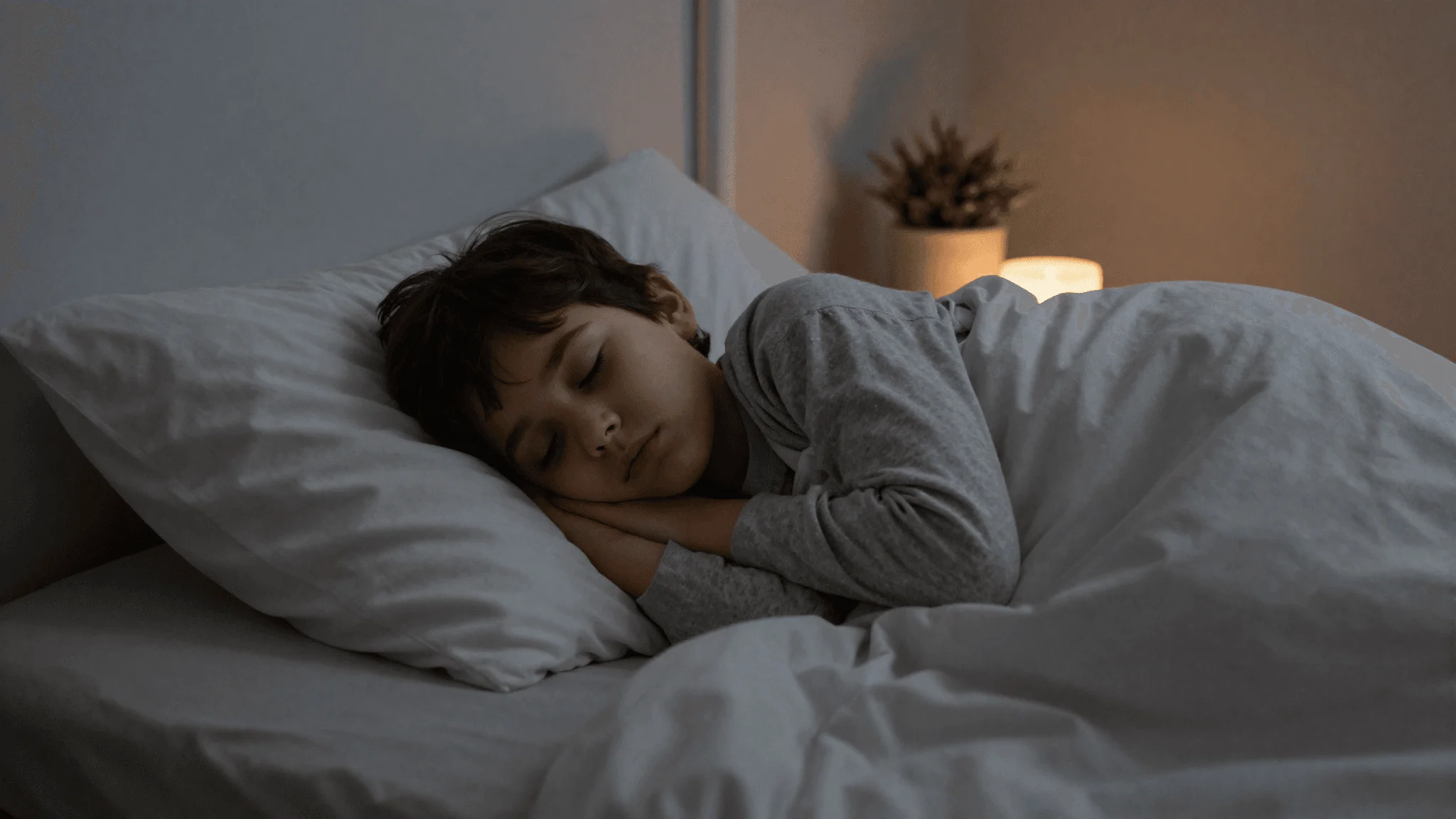
It’s 9:40pm, you’ve done the third glass of water and the second pee, and someone small is still very much awake, and you’re quietly asking the thing every tired parent asks at this hour: why won’t my child sleep? That same hour goes differently in a strange bed, which is its own problem when a toddler will not sleep away from home.
Most nighttime resistance traces back to a short list of fixable causes, not a child who’s “a bad sleeper.” Find yours in the five below and tonight’s fix is usually sitting right next to it. None of this is about a difficult kid. It’s about a body that got the wrong signal somewhere between dinner and dark.

ColorsNoise Sound Machine and White Noise Machine with 30 Soothing
As an Amazon Associate, Decoded Kids earns from qualifying purchases. Price checked live on Amazon.
Why won’t my child sleep? The five usual suspects
- Overtired, not under-tired. A child who skipped the nap or crashed too late gets a second wind of stress hormones that make sleep harder, not easier: that wired, giggly-then-sobbing state by 8pm. Tonight: move bedtime earlier, not later, and catch the first yawn instead of fighting past it.
- Screens too close to bed. Blue light and fast, flickering content switch the brain on right when you need it powering down. Tonight: kill screens an hour before bed and swap in something dull and dim: a bath, a couple of books, low lamps instead of the big light.
- An unpredictable wind-down. Brains fall asleep on cues, and a routine that changes every night never gets the chance to build them. Tonight: run the exact same short sequence, in the same order, until it’s so boring it’s automatic.
- The room’s quietly working against you. Too warm, too bright, too loud. Tonight: cooler than feels right, properly dark, and maybe a little white noise to blur the sound of the household carrying on without them.
- Connection running on empty. A child who was short on you all day will hunt for it hard at bedtime, because that’s when they finally have you cornered. Tonight: ten unhurried minutes of full attention before lights-out settles the stalling faster than any sticker chart.
Pick the one that sounds most like your evenings and change just that, tonight. And if the fear itself is the thing keeping them up (the dark, the closet, the noise the house apparently never made before), that’s its own gentle fix, which I wrote about in why bedtime suddenly feels scary.
Sleep shifts take a few consistent nights to land, so hold the line gently and give any change a week before you judge it. If the room itself is the battle, a few sleep tools genuinely earn their keep, and on the rough nights, the teething, the bad dream, the 3am visitor, you haven’t failed. That’s just childhood, doing its thing.
Frequently asked questions
Roughly: toddlers land around eleven to fourteen hours counting naps, preschoolers a little less, and by elementary school it’s nine to twelve. Treat those as loose guides: a well-rested kid wakes reasonably cheerful and makes it to dinnertime without unraveling, which tells you more than any chart.
Sometimes, and the timing makes or breaks it. Drop it too soon and you get an overtired child fighting bedtime even harder. If school is about to start again, it is worth running a proper back-to-school bedtime reset a week or two ahead. Most are ready between three and four. Quick test: if the nap keeps shoving bedtime later or hollowing out the night, it’s probably on its way out.
Early waking usually traces to a bedtime that’s too late (overtiredness backfires) or light sneaking through thin curtains. A blackout blind is the cheapest experiment going, so try that first. If they wake genuinely happy and rested at five, that might just be their body clock.
An okay to wake clock is the other cheap experiment for a 5am riser, as long as your child is old enough to learn the rule.
This one belongs with your doctor, not a blog post. For most kids, routine and wind-down changes come first, and melatonin is only weighed up in specific situations, often where there’s ADHD or autism in the mix, and always under medical guidance. Book the pediatrician chat before you buy anything.
Leave the first comment
Share your thoughts

I'm for the parent mid-meltdown - theirs or the kid's. I write from the actual floor of it: the crying that won't stop, the dinner thrown, the bedtime that unravels. Blunt because I respect you too much to pretend it's easy. Just what tends to work.
More from NourWhat's the one thing that calmed the chaos in your house?
No right answers here - tell us how it went. Someone reading needs to hear it.
Join the conversation