
The Winter Coat Comes Off in the Car. Here’s the Two-Second Test.

It’s twenty-eight degrees, you’re already late, and the person you are trying to buckle into a car seat is wearing a coat roughly the size of a beanbag chair.
So you do what everyone does. You pull the straps down over the puffy sleeves, you push the buckle together, you tug the strap tight, and it feels tight. It looks tight. You drive.
Here’s the part that nobody mentions at the store where you bought the coat: in a crash, that coat isn’t there anymore.
The short version: a puffy coat under the harness compresses on impact, and the space it leaves behind turns into slack the harness can’t take back. The American Academy of Pediatrics says bulky coats and snowsuits should not go under the harness at all. You don’t need to buy anything to fix it. Buckle your kid in without the coat, then put the coat on backwards over the straps, or a blanket over the top.
Why a tight strap can still be loose
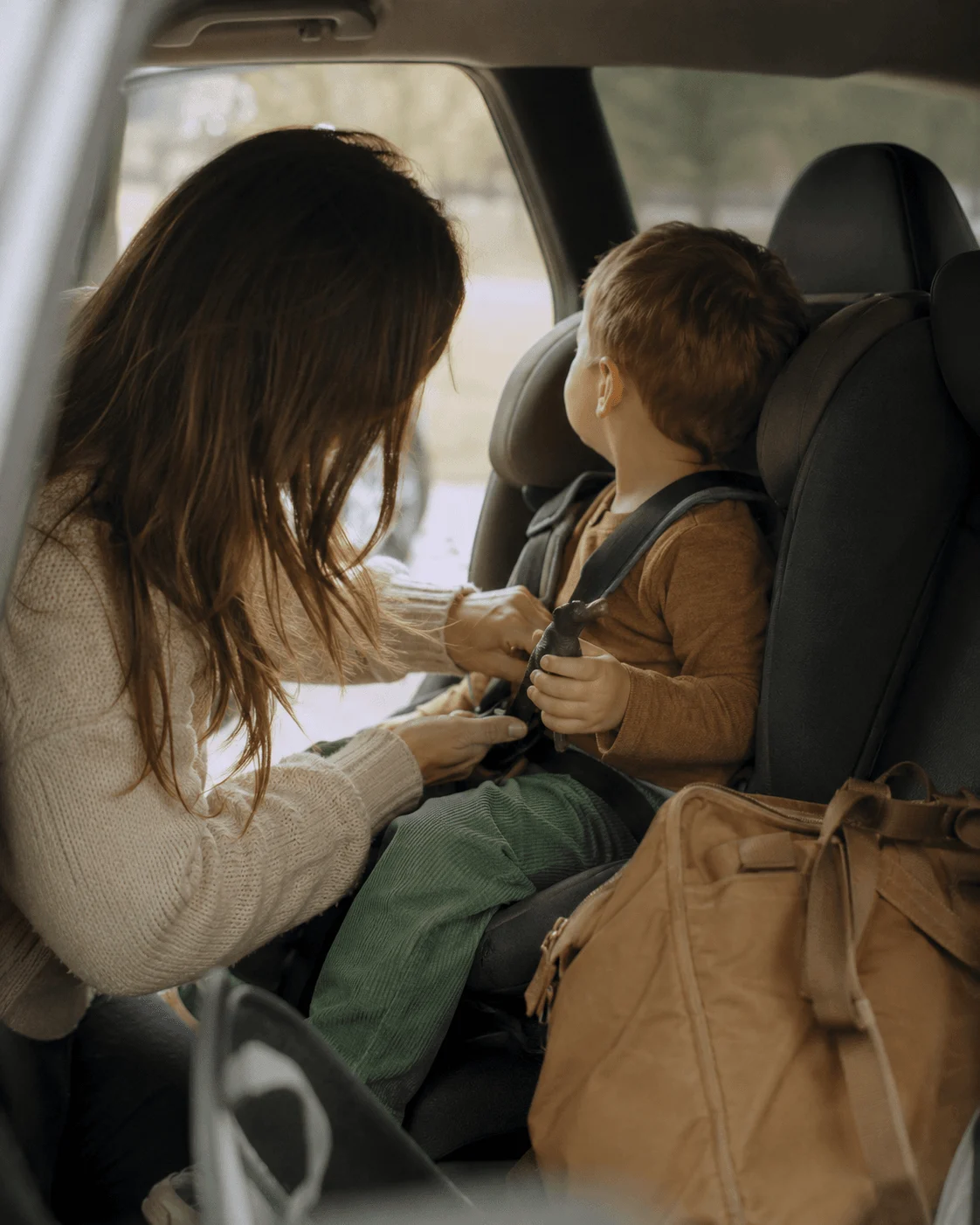
Think about what a winter coat actually is. It’s a bag of air held in fabric. That air is why it keeps your kid warm, and it’s also why it behaves so badly in a car seat.
When you tighten the harness over the coat, you’re tightening it against loft, not against your child. In a crash the loft is gone in an instant, squashed flat by forces nothing in daily life resembles. The strap that was snug against a coat is now floating somewhere above a much smaller kid.
Consumer Reports puts the gap that opens up at two to four inches. Two inches is enough for a small body to move out from under the protection the seat was designed to give.
Any time a child is not properly and snugly harnessed within their car seat, there is an increased injury risk.Emily A. Thomas, PhD, auto safety manager at Consumer Reports and a child passenger safety technician
The test that settles it for your kid’s actual coat
You don’t have to guess whether a particular coat is too much, and you don’t have to take a stranger’s word for it either. There’s a check you can run tonight in your own driveway, and it takes about a minute.
Put the coat on your child and buckle them in as normal. Tighten the harness until you can’t pinch any slack in the strap at the shoulder. Now, without touching the adjuster, unbuckle them, take the coat off, and buckle them back in exactly as they were.
Then try to pinch the strap again. If you can gather a fold of webbing between your fingers, that fold is what the coat was hiding. That’s your answer, for that coat, on that kid, in that seat.
Most parents run this once and are quietly appalled by how much strap they can grab. A fleece or a sweatshirt usually passes. A down jacket almost never does.
How to keep them warm anyway

Every fix here is free, and none of them involve a cold child.
Buckle first, coat second. Once the harness is snug against a sweatshirt, put their coat on backwards over the top, arms through the sleeves, so it works like a blanket with sleeves. Younger kids find this hilarious, which helps.
A blanket over the harness does the same job with less fuss, and it’s the one I’d start with for a baby. Warm the car for a couple of minutes first if you can. Hats and mittens can stay on, since neither one goes under a strap.
What matters is the order. Nothing thick between the child and the harness; everything warm goes on top of it once they’re buckled.
Babies, bunting bags and the cover question
Infant seats have their own version of this, and it confuses people because the products are sold right next to the seats.
The rule is the same rule, just smaller: nothing thick goes between the baby and the harness. That includes padded bunting bags and the fleece-lined inserts with slots cut for the straps, unless that exact insert came in the box with your seat. If it came with the seat, it was tested with the seat. If you bought it separately, it wasn’t.
The covers that stretch over the top of the carrier like a shower cap are a different animal, because nothing goes underneath the baby. Those are generally fine, as long as the fabric stays off your baby’s face and you take it off once you’re indoors so they don’t overheat.
Newborns also lose heat faster than the rest of us, so a hat matters more here than the coat ever did. Buckle first, then blanket, then check the strap at the shoulder one last time before you shut the door.
What not to do: don’t loosen the straps to fit the coat, and don’t put a rolled blanket or an aftermarket strap cover underneath the harness. Anything that didn’t come with your seat and sits between your child and the webbing hasn’t been crash-tested with it. Your seat’s manual is the final word here, and it will say so plainly.
When the coat itself is the fight
For some kids this isn’t about warmth at all. If your child already melts down over seams, tags and stiff sleeves, then a bulky coat is a sensory event before it’s ever a safety question, and the car seat argument lands on top of a battle you were already losing.
Those kids often do better with layers than with one big coat: a soft long-sleeve, a fleece, and the outer layer treated as something that goes on at the door and comes off in the car. It’s fewer textures at once, and it happens to be exactly what the harness needs anyway. If that’s your house, our piece on the kid who won’t wear socks covers why the fabric fight is real, and the sensory-friendly costume playbook uses the same layering trick for a different month.
One more thing worth saying out loud: this whole rule expires. Once your child is out of a harness and into a booster with the vehicle belt, coats stop compressing the same way. This is a problem with a finish line.
Try it in the driveway tonight
Run the pinch test once, on the coat they wear, before the first properly cold morning arrives. Whatever you find, you’ll never have to wonder about it again this winter.
Frequently asked questions
Not a bulky one. The American Academy of Pediatrics advises that bulky clothing, including winter coats and snowsuits, should not be worn underneath a car seat harness. A thin fleece or sweatshirt is generally fine. Put the warm layer on over the buckled harness instead.
Buckle your child in wearing the coat and tighten until you cannot pinch any strap at the shoulder. Without adjusting the harness, take them out, remove the coat, and buckle them back in. If you can now pinch a fold of webbing, that coat is too bulky to wear underneath.
Consumer Reports reports that a bulky coat can leave two to four inches of harness slack once the padding compresses. Two inches is already enough for a small child to move out from under the protection the seat is designed to provide, so the target is no slack at all.
Buckle them in over a sweatshirt or fleece, then add warmth on top: their coat on backwards over the straps, or a blanket laid over the harness. Hats and mittens can stay on. Warming the car for a few minutes beforehand handles most of the complaining.
Anything that goes over the harness once your child is buckled is generally fine, which is why ponchos are popular. Anything that sits between the child and the straps, or that clips onto the seat but did not come with it, has not been crash-tested with your seat. Check your manual.
Leave the first comment
Share your thoughts

I'm for the parent doing it largely alone. I've done the single-dad decade - two homes, one income, the handovers, the very quiet Tuesdays - and I write from the far side of most of those days, with humor and hard-won calm. Not advice from above; a hand back from a few steps up the road.
More from DiegoWhat's the one thing that calmed the chaos in your house?
No right answers here - tell us how it went. Someone reading needs to hear it.
Join the conversation