
He Wanted the Wagon, Not the Pumpkin
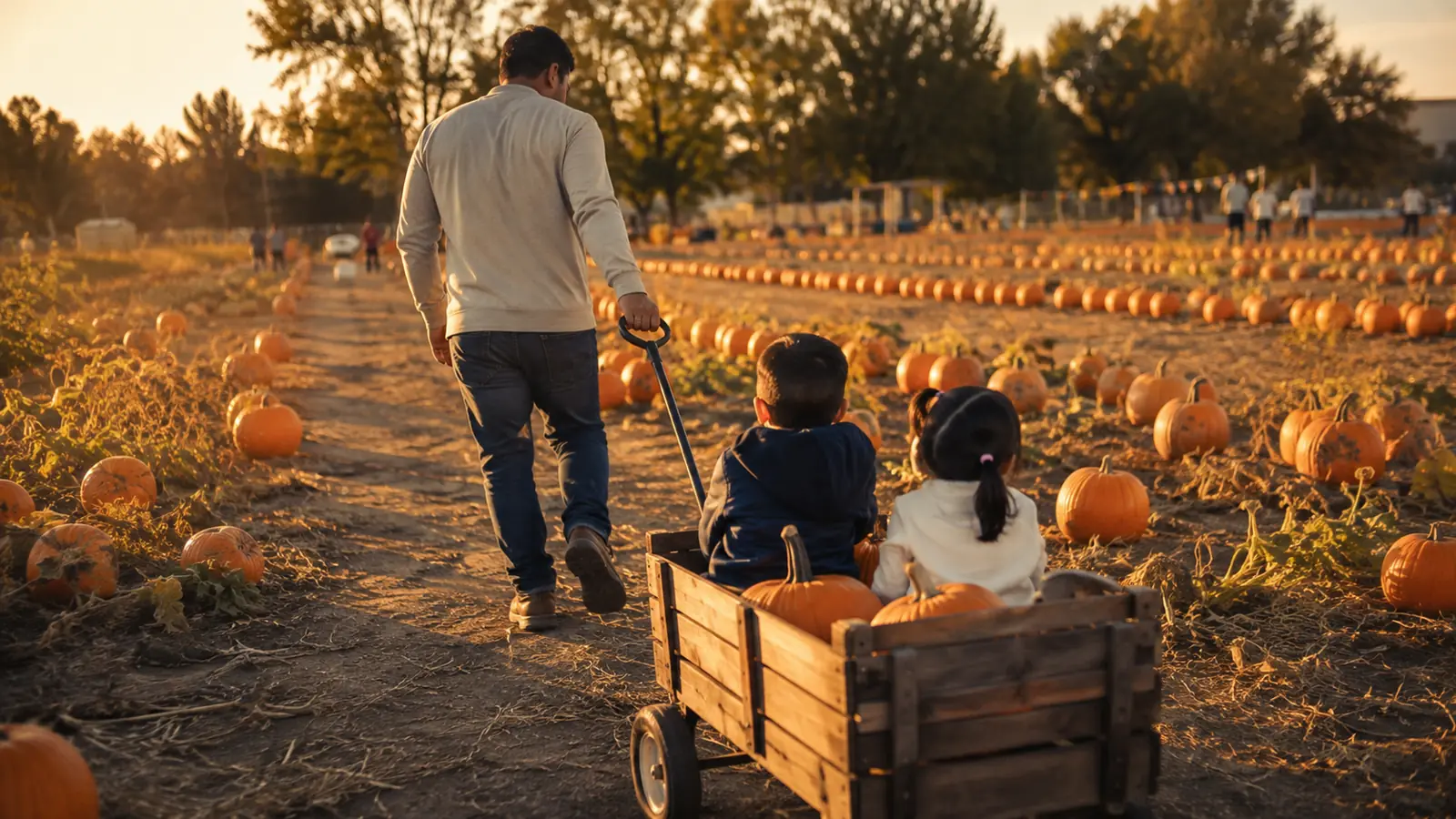
You had a picture in your head. Soft sweater, orange field, your toddler grinning next to a pumpkin bigger than she is. What you got was a kid who sat in the wagon, refused to get out, and cried when you tried to give the wagon back.
That still counts as a good trip. It just wasn’t the trip you planned, and the gap between those two is where most of the stress lives.
When is the best time to go with a toddler?
Go early, and go on a weekday if you can. Weekend afternoons tend to be packed, and they also land right on top of most toddler naps.
A weekday morning feels like a different farm. The lines are short, the hayride has empty seats, and the staff have time to point your kid toward the goats.
Let the nap set the schedule. Leave the house right after breakfast, give yourself the drive, and aim to be buckled back in before your child’s usual nap. (If they conk out in the car seat on the way home, take the short nap and call it a win.)
For the ride there, a snack and one new toy go a long way. We keep a stash of small things that make a long drive easier, and most of them work just as well for the trip out to a farm.
What should you bring?
Pack for mud, cold and hunger, in about that order. Pumpkin fields have dirt paths, and some of that dirt is wet. Rain boots or old sneakers beat anything cute.
- A wagon or a sturdy stroller. Many farms rent wagons, but they can run out on busy days. A wagon is a ride, a seat, and the way the pumpkin gets back to the car.
- Wipes and a small bottle of hand sanitizer. You will use them on hands, faces, and a pumpkin that rolled somewhere gross.
- Layers. Fall mornings start chilly and warm up fast. A thin layer under a fleece is easier than one big coat, and our guide to layering kids for cold weather explains why that works.
- Snacks and water. Farm food lines are long, and a hungry toddler has no patience for them.
If your child fights the jacket at the door, don’t start the day with that battle. Toss it in the wagon instead. A kid who refuses to wear a coat is often happy to put it on once the wind picks up.
What do toddlers actually enjoy at a pumpkin patch?
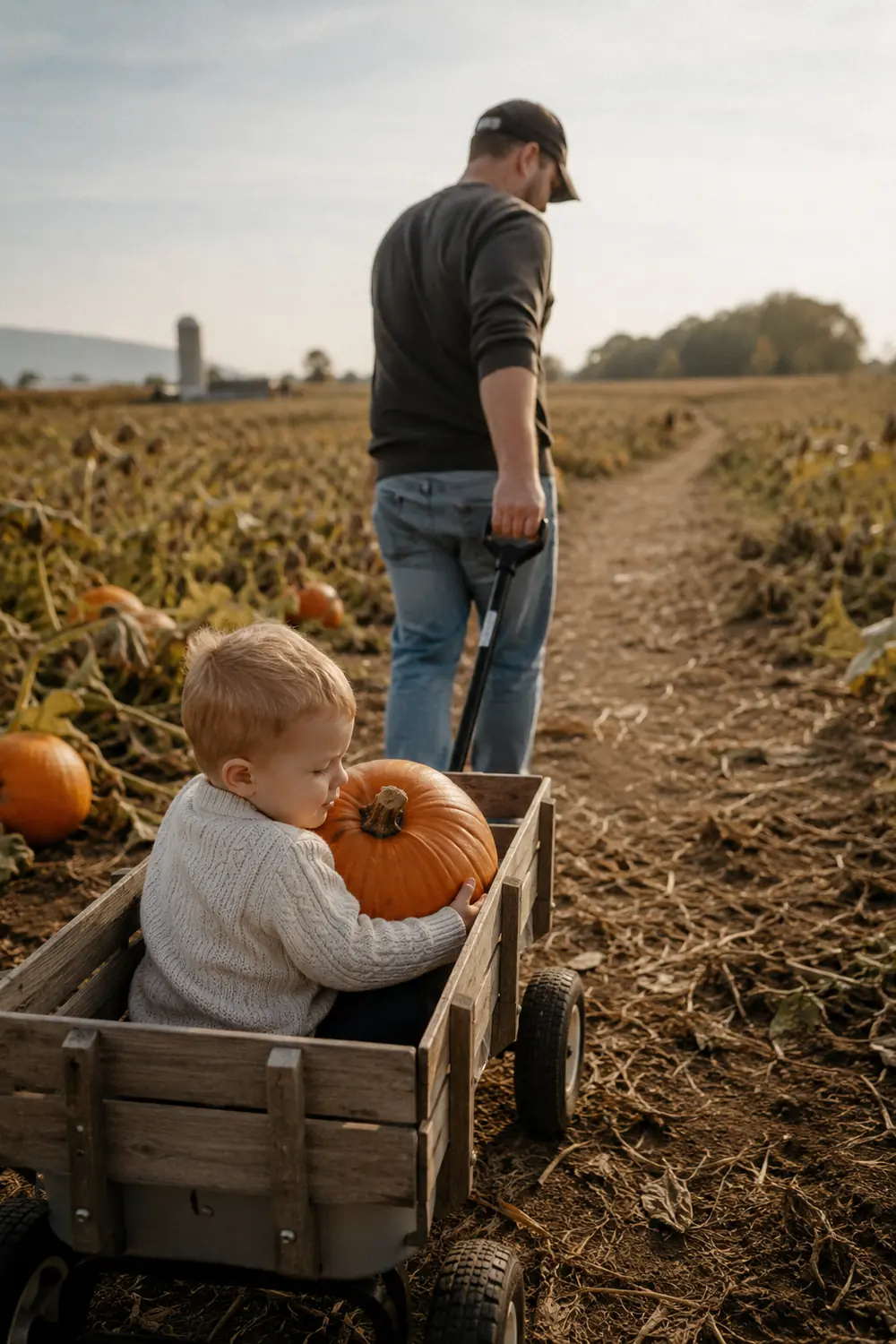
The wagon is the top attraction. Hay bales come next, since they are just the right height to climb and jump off. Tiny pumpkins, the kind that fit in one hand, beat big ones every time. After that come the animals, the tractor parked by the barn, and any puddle at all.
The giant pumpkin you pictured? Your toddler may ignore it. They can’t lift it, so to them it is basically a large orange rock.
So let them do the small things for longer than feels normal. If your son wants to pull the empty wagon up and down one row nine times, that is his whole trip, and it is a good one. Hand him a mini pumpkin to carry. Let him pick which one, even if it is lopsided and a bit squishy on one side.
Plan to leave before the fun runs out. Most toddlers are done well before the grown-ups are. If a meltdown does come, it helps to know whether you are facing a tantrum or a true meltdown, because what helps is different.
How do you get the photo, and what about the hayride?
Take the photo early, in the first few minutes after you arrive. Everyone is clean, fed and still curious. An hour in, the cheeks are sticky and the mood is gone.
Lower the bar on what counts as a good picture. Your toddler in the wagon, staring at a goat, is a better photo than a stiff pose on a hay bale. Snap a bunch, then put the phone away.
A hayride usually works with a little planning. Sit your toddler on your lap near the middle, away from the edge, and hold on. Tractors are loud, so warn them before it starts. Corn mazes are harder. Tall rows, lots of turns and a child who can slip out of sight in a second make a stressful mix. Pick the small kids’ maze if the farm has one, or carry your toddler on your hip. You can also skip the maze. Your toddler will not miss it.
Are petting zoos safe for toddlers?
The goats are often the best part, and they come with one real rule. Farm animals can carry germs that make people sick, even when they look clean. The CDC names E. coli, Salmonella and Cryptosporidium among the most common harmful germs people get at animal exhibits.
Young kids get hit hardest. They touch everything, and then their hands go into their mouths. The CDC says adults should supervise and be extra cautious when children younger than 5 have direct contact with farm animals, including at petting zoos and fairs.
Soap and running water is the goal. Hand sanitizer with 60% alcohol is the backup when there is no sink, according to the CDC’s tips for animal exhibits. The same page says to leave strollers, cups and toys outside the animal area. Save the cider donut for after the hand washing. (I know. It is hard.)
What should you do with the pumpkin at home?
Skip the carving knife at this age and paint the pumpkin instead. Washable kids’ paint, a few brushes and an old sheet on the kitchen floor will buy you a calm afternoon. Stickers work too, and so do dot markers for the youngest ones. Your toddler gets to make it theirs, and nobody needs a bandage.
A pumpkin you never cut open also holds up longer on the porch, so the art sticks around. If your child wants more fall projects, we have a list of fall crafts made for toddler hands, and a painted pumpkin fits right in. It can even do a second job on Halloween night. Painted teal, it tells families you have treats that are not food, which is the idea behind the Teal Pumpkin Project.
And the tiny pumpkin your toddler hauled around all morning? It will probably end up in their bed tonight. Let it.
Leave the first comment
Share your thoughts
Frequently asked questions
Go on a weekday morning if you can, soon after the farm opens. Crowds are smaller and the lines are shorter. Plan the trip so you are back in the car before your toddler’s usual nap, and keep the visit short so it ends while everyone is still happy.
Bring a wagon or sturdy stroller, wipes, snacks, water, and an extra layer, since fall mornings can start cold. Wear boots or old shoes for muddy paths. Keep a spare outfit in the car, because hay, dirt and cider tend to end up all over small kids.
It can be, with care. The CDC says adults should supervise closely when children under 5 touch farm animals, since animals can carry germs like E. coli. Wash hands with soap and water right after, keep food and pacifiers out of the animal area, and use sanitizer only as a backup.
A hayride usually works if your toddler sits on your lap near the middle and you warn them the tractor is loud. Corn mazes are harder, since a small child can slip out of sight fast. Choose a small kids’ maze, carry your toddler, or skip it.
Painting is a better fit for toddlers than carving. Use washable paint, stickers or dot markers on an old sheet, and let them decorate it their own way. It keeps knives out of the picture, and a pumpkin that is never cut open lasts longer on the porch.

I'm for the parent standing in the bookshop, overwhelmed. I read them all - the wise, the smug, the single good idea stretched to 240 pages - so your nightstand stack stays short. I'll point you to what's truly worth it, and kindly, what to put back.
More from MeiWhat's the one thing that actually calmed the chaos in your house?
No right answers here - tell us how it actually went. Someone reading needs to hear it.
Join the conversation