
Two Bowls by the Door, and Only One of Them Is Candy
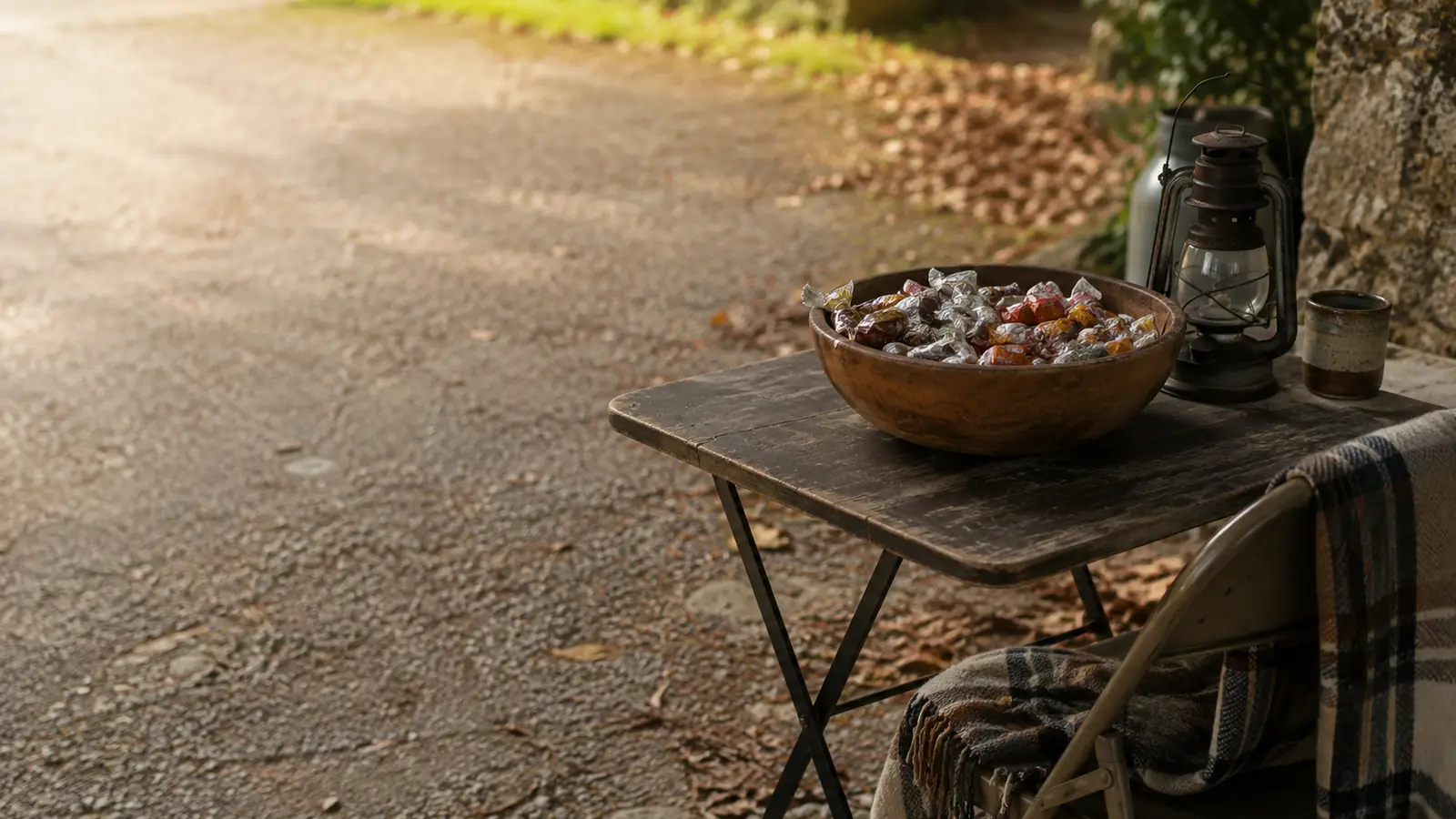
He is six, he is a fire engine, and he has been practicing the line all week. Then the bowl comes out and his mom has to lean in and read the back of a fun size wrapper by porch light while four other children push past him.
Usually she hands it back. He says thank you anyway. They walk to the next house and do it again.
Nobody is checking and it is not a rule. It is a signal, and a signal only works when enough doors use it.
What the teal pumpkin tells a family
The Teal Pumpkin Project is run by Food Allergy Research and Education, and it started in 2014. A teal pumpkin, or a teal sign, on the porch means one thing: there are non-food treats here, and a child who cannot eat candy will get to choose something too.
About one in thirteen kids in the US has a food allergy. That is two in a classroom, close to six million children. So on a normal street, several of the kids at your door tonight are doing math instead of trick or treating.
It is wider than allergy too. The same bowl matters for kids with celiac disease, with diabetes, with a feeding tube, and for the toddler who is not on solid food yet. None of them look any different at your door.
Getting on the map takes about a minute
FARE runs a public map of participating houses so families can plan a route before they leave. In 2024 it held more than 12,500 locations across all fifty states. Adding your address is a form on their site and takes a minute.
Worth doing even if your street is quiet. The parents who use that map spend the walk deciding which doors to skip. One dot changes where they go.
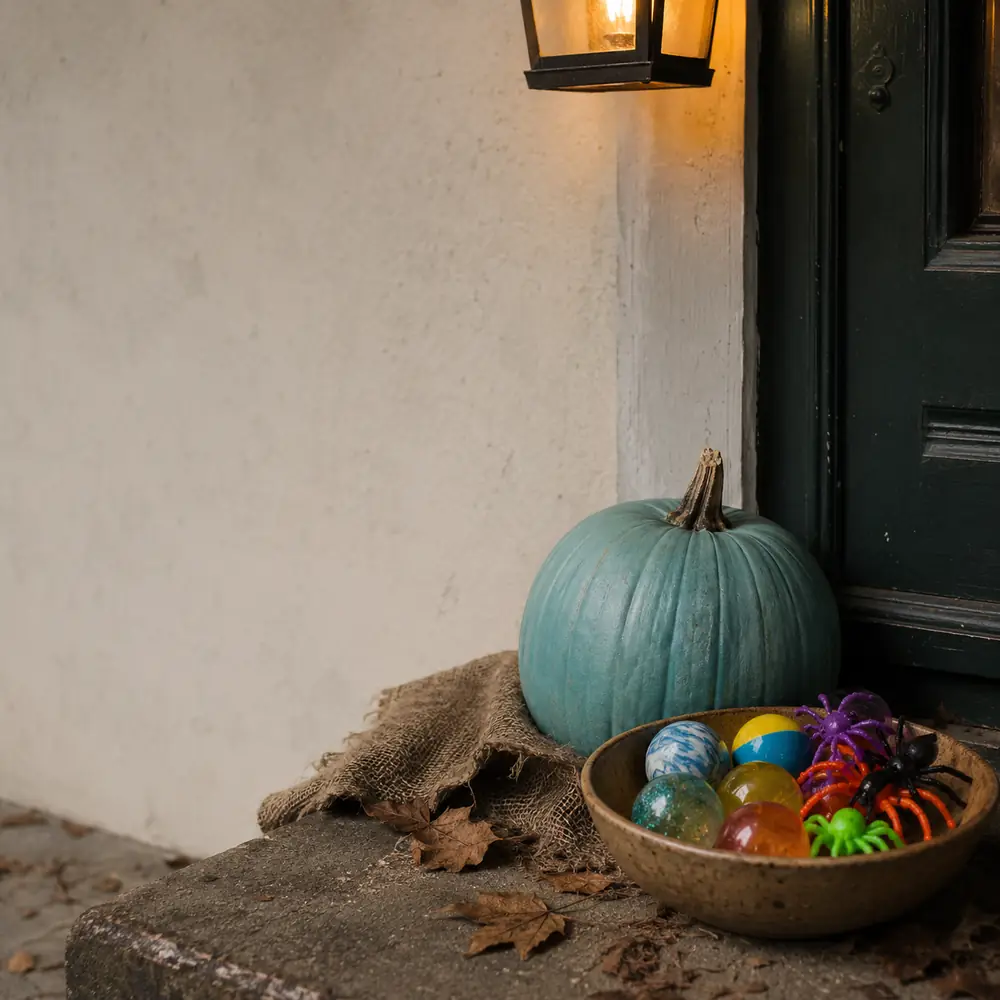
For the pumpkin itself, teal spray paint on a real one works, so does a craft store foam pumpkin, so does a printed sign taped to the door. A teal bucket on the step does the job. What matters is that it reads as teal from ten feet away in the dark, so keep a porch light on it.
What goes in the second bowl
Glow sticks, bracelets and glow necklaces are the ones children actually want, and they have the advantage of making your street more visible for the rest of the evening. Then bubbles, stickers, temporary tattoos, spider rings, bouncy balls, mini stencils, pencils, erasers shaped like something.
Skip anything that needs batteries and anything with a coin cell in it. Skip latex balloons too, since latex is its own allergy. If you get a lot of toddlers, hold the tiny items back and offer the bigger things first.
Bulk packs of squishy toys are the cheapest way to fill a bowl for a whole street. They are cheerful and they are not built to last, which is fine for one night and worth knowing before you expect more of them.
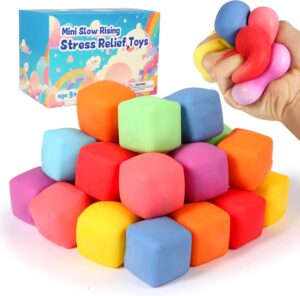
24 Pack Slow Rising Stress Cube , Dough Stress Balls Soft Fidget Squishy Toys for Anxiety Relief…
As an Amazon Associate, Decoded Kids earns from qualifying purchases. Price checked live on Amazon.
Buy roughly a third as many non-food treats as candy. Most kids will still take the candy, and the ones who need this bowl will find it fast.
Keep the two bowls apart
This is the part that gets skipped, and it is the part that matters. If the trinkets sit in the candy bowl, or in a bowl that had candy in it an hour ago, the whole point is gone. Traces of peanut and milk move from wrapper to wrapper. A parent who knows that will say no thank you and move on.
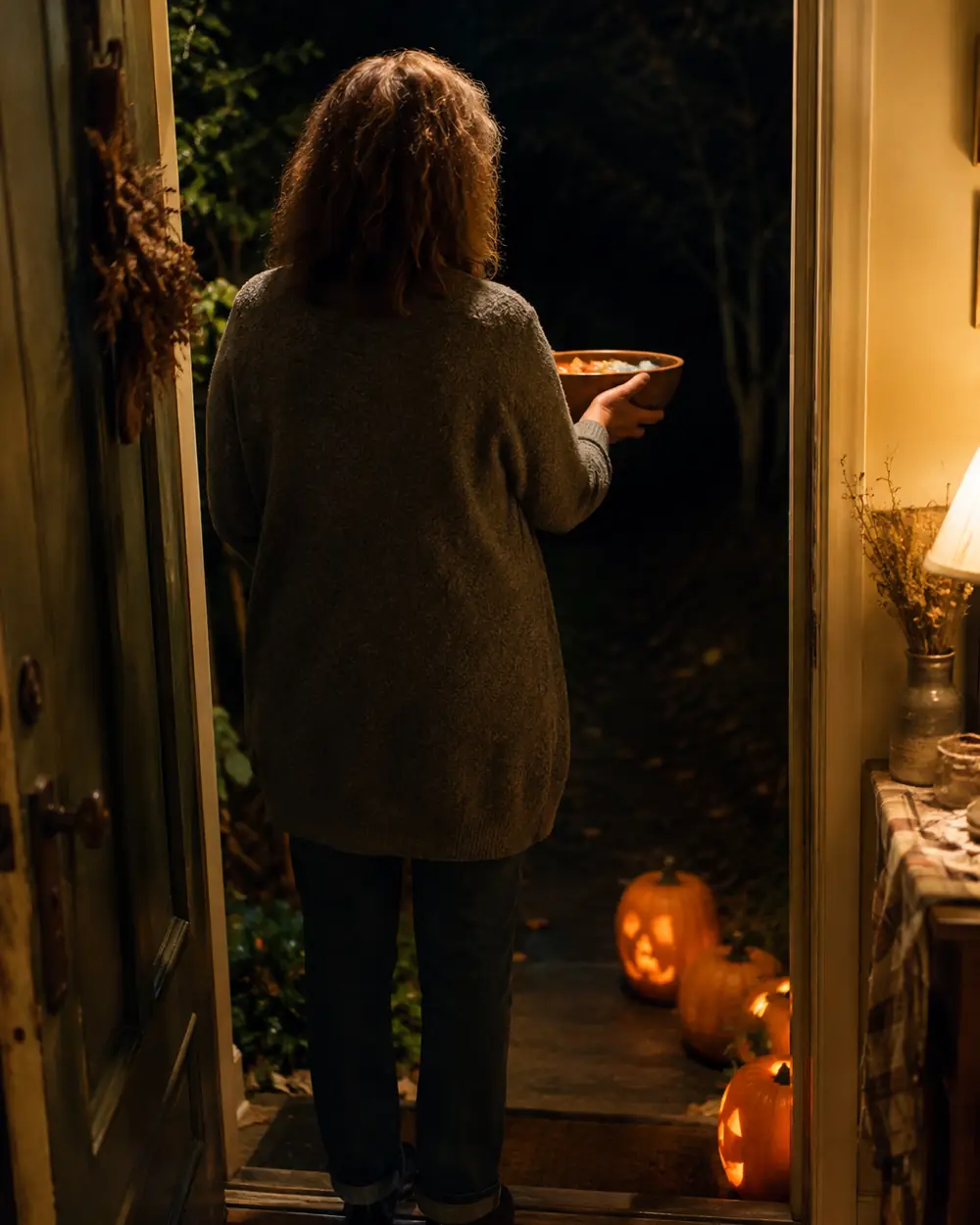
So use a bowl that has never held food. Keep it an arm’s length from the candy. Hold it out first when a family stops, and say it out loud. “There are non-food ones in this bowl.” That sentence saves a parent from having to ask, which is the part they are tired of.
If your child is the one with the allergy
Plan the route off the map before you go out, so the walk has known stops in it rather than a series of small negotiations. Feed him first. Bring a flashlight bright enough to read a label by. Porch lights are not.
Then do the swap at home. He hands over the haul and it comes back as a pile he can eat, or as one thing he has been wanting. Some families set a fixed rate. Some just buy the whole bucket. Either way the trading happens at your kitchen table, not on somebody’s doorstep. There is more on running that trade in what to do with the bucket when it comes home full.
If the evening itself is the hard part rather than the candy, the sensory version of trick or treating covers the crowds, the costume and the noise, and a Halloween party at home is a real option rather than a consolation prize.
Put it out early
The pumpkin only works if it is out before the walk starts, so put it on the step in the afternoon rather than at six when the first group arrives. Families leave earlier than you think, and the youngest children go first.
One bowl, one painted pumpkin, one sentence at the door. It is a very small amount of effort for a child who has spent every October being the one who hands it back.
Leave the first comment
Share your thoughts
Frequently asked questions
It means the house is offering non-food treats as well as, or instead of, candy. It is a signal from the Teal Pumpkin Project, run by Food Allergy Research and Education since 2014, so that a child with a food allergy can see from the sidewalk that there is something at that door they can safely take.
Glow sticks and glow bracelets are the ones children want most, followed by bubbles, stickers, temporary tattoos, spider rings, bouncy balls, pencils and novelty erasers. Skip latex balloons, since latex is its own allergy, and skip anything containing a coin battery.
No. Most houses hand out both. Keep the non-food treats in a separate bowl that has never held food, hold it out alongside the candy, and say out loud that it is there. Roughly one non-food treat for every three pieces of candy is enough for a normal street.
Add your address through the form on the Food Allergy Research and Education website. The map had more than 12,500 locations in 2024, across all fifty states, and families use it to plan a route before they leave the house.
About one in thirteen children in the US has a food allergy, which is roughly two children in every classroom and close to six million children nationally. Non-food treats also matter for children with celiac disease, diabetes, EoE and feeding tubes.

I started Decoded Kids because the calm, straight answer I needed at 2 a.m. just didn't exist. I'm a parent of two, still figuring it out - and I hold this whole place to one promise: real help, in plain language, with no one talked down to.
More from MayaWhat's the one thing that calmed the chaos in your house?
No right answers here - tell us how it went. Someone reading needs to hear it.
Join the conversation