
Bread and Butter, Again, at the Biggest Meal of the Year
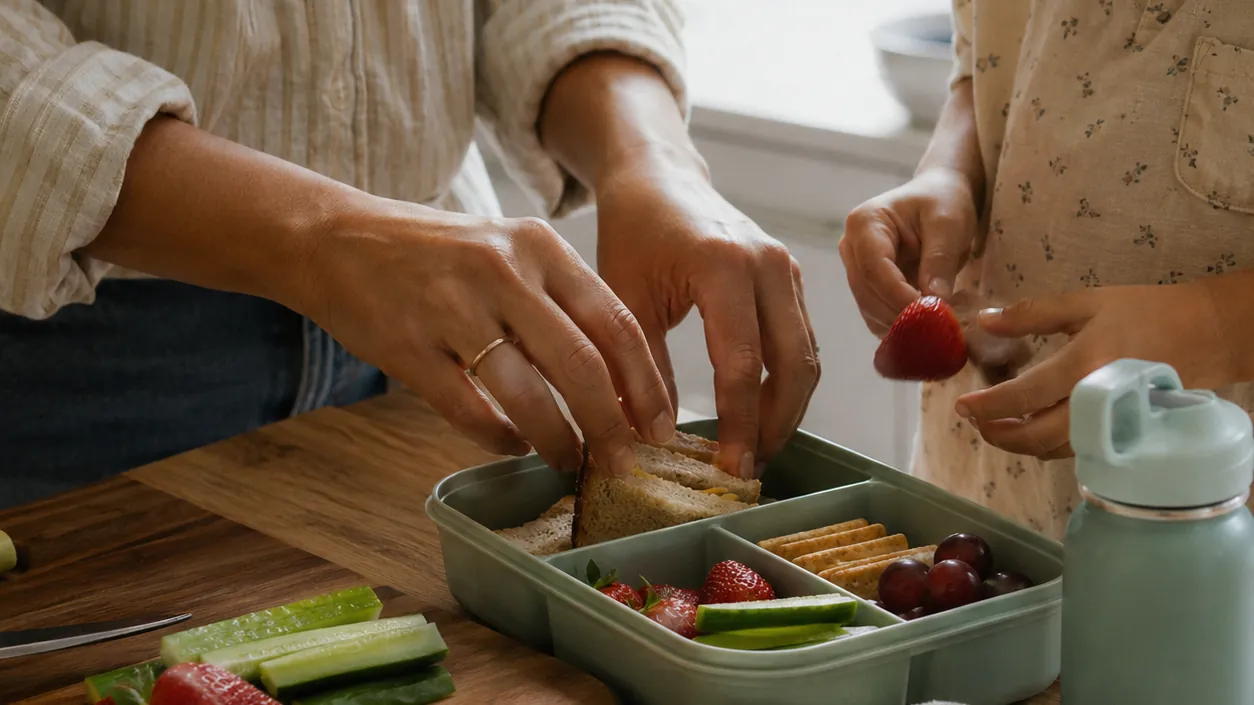
There is a moment at about four in the afternoon when you look down the table at a plate holding one bread roll and two slices of apple, and you feel something you were not expecting to feel about a bread roll.
Everyone cooked for two days. He is eating the thing that required no cooking at all.
What follows is the version that works, and the two places it usually falls apart.
What goes on the plate
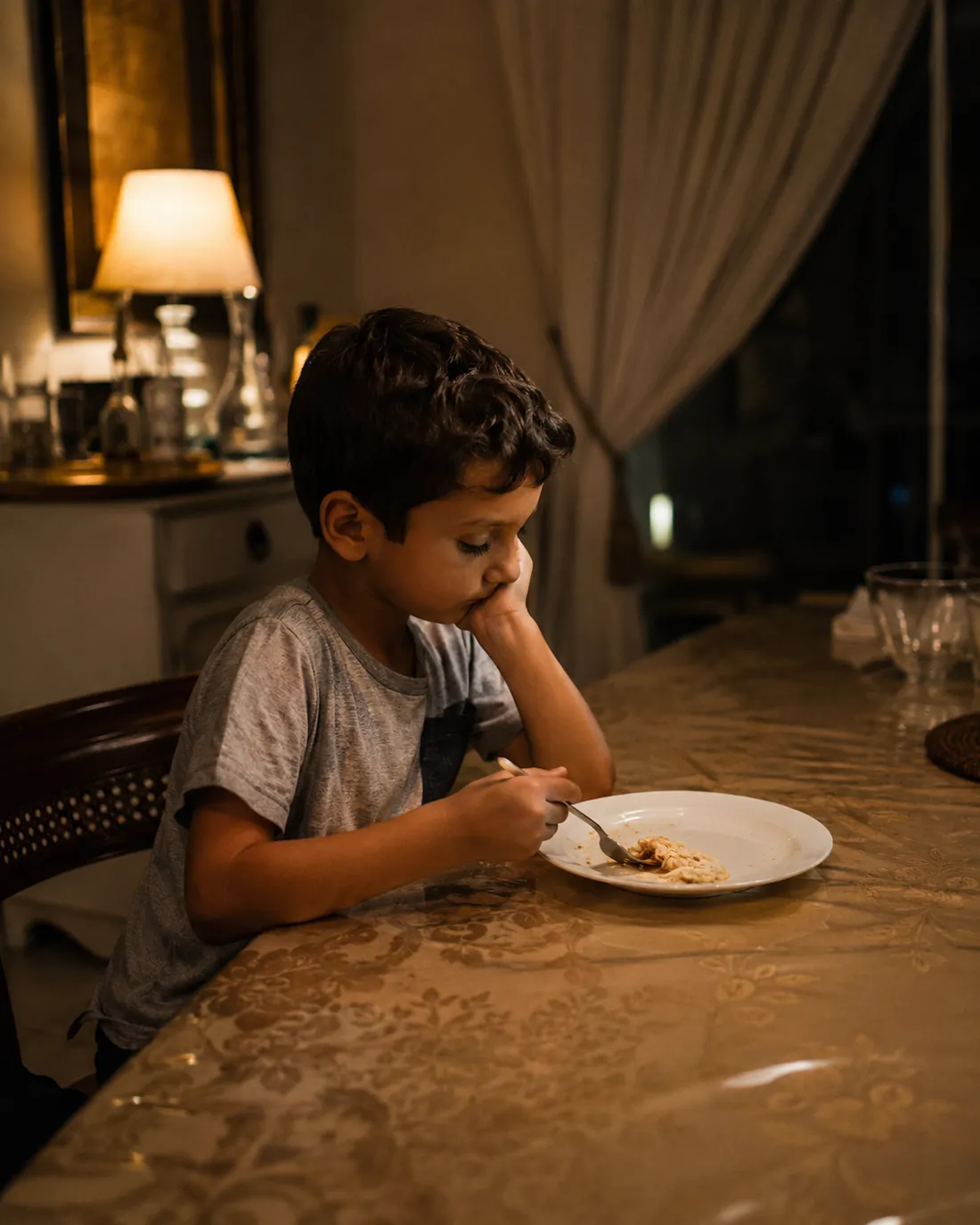
Keep it plain and keep it recognizable. Plain roast turkey cut small. Mashed potato without much butter through it. A plain roast carrot or a piece of sweet potato with nothing on top. Bread. Fruit.
Then the things to leave off, which matter more than people expect. Anything with a sauce poured over it, because a toddler who is unsure about turkey is not going to be persuaded by gravy on top of it. Anything with whole nuts or whole grapes. The marshmallow topping, which will end the negotiation about everything else on the plate the moment it is spotted.
The plate should look like a smaller, plainer version of the table. Not a separate menu. That distinction sounds like hair splitting. It is not. A separate menu quietly tells a child that the family food is not for them. That undoes a year of the slow work described in who is in charge of what at mealtimes.
Give them a job in the kitchen first
The single thing most likely to shift how much a small child eats is not what you serve. It is whether they helped make it.
Klazine van der Horst and colleagues tested this properly, in a study of forty seven children aged six to ten published in Appetite in 2014. Half the children helped cook the meal, half had it cooked for them by a parent. The children who cooked ate 76 percent more salad, 27 percent more chicken and around a quarter more calories overall than the children who did not.
Those two words, positive and in control, are the mechanism. It is not that stirring makes food taste better. It is that a child who put the carrots in the dish arrives at the table as a participant rather than as somebody being served something.
Your two year old is younger than the children in that study and cannot cook. She can still tip a bowl of carrots into a roasting tin, tear bread for the stuffing, or carry the butter. Say what it is out loud when it lands on the table. “Amira did the carrots.” Watch what happens to the carrots.
Feed them before the meal, not at it
This feels like cheating. It is scheduling. Thanksgiving dinner lands at an hour that suits nobody under five, after a morning of noise and a car ride and probably a missed nap. Expecting a full plate out of that is expecting a child to be at their best at the exact moment they have the least left.
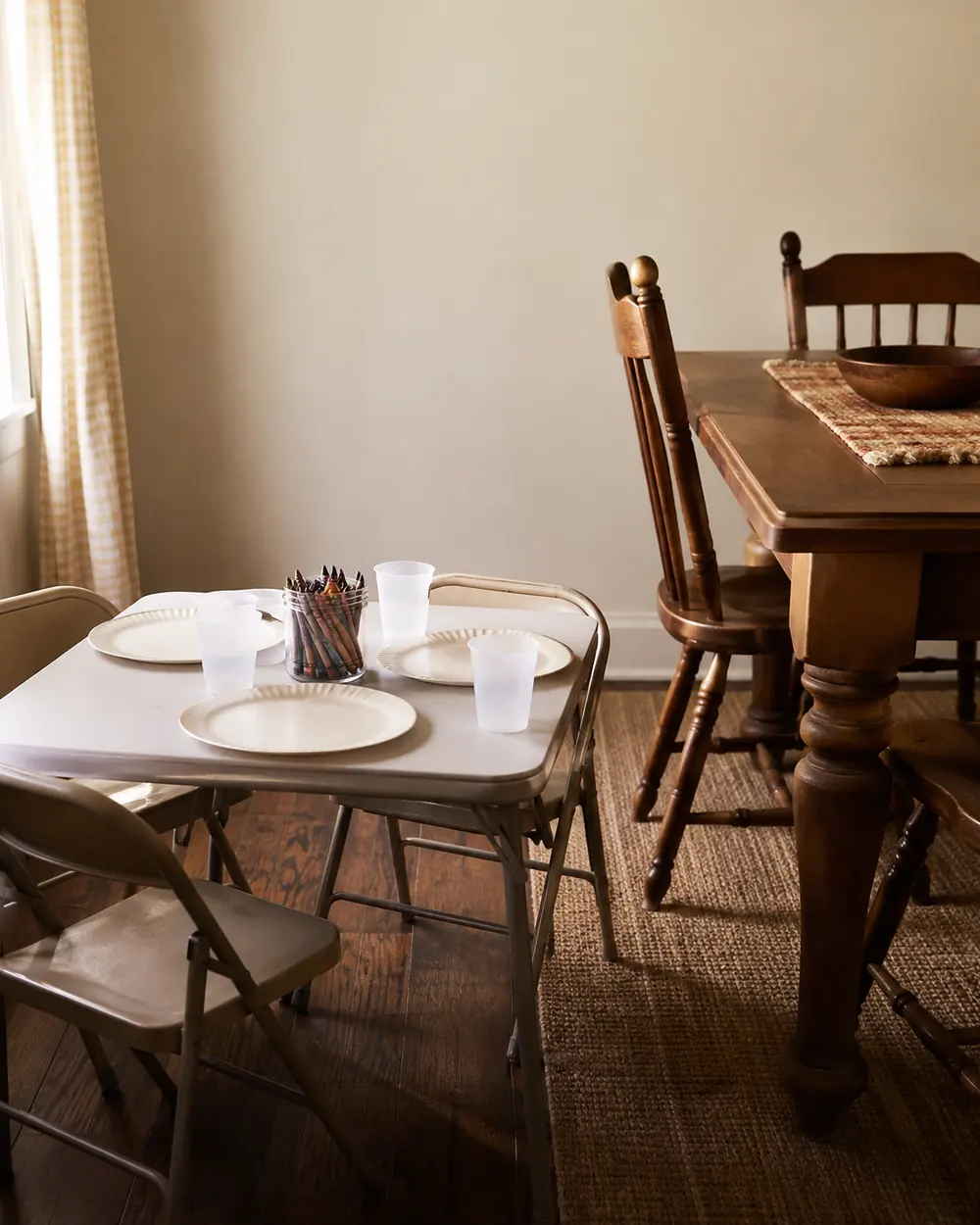
If there is a kids’ table, it works on the same principle. It needs its own food rather than smaller portions of ours, and it needs an adult within eyeline. A kids’ table in another room is not a kids’ table, it is a holding pen, and the children can tell.
The relatives are the harder part
Somebody will say something. Usually kindly, usually a version of “he doesn’t eat much, does he”, occasionally something with more edge about how children ate in their day.
Answer once, lightly, and move the conversation on. “He grazes, he’s fine.” That is the whole script. The comment is nearly always about the relative’s own memory of mealtimes. It is not about your child. And defending yourself in detail at the table does one thing you will not want. It teaches a watching toddler that what he eats is a subject adults argue about.
If the relative in question tends to keep going, that is a wider pattern and it has its own piece, the grandparent who knows the rule and thinks it is silly. Thanksgiving dinner is not the place to settle it.
One plate that helps more than it should
A divided plate or a small compartment box is worth having on a day like this, and not for the reason people usually give. It is not about portion control. For a lot of two and three year olds, food touching other food is a genuine problem rather than a preference. A plate with walls in it removes an argument you do not need to have with an audience.
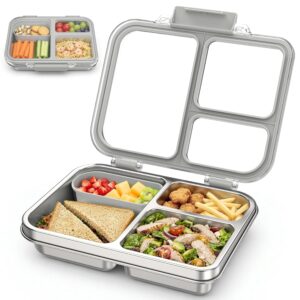
Stainless Steel Bento Box for Kids
As an Amazon Associate, Decoded Kids earns from qualifying purchases. Price checked live on Amazon.
Ours travels. It has been to four Thanksgivings and it means the plate is the same plate no matter whose house we are in, which turns out to matter to a child who is already dealing with an unfamiliar room, unfamiliar smells and someone else’s dog.
What a good outcome looks like
Not a clean plate. It looks like this: he sat at the table with everyone for twenty minutes, ate bread and fruit and two pieces of turkey, got down, and came back later for more bread.
Children eat to a weekly average rather than a daily one. One low-input meal in a loud room at an odd hour tells you almost nothing about how a child eats, and it certainly does not need fixing that evening. If the eating is a worry beyond the holiday, the ground to cover is in why children become fussy eaters in the first place and in the meals that get eaten on ordinary nights.
He had the bread roll. He had a second bread roll at seven. In the car on the way home he asked whether we could have the carrots again, which is the only review that has ever mattered.
Leave the first comment
Share your thoughts
Frequently asked questions
Plain roast turkey cut small, mashed potato without much butter, plain roast carrot or sweet potato, bread, and fruit. Skip anything with a sauce poured over it, anything with nuts or whole grapes, and the marshmallow topping. A toddler plate should look like a smaller, plainer version of the table, not a separate menu.
No, and you do not have to. Put two or three things from the actual table on their plate, plus one thing you know they eat. That is not a separate meal, it is a landing pad. Cooking something different signals that the family food is not for them, which is the opposite of what you want on a day like this.
Not for one meal. Children eat to a weekly average, not a daily one, and a big noisy meal at an odd hour with people they rarely see is a poor test of appetite. Bread and fruit at the table with everyone else is a better outcome than a full plate eaten alone in front of a screen.
Answer once, lightly, and move the conversation on. Something like "he grazes, he is fine" is enough. The comment is usually about the relative's own memory of mealtimes, not about your child, and arguing it out at the table teaches your toddler that eating is a subject worth fighting over.
At their normal time, with the family meal as a bonus rather than the main event. If dinner lands at four in the afternoon, feed them properly at midday. A hungry, overtired two year old at a long table is a different problem to a fussy eater, and it is the one that ruins the afternoon.

I'm for the parent mid-meltdown - theirs or the kid's. I write from the actual floor of it: the crying that won't stop, the dinner thrown, the bedtime that unravels. Blunt because I respect you too much to pretend it's easy. Just what tends to work.
More from NourWhat's the one thing that calmed the chaos in your house?
No right answers here - tell us how it went. Someone reading needs to hear it.
Join the conversation