
She Knows the Rule. She Just Thinks It Is Silly.

Second night of the visit and there is chocolate at nine o’clock, because Nana says one night will not hurt.
And it will not, actually. That is the annoying part. One night does no harm at all, and if you say anything you are the difficult one, in your own kitchen, at Christmas.
The trick is knowing which pile a thing belongs in before you are standing in the hallway with your coat still on.
How common this is
Extremely. The C.S. Mott National Poll put this to 2,016 parents. Nearly half had fallen out with a grandparent over how their child is raised.
What they row about is worth knowing, because it is not random. Discipline comes first by a distance, then meals, then screens.
Forty percent said Nana was too soft. Fourteen percent said too strict. Nobody talks about that second group, and it is often the harder one.
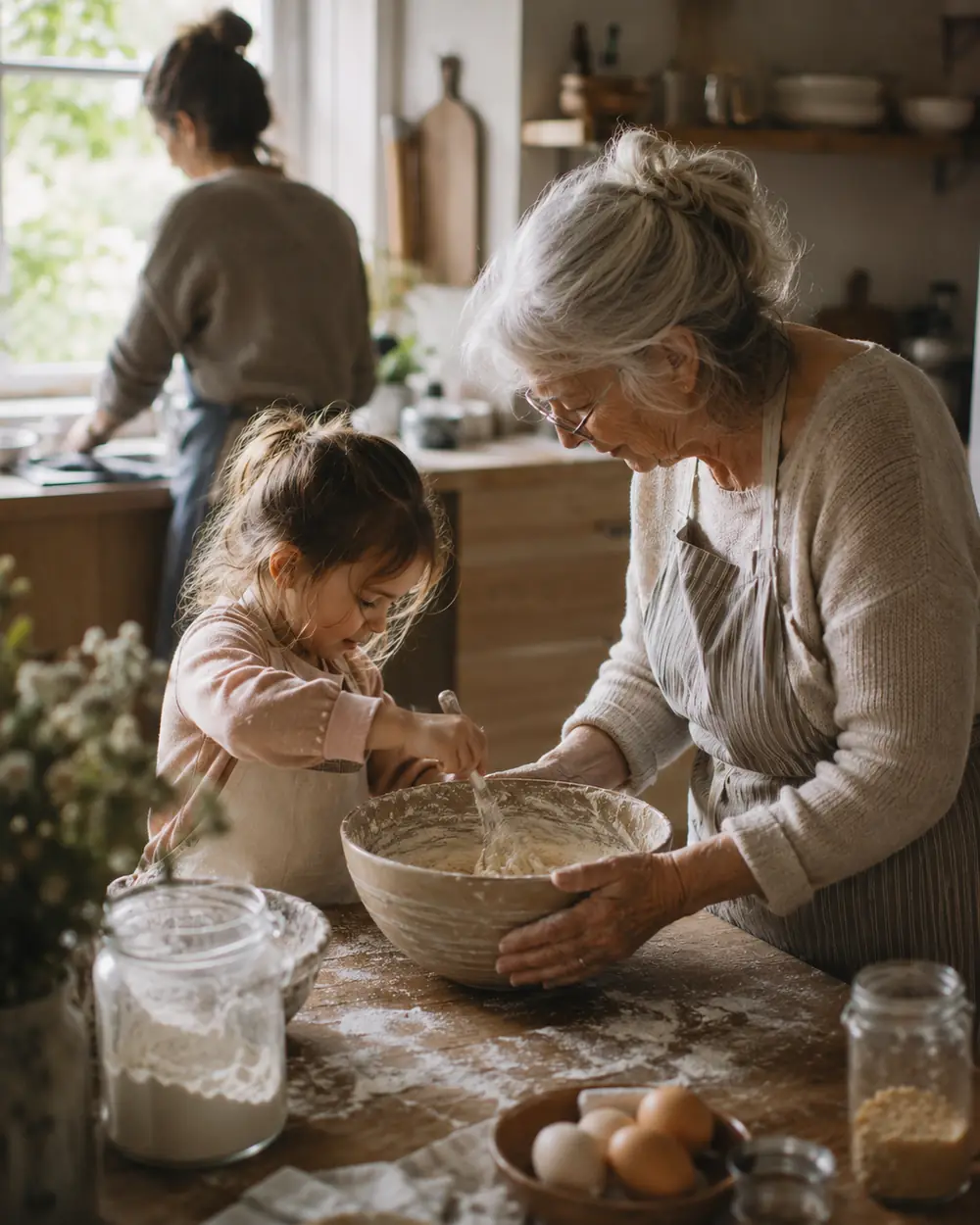
Strain on the relationship, note. Not damage to the child. The bill for this is nearly always paid between the adults, and the thing worth protecting is the one in the photograph above.
The two piles
Pile one is short and you never negotiate it. Car seats. Medication and allergies. Who is allowed to collect them. Water and supervision. Anything a doctor told you. These get said once, clearly, and without softening.
Pile two is everything else, and it is longer than most of us want to admit. Bedtime drifting by twenty minutes. Candy before dinner. A movie with a rating you would have checked. Being carried when they can walk perfectly well.
Pile two is what grandparents are for. A house where the rules bend a little is a good thing for a child to have, as long as it is not the house they live in.
It gets harder with more than one child, because the softness is rarely spread evenly and the older one notices within an hour. That is a fairness problem rather than a rules problem, and the piece on siblings keeping score is the better guide to it.
The hard part is that most fights start in pile two and feel like pile one. What is being poked is not the bedtime. It is whether you get to decide. Worth spotting in yourself before you open your mouth.
Saying it so it lands
Ahead of the visit, not during it, and by phone rather than in a text that can be read in three different tones.
Lead with the why, and keep it to one line. “He falls apart by four if he is up past nine, so we are holding bedtime this week” beats “we have a rule about bedtime” every time.
The first is a fact about your child. The second is an order about hers.
Give them something to say yes to. Grandparents handed a job they own, the bath, the bedtime story, the walk to the store, argue much less about the ones they do not.
Most of this was never about cookies. It is about being useful in a house that no longer needs them the way it used to.
Food is the second most common flashpoint in the poll, and it has its own script. Handing over one meal they are in charge of usually ends the discussion, and the everyday guide to a picky eater is worth reading before you hand it over.
If your parents and your ex’s parents both have opinions, the same script works twice. Agree the wording between the two households first, which is the same principle as keeping the two homes recognisably similar, and a good deal easier if the co-parenting basics are already settled.
When it keeps happening
In the same poll, most did change something once they were asked. Seventeen percent refused flat out. That is the group where parents ended up cutting the visits back, which nobody wants and everybody threatens.
Before you get there, try naming the pattern rather than the incident. “This is the third visit where bedtime has gone” is a conversation. “You gave him chocolate again” is an argument, and it will be about chocolate for forty minutes.
What you are buying

A few hard days after they leave. That is real, and nobody warns you.
Two late nights and endless cookies give you a child who is wrecked and unreasonable by Wednesday. The fix is boring. Normal bedtime, normal food, and no lecture about whose fault it was.
Build in a landing day if you can. The reset is easier when nobody has school the next morning, and screens usually take the biggest hit in that first day back, which is its own conversation covered in the piece on how much screen time is too much.
What you get back is a child with an adult in their life who thinks they are marvelous, with no conditions on it. That is not nothing. It may be the whole point of grandparents, and it is why a slightly relaxed house is worth having, as long as somebody keeps the ordinary one running.
Mine hands out chocolate at nine and always has. I have stopped counting. I do still hide the good cookies.
Leave the first comment
Share your thoughts
Frequently asked questions
On safety and health, yes, without discussion. On everything else, a little flexibility is fine and arguably good for a child. Sort your rules into those two piles before the visit so you know which ones you are prepared to defend.
Very. A national poll of 2,016 parents found nearly half reported disagreements with at least one grandparent. Discipline was the most common topic at 57 percent, followed by meals at 44 percent and screen time at 36 percent.
Before the visit rather than during it, by phone, in one sentence that leads with your child rather than with the rule. Name the pattern instead of the latest incident, and offer them a job they own so the conversation is not only about what they cannot do.
Do not correct them there. A child who watches two adults dispute who is in charge learns that rules are negotiable and starts shopping between adults. Hold the rule quietly in the moment and take the conversation to another room afterwards.
Late nights, different food and a lot of attention add up, and the bill arrives once everyone has gone home. Go straight back to the normal routine without a lecture about whose fault it is, and give it two or three days.

I'm for the parent doing it largely alone. I've done the single-dad decade - two homes, one income, the handovers, the very quiet Tuesdays - and I write from the far side of most of those days, with humor and hard-won calm. Not advice from above; a hand back from a few steps up the road.
More from DiegoWhat's the one thing that calmed the chaos in your house?
No right answers here - tell us how it went. Someone reading needs to hear it.
Join the conversation