
The Craft That Survives the Day Has a Job
By eleven in the morning there were four paper turkeys on my kitchen table and nobody had looked at any of them for twenty minutes.
They were fine turkeys. Googly eyes, feathers in the right order, one with a scarf for reasons my son could not explain. And they were already finished in the way that children’s crafts are finished, which is to say abandoned somewhere between the last bit of glue and the next idea.
This is not a lecture about screen time or slowing down. It is a practical observation from three Novembers of making things at that table. The crafts that survived were the ones that were needed.
Why most of them are forgotten in ten minutes
Look at what a printable Thanksgiving craft usually asks a child to do. Cut along the line. Glue the feather where the feather goes. Copy the picture at the top of the page. There is a right answer and an adult already knows it.
Early childhood educators have a name for the difference. The National Association for the Education of Young Children draws a line between product-focused art, where children follow instructions to recreate a sample, and process-focused art, which it defines by three things: no step-by-step instructions, no predetermined sample to copy, and a deliberate emphasis on the child choosing.
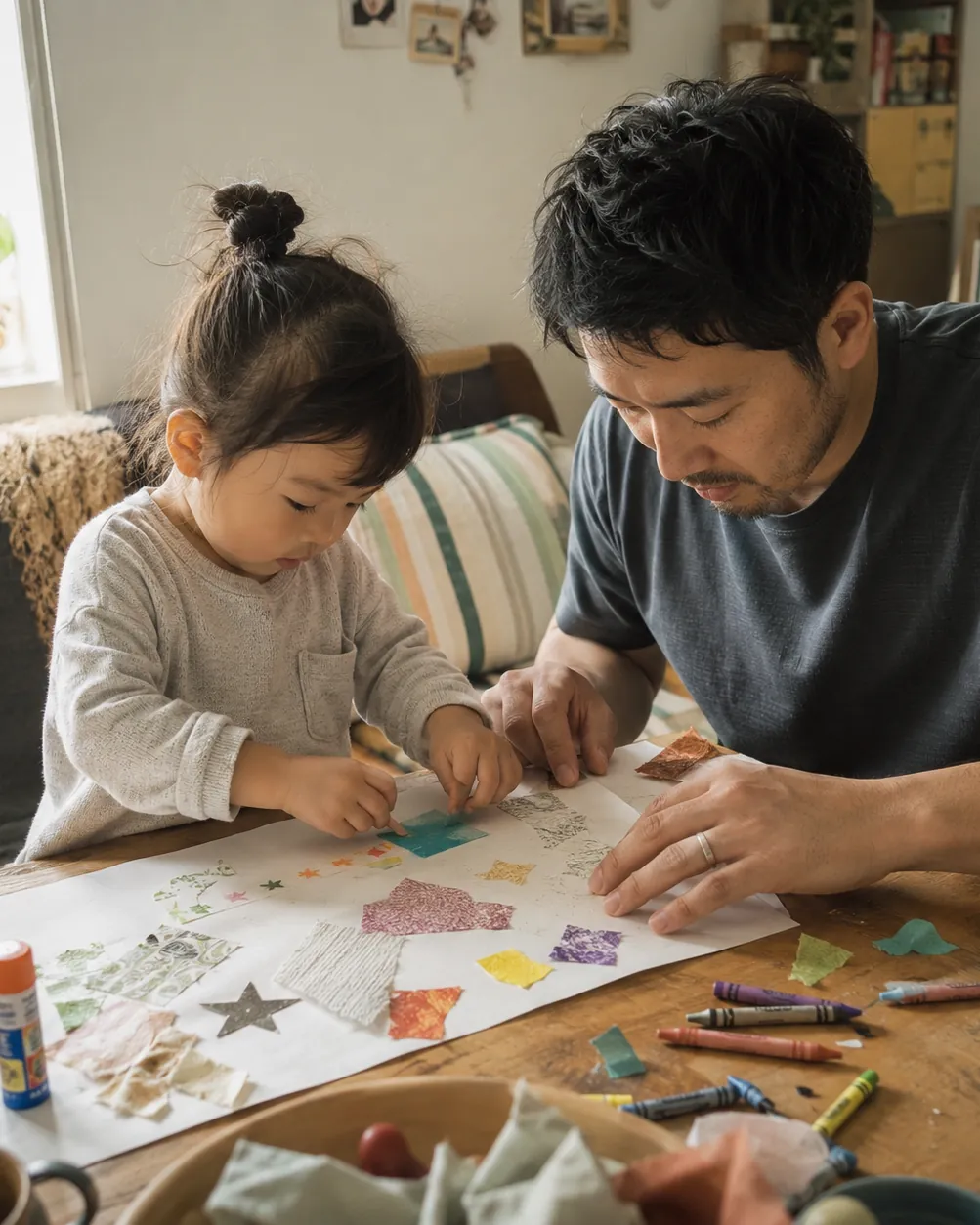
You can feel this at your own table. Hand a five year old a template and she works quickly and quietly and puts it down. Hand her a pile of leaves, a glue stick and a length of string and she is still there forty minutes later, telling you about the one that looks like a hand.
Neither version is wrong. A template is a fine way to fill the half hour before the guests arrive. But if you have wondered why the craft you planned lasted no time at all, that is usually why.
Give it a job
The fix is small and it changes the whole afternoon. Before you start, decide out loud where the thing is going.
- Place cards. One folded card per person, the name written by whoever can write and drawn on by whoever cannot. Children who make the place cards will walk the table twice to check nobody has moved.
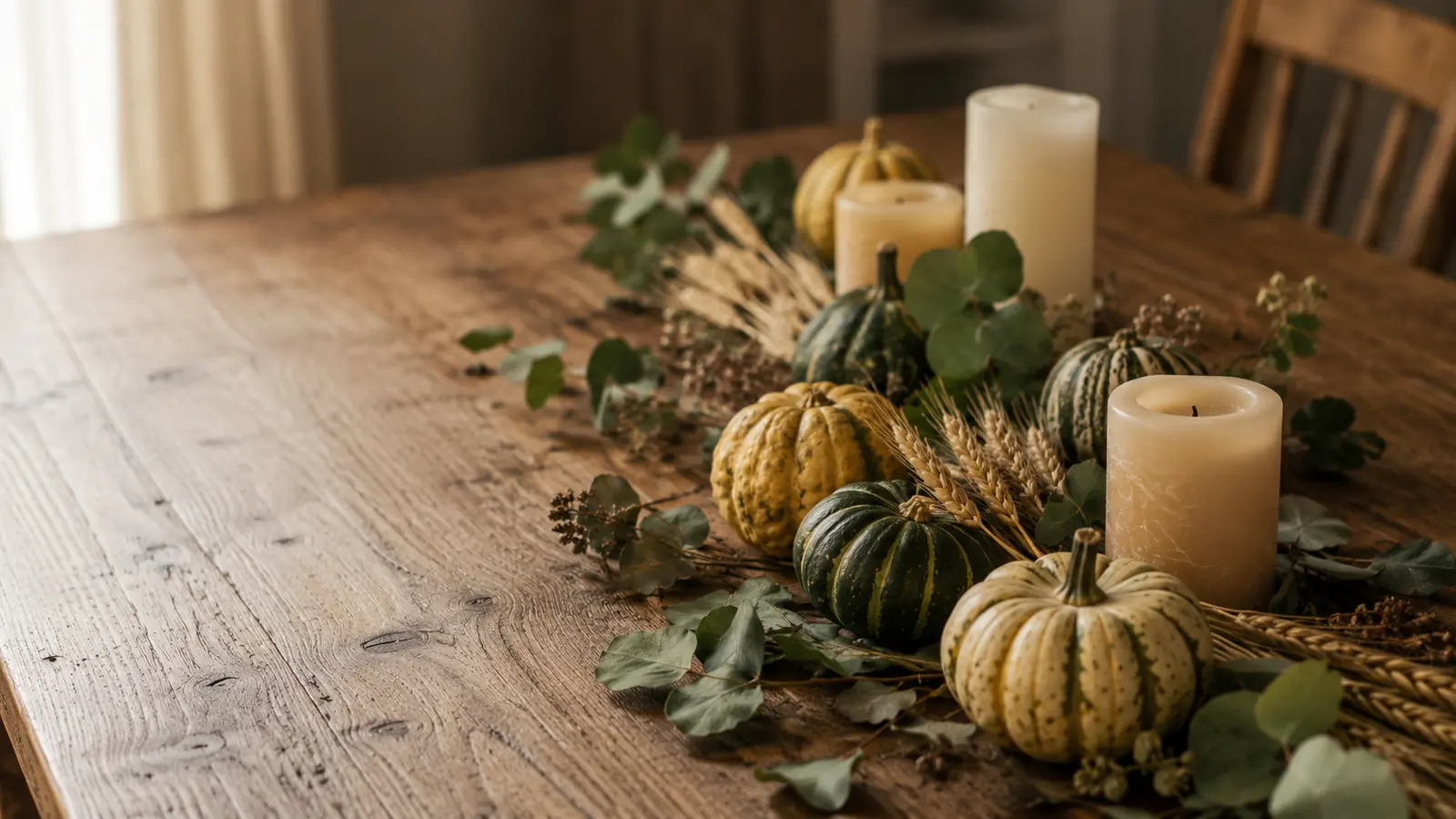
- The centrepiece. Gourds, pine cones, a few sprigs of anything from the garden, arranged down the middle. There is no wrong version, which is the point, and it stays on the table all day where everyone sees it.
- A gratitude jar. A clean jar, strips of paper, a pen. People add to it during the meal. This one gets read aloud, which means the child who made it hears their own work being used.
- The door. A wreath of paper leaves, or just a taped-up banner. It greets people. Children stand next to it when the doorbell goes.
- The handprint turkey. Keep it, but give it a job too. Ours becomes the label on the leftovers container that goes home with grandparents.
None of these are new ideas. What is different is the order you do them in. Job first, craft second. The child is not making a turkey, they are making the thing that tells Uncle Ray where to sit, and those are different activities even when the glue is identical.
The mess is the part you plan, not the part you survive
Worth knowing as well: the praise you give at the end matters more than the craft did. “You worked on that for ages” lands differently from “that is beautiful”, and the reason is the same one we went into in why praising the result backfires. Effort is something a child can do again tomorrow. Beautiful is a verdict.
Move it off Thanksgiving day
The strongest version of all of this is not on Thanksgiving at all. It is the Sunday before.
The kitchen is free, you are not also cooking, and the children get to hand something over when the guests arrive instead of orbiting them. That handover matters more than the craft. A four year old with a job at the door is a different child from a four year old with nothing to do and eleven adults talking over her head.
It also takes some load off the meal itself. A child who has already been useful is easier at the table, and the table is where the day usually gets difficult, particularly if yours eats bread and two carrots while nine adults watch.
What to do with them afterwards
Give each one a week and then a decision. The centrepiece stays until the weekend. The place cards go in the recycling on Friday, in front of them, without ceremony. The handprint turkey gets photographed and the photograph is the thing you keep.
Children mind this far less than parents do. What they object to is the craft disappearing without ever having been looked at. Seen, used, then gone is a fine sequence. Straight into the trash while they are asleep is the one that stings, and they always find out.
For the sensory-sensitive child, one more note. Glue on the fingers is a genuine problem for some children rather than a fuss, and a craft table with a damp cloth on the corner solves most of it. There are more ideas along those lines in the sensory play list, and if the wider day is the harder part, the four hours before anyone sits down is the one to read.
The scarf turkey ended up taped to the leftovers box, which traveled ninety minutes to my mother in law’s house and came back in January. He asked about it twice.
Leave the first comment
Share your thoughts
Frequently asked questions
The easiest ones use what is already in the house and finish in under fifteen minutes: a handprint turkey, place cards folded from card, a gratitude jar made from a clean jam jar. Easy is not the same as good, though. The ones children come back to are the ones that get used at the table later in the day.
Around two, if you accept that a two year old's craft is mostly pressing and sticking. Three to five is the sweet spot for handprints and gluing. From about six they can cut, plan and finish something in one sitting, which is when a craft can carry a real job like laying the table.
Decide the clean-up before you start, not after. One tray per child, one glue stick rather than a bottle, and paints only if you are already planning to wipe the table. If the clear-up is bigger than the activity, you will be short tempered by the end and they will feel it.
Give each one a place for the week and a decision at the end of it. The centrepiece sits on the table. The place cards go in the recycling on Friday. Photograph the handprint turkey and keep the photo rather than the paper. Children mind far less about the throwing away than parents expect, as long as it was seen first.
Yes, but move them off the day itself. A craft on the Sunday before takes the pressure off, gives the children something to hand over when the guests arrive, and means the morning of Thanksgiving is not also a craft session in a kitchen that is already full.

I'm for the parent standing in the bookshop, overwhelmed. I read them all - the wise, the smug, the single good idea stretched to 240 pages - so your nightstand stack stays short. I'll point you to what's truly worth it, and kindly, what to put back.
More from MeiWhat's the one thing that calmed the chaos in your house?
No right answers here - tell us how it went. Someone reading needs to hear it.
Join the conversation