
Oppositional, or Overloaded? What ODD and ADHD Look Like Side by Side

You asked him to put his shoes on four times. The fourth time your voice did the thing you promised yourself it wouldn’t do, and he looked straight at you and said no.
And you stood there in the hallway running the same two questions you’ve been running for months. Is this the ADHD? Or is this a kid who has worked out that nothing happens when he refuses?
Nobody at school will answer that for you. So here is the honest version, including the part where the line is blurrier than anyone’s checklist admits.
The short version: ADHD is a problem with the brakes. ODD is a pattern of hostility aimed at whoever is in charge, held over months. They look identical in the hallway and they overlap constantly, because somewhere between a third and half of kids with ADHD also meet the criteria for ODD. The useful question at home isn’t which label fits. It’s whether your kid couldn’t stop, or wouldn’t, and those two need different help.
What each one describes

ADHD is a wiring difference in the systems that hold attention and park an impulse. Those same systems keep a plan in mind long enough to finish it. The behavior you see is the overflow. He interrupts because the thought arrived and the gate didn’t close. He blows up over a small no because the brakes on feeling are the same brakes that are already worn out by four o’clock.
ODD describes something different: a lasting pattern of angry, argumentative, defiant behavior pointed at adults with authority. The clinical bar is deliberately high. It has to run at least six months. It has to show up more than in other kids the same age. And it has to cause real trouble in real life. Two rough weeks after a house move doesn’t qualify, which is the safeguard people forget.
The trap is that the raw footage is the same. Refusing. Arguing. Blowing up. You can’t tell them apart by watching one afternoon, and neither can anyone else. So when someone diagnoses your kid in three sentences at a birthday party, feel free to let it go past you.
ADHD clearly appears to be a problem of willpower failure, but it is actually a problem with the interacting dynamics of emotion, working memory, and the chemistry of the brain.Thomas E. Brown, PhD, clinical psychologist and ADHD researcher
How often they arrive together
Very often, which reframes the whole question. This is not usually a fork in the road where your child goes down one path or the other.
Read that number the way it deserves to be read. If your ADHD kid also looks oppositional, you’re in the middle of the pack. You’re not out at some worrying edge of it.
It also means two things can be true at once. He has ADHD, and he is genuinely defiant with you. Plenty of parents spend a year talking themselves out of that second one because saying it feels disloyal.
Ask whether your child couldn’t, or wouldn’t
Forget the labels for a second, because at 8am in the hallway they’re useless to you anyway. Ask a smaller question about the moment in front of you.
Signs it was couldn’t: it happens most when he’s tired, hungry, or has just come out of holding himself together somewhere else. He’s as surprised as you are afterwards. He can tell you the rule perfectly, five minutes later, while genuinely not knowing why he broke it. It happens with things he wants to do, which is the tell that gives it away.
Signs it was wouldn’t: the refusal is aimed, it’s aimed at you specifically, and it evaporates for the football coach. It shows up around control rather than around load, and there’s a flicker of watching to see what you’ll do. It’s steady rather than spiky.
Most real children give you a mix, and the mix changes by the hour. That’s not you failing to observe. That’s what the overlap looks like from the inside. If the pattern at home looks nothing like the report from school, that gap has its own explanation, and we’ve written up why a kid can hold it together all day and fall apart with you.
Why the label question matters less than it feels like it does
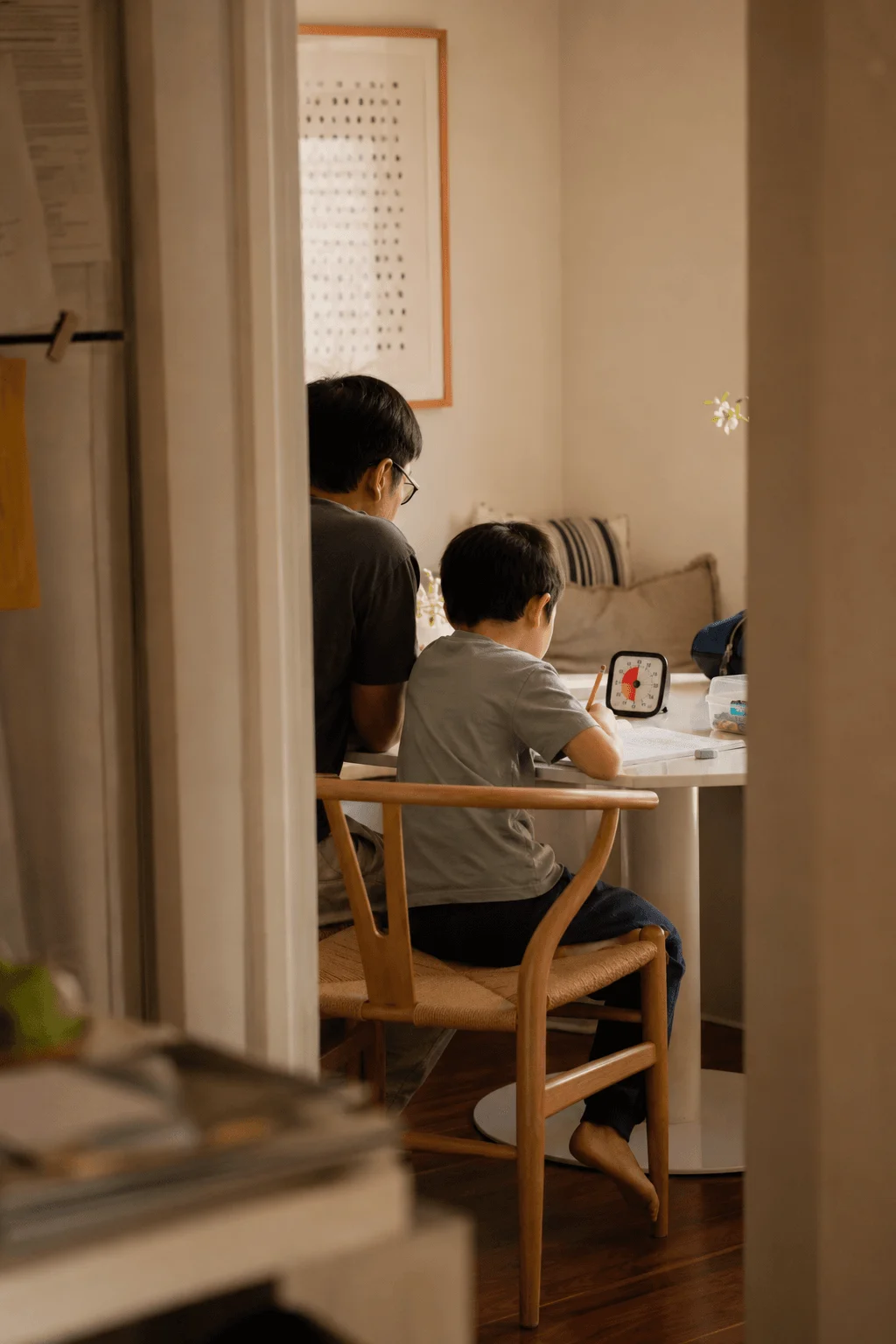
Here’s the part that surprised me when I first went looking. At home, the advice that follows an ODD assessment and the advice that follows an ADHD one land in almost the same place. Fewer, clearer demands. A warning before transitions. Repair after the blowup instead of a lecture during it. Catching the twenty seconds when it went right.
What the label really changes is paperwork and access. It changes what school has to do, what insurance will pay for, and which door you get to knock on. That’s not nothing. It’s just not the thing that changes Tuesday evening.
So if you’re stuck on a waiting list, you are not stuck on the parenting. You can start the part that helps now. Our piece on the difference between a kid having a hard time and giving you one is where most families find the first real foothold, and the honest look at what an ODD diagnosis does and doesn’t explain covers what the word buys you once it’s on paper.
What not to do: don’t let anyone hand you a label as a personality verdict, in either direction. “He’s just oppositional” closes the case on a child who might be drowning in demands, and “it’s all the ADHD” can wave away a genuine power struggle that needs addressing. Both sentences end the investigation early, and your kid is the one who pays for that.
What to bring to the appointment
Whoever assesses him will lean heavily on what you and his teacher report, so arrive with specifics instead of adjectives. Two weeks of notes beats an hour of describing.
Write down what happened right before as well as what happened. Note the time of day, because a pattern that clusters at 4pm and 8pm is telling you about depletion rather than about character. Note where it doesn’t happen at all, and with whom. Note whether he can name the rule afterwards. Bring the school’s version even when it contradicts yours, because the contradiction is data too.
And say the quiet part out loud to the clinician: that you can’t tell whether he can’t or won’t. That’s not a confession of bad parenting. It’s the single most useful thing you can hand a professional, because it’s the exact thing their assessment exists to untangle.
Watch the moments, not the label
Take the notes for two weeks and look at when it happens rather than what to call it. The pattern usually shows up before the paperwork does, and it’s the pattern you can do something with tonight.
Frequently asked questions
ADHD is a difference in attention, impulse control and emotional braking, so the behavior is usually overflow. ODD describes a lasting pattern of angry, argumentative, defiant behavior aimed at authority figures, running at least six months and beyond what is typical for that age.
Yes, and it is common. CHADD estimates that roughly one-third to one-half of children with ADHD also have coexisting oppositional defiant disorder. Having both is an ordinary combination rather than a rare or especially alarming one.
They look at pattern, duration and target. Behavior across several settings that tracks with tiredness and demand load points toward ADHD. Behavior held over months, aimed at adults in authority and focused on control, points toward ODD. Parent and teacher reports carry most of the weight.
Ask whether he couldn’t or wouldn’t. Struggling usually spikes with tiredness, hunger and transitions, surprises the child afterwards, and shows up even on things he wanted to do. Defiance is steadier, aimed at particular people, and built around control rather than around load.
Less than parents expect. Home strategies overlap heavily: fewer and clearer demands, warnings before transitions, repair after conflict rather than lectures during it. What the label mainly changes is access, meaning school obligations and what insurance will cover.
Leave the first comment
Share your thoughts

I'm for the parent whose mornings keep falling apart. I didn't train in ADHD - I lived it with three kids, then read the actual studies, so what you get here holds up in a real kitchen at 7:50 a.m. Specific, tested at home, never preachy.
More from MarcusWhat finally made your child's focus click - even a little?
No right answers here - tell us how it went. Someone reading needs to hear it.
Join the conversation