
Christmas Day Is Fourteen Hours Long. Your Kid Has About Four in Them.
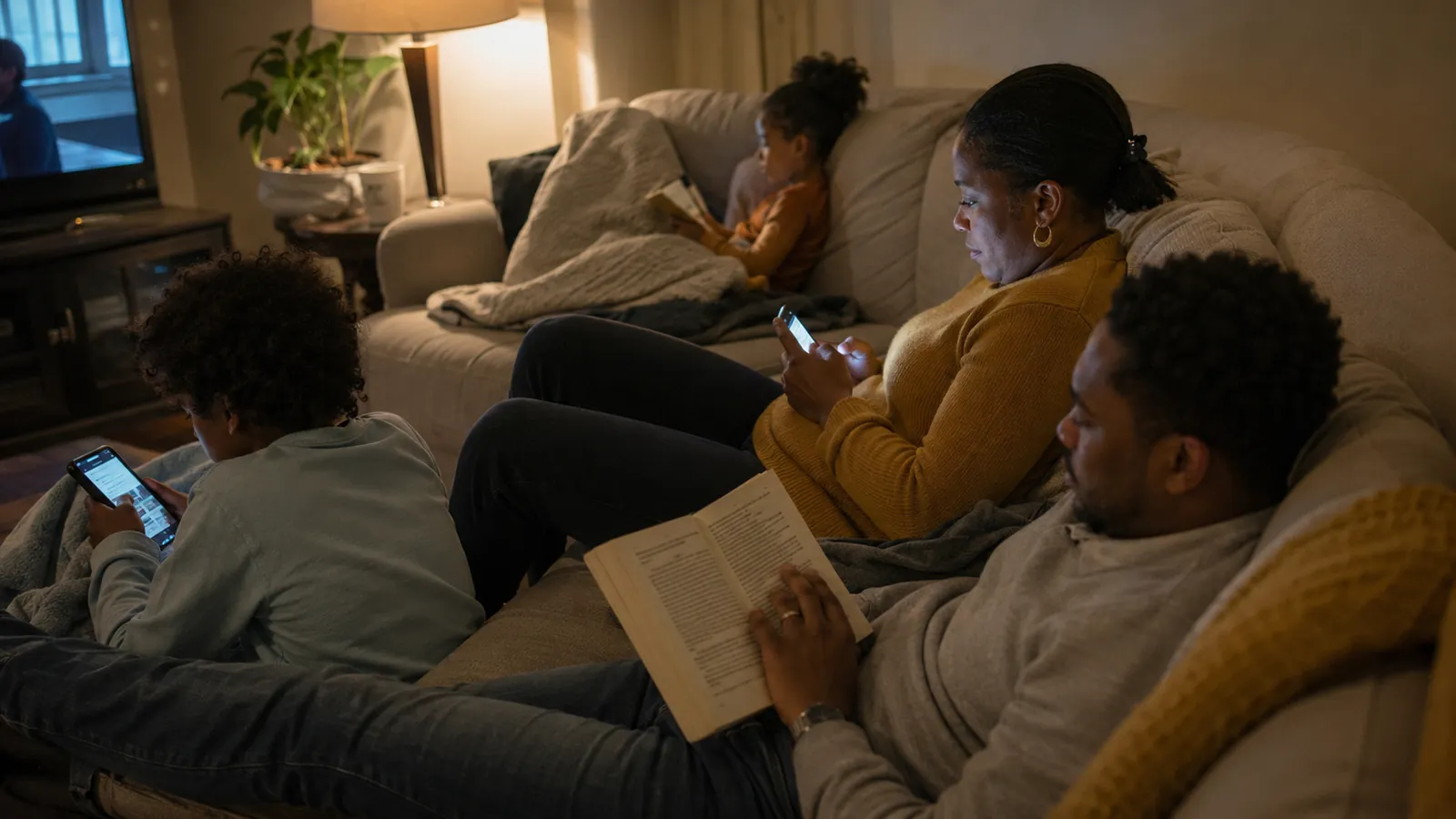
By four in the afternoon he was under the dining table with his palms clamped over his ears, and an aunt said the quiet thing out loud. That he was spoiled. That he had been given too much.
He had not been given too much. He had been switched on too long.
Nobody warns you that the best day of the year is built like an endurance event. Fourteen hours of noise, relatives, new textures, sugar, waiting, and a house that suddenly smells and sounds like somewhere else. For plenty of kids that is the fun. For yours it is a shift with no breaks in it.
Why the happiest day is the hardest one
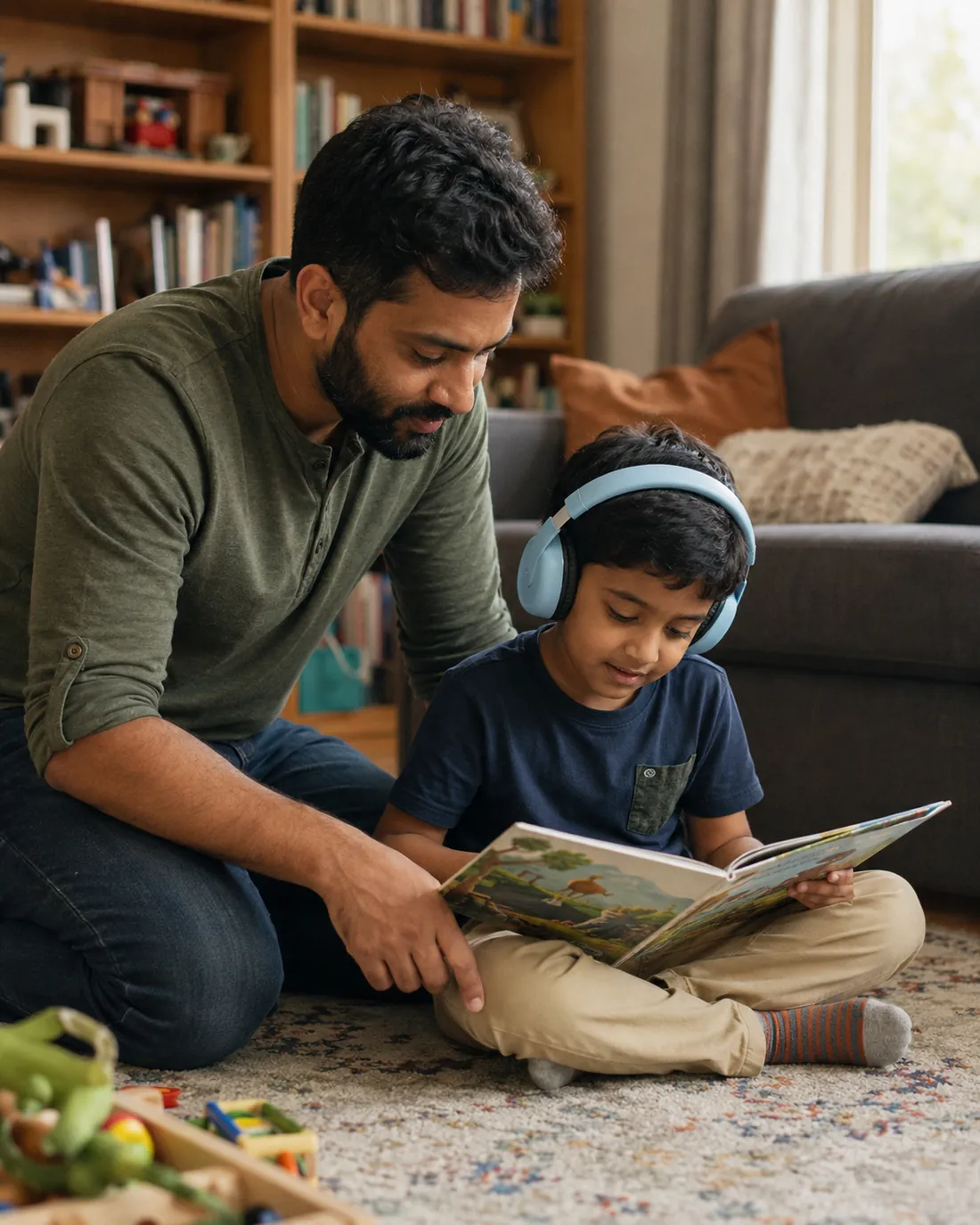
Christmas takes away every support your kid leans on, and it does it all at once. The routine goes. The furniture moves. Lunch happens at a strange hour, in a room full of people who want a hug and a thank you.
The part that catches most of us out is that the load adds up. One loud moment is not what tips him over. Hour nine of a day that never once went quiet is what does it, and his morning was already full by the time the crackers came out. We wrote a separate plan for the morning itself, because that hour fails for its own reasons.
Roughly one in seven kindergarten-age children shows enough sensory difficulty for a parent to flag it on a screening questionnaire, going by the Ahn and Miller survey of 703 families. So the kid under the table is not rare. He is just having a harder day than the room understands.
Which version of hard depends on the child. Some kids hunt more input on a day like this, crashing about and climbing and shrieking. Others spend the whole day trying to get away from it. We pulled that apart properly in our piece on why a calm down corner built for the wrong kid quietly fails, and it is worth knowing which one you have before you plan anything.
She goes on to say she has two options with that microphone. Leave it on and get flooded, or switch it off. There is no dial in between.
Sit with that on 25 December. Your kid is not choosing to find the room unbearable while everyone else finds it lovely. He has no volume knob, and you have just walked him into the loudest room of his year.
What fills up first
Noise goes first, nearly always. Not the volume so much as the layering, three conversations over a movie over a kettle over a doorbell.
People come next. Being touched, being watched while he opens something, being asked to perform gratitude on cue in front of an audience. Then waiting, which is its own particular torment when there is a wrapped thing in the room and a rule about when it may be opened.
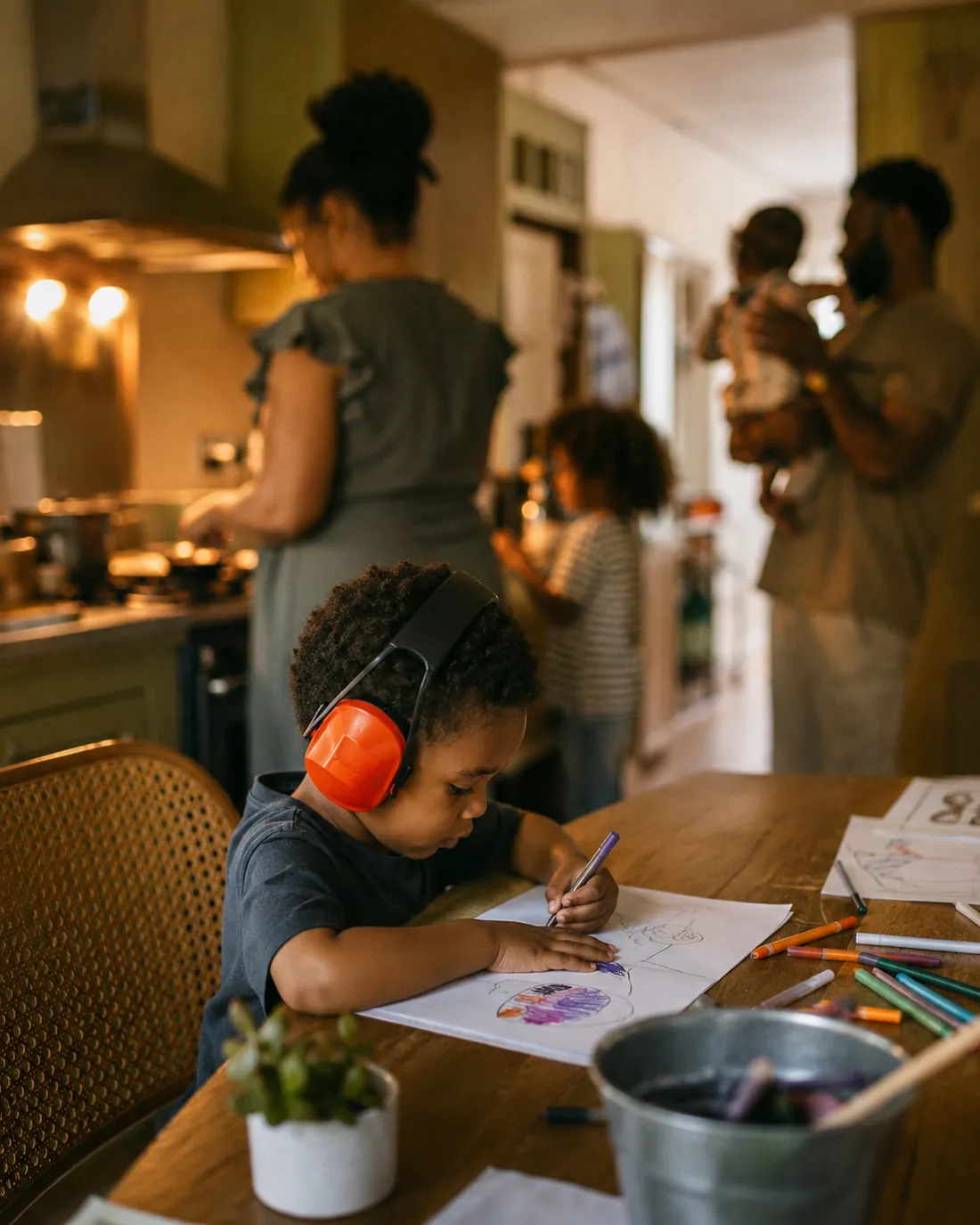
If noise is the big one for your child, ear defenders are the cheapest good decision you will make this month. We tested the pairs that survive actual use in our honest review of the Alpine Muffy, and there is a wider field of noise-reducing options for sensory kids if his head is between sizes or he refuses anything that clamps.
Give the day a shape he can feel
Most Christmas meltdowns I hear about happen in the gaps. That unbounded stretch between one thing and the next, when he has no idea whether the waiting is five minutes or fifty.
A child who cannot read a clock has no way to check for himself. So he asks, and asks again, and the asking is really anxiety looking for a handrail. Show him the time instead of telling him and a good chunk of that just stops.
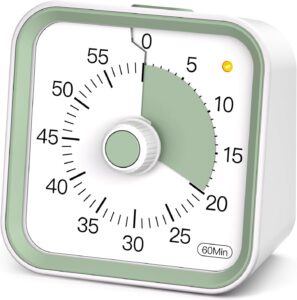
Visual Timer for Kids with Pause Function, 60 Minute Countdown Timer for Kids Desk Study, Teaching…
As an Amazon Associate, Decoded Kids earns from qualifying purchases. Price checked live on Amazon.
The pause button matters more than it sounds. Christmas never runs to plan, and a timer you cannot pause becomes one more thing that lied to him.
He needs somewhere to go before he needs it
Decide this in the morning, not at four o’clock. One quiet room, or the spare bed if that is all you have. Somewhere with a door and no television in it.
Then take him there before he is in trouble. That is the whole trick, and it is the part almost nobody manages, because leaving a lovely party to go and sit in a dim bedroom with your kid feels like missing Christmas. Twenty minutes of nothing at eleven in the morning is what buys you a child who is still standing at dinnertime.
What goes in that corner is not complicated. Something heavy for his lap, something quiet for his hands.
If none of that is in the house yet, the same thinking sits behind our stocking stuffers for sensory kids, which is largely the calm-corner kit broken into small wrapped pieces.
You are allowed to move Christmas
Open half the presents on Boxing Day. Eat at the normal time and let the adults have their long lunch later. And say no to the second house. Spreading a celebration over days instead of hours is also why Hanukkah activities for kids tend to sit easier with an overloaded child.
None of that is a smaller Christmas. It is the version your actual child can be present for, which beats the perfect one he spends under a table. Anyway, he will not remember the running order. He will remember whether the day felt safe. The same fairness question comes up for the children whose own day disappears into it, which is what a December birthday has to be planned around.
Frequently asked questions
Because the load builds all day rather than hitting at once. Noise, relatives, touch, new textures, sugar and a broken routine stack up for hours, and most kids reach their limit four to six hours before the day ends. The meltdown is a system that has run out of room, not bad behavior and not too many presents.
Pick a quiet room in the morning and take your child there for fifteen or twenty minutes before he seems to need it, then again every couple of hours. Preventive breaks work far better than rescue ones. Add ear defenders for the loud stretches and a visual timer so waiting has a visible end.
No. Ear defenders let a child stay in the room instead of leaving it, which is the opposite of avoidance. They lower the one input that overloads most kids first. Expect a comment or two from relatives, and treat it as you would glasses for a child who cannot see the board.
Usually not, if your child overloads easily. A pile of wrapped things creates pressure to perform excitement while managing noise and an audience at the same time. Spreading gifts across the day, or into Boxing Day, keeps each one enjoyable instead of turning the morning into one long surge.
Keep it short and factual: he processes noise and crowds differently, and short breaks are what keep him regulated. You are not required to win the argument at the table. Sensory difficulty shows up in roughly one in seven young children, so this is common, whatever the room believes.
Leave the first comment
Share your thoughts

I'm for the parent watching a feeling they can't name and wondering if it's normal. I've spent years close to the child-mental-health research and the specialists behind it, and I carry the heavy parts into plain language. I won't diagnose your child - I'll help you see what you're looking at, and say honestly when it's time to ask someone in person.
More from SofiaWhat finally made your child's focus click - even a little?
No right answers here - tell us how it went. Someone reading needs to hear it.
Join the conversation