
Nine Adults, Nine Gifts, and Nobody Wanted Most of Them

My brother in law got a cheese board last year. He has, at conservative estimate, four cheese boards. He said thank you in the voice people use for cheese boards, and put it under the chair.
Somewhere in the same room was a woman who had spent an hour choosing it, and forty dollars, and had driven it over.
Here is what works, and how to raise it without a row.
Why the current arrangement disappoints everyone

The economist Joel Waldfogel put a number on this. He asked people what their Christmas gifts had cost and what they would have been willing to pay for those same gifts themselves. The second figure was consistently lower.
In one survey the gifts cost around $438 and were valued by the people who received them at about $313. In another, $509 of gifts came out at $462. Waldfogel called the difference the deadweight loss of Christmas, and estimated that between a tenth and a third of the price of a typical gift evaporates.
That is not an argument for giving cash, and I would not enjoy a Christmas run that way. It is an argument for one thing only: the guessing is where the value goes. Every time somebody buys for a person whose taste they do not really know, a chunk of the money turns into a cheese board under a chair.
Four systems that work
- Draw names. One adult buys for one adult, budget agreed, wish list of three or four things per person. This is the default for a reason. It cuts twelve gifts to four and raises the spend on each.
- Consumables only. Everything given has to be eaten, drunk, burned or used up by February. No storage, no guilt, nothing to display for a decade out of politeness.
- One experience together. Everyone contributes what they would have spent, and it buys a day out or a meal in January when there is nothing else on. Works particularly well for families who see each other rarely.
- Charity draw. Each adult gives their amount in another adult’s name, to something that person cares about. Then a card at the table saying where it went. Better than it sounds, and it survives the years when somebody is out of work.
Any of these beats the current arrangement. The one to avoid is the halfway house where three people opt out and everyone else carries on, because that produces exactly the awkwardness the change was supposed to remove.
The wish list is not unromantic
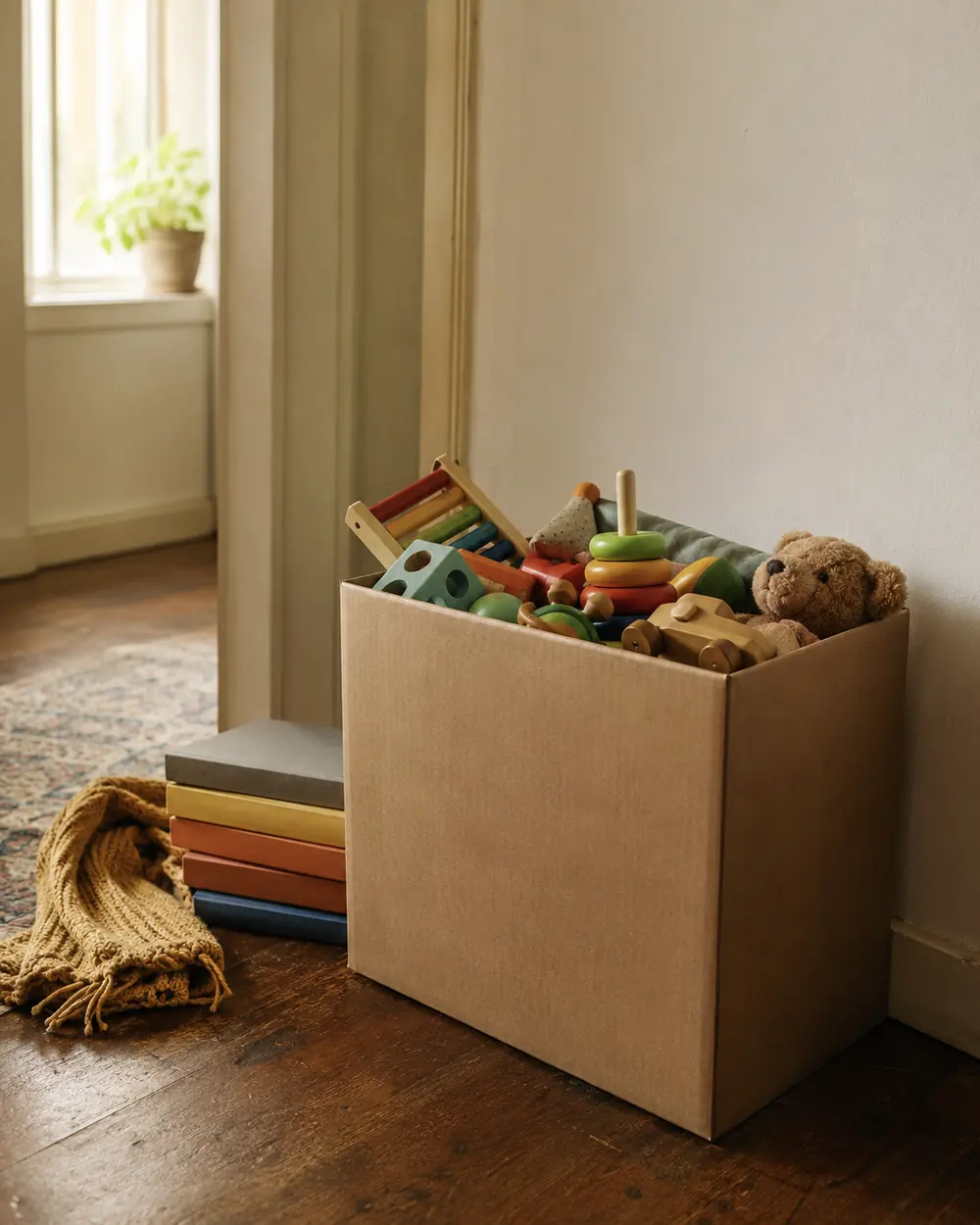
Somebody in your family will object that a list takes the thought out of it. The research says the opposite: people are consistently more appreciative of things they explicitly asked for, while givers assume the surprise will land just as well. The surprise is the risk, not the gift.
Ask everyone for three or four specific things with a range of prices. It reads as boring. It produces gifts people keep.
How to raise it without a row
Three rules, learned the hard way.
Raise it in October. Not in December, when people have bought things, and not on the day, which is a special kind of disaster. October is a planning conversation. December is a criticism of what somebody has already done.
Frame it around time and stress, not money. “I find the shopping stressful and I don’t think I’m buying anything anyone actually wants” is a sentence nobody can be offended by. “We can’t afford this” is true in many families and it invites either pity or an argument, and it lets one person quietly decide the whole thing is about your situation.
Ask, do not announce. Put it as a question with a specific alternative attached. “Would anyone be up for drawing names this year, thirty dollar limit?” Most families contain at least two people who have been hoping somebody else would say it first.
Keep the children out of it
This is the compromise that gets the proposal accepted almost every time. Adults draw names or stop entirely. Children carry on exactly as before.
It reassures the relative who is worried that Christmas is being canceled, and it keeps the morning intact for the people who count presents. Nobody under twelve has ever noticed how many gifts the adults gave each other.
Where it gets more delicate is across two households, when there are grandparents on both sides and a gift count that is quietly being compared. That is a different problem with its own arithmetic, and it is dealt with in the co-parenting Christmas schedule and in what to tell grandparents to buy.
What to do with the space it makes
The reason to do any of this is not the money saved. It is the afternoon you get back.
An exchange that takes four minutes instead of forty leaves the room free for the part people remember, which is not the opening of anything. We set out what that looks like in the traditions that cost nothing, and it is worth reading if you are worried that removing gifts removes the day.
This year we drew names in October. My brother in law drew me. He asked me directly what I wanted, I told him, and he bought exactly that and looked extremely pleased with himself about it.
Nobody got a cheese board.
Leave the first comment
Share your thoughts
Frequently asked questions
Drawing names, one gift each, with a set budget and a wish list per person. It cuts the number of gifts from dozens to one per adult, raises the amount that can be spent on that one gift, and removes the guessing, which is where most of the disappointment comes from.
Raise it in October, not December, and frame it around time and stress rather than money. Ask rather than announce, and offer a specific alternative instead of just stopping. Most families have at least two people quietly hoping somebody else will say it first.
In most families, yes, and it is the compromise that gets the proposal accepted. Adults draw names or stop entirely, children carry on as normal. It keeps the morning intact for the people who care about the number of presents.
Whatever the least comfortable person in the group can manage without thinking about it, which is usually lower than the person proposing it assumes. Set the figure as a cap rather than a target and say explicitly that under is fine, otherwise the number becomes a floor.
A shared experience instead of objects, such as a meal or a day out that everyone contributes to. A charity draw where each person gives in another person's name. Or a consumables-only rule, where everything given has to be eaten, drunk or used up by February.

I'm for the parent doing it largely alone. I've done the single-dad decade - two homes, one income, the handovers, the very quiet Tuesdays - and I write from the far side of most of those days, with humor and hard-won calm. Not advice from above; a hand back from a few steps up the road.
More from DiegoWhat's getting you through right now? Be honest - we're all figuring it out.
No right answers here - tell us how it went. Someone reading needs to hear it.
Join the conversation