
The Countdown Happens at Twelve. Just Not That Twelve.
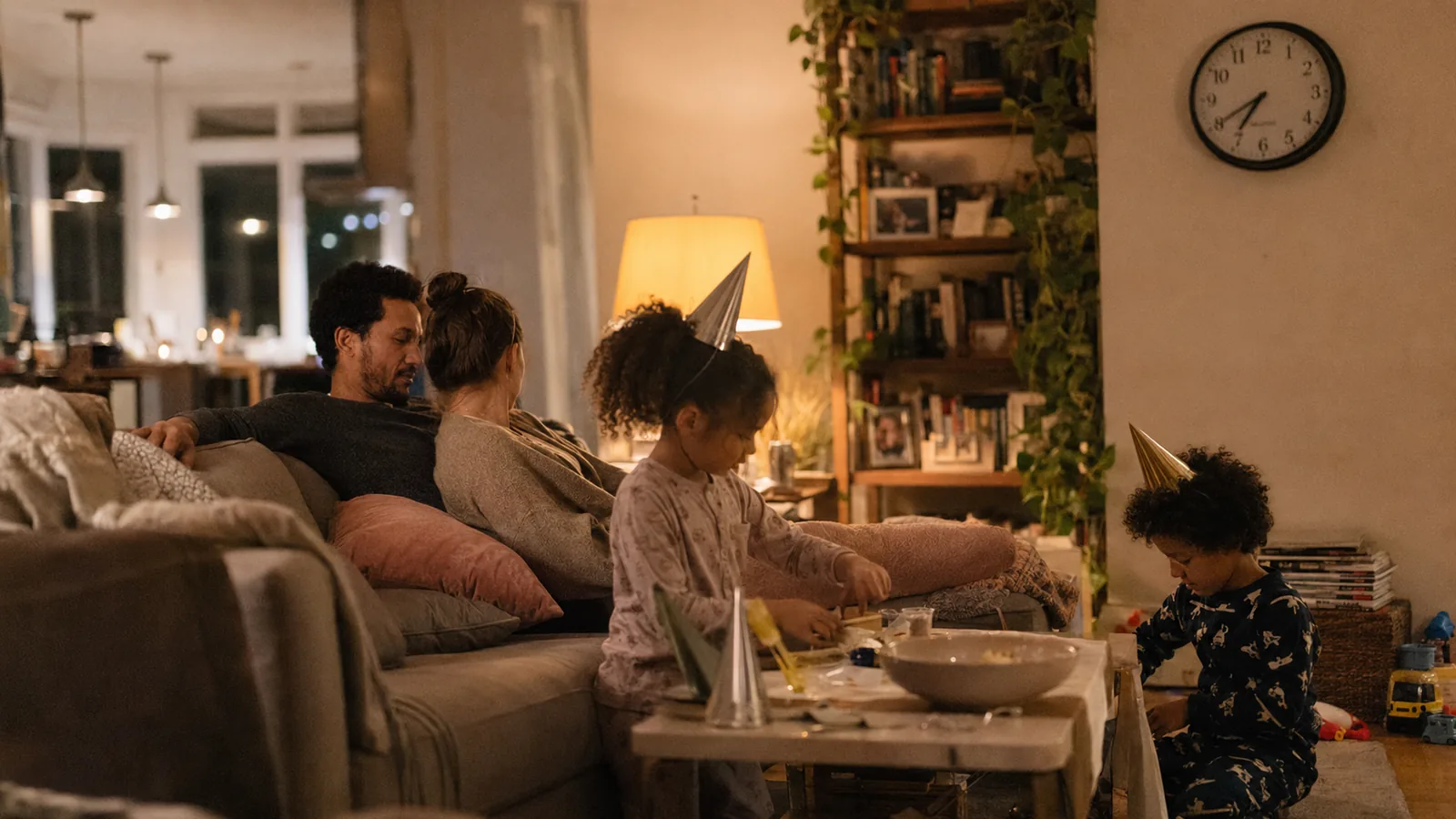
Every year the same conversation. They want to stay up. You know what a five year old is like at half past midnight. You also know what happens on the first of January if they manage it.
There is a way out of this and it is not a compromise. It is moving the clock.
It sounds like a fudge until you do it. Then you notice the children never cared about midnight. They cared about the counting, the noise and being allowed.
The reason the real midnight goes badly
The American Academy of Sleep Medicine’s consensus, which the American Academy of Pediatrics supports, is that children aged three to five need ten to thirteen hours of sleep in twenty four, and children aged six to twelve need nine to twelve.
A child who normally sleeps at seven and gets up at seven is at the bottom of that already. Push bedtime to midnight and they do not sleep in to compensate. They wake near the usual time, five hours short, and the first day of the year is spent with a child who has nothing left.
And the actual midnight is rarely good. By eleven most young children are past tired and into the wired, brittle state where they cry about the wrong cookie. They do not experience the countdown so much as survive it.
How to run it
Start at about eleven. An hour is the right length. Longer and it turns into an ordinary afternoon with decorations.
Make a countdown they can see. A paper chain with sixty links torn off one at a time, or a timer on the table with the last minute running down. The counting is the event, so give it something physical.
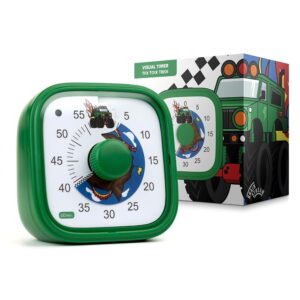
Visual Timer for Kids Tick Tock Truck Clock
As an Amazon Associate, Decoded Kids earns from qualifying purchases. Price checked live on Amazon.
Do the noise properly. Pans and wooden spoons, party blowers, a playlist. This is the part they will describe to somebody in January.
Then have something in a glass that fizzes. Sparkling apple juice in a real glass, not a plastic cup. The glass is doing more work than the drink.
And do the balloon drop, because it is the one everybody remembers. A bed sheet held up by two adults with balloons on it, or a trash bag taped to the ceiling with a slit cut in the bottom. Fifteen minutes of setup, four seconds of payoff, worth it.
The child who will find it too loud
Pans and party blowers in a small room is a lot. If you have a child who covers their ears at hand dryers, the countdown is the moment to watch, not the whole hour.
Give them the job of counting rather than the job of banging, and have ear defenders within reach so leaving is not the only option. That single change is often the difference between a child who joins in and a child who is under the table.

If fireworks follow later in the evening, that is a separate problem with its own answers, and we went through the models properly in the ear defender comparison.
What happens at the actual midnight
Nothing. That is the point. Normal bedtime, normal routine, and the adults get an evening.
Some families do a second, quieter thing at seven for the older ones. A movie, the good snacks, and bed at nine. That works, and it means an eleven year old is not being handed the same afternoon as their four year old sister.
What does not work is doing noon and then also letting them stay up. You have then run two events and still ruined the first of January, and the noon one gets blamed for it.
The other thing that does not work is telling them at eleven in the morning. Say it a week ahead so it becomes the plan rather than a surprise substitution, and put it on the calendar where they can see it.
The bit that makes it worth doing twice
Somewhere in the hour, ask each person for one thing from the year. Not a resolution. Something that happened. Write them on strips of paper and put them in a jar.
It takes four minutes and it is the only part of the day that will still exist next December, when you open the jar and read out what a six year old thought was the best thing that happened to them.
Keep the jar somewhere visible rather than in a drawer. A jar on a shelf gets asked about in March, and answering the question is how the tradition survives to a second year.
Resolutions can come later in the week when everyone has slept, and they work better when they are small and specific, which is the argument we made in why most of them are gone by the fourth of January.
And the rest of that week
The first of January is a long day with everything closed and nothing planned. A noon countdown does not fix that, but it does mean everyone facing it has slept.
For the days either side, the things that hold up indoors are in the winter boredom list, and the specific problem of the week between the holidays is in what to do when the new toys are already boring.
Twelve o’clock. Same countdown. Everyone in bed at the normal time. It is not a smaller New Year. It is the same one, held at an hour when children are still themselves.
Leave the first comment
Share your thoughts
Frequently asked questions
A New Year's Eve celebration held at twelve in the afternoon instead of midnight, with the same countdown, noise and balloon drop, finished by half past twelve.
Two to about nine. Older children often want a second, quieter evening thing at seven, with bed at nine.
About an hour, starting around eleven. Longer and it turns into an ordinary afternoon with decorations.
Sleep guidance supported by the American Academy of Pediatrics puts children aged three to five at ten to thirteen hours in twenty four, and six to twelve year olds at nine to twelve.
Nothing. Normal bedtime, normal routine. Doing both a noon party and a late night undoes the whole point.

I started Decoded Kids because the calm, straight answer I needed at 2 a.m. just didn't exist. I'm a parent of two, still figuring it out - and I hold this whole place to one promise: real help, in plain language, with no one talked down to.
More from MayaWhat's the one thing that calmed the chaos in your house?
No right answers here - tell us how it went. Someone reading needs to hear it.
Join the conversation