
Christmas Eve Is the Most Exciting Night of the Year. That’s Exactly the Problem.
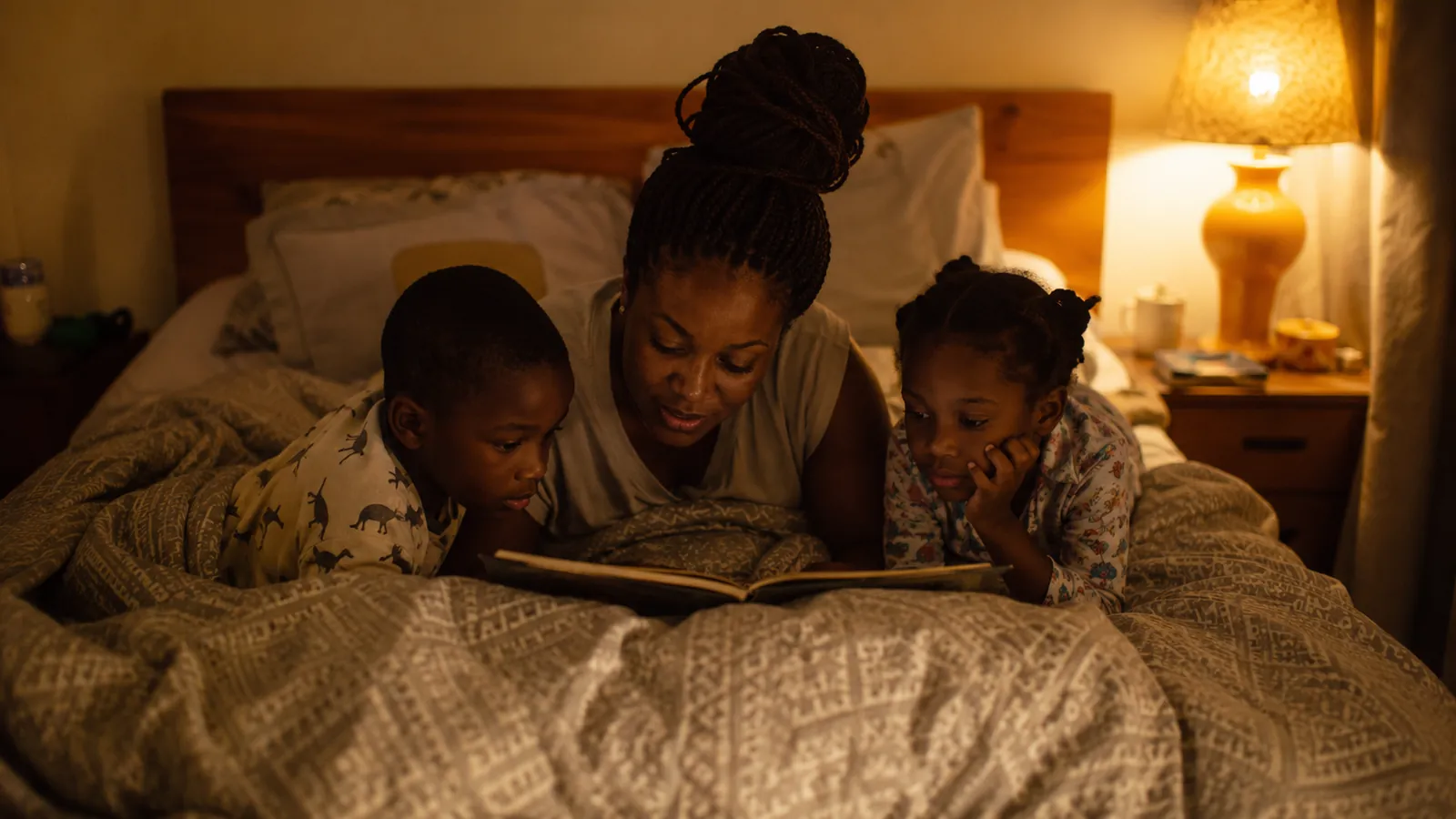
It’s 9:40 on December 24th and you’ve just done the third trip upstairs. The cookies are out. The presents aren’t wrapped. And a small voice through the door asks, again, whether reindeer can see through curtains.
You’re not doing bedtime wrong. You’re doing bedtime on the one night of the year when a child’s entire body is arguing against it. And that argument has actual chemistry behind it.
The short version: excitement and anxiety are the same body state. Racing heart, busy brain, zero interest in sleep. You can’t switch it off on command, but you can burn it down: movement after dinner, lights low, the exact same bedtime script as every other night, and a boring job for their brain once they’re in bed. Then expect sleep to land 30 to 60 minutes late, and let that be okay.
Why an excited brain won’t switch off
Your child’s body doesn’t have separate settings for thrilled and terrified. Both run on arousal: adrenaline up, heart rate up, senses wide open. It’s the state bodies use for anything that matters. Useful for spotting reindeer. Useless for falling asleep.
Grown-ups feel this too, the night before a flight or a new job. The difference is that you’ve had decades of practice talking your body down, and your child has had, generously, five years. The brakes aren’t built yet. Asking an eight-year-old to calm down on Christmas Eve is asking them to drive a car that doesn’t have that pedal. It helps to remember what all that build-up is for, because most of what makes Christmas feel magical costs nothing and happens long before that night.
And if it helps to know you’re not uniquely cursed: you’re not even unusual. Google’s own numbers make the point better than we can.
The script is the sleep aid
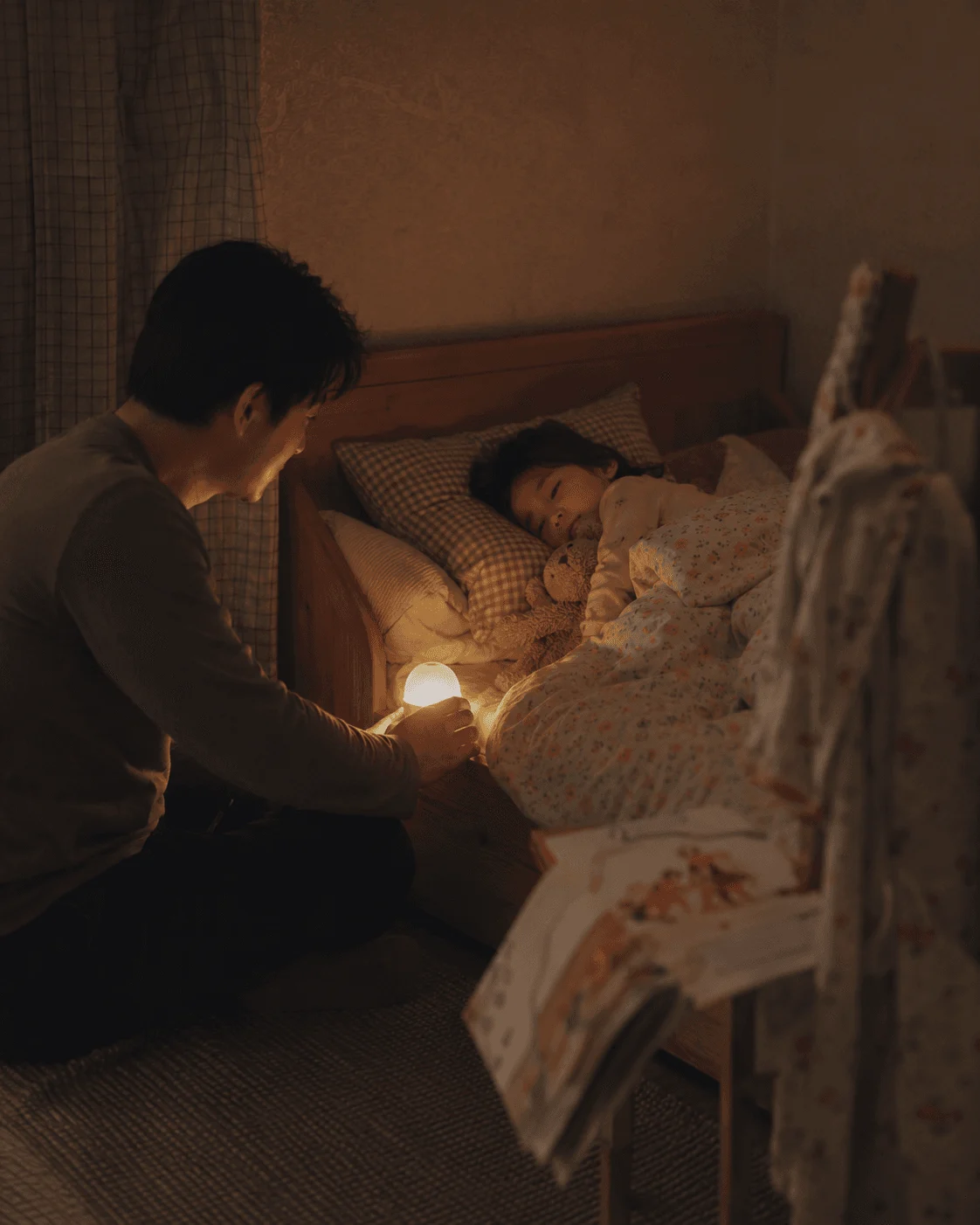
On a normal night, your bedtime routine is a series of cues that tells a body, step by step, that sleep is next. Bath, pajamas, teeth, book, light off. Same order, every night. By December your child’s nervous system knows this dance so well it starts powering down at the first cue, which is why kids who fight sleep often fight the routine first.
Christmas Eve is the night to run that script exactly as written. Not the night to skip the bath because it’s late, or read a special long book because it’s festive. The familiar version is the whole point. Novelty is arousal, and your kid has had novelty since breakfast. The routine is the one part of the day their body recognizes as ordinary, so let it be aggressively ordinary. It’s the same logic behind pacing the fourteen-hour marathon that is Christmas Day itself: the body needs something predictable to hold onto.
Start it earlier than usual, not later. Not because they’ll fall asleep earlier. They won’t. But an early, slow runway means the excited hour happens in a dim bedroom instead of under the kitchen lights next to the cookie plate. What fills that runway matters too, and a short list of calm things to do on Christmas Eve beats an open evening every time.
Kids are surprisingly resilient when it comes to short-term disruptions. It’s our anxiety about those disruptions that creates most of the problems.Craig Canapari, MD, Yale Pediatric Sleep Center
The wind-down that lands
After dinner, get the energy out on purpose. A walk around the block to look at lights does two jobs at once: it burns arousal, and it happens in the dark, which lets the sleep hormone melatonin start its shift. Then home, lights low everywhere, screens off. A bath if that’s your routine, warm and unhurried.
Once they’re in bed, give the busy brain a boring job. Excited brains don’t respond to “stop thinking”, but they’ll happily accept a dull assignment: name every animal you can think of that’s asleep right now. Listen for the furnace and count how many times it hums. Breathe like you’re trying not to wake a cat on your chest. It sounds silly. It’s the same trick adult sleep techniques use, sized for someone who believes in flying reindeer. If the grown-ups are still celebrating downstairs, a steady background hum can blanket the party noise; our honest take on the Hushh white noise machine covers safe volume too.
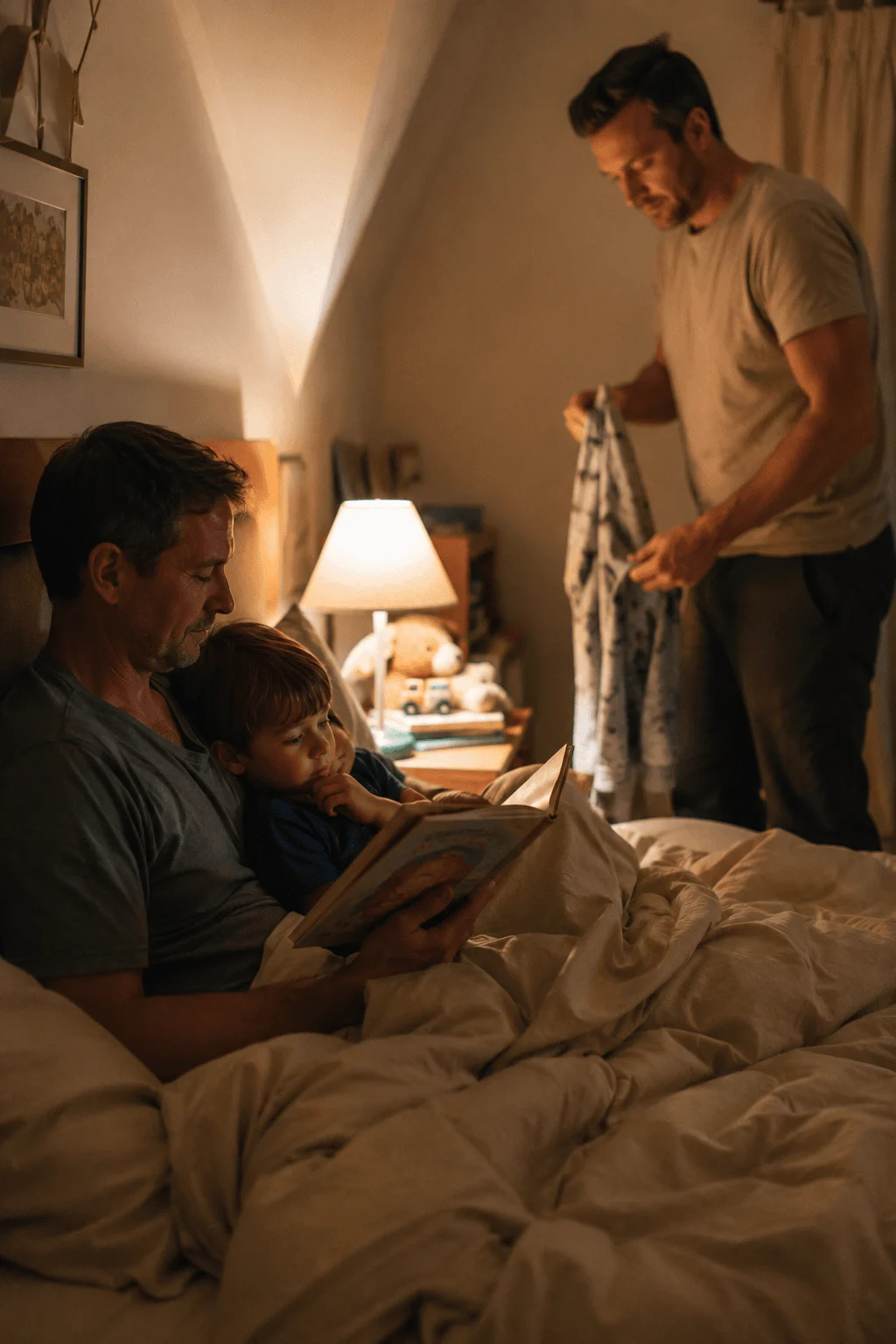
One warning about the most famous line in the Christmas Eve playbook. Santa only comes when you’re asleep feels like a masterstroke at 9pm, but listen to what it actually says: the whole day tomorrow depends on you falling asleep, right now. That’s a performance demand, and performance is arousal. For an anxious kid it can tip excitement straight into dread, the same slide we describe in why bedtime suddenly feels scary. Softer works better: Santa’s got all night, your only job is to rest.
What not to do: don’t threaten the holiday (“keep this up and Santa skips our house”), and don’t reach for melatonin as a one-night trick. It’s a hormone, not a candy cane, and the dosing and timing questions are real. We’ve broken down what melatonin does and when it’s safe if you’re considering it for more than one night.
Two kids, one bedroom, double the giggles
Siblings who share a room turn Christmas Eve into a relay. One starts to drift, the other whispers a reindeer fact, and the whole thing resets. If you can split them for just this night, even with one on a mattress in your room, do it without guilt. If you can’t, stagger the landings: the younger one goes through the routine first while the older one gets a quiet job downstairs, like setting out the cookies. Then the older one gets their own short, separate wind-down. Giving the big kid the role of sleep guardian, the one who protects the quiet, works better than any shushing you’ll do through the door.
If they’re still awake at ten
Some kids will be, and it genuinely doesn’t matter. One late, giddy night doesn’t undo months of good sleep, and pediatric sleep medicine backs that up: short disruptions don’t erase learned sleep skills. The child who falls asleep at 10:15 on Christmas Eve, buzzing, is running exactly on spec.
So do the quiet check-ins, keep the answers short and dull, and resist the urge to lie down next to them if that’s not your normal deal, because that’s a new habit applying for a permanent position. Then go wrap the presents. Perfection was never on the menu tonight. A decent runway and a calm parent is the whole assignment, and you can hand the rest to the morning, which is its own event with its own plan.
Leave the cookies, close the door
They’ll sleep. Later than you’d like, sooner than it feels. And in the morning nobody will remember 9:40, except you, over coffee, quietly proud of that lap around the block.
Frequently asked questions
Aim for the normal bedtime, started 30 minutes earlier than usual. The extra runway absorbs the excitement. Expect actual sleep to arrive 30 to 60 minutes later than normal anyway. One late night doesn’t harm kids; the familiar routine matters more than the exact clock time.
Excitement is physiological arousal: adrenaline, raised heart rate, an alert brain. It’s the same body state as anxiety, and children haven’t yet developed the self-calming skills adults use. Anticipation of the morning keeps that system switched on, so their bodies genuinely can’t power down on command.
Not as a one-off trick. Melatonin is a hormone with real timing and dosing questions, and excitement-driven wakefulness isn’t what it treats best. Try movement after dinner, dim lights and a boring mental job first. If sleep is a nightly struggle, talk to your pediatrician about it properly.
A little flexibility is fine, but keep the routine itself intact. Kids’ sleep skills survive one exciting night. What backfires is abandoning the whole script: skipped baths, extra screens, bright lights late. Run the normal sequence, accept a later landing, and protect tomorrow’s nap if they still take one.
You mostly don’t, but you can contain it. Agree the rule before bed: nobody wakes the house before the clock says a set time. An okay-to-wake clock makes that visible for younger kids. Leave a small stocking or book at the foot of the bed to buy the household another half hour.
Leave the first comment
Share your thoughts

I'm for the parent mid-meltdown - theirs or the kid's. I write from the actual floor of it: the crying that won't stop, the dinner thrown, the bedtime that unravels. Blunt because I respect you too much to pretend it's easy. Just what tends to work.
More from NourWhat's the one thing that calmed the chaos in your house?
No right answers here - tell us how it went. Someone reading needs to hear it.
Join the conversation