When You’re the Only One on Shift: Single-Parent Burnout
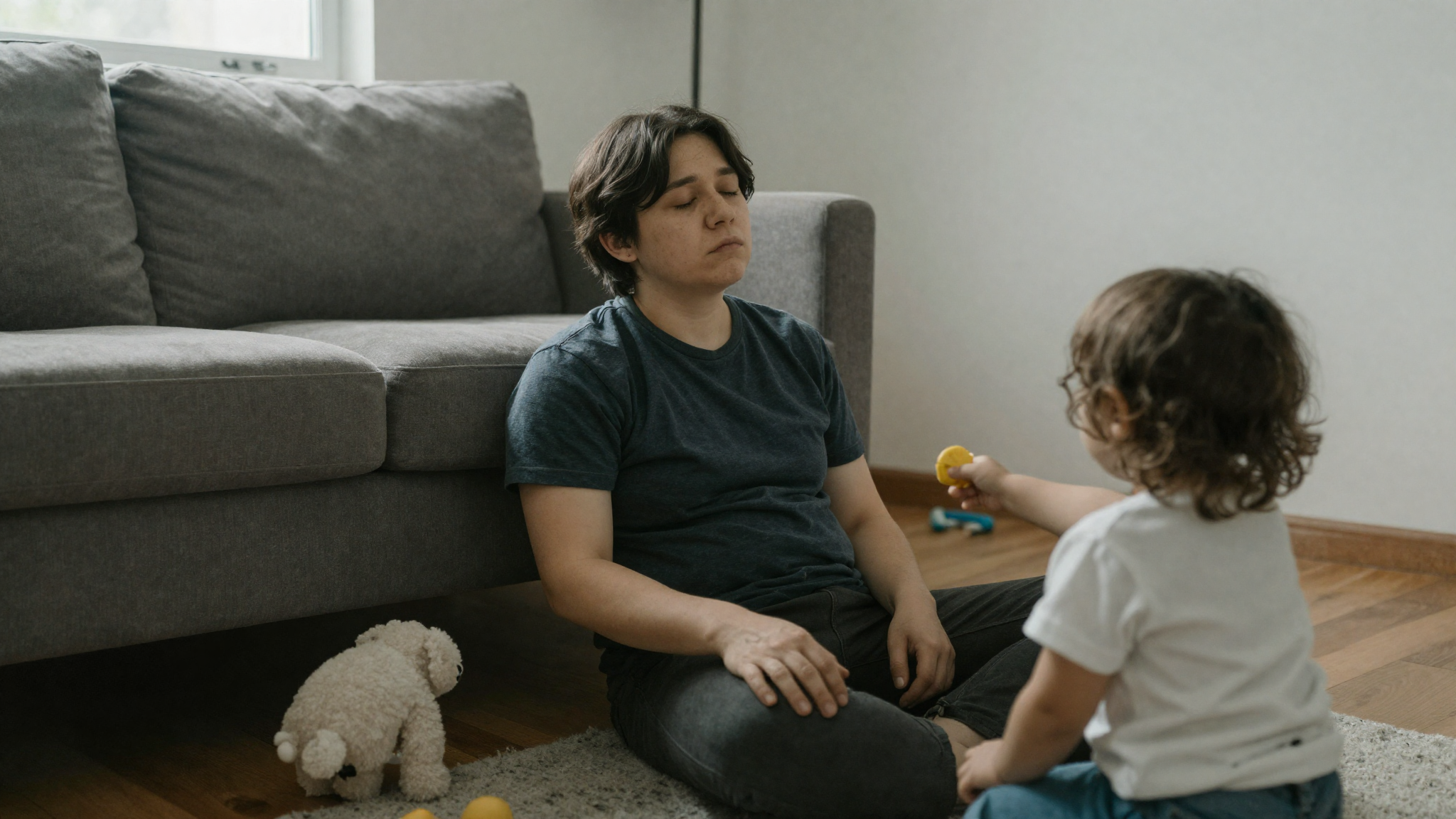
You’re not lazy, and you’re not failing — you’re doing a two-person job with one body and no one to tag in. Single-parent burnout isn’t the same as being a bit tired; it’s the slow flattening that comes from being permanently on shift. The small mercy: it has patterns, and it has exits. Let’s name it first, because naming it is where the relief starts.
What burnout actually feels like
Burnout isn’t tiredness you can sleep off. It’s the emotional flatness where you’re going through the motions — lunches made, teeth brushed — while feeling oddly far away from all of it. You might be snapping more, crying easier, or lying awake at 11pm too wired to sleep and too empty to move.
The cruellest part is the guilt riding along with it: I love them, so why can’t I feel it right now? That numbness isn’t a lack of love. It’s a nervous system that’s been running in the red too long.
Why it hits single parents harder
There’s no off-duty. Two-parent homes get to tap out, even briefly — one runs bath time while the other breathes. Solo, the mental load, the logistics and the 3am worries all land on one set of shoulders, with no one to absorb the small emergencies.
Add money stress, less adult conversation than a houseplant gets, and a culture that quietly expects you to be grateful and fine, and you’ve got the perfect conditions for burning out. It’s not weakness. It’s maths.
“You can’t pour from an empty cup — but nobody tells you who’s meant to fill it when you’re the only adult in the house.”
The guilt that makes it worse
Single parents run a guilt loop at a volume two-parent families rarely hit: guilt for being tired, guilt for the screen time that buys you ten minutes, guilt that your kid only has one of you today. The myth that good parents don’t get this tired keeps you from saying it out loud.
So you don’t ask for help, which deepens the burnout, which turns the guilt up. Naming the loop is how you start to climb out of it.

Small refills that fit a real life
Forget the bubble-bath self-care that needs two spare hours you don’t have. Aim smaller: a ten-minute reset while they watch one show, a lap of the block with the pushchair, eating something that isn’t the cold ends of their fish fingers. Lower the bar on purpose — a survival week of beans on toast and no homework battles is allowed.
Rest in parallel where you can: lie on the floor while they build Lego on you. Not a spa. Still counts.
Building a tag-team out of thin air
You can’t conjure a second parent, but you can build a patchwork. A friend who takes your kid for two hours so you sleep. A swap with another single parent — you take both Saturday, they take both Sunday. Family for a school run. An online group at midnight when the walls press in.
Asking feels mortifying the first time and ordinary by the tenth. Most people genuinely want to help; they just don’t know what you need until you say it.
When it’s more than burnout
Sometimes the flatness doesn’t lift with a good night’s sleep and a lighter week. If low mood, hopelessness or not-coping has hung around for a fortnight, or you ever have thoughts of not being here, please treat that as the priority it is and talk to your GP or a helpline. That isn’t failing at single parenting.
It’s the same as taking your child to the doctor when a cough won’t shift. You’re part of the family that needs looking after too.
Frequently asked questions
Emotional exhaustion that sleep doesn’t fix, feeling numb or detached with your kids, a shorter fuse than usual, dreading the day before it starts, and physical signs like headaches or catching every bug going. If running on empty describes most weeks rather than the odd bad one, that’s burnout, not laziness.
Shrink the job before you push through it. Drop every non-essential for a week, lower your standards on purpose, and take rest in ten-minute pieces rather than waiting for hours that never come. Then widen your net slowly: one friend, one swap, one online group. A patchwork of small help beats holding out for rescue.
It’s common and it doesn’t make you a bad parent. Numbness and flashes of resentment are symptoms of depletion, not a verdict on your love. They usually ease with even small amounts of rest and support. If they don’t, that’s a good reason to talk to your GP.
If low mood or hopelessness lasts more than a couple of weeks, if you’re not coping with daily life, or if you ever have thoughts of harming yourself, contact your GP or a helpline straight away. Getting support early is the responsible, loving thing to do, for you and for them.

© 2026 DECODED KIDS · PRIVACY · AFFILIATE DISCLOSURE · TERMS