
The Whole-Brain Child: The Meltdown Strategies That Stick
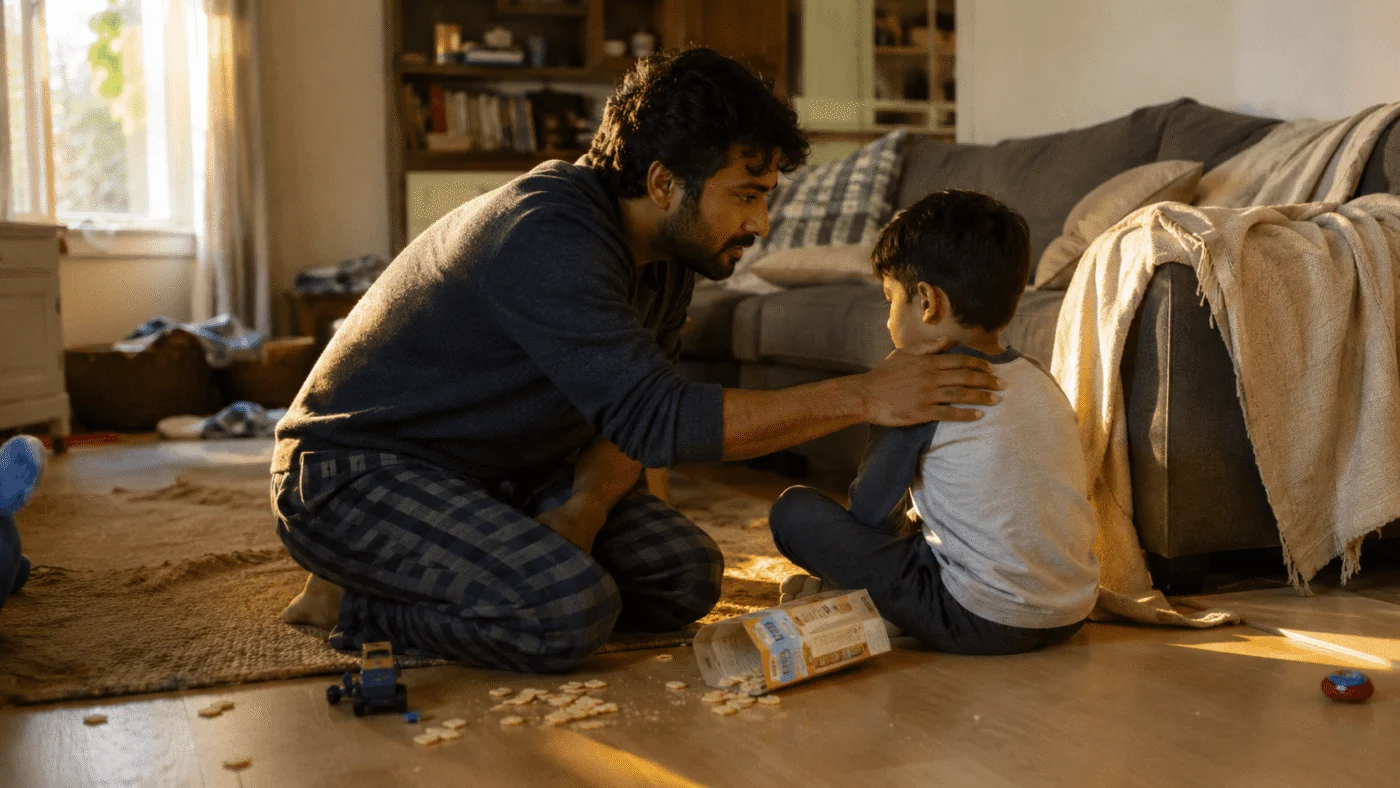
It usually lands around six in the evening. The shoes are on the wrong feet and your calm, reasonable child is suddenly on the floor over a snapped cracker, like the whole world just ended in the cereal aisle of their heart. You stay steady, you try the gentle thing, and some nights it still goes sideways. If you have read every calm-down post going and still feel like you are missing the why, there is one book that tends to flip the lights on. It is called The Whole-Brain Child, and it is the rare parenting read that explains what is happening inside that little head instead of just handing you a script to recite.
Why does a calm kid melt down over nothing?
The short version is that their brain is not finished yet. The book’s authors, neuropsychiatrist Dan Siegel and parenting expert Tina Payne Bryson, picture the brain as a house with a downstairs and an upstairs. The downstairs runs on instinct and big feeling, and it is fully wired from birth. The upstairs, the part that reasons and plans and talks itself down, stays under construction well into the twenties. So when your four-year-old comes apart over the cracker, the downstairs brain has grabbed the wheel and the upstairs brain is not tall enough to reach the pedals. It is not defiance. It is wiring, and wiring you can work with once you can see it.
What is the whole-brain approach, in plain words?
The whole idea is integration. A child mid-meltdown is, for that moment, all downstairs and no upstairs, all flooding feeling and no words to hold it. Your job is not to argue the feeling away. It is to help the two floors start talking to each other again. Siegel and Bryson shrink this into a move they call connect and redirect. You meet the feeling first, the connect, and only once your child actually feels felt do you bring in the reasoning or the boundary, the redirect. Try to redirect a flooded brain and you are reasoning with someone who has temporarily left the building.
The strategies that stick
There are twelve strategies in the book, and here is the honest bit. You will not remember twelve of anything at bedtime. Most parents quietly end up leaning on the same two or three. Name it to tame it is the one that earns its keep most nights: you help your child put the scary or furious thing into words, and the naming itself bleeds the heat out of it. There is real neuroscience under that, because telling the story of a big moment helps the upstairs brain file it away instead of looping it on repeat. Engage, don’t enrage is the other keeper. A genuine question (why do you think that one hurt so much?) gently wakes the thinking brain, where a barked command tends to slam the downstairs door harder. None of it is a magic spell. It mostly gives you something steady to do with your hands that is not matching their volume.
Is The Whole-Brain Child worth reading?
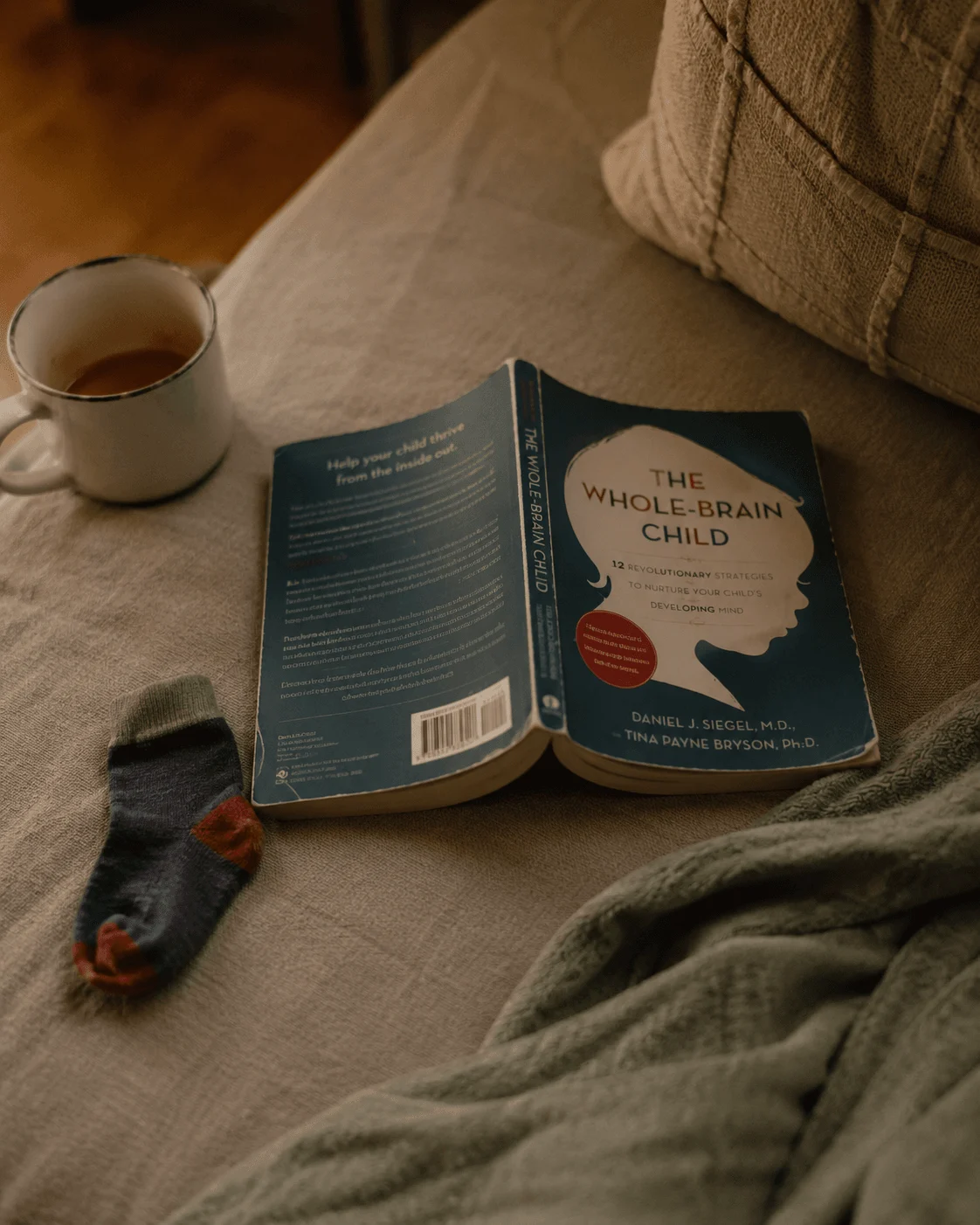
If you want one book that changes how you see the meltdown rather than just how you survive it, this is the one I would hand a worn-out parent first. It is short, it re-reads beautifully in five-minute scraps, and there are actual cartoon strips in the margins for the nights you have no brain left for prose. Parents say the same thing review after review, that they finally stopped taking the big feelings so personally. Where it runs thin is the practical how-to. It is far stronger on understanding than on exact scripts for the heat of the moment, which is why a lot of families read it alongside No-Drama Discipline by the same authors for the step-by-step follow-through. For roughly the price of a takeout, it is a fair trade.
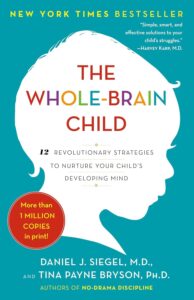
The Whole-Brain Child
Twelve plain-language strategies for your child’s still-building brain, with little cartoon strips for the nights reading feels like too much. Strong on the why, lighter on scripts, so pair it with No-Drama Discipline if you want the exact words. The book most parents end up wishing they had read first.
As an Amazon Associate, Decoded Kids earns from qualifying purchases. Price checked live on Amazon.
None of this lands cleanly the first time you try it at six in the evening, and that is completely normal. If the meltdowns in your house look more like fury than tears, it is worth reading why a child’s anxiety can look like anger, because the book’s downstairs-brain idea explains a lot of that too. And on the harder evenings, when the feeling turns into “I hate you”, there is a calmer way through that one as well.
You will never parent from a book in the live moment. Nobody does. But the next time the cracker snaps and the floor opens up, you might catch yourself thinking downstairs brain for half a second, and meeting the feeling before you reach for the lesson. That small pause, honestly, is most of the whole thing.
Frequently asked questions
That a child’s brain has an emotional “downstairs” that is ready at birth and a reasoning “upstairs” that is still developing. Meltdowns happen when the downstairs takes over, so the fix is to connect with the feeling first, then redirect to the lesson once the thinking brain is back online.
It is written for parents of children roughly 0 to 12, and the core ideas (connect and redirect, name it to tame it) keep working right through the teenage years. The book is for the grown-ups, not the kids.
Twelve. In real life most parents lean on just two or three of them, usually “name it to tame it” and “connect and redirect”, which is exactly how the authors intend it to be used.
Yes, if you want to understand why your child behaves the way they do rather than just manage it. It is short and re-readable. If you also want exact discipline scripts, pair it with No-Drama Discipline by the same authors.
Leave the first comment
Share your thoughts

I'm for the parent standing in the bookshop, overwhelmed. I read them all - the wise, the smug, the single good idea stretched to 240 pages - so your nightstand stack stays short. I'll point you to what's truly worth it, and kindly, what to put back.
More from MeiWhich book changed something at home - and which did you put back?
No right answers here - tell us how it went. Someone reading needs to hear it.
Join the conversation