
Alpine Muffy Ear Defenders Review: Worth It for a Sensitive Baby or Toddler?
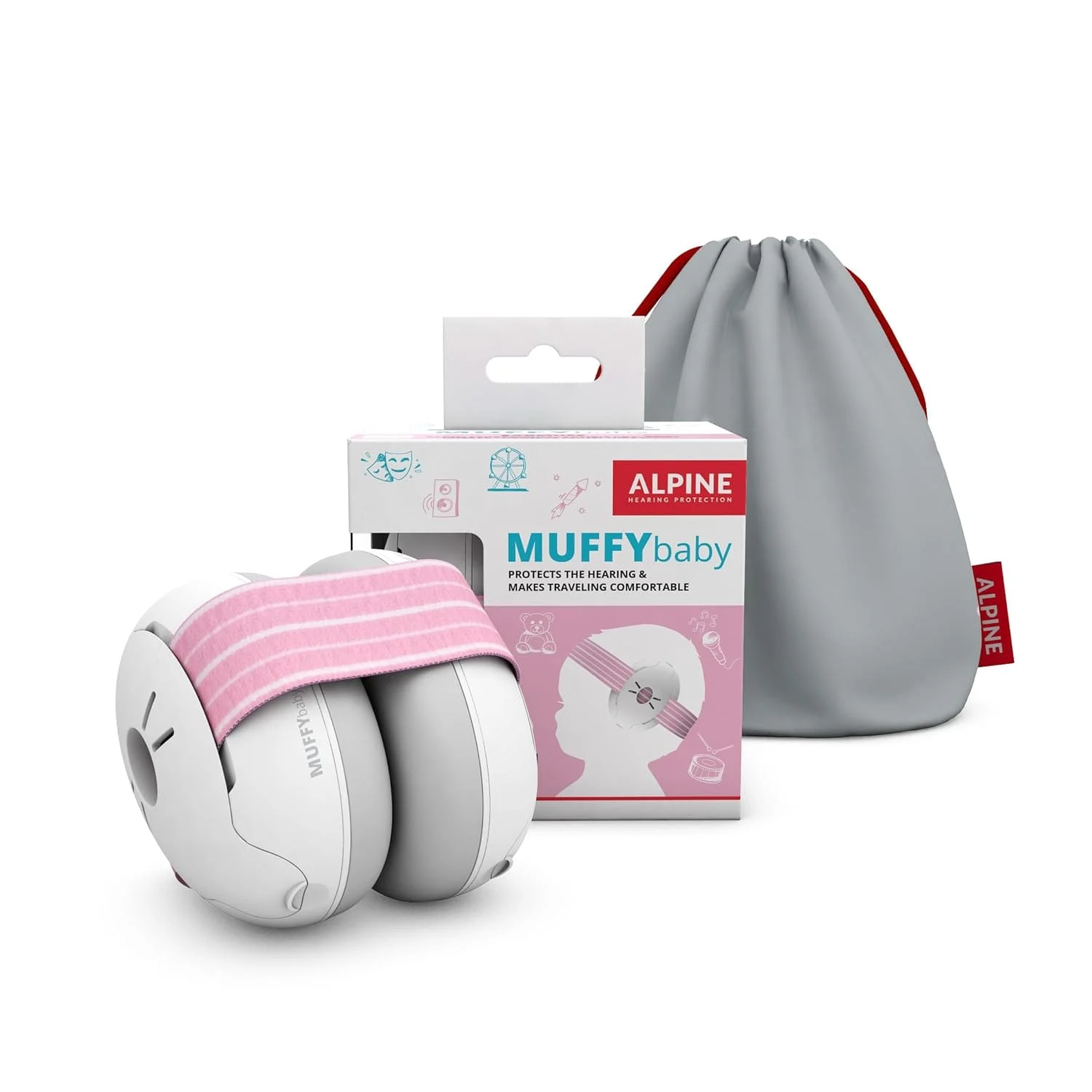
Most baby ear defenders are an adult pair shrunk down and crossed fingers. The Alpine Muffy is one of the few genuinely built for a baby or toddler from the start, and it is priced like it knows that. So the question is simple. Is a soft, certified pair of little ear muffs worth several times the cost of generic ones, or are you mostly paying for the word baby on the box?
We have used the Muffy at fireworks, on one long flight and through a very loud family wedding. Here is the honest take, the good and the parts that might make you pause.
What you’re buying
The Muffy is certified for the under-threes (both CE and ANSI), which almost nothing else in this aisle can say. It is feather-light, the band is soft and shrinks down small, and it cuts roughly 25 decibels. The point was never maximum reduction. The point is that it fits a tiny head and stays there without pressing, which is the exact thing cheap shrunk-down muffs get wrong.
Alpine Muffy (Baby & Toddler)
After fireworks and a long flight it still sits comfortably and our toddler stopped trying to pull it off within a few wears, which is the real test. It is the priciest baby pair you will find, and for a little one who needs it often it is the one we would buy again without much thought.
As an Amazon Associate, Decoded Kids earns from qualifying purchases. Price checked live on Amazon.
The good
The fit is the whole story, and it is genuinely good. The band goes small enough that it does not slip back off, and light enough that a baby forgets it is on, which is more than half the battle with anything you put on a small child. The soft cushions seal without clamping, so you avoid the red-eared, furious-toddler outcome that ends most ear-defender experiments.
It is also properly certified for infants, which matters when you are putting something on a baby and want to know a real standard sits behind the claim rather than a label someone printed.
The not-so-good
The price is the obvious one, and there is no pretending otherwise. You are paying a clear premium over a generic pair. The roughly 25 decibels of reduction is moderate too, plenty for a supermarket or a normal fireworks night, but if you want to muffle something properly deafening for an older child you would want more. And your kid will outgrow it, somewhere around three, so it is a stage purchase, not a forever one.
The Muffy isn’t the quietest pair you can buy. It is the one a baby will actually leave on, and for the under-threes that is the only spec that matters.
What you only notice after a few weeks
The elastic band turns out to matter more than the noise number. Rigid headbands give a toddler something to grab and pull, and once pulling becomes the game, the defenders stay in the bag. The Muffy’s soft strap gives them nothing to fight, so putting them on stays boring, and boring is exactly what you want.
Two small habits made ours earn their keep. They live in the changing bag, not in a drawer at home, so loud moments that ambush you (a surprise parade, a packed soft-play hall, a restaurant that turned out to be a birthday party) are covered. And we put them on before the noise starts whenever we can. A calm child accepts them; an overwhelmed one fights everything, including the fix.
So, is the Alpine Muffy worth it?
For a baby or a sensory toddler who needs ear defenders regularly, yes. The fit is the thing nothing cheaper gets right, and a pair your child keeps on is worth far more than a cheaper pair that lives on the floor. If your kid is older, or this is a once-a-year fireworks thing, the money is better spent on a simpler grown-up-sized pair.
We lined it up against the cheaper all-ages options so you can see exactly where it wins and where it doesn’t.
Frequently asked questions
For a baby or sensory toddler who needs them often, yes. The fit on a small head is the thing cheaper pairs get wrong, and a pair your child keeps on is worth more than a bargain pair that ends up on the floor. For an older child or once-a-year use, a cheaper grown-up-sized pair makes more sense.
They are made and certified for babies and toddlers up to about 36 months. Around the age of three most children outgrow the band and should move up to a regular kids’ pair, so think of the Muffy as a stage purchase for the early years rather than something that lasts for good.
Roughly 25 decibels (an SNR rating), which is moderate and plenty for everyday loud places like supermarkets, parties and a normal fireworks night. For genuinely deafening events with an older child you would want a higher-reduction pair, but for a baby that level of cut paired with a good fit is the right balance.
Many families of sensory and autistic toddlers find them helpful, as a tool rather than a treatment. The soft, light fit makes them tolerable to wear, which is usually the sticking point. Introduce them at home on a calm day, let your child get used to them, and never force them on.
The Muffy Baby is designed for roughly 0 to 36 months. Around age three, most children are ready for a kid-sized pair with an adjustable band, which also tends to block a little more noise. If the strap starts leaving a mark or your child keeps tugging it forward, that is usually the sign to size up.
Leave the first comment
Share your thoughts

I'm for the parent standing in the bookshop, overwhelmed. I read them all - the wise, the smug, the single good idea stretched to 240 pages - so your nightstand stack stays short. I'll point you to what's truly worth it, and kindly, what to put back.
More from MeiWhich tool earned its place - and which was a waste of money?
No right answers here - tell us how it went. Someone reading needs to hear it.
Join the conversation