
Children’s Reading Statistics 2026: What Every Parent Needs to Know
You can usually feel it before any survey confirms it. The school bag comes home heavier with worksheets and lighter on actual stories. The bedtime chapter you used to share keeps quietly losing to one more episode. Maybe you have wondered if reading really is slipping, or if it is just your house. Here is where children’s reading stands in 2026, in plain numbers. And here is the one small thing that moves those numbers more than any sticker chart on the fridge.
The short version: fewer children read for joy than at almost any point on record. This year did bring the first hopeful flicker in five years. Still, the gap between the kids who read and the kids who don’t has rarely mattered more. None of that is a verdict on you. It is just the shape of the moment we are parenting in.
Only have a minute? These are the numbers worth knowing. Every one links to its original source.
- 36.1% of children aged 8 to 18 enjoy reading in their free time in 2026. That is the first rise in five years, up from a record-low 32.7% (National Literacy Trust, 125,375 children surveyed).
- Just 20.3% read something daily in their free time, up from 18.7% in 2025 (National Literacy Trust annual survey).
- 40% of US fourth-graders read below the basic level, the largest share since 2002 (NAEP, the Nation’s Report Card 2024).
- Only 28% of US children aged 6 to 17 read books for fun five or more days a week (Scholastic Kids & Family Reading Report).
- Children read five books a day hear about 1.4 million more words by kindergarten than children never read to (Ohio State University).
- More than 1 million new neural connections form every second in a baby’s first years (Harvard Center on the Developing Child). About 90% of brain growth happens before age five (Collaborative for Children).
- Children who read daily score three times higher on mental-wellbeing measures (National Literacy Trust).
- US tweens aged 8 to 12 spend about 5.5 hours a day on screen media (The Common Sense Census).
- 40% of US kids aged 6 to 11 whose parents stopped reading aloud wish it had continued (Scholastic, The Rise of Read-Aloud).
How much are children reading in 2026?
For the first time in five years, slightly more than last year. The UK’s National Literacy Trust asked 125,375 children and teens about their reading in early 2026. Only 36.1% said they enjoy reading in their free time, up from 32.7% a year earlier. Daily reading edged up too, from 18.7% to 20.3%. One better year is a green shoot, not a recovery. Both figures remain the second-lowest ever recorded. A decade ago, roughly half of children said they loved reading.
The US numbers carry the same warning with an American accent. Scholastic finds only 28% of children aged 6 to 17 are frequent readers. On the 2024 Nation’s Report Card, 40% of fourth-graders read below the basic level, the largest share since 2002. Below basic means a child likely cannot work out why a story character did what they did. That is not a test-taking problem. It is a meaning problem.
What happens before a child ever starts school?
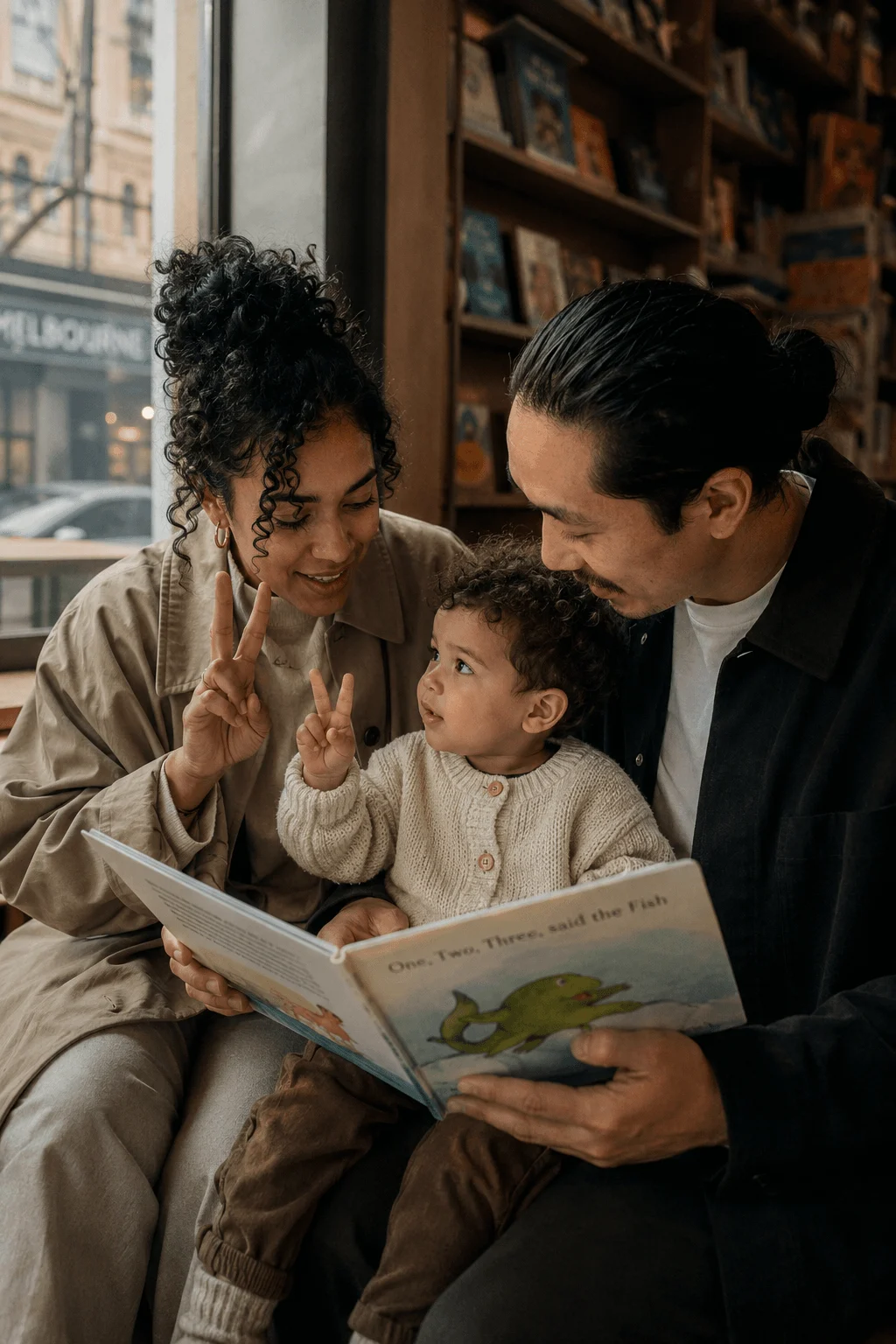
More than most of us were ever told. In the first few years of life, a baby’s brain forms more than one million new neural connections every second. About 90% of brain growth happens before age five. That is not pressure to buy flashcards. It means the reading life starts on a lap, years before school gets involved.
The famous study here comes from Ohio State University. Children whose parents read them five books a day hear about 1.4 million more words by kindergarten. Even one book a day adds roughly 290,000 words by age five. Researchers call it the million word gap. It helps explain why two kids in the same classroom can meet the same sentence so differently.
Pediatricians take this seriously enough that reading aloud is now, quite literally, medical advice. The American Academy of Pediatrics formally recommends reading aloud from birth. Through the Reach Out and Read program, doctors hand a book across the table at regular checkups. It sits right next to the vaccination schedule now.
Why does reading for pleasure keep falling?
The honest answer is time, and what competes for it. A phone offers a hundred instant, frictionless rewards. A book asks a child to stay with one slow thing. When attention is the currency, the book is playing a much harder game than it was a generation ago.
The scale of that competition is easy to underestimate. American tweens now average about five and a half hours of screen media a day. The online-video slice of that more than doubled in four years. Reading for pleasure went the other way. Analyses of the American Time Use Survey show it has fallen by more than 40% over two decades. The National Literacy Trust adds one detail parents of sons will recognize. The steepest recent falls were among boys aged 11 to 16.
Does reading change anything?
This is where the numbers stop being gloomy and start being useful, because the payoff is bigger than a reading level. The National Literacy Trust found that children who read daily score three times higher on mental-wellbeing measures. Reading is quietly doing emotional work. It builds vocabulary, yes. It also builds the ability to sit inside someone else’s head for a while, which is most of what empathy is.
And the effect compounds. A child who hears more words finds reading easier, so they read more, so it gets easier still. The same flywheel runs in reverse for the child who never got the words. That is why the early-years numbers above matter so much. The fix is less about drilling and more about company.
What can parents do about it?
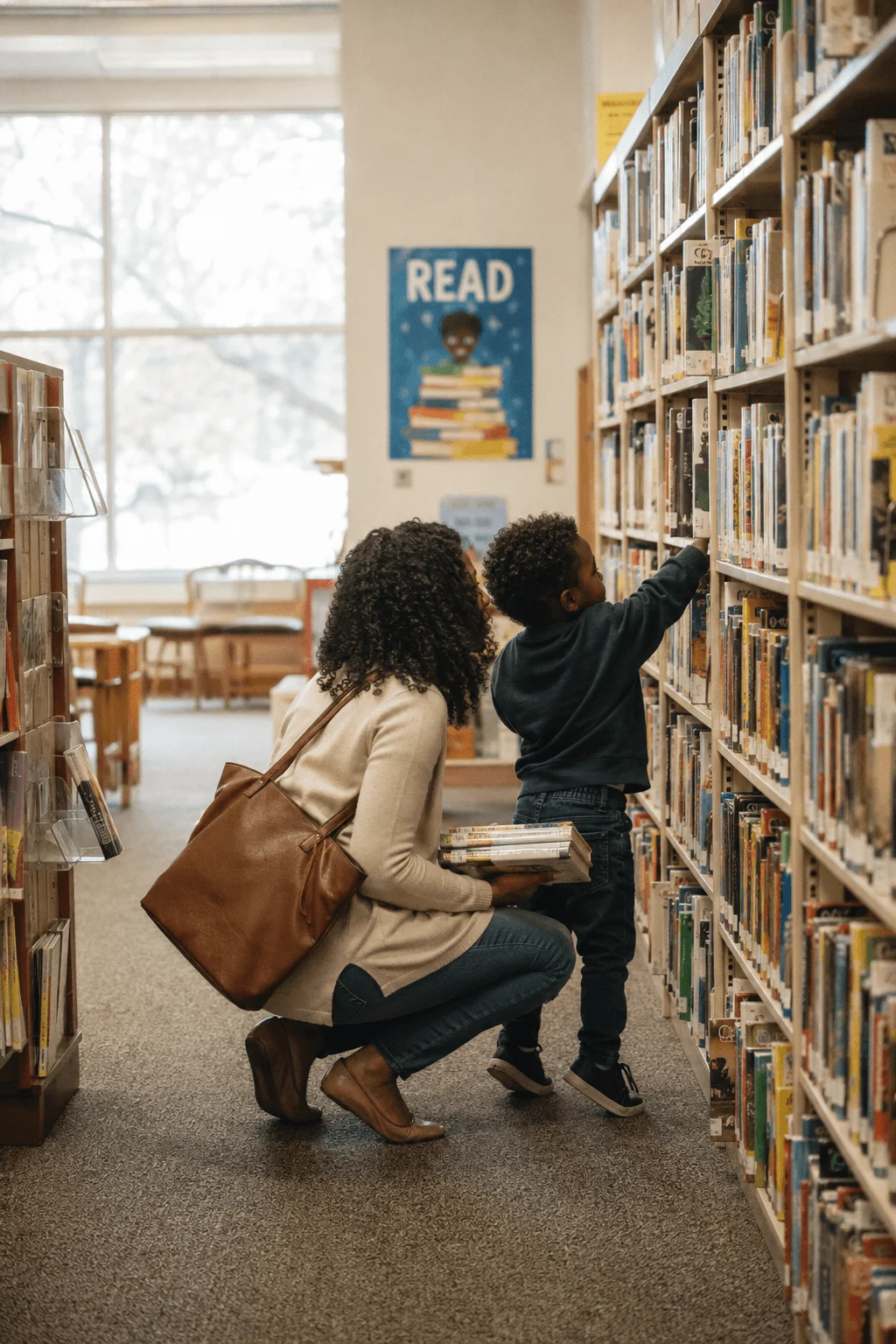
Far less than the panic suggests, and it works better than the panic too. You do not need a program. You need about fifteen unhurried minutes and the willingness to let your child steer.
Keep reading aloud even after they can read for themselves. Scholastic found 83% of children love being read to. And 40% of kids aged 6 to 11 whose parents stopped say they wish it had continued. A shared story holds attention longer than solo reading can. It keeps books tied to warmth instead of homework. Has bedtime itself turned into the battle? Our piece on why bedtime suddenly feels scary pairs well with a calmer read-aloud ritual.
Let them choose what they read. Yes, even the same dinosaur book for the ninth night, or a comic you would not have picked. A child who chooses is a child who comes back. And let them catch you reading your own thing. Kids copy what they see far more reliably than what they are told. If you want a starting point, our book reviews and reading guides lean into exactly this. They favor the books that pull a reluctant reader in rather than push them. There are stories for the kid who runs a little hot, and the one that finally explains worry to an anxious child.
Bellingham’s talk lands where the data does. The read-aloud stays valuable long after a child can manage the words alone. Comprehension and connection grow fastest when someone brings a story to life. If your own child is stuck somewhere in that chain, it helps to know which part is stuck.
Start with one page tonight
Not a chapter. A page. Read it in a silly voice, let them fall asleep halfway, reread the one they already know by heart. Every number on this page eventually traces back to that small, repeatable moment. The statistics are just what it looks like from far away.
Sources
Every figure above links to its original source so you can check our work. Editors, librarians and researchers are welcome to cite any statistic on this page. A link back here as the compilation source is appreciated. Last verified July 3, 2026.
- National Literacy Trust: Children and Young People’s Reading in 2026 (125,375 children, published June 2026)
- National Literacy Trust: Children and Young People’s Reading in 2025
- NAEP: 2024 Reading Assessment, Grades 4 and 8
- Scholastic: Kids & Family Reading Report, Key Findings and The Rise of Read-Aloud
- Ohio State University: A Million Word Gap (Journal of Developmental and Behavioral Pediatrics)
- Harvard Center on the Developing Child: Brain Architecture and Collaborative for Children: 90% of Brain Development Happens by Age 5
- American Academy of Pediatrics: Early Literacy and HealthyChildren.org: Shared Reading Starting at Birth
- Common Sense Media: The Common Sense Census, Media Use by Tweens and Teens
- US Bureau of Labor Statistics: American Time Use Survey
Spotted a newer figure, or a link that has gone stale? Tell us and we will update this page.
Frequently asked questions
There is no magic number. Around 15 to 20 minutes of reading a child enjoys, most days, is a realistic target. Research links that habit to stronger vocabulary and wellbeing. Consistency matters far more than length, and reading aloud together counts fully.
After five years of decline, 2026 brought the first small rise. Now 36.1% of children say they enjoy reading and 20.3% read daily, per the National Literacy Trust. Both figures are still the second-lowest on record. In the US, only 28% of children are frequent readers.
It is the gap in words heard by age five between children who are read to daily and children who are not. Ohio State researchers put it at about 1.4 million words for kids read five books a day. That head start shapes vocabulary and later reading.
Very much. Scholastic found 83% of children love being read to. And 40% of kids aged 6 to 11 whose parents stopped wish it had continued. Reading aloud past independence keeps building vocabulary, attention and a warm association with books.
Let them choose what they read, keep it short and warm, and drop any timing or reward pressure. Comics, re-reads and audiobooks all count. Children who are read to without a test at the end are the ones most likely to keep reading on their own.
For comprehension and vocabulary, largely yes. Listening builds many of the same language muscles. For reluctant or dyslexic readers, audiobooks are often the door back in. Print still does more for spelling and sustained attention, so treat audio as a bridge rather than a replacement.
Leave the first comment
Share your thoughts
Which book changed something at home - and which did you put back?
No right answers here - tell us how it went. Someone reading needs to hear it.
Join the conversation