
The Calm Down Corner Kit Worth Buying (and What’s Just Padding)
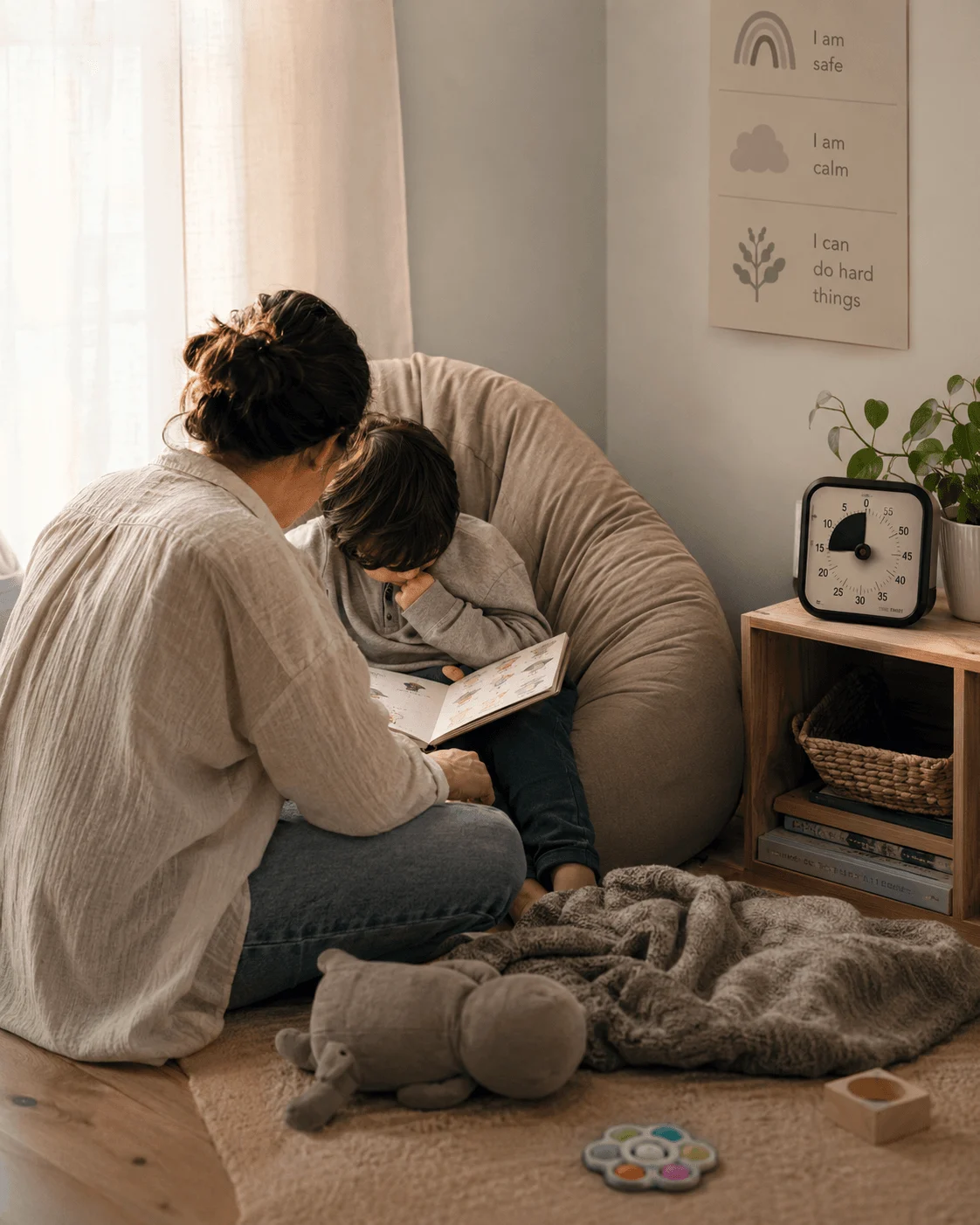
Search “calm down corner kit” on Amazon and you’ll land on bundles running $35 to $60, stuffed with eight or nine items and a cardboard insert promising it’s “everything you need.” I bought a few, unpacked them on my kitchen table, and about half of what’s actually in there earns its spot. The rest is filler that photographs well for the listing and gets ignored by week two.
Why the $50 kit and the $13 flipbook do the same job
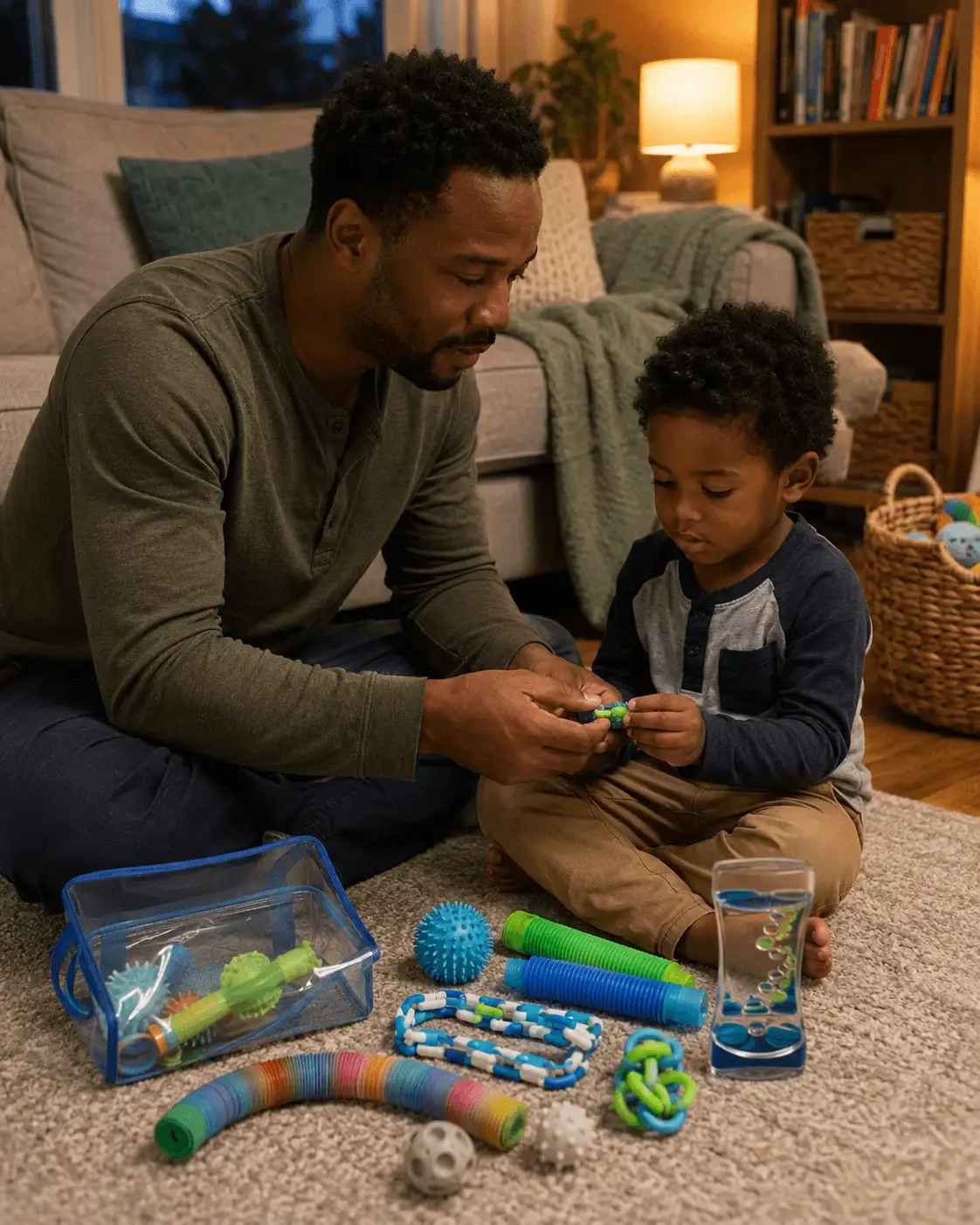
Open one of the popular bundles (ODOXIA’s kit is the one that shows up first in most searches) and you’ll usually find the same handful of categories inside: a feelings chart or flipbook, a stress ball or two, a set of fidget rings, some pop tubes, and sometimes a small pop-up tent. None of it is proprietary. Every piece is also sold on its own, with its own Amazon rating and review count you can check, which the bundle listing doesn’t break out for you.
That matters, because a kit’s overall star rating tells you almost nothing about which specific item inside it is doing the work and which one is just there to make the box look fuller. We priced out the individual pieces instead, so you can buy the ones with real usage behind them and skip the rest.
Jump to a pick
This isn’t just a Pinterest trend, either. A graduate action-research study on a primary classroom’s calm down corner found that giving kids a consistent, dedicated space to self-regulate reduced negative behavior and helped them settle back into the lesson faster, without a teacher having to manage the moment for them. The same logic holds at home. It’s the consistency of having a space, not the price tag on what’s inside it, that does the work, which lines up with what we found in our 5-step calm-down plan.
The pieces worth buying, ranked
| Pick | Price tier | Rating | Best for |
|---|---|---|---|
| I Know What to Do FlipbookTop pick | $12–15 | 4.6 · 2,886 ratings | Giving your kid an actual step to follow, on top of somewhere to sit with a feeling |
| Weighted Comfort Plush | $25–35 | 4.8 · 1,340 ratings | The physical pressure and comfort piece |
| Fidget Sensory Stones | $8–12 | 4.6 · 1,316 ratings | A quiet tactile fidget that doesn’t click, roll or rattle |
| Pop Tubes (kit filler) | $8–10 for a pack | No public rating we’d stand behind | A kid who’s already asked for pop tubes specifically |
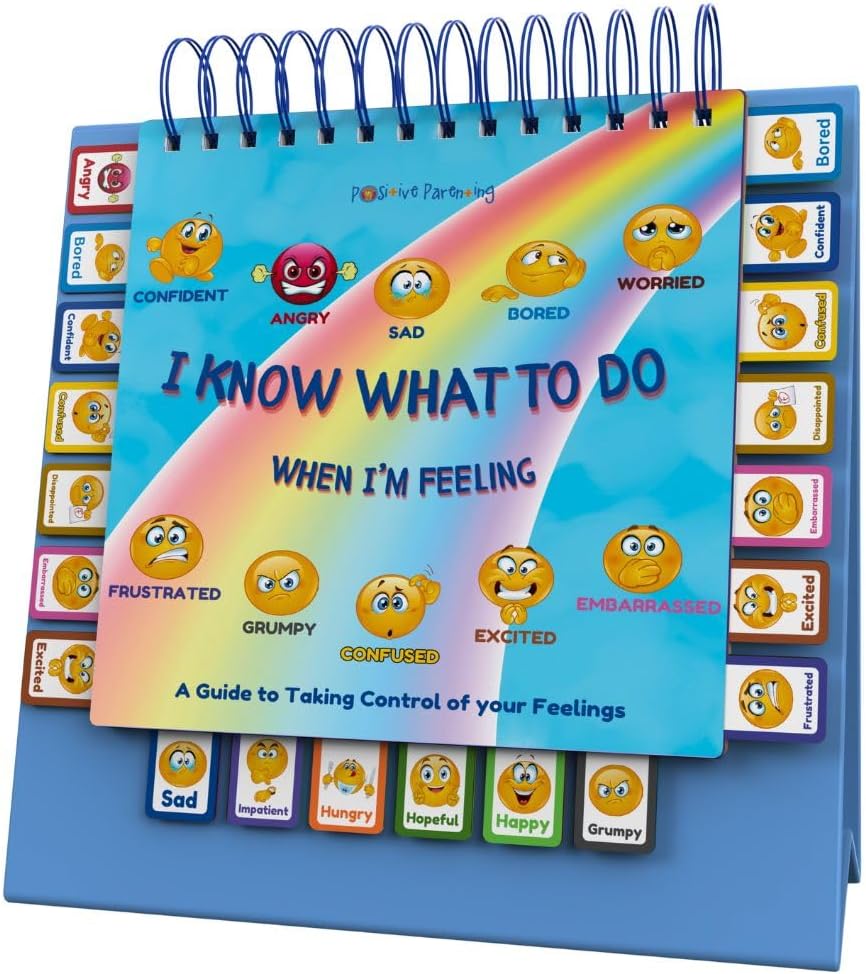
I Know What to Do Flipbook
$12–15
Get it if
- Your child needs an actual physical step to follow as well as somewhere to sit with a feeling
- You want something small enough to live in the corner itself, no wall space needed
- You want a tool that still works for older kids, they just flip to a different page
Skip it if
- Your child already has a feelings chart or app doing the same job
- Your child tends to ignore printed material mid-meltdown and needs a person modeling calm instead
This is the one piece from every branded kit we’d tell you to buy on its own even if you skip everything else. It’s cheap, it’s specific, and the review count backs up that people keep using it past the first week.
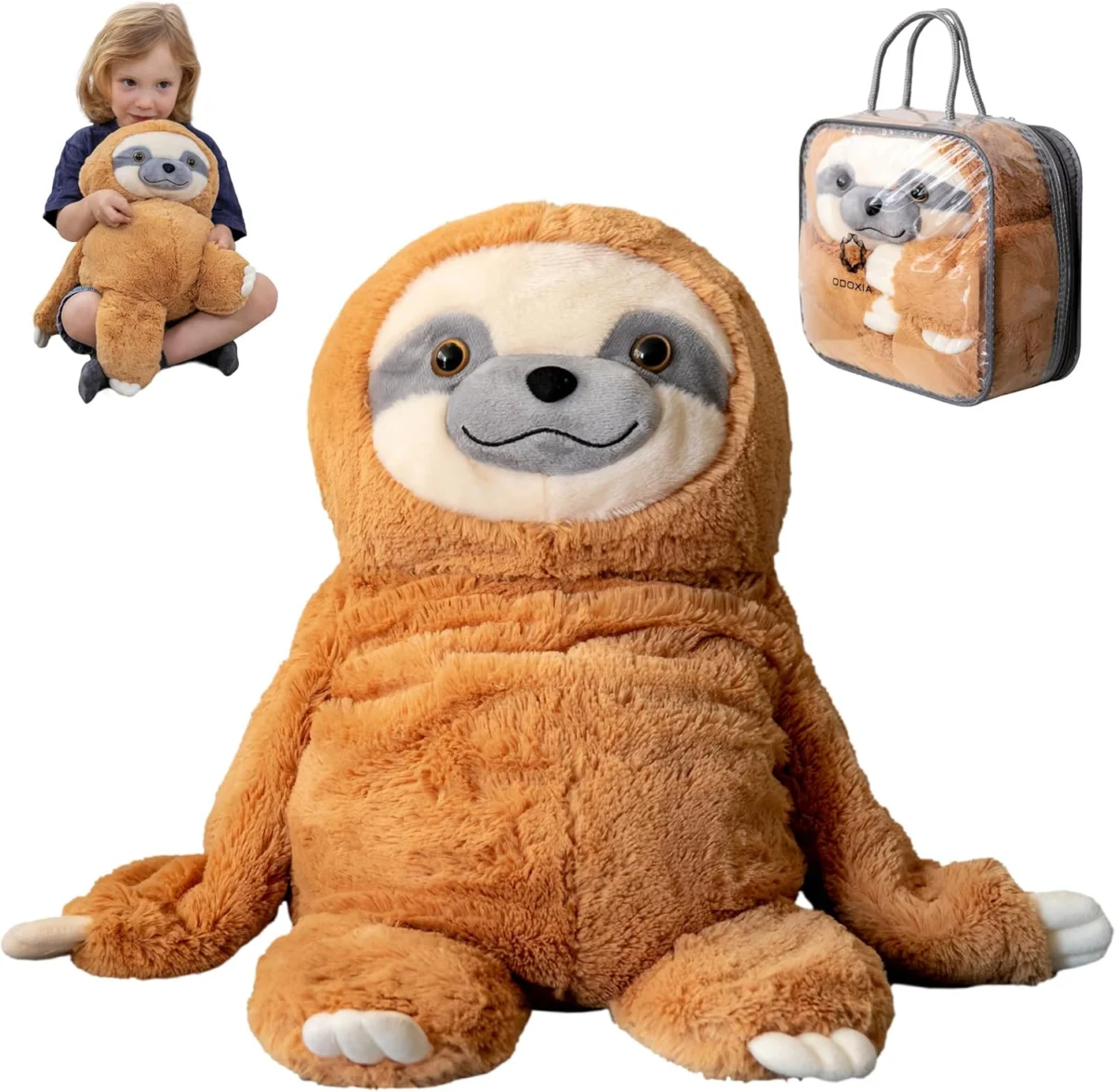
Weighted Comfort Plush
$25–35
Get it if
- Your child already responds to deep-pressure input, like tight hugs or a weighted blanket
- You want something small enough to hold on the couch, in the car, or in a waiting room
Skip it if
- You already own a weighted blanket or vest that gets used, this becomes a second version of the same thing
Think of this as the “starter dose” of weighted pressure before committing to a full blanket. If your child never reaches for it, that’s useful information before you spend more on the bigger version.
Fidget Sensory Stones
$8–12
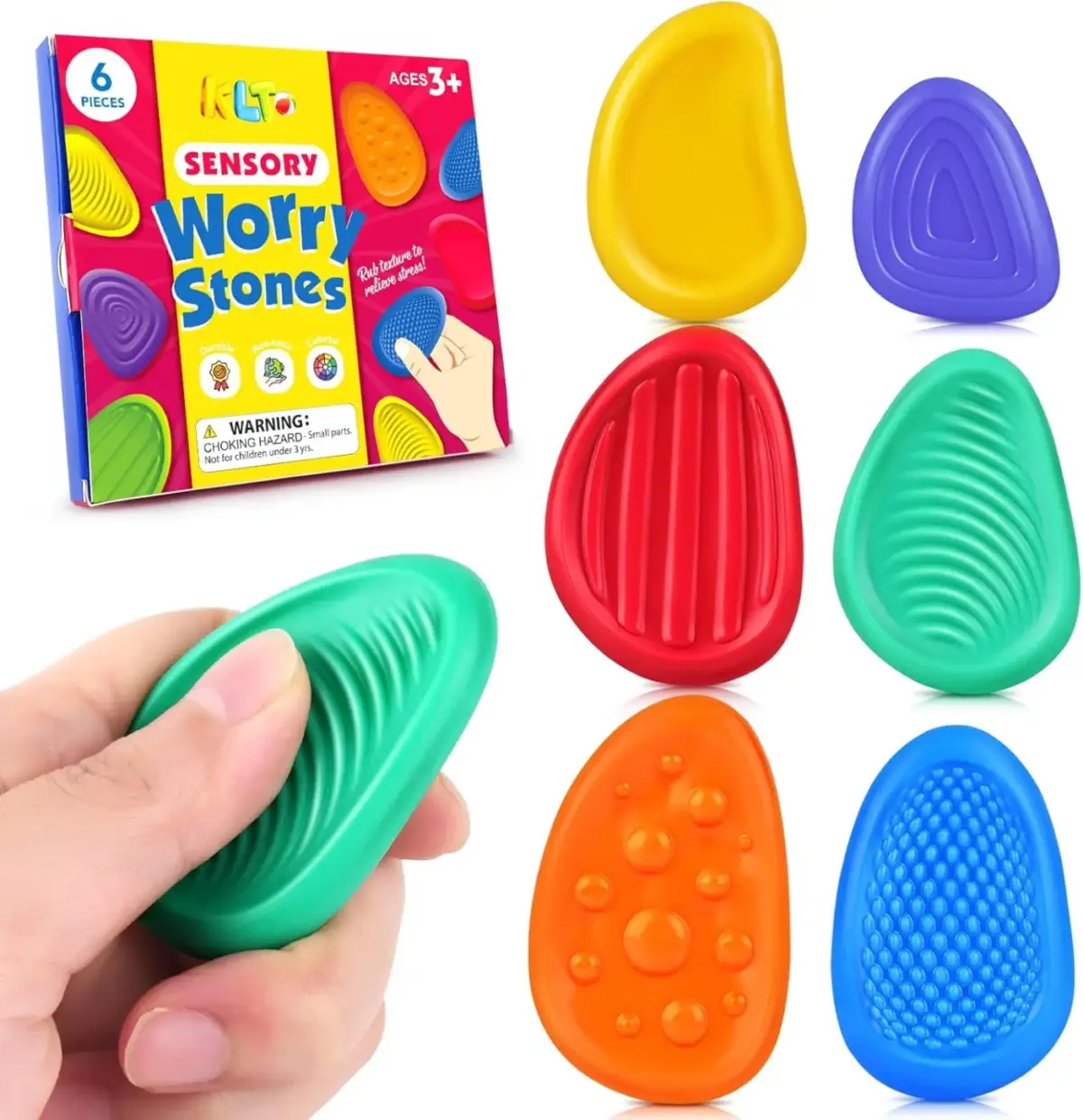
Get it if
- You want a quiet tactile option that doesn’t click, roll or rattle in a classroom or waiting room
- You want a cheap way to test whether tactile fidgeting even helps before spending more
Skip it if
- Your child needs something more stimulating, a stone won’t out-compete a real meltdown for a sensory-seeking kid
The rating count here is real and the price is low enough that it’s not much of a gamble either way.
Pop Tubes (the padding)
$8–10 / pack

Get it if
- Your child has specifically asked for pop tubes, or you already know they like pulling and connecting toys
Skip it if
- You’re buying it “because it was in the kit,” this is the item we’d bet gets forgotten in a drawer fastest
- You want a rating you can verify, this exact listing doesn’t have one we’d stand behind
We’re including it because it’s in almost every bundle, not because we’re excited about it. It’s fine as a $2 add-on. It’s not worth treating as a reason to buy the whole kit.
Start with one piece, not a whole kit
If you’re setting this up for the first time, buy one piece, the flipbook or the weighted plush, and give it two weeks in a consistent spot before adding anything else. A calm down corner that gets used is one item that works, not eight items that don’t. For the behavior side of why the spot itself matters, our breakdown of Whole-Brain Child meltdown strategies and why your words can make a meltdown worse both cover what to do once your child is standing in the corner, not just what to put in it.
And if a visual timer is part of your routine already, we ran the same honest comparison on those.
Frequently asked questions
Most branded kits bundle the same handful of items you can buy individually for less. Buying two or three specific pieces on their own, rather than the full kit, usually costs less and lets you check each item’s real rating before you buy it.
A consistent, quiet spot matters more than any specific product. From there, a feelings tool that gives a concrete next step, one comfort item, and a quiet tactile fidget cover most of what a branded kit tries to bundle together.
No. A dedicated self-regulation space benefits most children, though what works best inside it can differ by child. If your child is sensory-seeking or sensory-avoiding, that changes which pieces are worth buying.
The pieces we’d recommend run about $12 to $35 each. You don’t need all of them at once, and you can build up to a full setup for less than most branded kits charge for one bundle.
A calm down corner doesn’t need a lot of square footage. A closet gap, a corner of a shared bedroom, or even a labeled floor cushion can work if it’s used consistently.
Leave the first comment
Share your thoughts

I'm for the parent about to spend money they're not sure about. I buy the gadget, live with it, and give you the honest verdict - including the 'don't'. I've burned through enough hype to save you the cash, and when something truly earns its place, I'll show you exactly why.
More from TylerWhich tool earned its place - and which was a waste of money?
No right answers here - tell us how it went. Someone reading needs to hear it.
Join the conversation