
Two Cutters Each and a Tray With a Limit On It
Every December it goes wrong in the same three places, and every December I forget until I am standing in flour.
Place one is the dough, which is too warm and sticks to everything. Place two is about eleven minutes in, when the four year old announces she is done and walks off leaving me with half a tray. Place three is the sprinkles, which arrive in an open jar and leave as a single sugar drift across the table, followed by a change in my tone that neither of us enjoys.
Nothing here requires special equipment or a better child. It requires accepting what a small person is actually able to give you.
Cold dough, made yesterday

This is the whole trick and it is boring, which is why people skip it.
Make a firm roll-out dough the night before. Gingerbread or a plain sugar cookie. Wrap it and put it in the fridge. Cold dough holds its shape, does not stick to small warm hands, and does not need re-flouring every ninety seconds.
It also splits the job across two days, which means the session your child is actually present for is fifteen minutes of rolling and cutting rather than an hour that starts with weighing butter. Nobody under six has ever wanted to weigh butter.
Give them a limit before they start
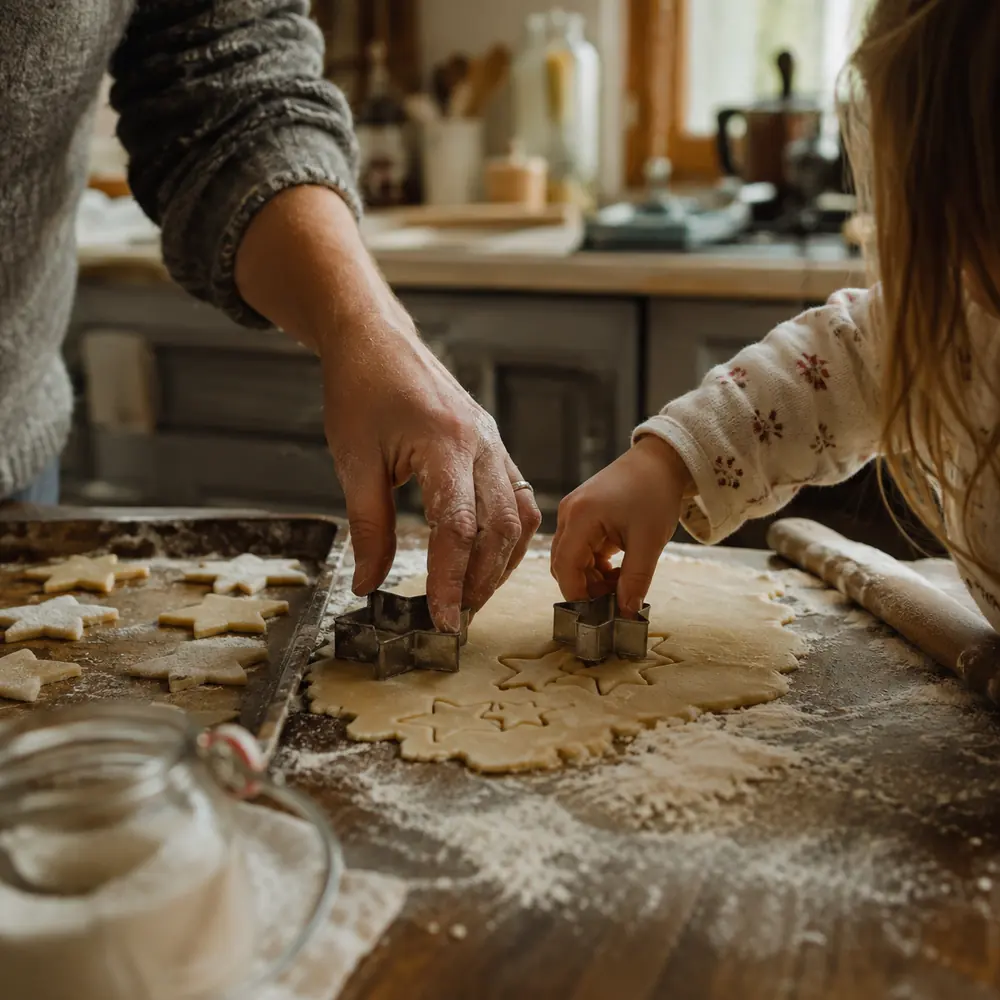
Two cutters each, and a tray with a number on it. “We are making twelve.” Then it is finishable, and a small child can see the end from the beginning.
An unlimited tray is where it falls apart. Children do not have a sense of when a batch is done, so the activity has no shape, so they leave it. The parent then experiences this as being abandoned mid-task, which it is, except that it was the task that was badly designed rather than the child.
A timer helps here more than it should. Not as a countdown to hurry them, but as a visible answer to “how much longer”, which otherwise gets asked eleven times.
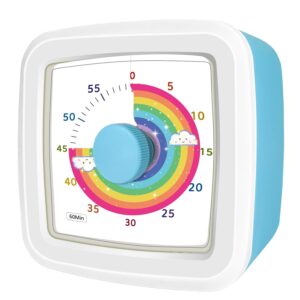
Visual Timer for Kids
As an Amazon Associate, Decoded Kids earns from qualifying purchases. Price checked live on Amazon.
Ours lives in the kitchen drawer and comes out for exactly two things, homework and baking. Twelve minutes on the dial, everyone can see it, and the argument about when we stop simply does not happen.
What each age can actually do
- Eighteen months to two. Pressing a cutter with your hand over theirs. Putting shapes on the tray. That is the entire job and it is genuinely enough.
- Three to four. Cutting and placing on their own. Rolling with a small pin, badly, which is fine. About twelve minutes of real attention.
- Five to seven. Measuring with help, managing the rolling pin, doing all the decorating. Can be trusted with a piping bag if you are relaxed about where it goes.
- Eight and up. Following a short recipe on their own, with the oven still firmly your job. This is the age where baking stops being an activity you run and starts being something they do.
The sprinkles rule
The same logic applies to the icing. One bowl each, spoons rather than squeeze bottles for the under fives, and a damp cloth on the corner of the table from the start. If you have a child who finds sticky hands genuinely unbearable rather than merely annoying, the cloth is not optional and there is more on that in the sensory play notes.
Give the batch somewhere to go
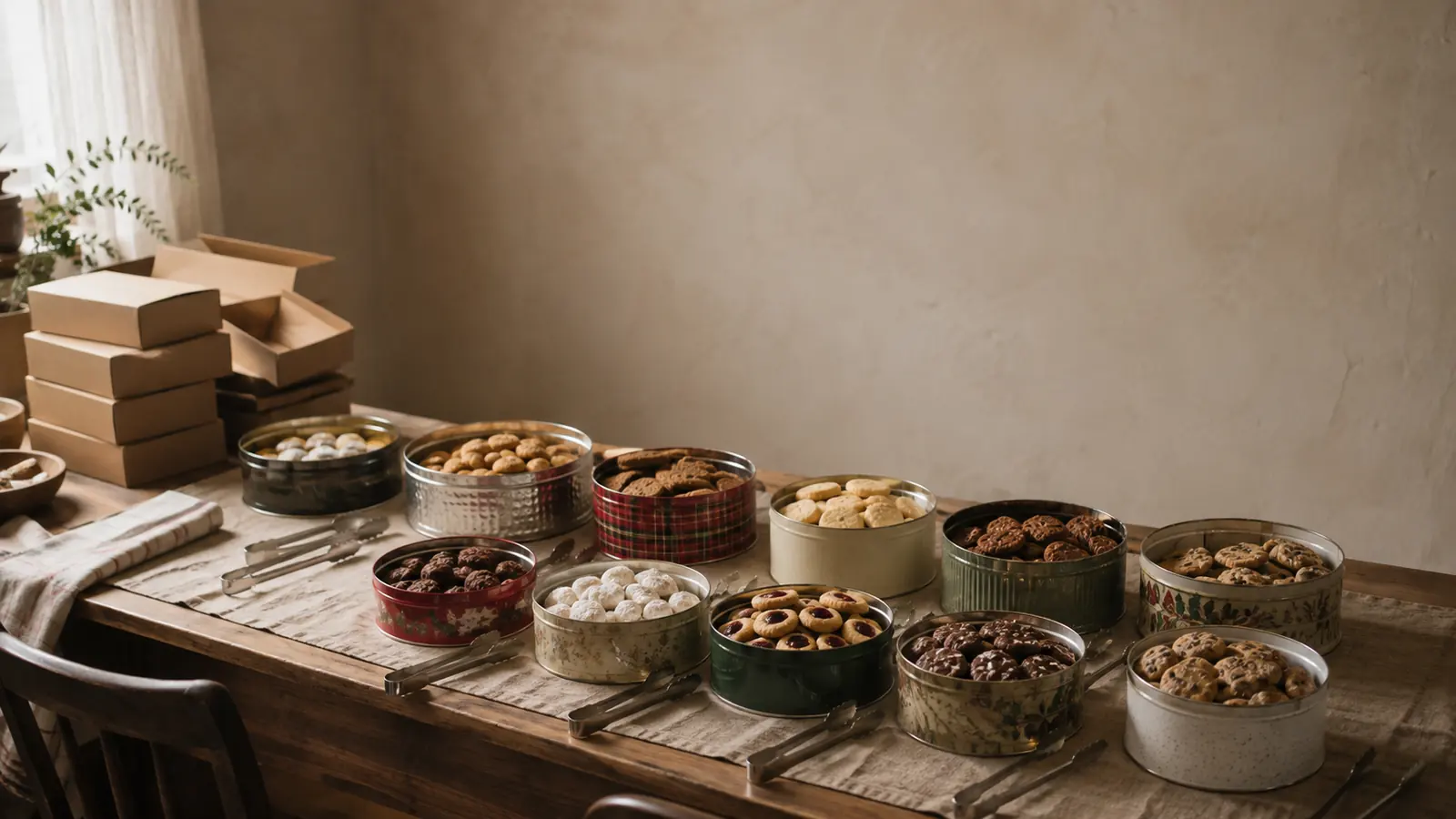
Decide before you bake. A tin for home, a plate for a neighbour, a bag for whoever is coming on the day, one set aside for the teacher.
Children take noticeably more care with a batch that has a destination. It turns an activity that ends in eating into one that ends in giving something away, and a six year old handing over a tin they made is doing something that no purchased gift does for them. One warning if the teacher is on your list: in a survey of 800 teachers run by Study.com, homemade food came out near the bottom of what teachers actually want to receive. Send the tin to a neighbour and send the teacher a written card instead.
When they wander off
Let them. This is the part parents take personally and should not.
Twelve minutes of rolling and cutting is a normal attention span for a four year old, not a failure of enthusiasm and not a sign that they did not want to do it with you. Finish the tray yourself, put it in the oven, and call them back for the decorating, which is the part they actually came for in the first place.
What you are protecting here is the memory. A child who did ten happy minutes and left remembers baking with you. A child who was kept at the table for forty minutes because you had committed to an afternoon remembers something else, and so do you. The same principle runs through the traditions that cost nothing: short and repeated beats long and endured.
The version that works in a small kitchen
One child at a time if you have more than two, and stagger it. Dough on Saturday night, first child cuts on Sunday morning while the second is out, second child decorates in the afternoon. It sounds like more work and it is less, because two children at one tray is a different activity called negotiating.
And if the whole thing collapses, buy the dough. A tube of shop-bought cookie dough, your cutters, your sprinkles, twenty minutes. Nobody has ever asked me where the dough came from, including the people who ate it.
She did eleven minutes this year, then came back at the icing stage and stayed for forty. The tray went to the neighbour with the dog. She knocked on the door herself.
Leave the first comment
Share your thoughts
Christmas cookies with kids, answered
Eighteen months can press a cutter into dough with a hand over theirs. Three can cut and place. Five can measure with help and manage a rolling pin. Eight can follow a short recipe on their own with the oven still your job. Match the task to the age and the whole thing gets easier.
A firm roll-out sugar cookie or gingerbread dough, made the day before and rested in the fridge. Cold dough holds its shape, does not stick to small warm hands, and lets you split the job across two days so the baking is fifteen minutes rather than an afternoon.
Portion the sprinkles before they arrive at the table. Small bowls, one each, and no open jars. It is not about restricting sugar, it is that a full jar in the hand of a four year old ends in a pile, then a mess, then a telling off, and the telling off is the part that spoils the afternoon.
Decide before you bake. A tin for home, a plate for a neighbour, and a bag for whoever is coming on the day. Children take far more care with a batch that has a destination, and it turns an activity that ends in eating into one that ends in giving something away.
Let them go. The average four year old has about twelve good minutes of rolling and cutting in them, and that is a normal attention span rather than a failure of enthusiasm. Finish the tray yourself, then call them back for the decorating, which is the part they actually came for.

I started Decoded Kids because the calm, straight answer I needed at 2 a.m. just didn't exist. I'm a parent of two, still figuring it out - and I hold this whole place to one promise: real help, in plain language, with no one talked down to.
More from MayaWhat's the one thing that actually calmed the chaos in your house?
No right answers here - tell us how it actually went. Someone reading needs to hear it.
Join the conversation