12 Indoor Movement Activities for Kids With ADHD Who Are Bouncing Off the Walls
Rain again, and your child has already launched a sofa cushion across the room. You need somewhere for that energy to go, preferably before dinner and without the downstairs neighbor learning your name. If this lands hardest right after pickup, that is its own predictable pattern: the first twenty minutes after school deserve their own plan.
The best indoor movement activity matches three things: how revved-up your child feels, how much floor space you have, and how much noise the room can take. Pick one job with a clear finish. Five useful minutes can be plenty.
Why does giving the energy a job help?
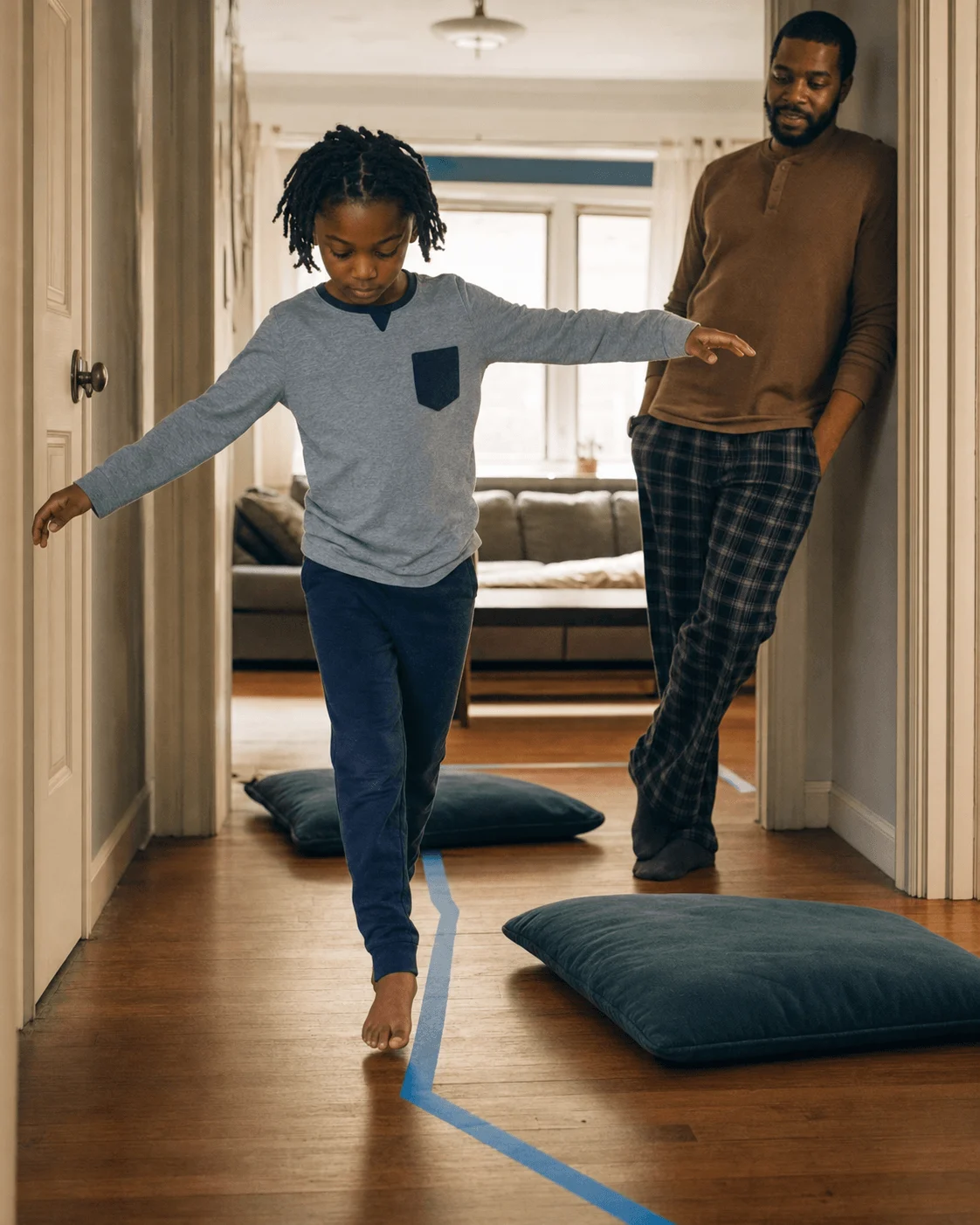
“Go burn some energy” sounds clear to an adult. To a child with ADHD, it can feel like standing in a blank room with no first move. A short mission is easier: push this basket to the hall, carry six books to the shelf, or follow this tape line twice.
The CDC recommends at least 60 minutes of daily activity for children ages 6–17, with age-appropriate activities they enjoy. That hour does not need to happen in one heroic session. A 2024 systematic review of acute exercise in adolescents with ADHD found small improvements in core symptoms and executive function after a single exercise session. Movement can support the day. It does not replace ADHD care.
“The activities should be varied, age appropriate, and enjoyable.”Centers for Disease Control and Prevention
Which heavy-work activities fit indoors?
When the body is looking for impact, give it resistance. Keep the load light enough that your child can move it with control, and clear the path first. Socks on a slick floor are not the vibe. Heavy work sits in the same family as the rest of the sensory tools that earn their shelf space.
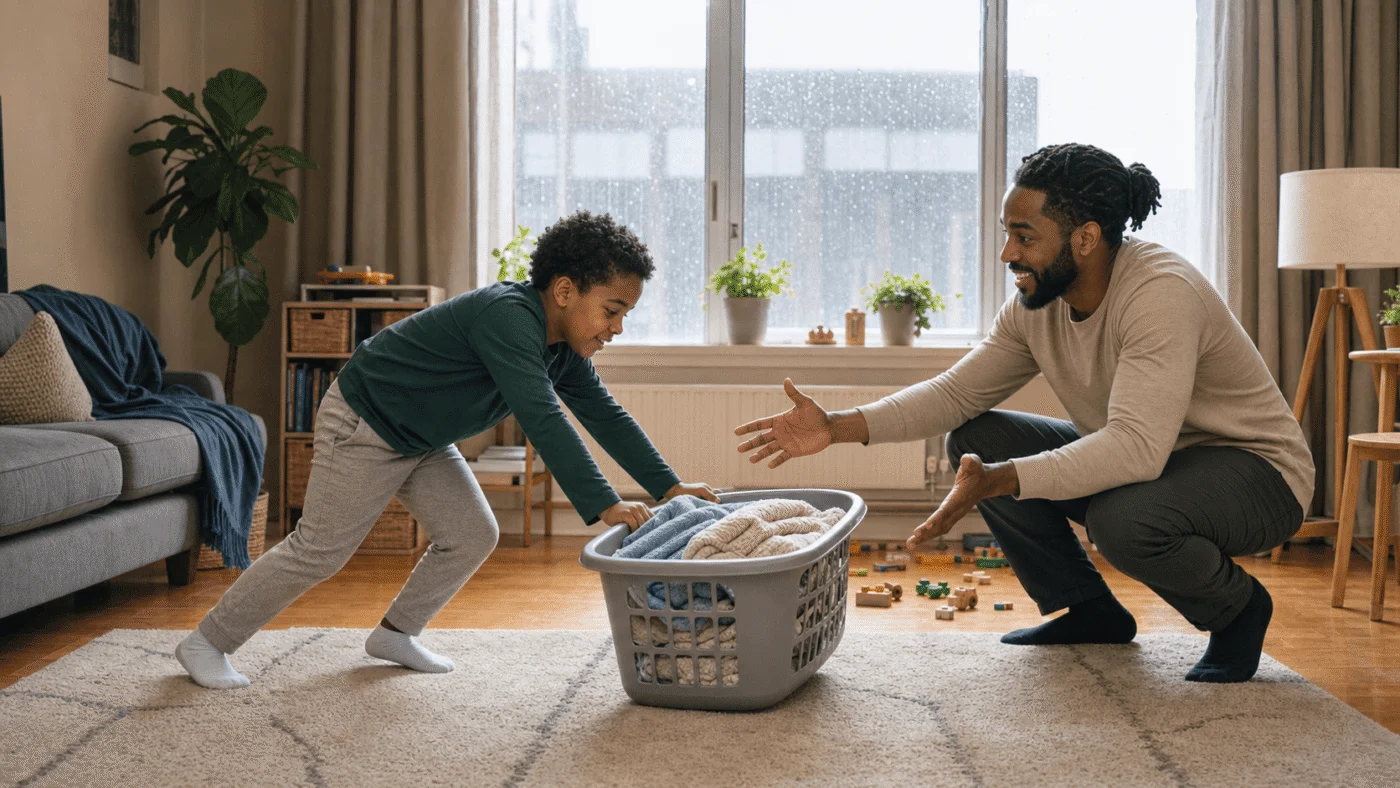
Laundry-basket push
Add towels, then push the basket from one marked spot to another. Let your child choose one extra lap.
Space: medium · Noise: low · Finish: 3 laps
Wall pushes
Hands flat, feet back, push the wall for ten slow counts. Rest, shake out, repeat twice.
Space: tiny · Noise: silent · Finish: 3 rounds
Book delivery
Carry two or three books at a time from a low shelf to a reading spot. Return them when the mission ends.
Space: small · Noise: low · Finish: 6 books
Cushion squeeze
Hug a sofa cushion for five counts, release, then carry it across the room like a package.
Space: small · Noise: low · Finish: 5 packages
What works when they need a fast burst?
This is the fizzy, giggling, cannot-find-their-socks energy. Use a visible start and stop. Do one activity for two to five minutes, then offer water and the next ordinary task. Turning it into a 40-minute workout usually creates a new transition problem.
Animal-walk relay
Bear-walk to the door, crab-walk back, then choose the final animal together.
Space: medium · Noise: medium · Finish: 3 trips
Paper-plate skating
On carpet, put one sturdy paper plate under each foot and slide between two cushions.
Space: medium · Noise: low · Finish: 5 returns
Balloon keep-up
Keep one balloon off the floor for 20 taps. Move breakables first and skip this with children who mouth balloon pieces.
Space: medium · Noise: medium · Finish: 20 taps
Hallway shuttle
Move five soft toys, one at a time, between two baskets. Walking fast counts. Racing is optional.
Space: long/narrow · Noise: low · Finish: 5 toys
Affiliate note: If you buy through the product link below, Decoded Kids may earn a commission at no extra cost to you. We only place a product where it solves a real part of the routine.
A visual timer can make the finish line visible when “two more minutes” feels slippery. Set it before the activity starts, and let the sound end the game so you do not have to become the human siren. The timer supports the transition, and our roundup of the visual timers that get used covers which ones survive a household. It is not an ADHD treatment.
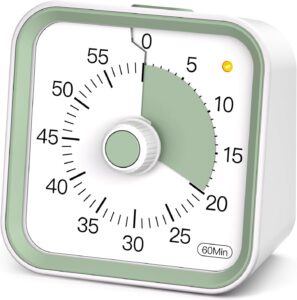
Visual Timer for Kids with Pause Function, 60 Minute Countdown Timer for Kids Desk Study, Teaching…
As an Amazon Associate, Decoded Kids earns from qualifying purchases. Price checked live on Amazon.
Which movement keeps the noise down?
Apartment evening? Baby asleep? Go for control instead of speed. These are also good after the bigger burst, when your child still needs motion but the edges have softened.
Tape-line balance
Walk heel-to-toe along painter’s tape. Try forward, backward, then with a beanbag balanced on one palm.
Space: narrow · Noise: silent · Finish: 3 paths
Slow-motion mirror
Face each other. One person makes slow stretches while the other copies, then swap after five moves.
Space: tiny · Noise: silent · Finish: 2 turns
Pillow stepping stones
Place firm cushions close together on a non-slip floor. Step across without touching the “river.” Stay beside younger children.
Space: medium · Noise: low · Finish: 4 crossings
Sock pickup crawl
Place three rolled sock pairs along a short route. Crawl out, collect one, and bring it back to the basket.
Space: small · Noise: low · Finish: 3 sock pairs
How do you pick one in 20 seconds?
| Your room right now | Try first | Why it fits |
|---|---|---|
| Tiny and quiet | Wall pushes or mirror moves | No setup, no jumping |
| Narrow hallway | Tape line or toy shuttle | One clear route |
| Open floor, high energy | Basket push or animal relay | Resistance plus a finish |
| Energy is coming down | Pillow path or slow mirror | Movement without another spike |
What if movement makes things louder or wilder?
Stop and shrink the plan. Dim the room, remove the audience, offer water, or sit nearby without adding questions. Some children get more wound up by fast movement, and whether motion settles or revs your child is the same seeking-versus-avoiding split we unpack in why a calm down corner works for one kid and not another. It shows up most when they are hungry, exhausted, in pain, or already overloaded.
Movement is one option, not a test your child can fail. If unsafe crashing, breathlessness, pain, dizziness, or sleep problems keep showing up, check in with your child’s clinician. Anyway, the win tonight may be two wall pushes and a snack.
Choose the smallest useful finish
Pick one activity your room can handle. Name the finish before you begin, then end without squeezing in one more round. You are building a repeatable escape hatch for a rainy day, not running gym class from the kitchen.
Frequently asked questions
Good indoor movement activities include laundry-basket pushes, wall pushes, animal walks, tape-line balance, toy shuttles and slow mirror stretches. Match the activity to your space and noise limit. Give it a visible finish, such as three laps or 20 taps, instead of asking for open-ended exercise.
Start with two to five minutes. A short movement break is easier to begin and easier to end, especially before homework, dinner or bedtime. Watch your child rather than the clock alone. Stop while the activity is helping, then offer water and the next predictable part of the routine.
Wall pushes, slow-motion mirror moves, tape-line walking, book deliveries and cushion squeezes use little space and make very little noise. Avoid jumping games late in the day or above neighbors. A hallway can become a useful route when the start and finish points are clearly marked.
No. Regular movement supports general health and may help attention or regulation for some children, but it does not diagnose or treat ADHD by itself. Keep following your child’s care plan. Talk with their clinician when symptoms affect safety, school, sleep, friendships or everyday family life.
Drop the demand and offer two small choices, such as wall pushes or carrying books. You can also begin the activity yourself without turning it into a contest. Refusal may mean your child needs food, quiet, connection or fewer instructions. Movement should feel available, not like a consequence.