
Your Calm Down Corner Isn’t Working Because It’s Built for the Wrong Kid

You did everything the Pinterest post said. Fairy lights, a beanbag, a basket of squishy things, a poster with the deep-breathing dragon. You built the calm down corner, you were quietly proud of it, and then your kid used it exactly once, hated it, and went back to melting down on the kitchen floor like the corner didn’t exist. So either your child is broken or the corner is, and I promise you it’s the corner.
Here’s the thing almost no one tells you before you spend the afternoon hot-gluing felt clouds. A calm down corner is not one thing. It is two opposite things wearing the same beanbag, because there are two opposite kinds of overwhelmed kid, and a corner that soothes one will wind the other one up like a spring. Get the match right and the corner works the first week. Get it wrong and it’s just a nice pile of stuff your kid ignores.
Two kids, two opposite nervous systems
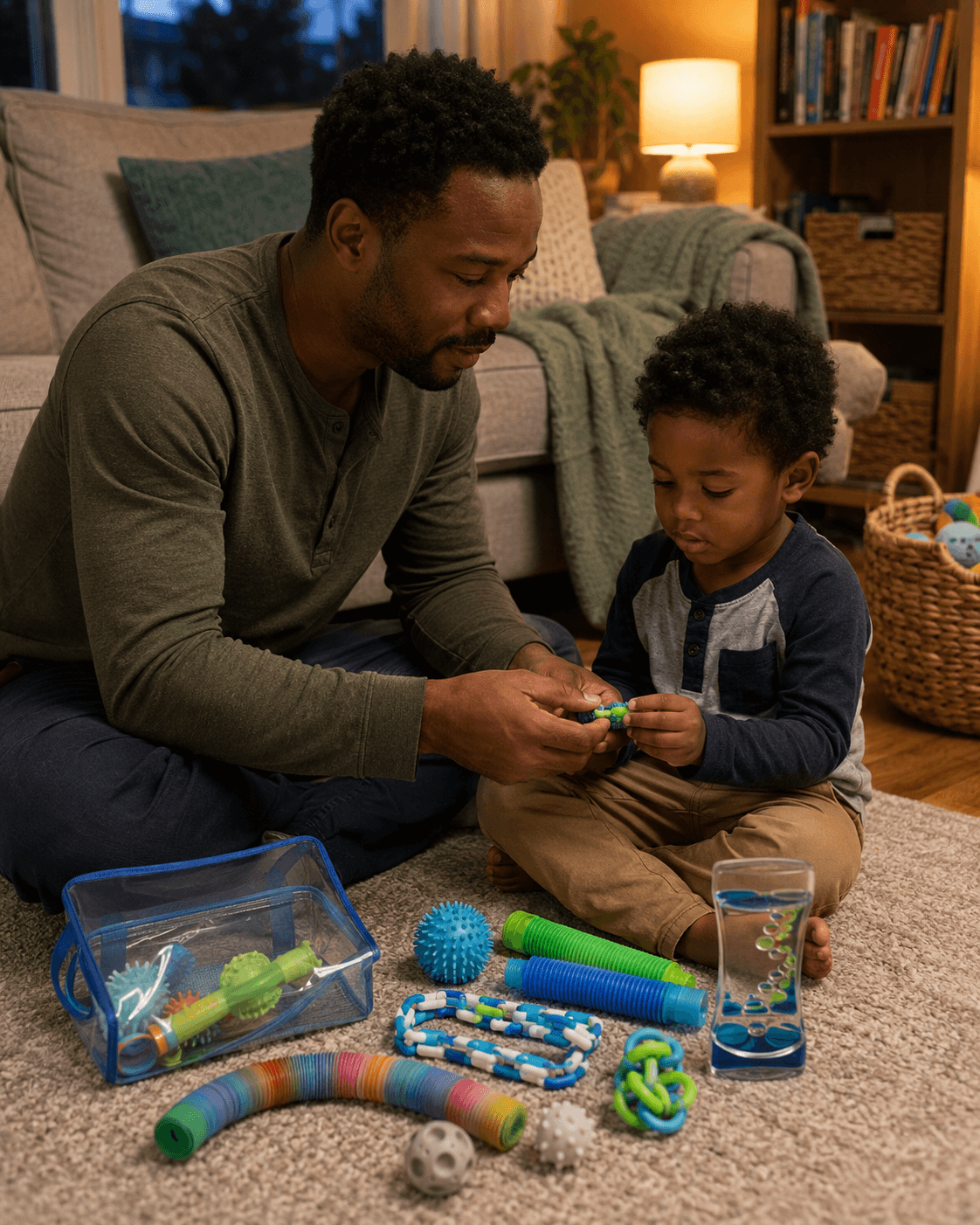
The idea that some kids are wired to want more sensation and some to want less comes from occupational therapy, specifically the work of Dr. A. Jean Ayres, who built the theory of sensory integration back in the 1970s and gave us the language most therapists still use. Strip it down to the kitchen table and it’s this: when a child gets overwhelmed, their nervous system is either drowning in input or starving for it.
The avoider is drowning. Noise, light, tags in the shirt, the smell of someone else’s lunch, all of it is turned up too loud, and a meltdown is the system tripping its own breaker. The seeker is the opposite: under-fed on input, so the body goes hunting for it by crashing into the sofa, spinning, chewing sleeves, climbing you like furniture. Same loud behaviour on the outside, completely opposite need underneath.
The avoider: build a corner that turns the world down
If your kid covers their ears, hides under the table, squints, peels off socks, and falls apart most in loud, bright, crowded places, you are raising an avoider. Their corner has one job: less. Dim it, tuck it into a real corner or behind a shelf so there’s a wall at their back, lose the busy poster wall, and give them a way to mute the room. This is the child the beanbag-and-fairy-lights setup was quietly designed for, as long as you also kill the noise.
For a child who comes apart in noise, a corner is only calm if it comes with a volume knob. A pair of these over the ears takes the edge off the fridge, the sibling, the everything, so the quiet spot can actually do its job.
As an Amazon Associate, Decoded Kids earns from qualifying purchases. Price checked live on Amazon.
The seeker: build a corner that gives the body a job
If your kid is the crasher, the leaner, the one who chews collars and can’t sit in a chair without tipping it, an empty quiet nook is torture, not relief. It gives them nothing to do with a body that is screaming for input, so they will bounce straight back out of it. A seeker’s corner needs more, but the organising kind: deep pressure, heavy work, something to push, squeeze, or hold. That is what actually downshifts a seeking system, and it’s the same reason movement-based regulation activities land better for these kids than being told to sit still and breathe.
A seeker’s corner can’t be empty and still, that’s a waiting room, not a reset. Steady weight gives the nervous system the deep-pressure input it’s chasing, which is often what finally lets a busy body come down.
So which corner does your kid need?
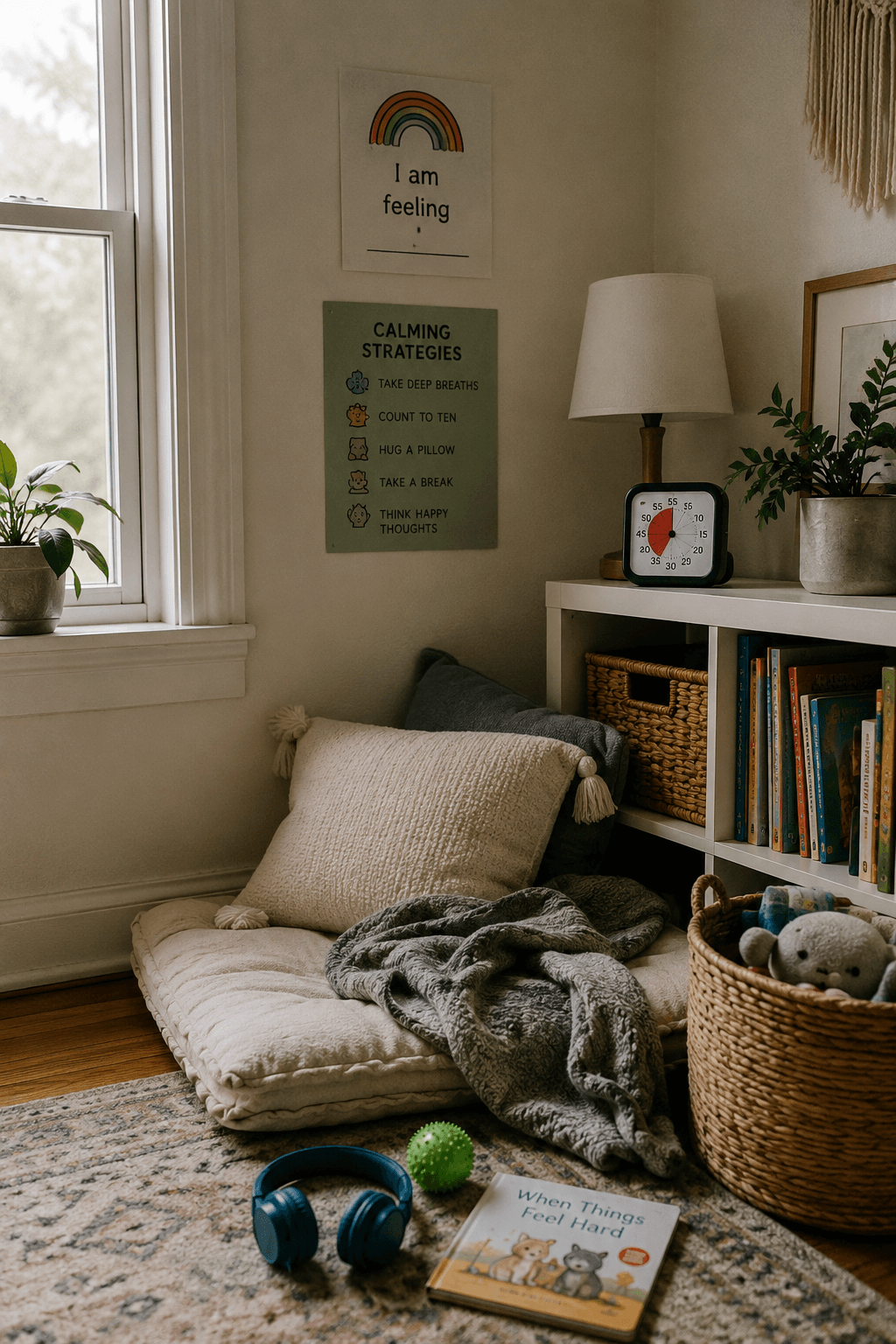
Don’t guess from a quiz. Watch what your kid reaches for in the middle of falling apart. A child who runs from the noise, hides, and wants the lights off is telling you to build down. A child who slams into cushions, spins, and grabs anything to squeeze is telling you to build up. Most kids lean clearly one way, and a fair few are mixed, calm in a dim quiet space but only once they’ve had two minutes of heavy input to burn off first. When in doubt, the safe default is deep pressure plus the option of quiet, because a weighted lap pad soothes almost everyone and a corner they can dim on demand rarely backfires.
None of this replaces the harder conversation about what set the meltdown off in the first place, which is usually less about the room and more about what we say while it’s happening. The corner is the tool. It buys the minutes. The relationship does the rest.
Build for the kid in front of you, not the one in the photo. Once the corner matches the nervous system, the strange part is how boring it gets: your kid drifts over, does their thing, and comes back down, and you stop needing to sell them on it at all.
Frequently asked questions
A sensory-avoiding child is overwhelmed by input (noise, light, textures) and calms down when you reduce it. A sensory-seeking child is under-stimulated and calms down when you give the body more input, like deep pressure, movement, or something to squeeze. The same situation, opposite needs.
Usually because it’s built for the wrong sensory profile. A quiet, empty corner does nothing for a child who is seeking input, and a bright, busy corner overwhelms a child who is avoiding it. Match the corner to what your kid reaches for when overwhelmed and use rises fast.
It depends whether they seek or avoid input. Avoiders do best with noise-reducing headphones, dim light, and an enclosed space. Seekers do best with deep pressure (a weighted lap pad or plush), something to squeeze or chew, and room to move. Many kids need a mix, so keep both options on the shelf.
No, and treating it like one breaks it. A time-out is a consequence you send a child to. A calm down corner is a place a child chooses to go to feel safe and regulate. If the corner ever means “you’re in trouble,” it stops working as a place to calm down.
Leave the first comment
Share your thoughts

I'm for the parent whose mornings keep falling apart. I didn't train in ADHD - I lived it with three kids, then read the actual studies, so what you get here holds up in a real kitchen at 7:50 a.m. Specific, tested at home, never preachy.
More from MarcusWhat finally made your child's focus click - even a little?
No right answers here - tell us how it actually went. Someone reading needs to hear it.
Join the conversation