
Mommy Thumb and Parent Back Pain: What Actually Helps (and When Shockwave Therapy Is Overkill)
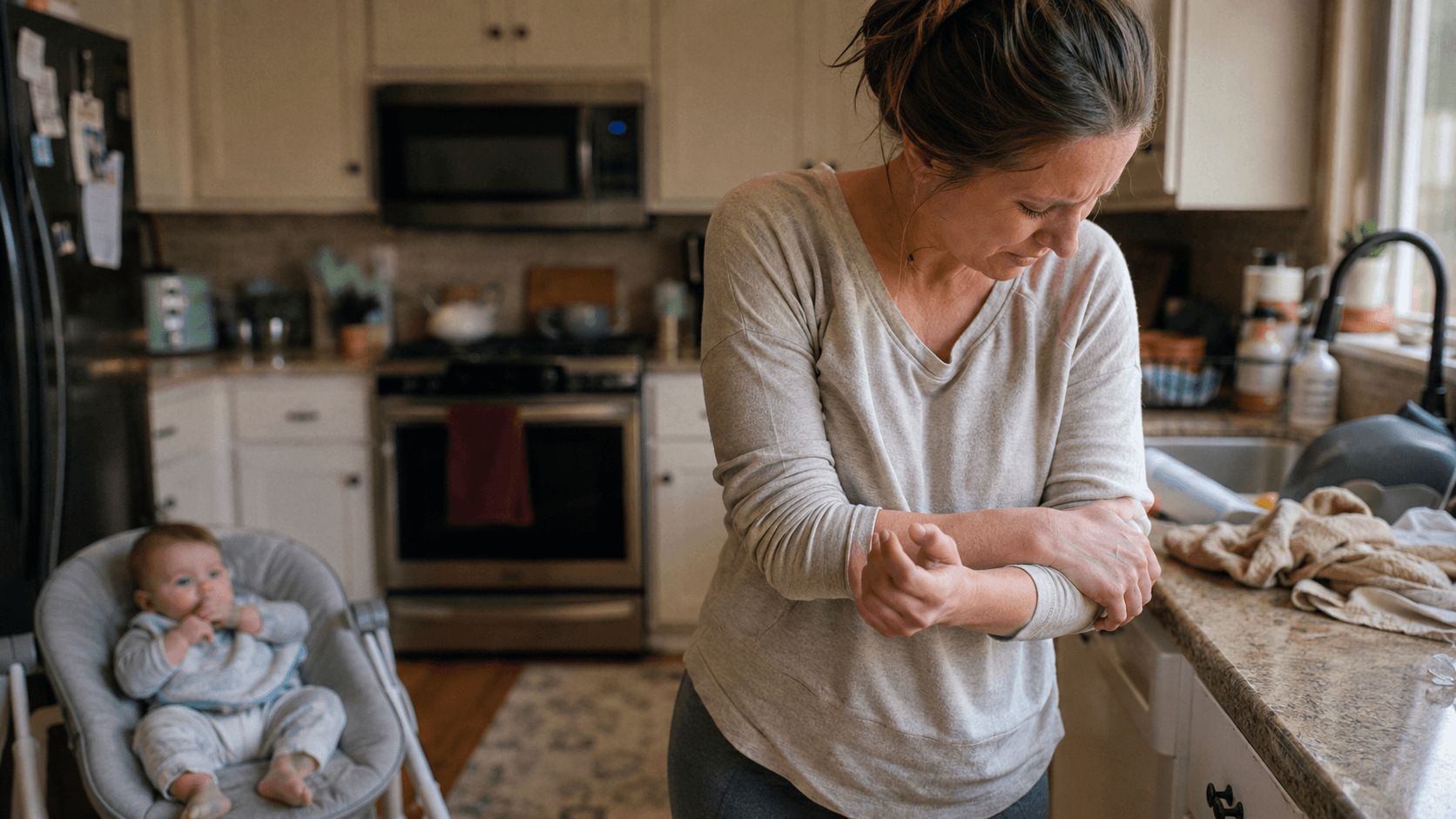
You picked your kid up the same way you have ten thousand times, and this time your wrist lit up. Or your lower back did. It’s the injury nobody puts on the baby-shower list, and it’s so common it has a nickname: mommy thumb. The good news is that most of it responds to small, cheap changes long before you need anything expensive.
Why parenting wrecks your wrists and back first

That thumb-side wrist pain has a real name: De Quervain’s tenosynovitis, an inflammation of the tendons at the base of the thumb. It’s diagnosed so often in new parents that hand specialists nicknamed it “mommy thumb”, though dads and grandparents get it too. The cause is simple and relentless: lifting a baby with your thumb out and wrist bent, dozens of times a day, every day, with a load that keeps getting heavier.
Lower-back pain follows the same logic. It isn’t one bad lift, it’s the repetition, hoisting a car seat, bending over a crib rail, carrying a toddler on one hip for months. The body can handle a lot, but not the same awkward movement on repeat with no recovery. That’s why the fixes that actually work start with the movement, not a machine.
The honest ladder, cheapest first
Here’s the order a physical therapist would generally walk you through, from the free changes to the expensive machine. Skipping to the bottom rung first is how people waste money.
| Option | Cost | Best for |
|---|---|---|
| Change how you lift + restStart here | Free | Almost everyone, as the first move |
| Thumb spica brace / back support | $15–40 | Supporting the tendon while it settles |
| Physical therapy sessions | Varies (often insured) | Pain that lingers past a few weeks |
| At-home shockwave therapy device | $1,060–3,600 | Stubborn chronic tendon pain, after the above |
Start at the top. A thumb spica brace that holds the joint still is often the single most effective cheap step for mommy thumb, and swapping a thumb-out lift for a two-handed scoop from the base takes the load off the exact tendon that hurts. For backs, it’s bending at the knees and keeping the baby close rather than reaching. Give these two to three weeks of genuine consistency before spending real money.
Where shockwave therapy actually fits
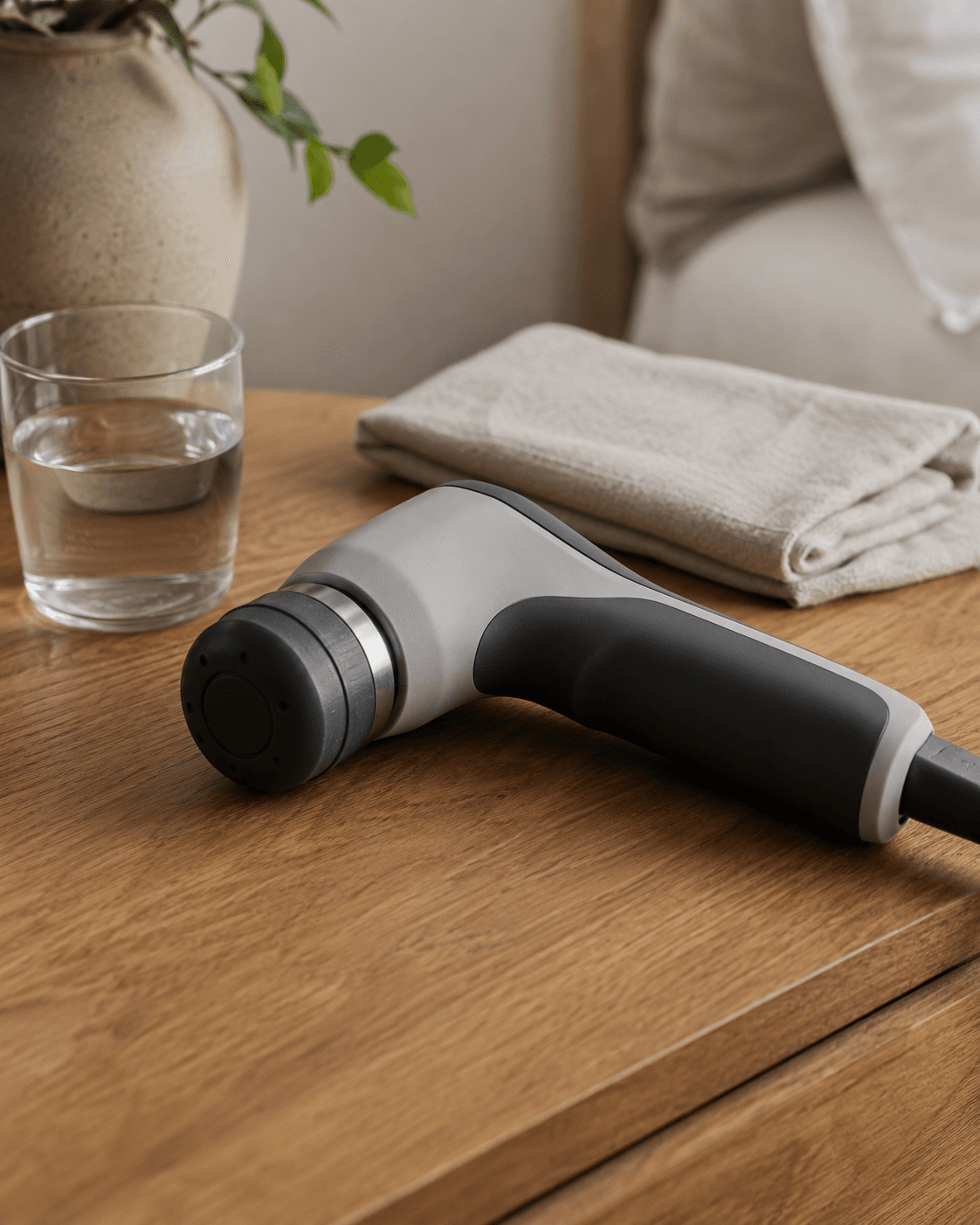
Shockwave therapy (clinically, extracorporeal shockwave therapy or ESWT) is a legitimate physiotherapy treatment. It delivers pulses of pressure into a tendon to stimulate healing, and it’s well established for chronic tendon problems like plantar fasciitis, tennis elbow, and calcific shoulder tendinitis. For a parent whose tendon pain has genuinely become chronic and hasn’t responded to rest, bracing, and physical therapy, an at-home device can save repeat clinic visits.
The honest caveats are just as important. These are professional-grade machines that cost as much as a mattress, they are not a first move, and shockwave has real contraindications, it isn’t suitable during pregnancy, over certain conditions, or without knowing what you’re actually treating. This is a “your physio suggested it and you’d use it for years” purchase, not an impulse fix for a wrist that started hurting last week.
SHOCK VITALIZE Shockwave Therapy Device
~$1,060–3,600
Get it if
- You have genuinely chronic tendon pain that rest and PT haven’t resolved
- A professional has already pointed you toward shockwave therapy
- You’d use it repeatedly over years, not once
Skip it if
- Your pain is new and you haven’t tried bracing and rest yet
- You’re pregnant or unsure what’s causing the pain
- The price only makes sense as a one-time hope
If you’re a parent who’s also an athlete or already lives with chronic tendon pain, and a professional has recommended shockwave, this is the honest place to look at pricing and specs. For a fresh mommy-thumb flare, it is not your answer.
Start with the cheap thing tonight
Tonight, change one lift. Scoop your baby from the base with both hands instead of hooking them with a bent wrist, and if your thumb is the problem, a brace is a $20 experiment worth running before anything else. Most parent pain quietly improves once the same movement stops repeating on an already-strained tendon.
And if the exhaustion is bigger than the aches, the burnout piece is worth reading next, because a rested body handles the lifting a lot better than a depleted one.
Frequently asked questions
“Mommy thumb” is the nickname for De Quervain’s tenosynovitis, an inflammation of the tendons on the thumb side of the wrist. It’s an overuse injury common in new parents from repeatedly lifting a baby with the thumb out and wrist bent. Dads and grandparents get it too.
Start with rest, a thumb spica brace to support the tendon, and changing how you lift, scooping with both hands from the base instead of hooking with a bent thumb. Give it two to three weeks. If it doesn’t improve, see a doctor or physical therapist.
Shockwave therapy (ESWT) is well established for chronic tendon conditions and can help stubborn cases that haven’t responded to rest and physical therapy. For fresh, mild parent strain it’s overkill; conservative first-line care resolves most cases without a device.
Only for the right person: someone with genuinely chronic tendon pain, pointed toward shockwave by a professional, who would use it repeatedly over years. At $1,060 to $3,600 it isn’t a sensible purchase for a new or mild strain, and it has real medical contraindications.
Leave the first comment
Share your thoughts

I'm for the parent mid-meltdown - theirs or the kid's. I write from the actual floor of it: the crying that won't stop, the dinner thrown, the bedtime that unravels. Blunt because I respect you too much to pretend it's easy. Just what tends to actually work.
More from NourWhat's the one thing that actually calmed the chaos in your house?
No right answers here - tell us how it actually went. Someone reading needs to hear it.
Join the conversation