
No Extra Room? The Calm Down Corner That Fits in a Closet Gap
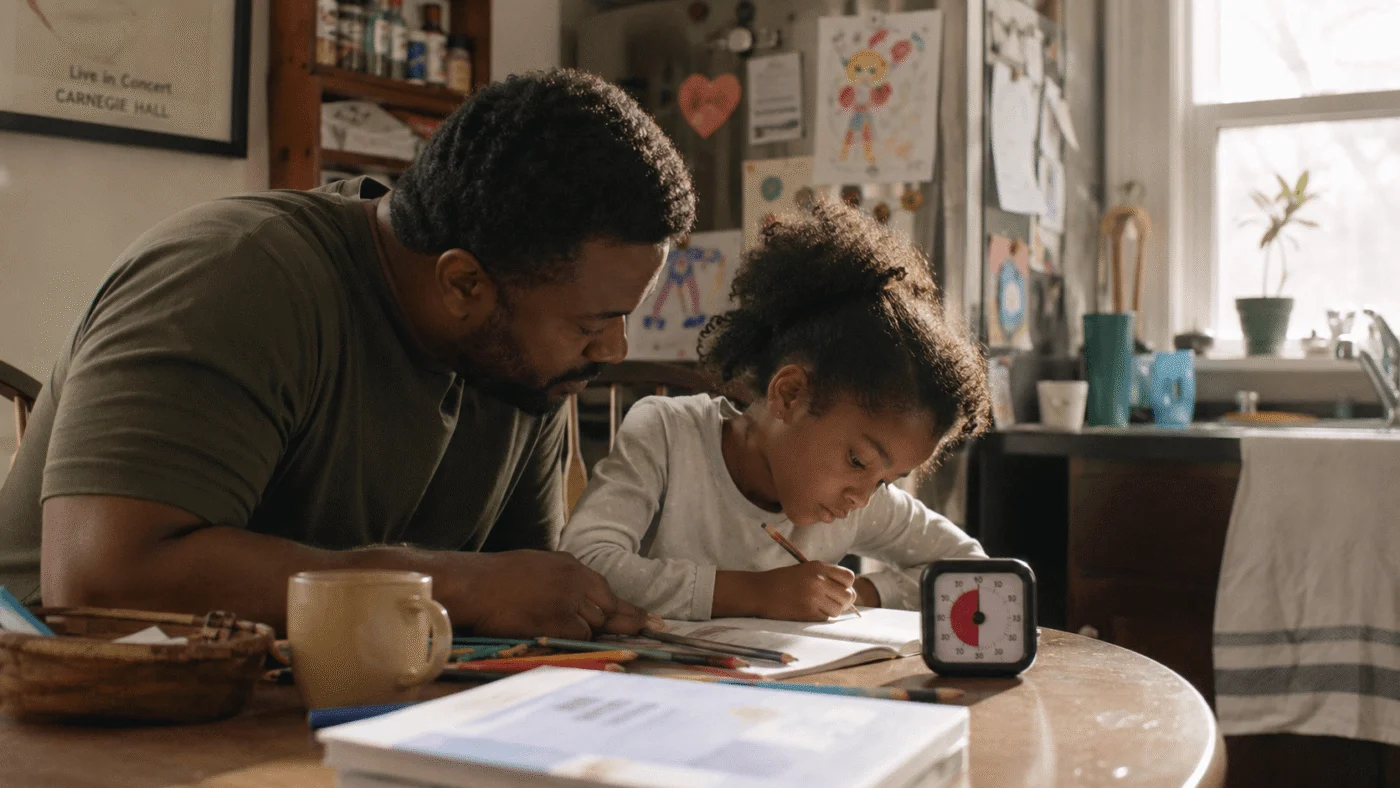
Every calm-down corner idea you’ve found so far assumes something you don’t have. A reading nook. A spare corner of the playroom. A beanbag chair with three feet of floor around it for good measure.
You’ve got a one-bedroom, or a shared room, or a living room that also doubles as the dining table, the home office, and the dog’s bed. There is no spare corner. There is barely a spare foot.
So the whole idea got filed under nice for other people’s houses, right around the time your kid started needing somewhere to fall apart that wasn’t the middle of the kitchen floor.
Why the square footage was never the point
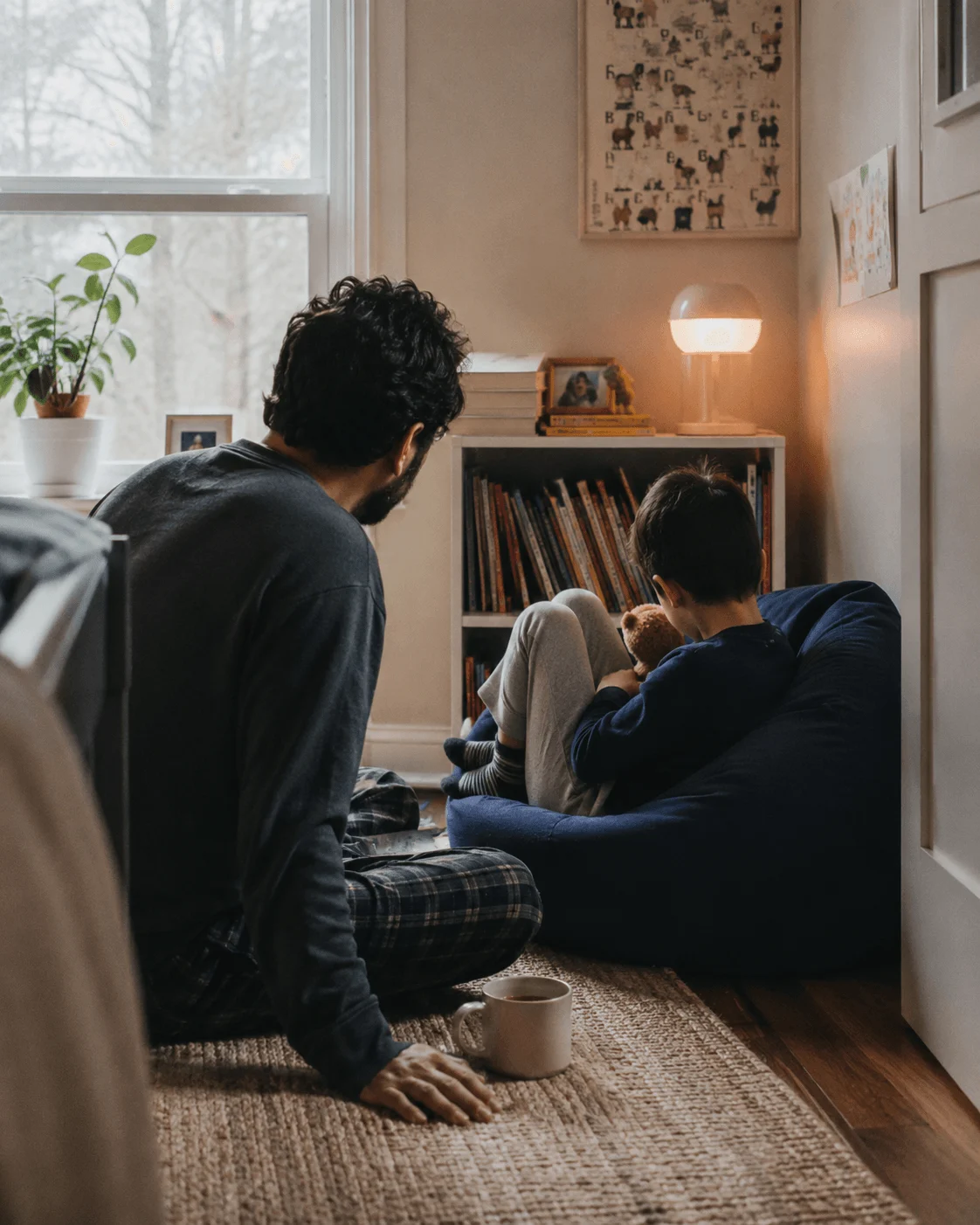
Here’s the part that gets skipped in most of these guides: a calm-down corner works because a child’s nervous system learns to associate one specific, unchanging spot with the process of settling. That’s a memory and habit thing, not a real-estate thing. A closet with the door propped open does exactly the same job as a converted den, as long as it’s always the same closet.
A classroom study out of Northwestern College in Iowa (Clairissa Thompson’s graduate research on a primary-classroom calm-down corner) found real, measurable improvement in how both first graders and sixth graders managed their emotions after one was introduced, using nothing more than a designated spot and a handful of consistent tools. No renovation. Just repetition.
What has to be there (it’s shorter than you think)
Three to five objects, kept in the same spot, is the whole list. Not a shelf. Not a system. A few things a wound-up kid can reach for without needing you to fetch anything, and none of them need to be big.
Something that costs zero floor space
The trick in a tight space is picking objects that don’t need floor room of their own. A wall-mounted sensory panel solves this almost by accident: it hangs at kid-height on any bare wall or the back of a door, so it costs nothing you don’t already have.
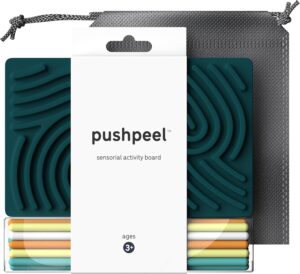
Pushpeel Sensory Activity Board
As an Amazon Associate, Decoded Kids earns from qualifying purchases. Price checked live on Amazon.
Something that names the feeling
A poster only works if a kid stops to read it, and most don’t. A small set of plush emotion characters gets picked up instead, mostly because a five-year-old will actually reach for a soft thing before a laminated chart. It lives in a basket, not on a wall, so it fits a gap a poster never could.
The light matters more than people admit
In a shared room, light is the part most lists skip past. A warm, flameless glow that a sibling can sleep through beats anything that plugs in and buzzes, and it does not need an outlet near the actual corner.
For the actual meltdown itself, once the corner is doing its job: our piece on what to say (and skip) mid-meltdown covers the part that happens after your kid gets to the spot.
Finding the actual gap in your place
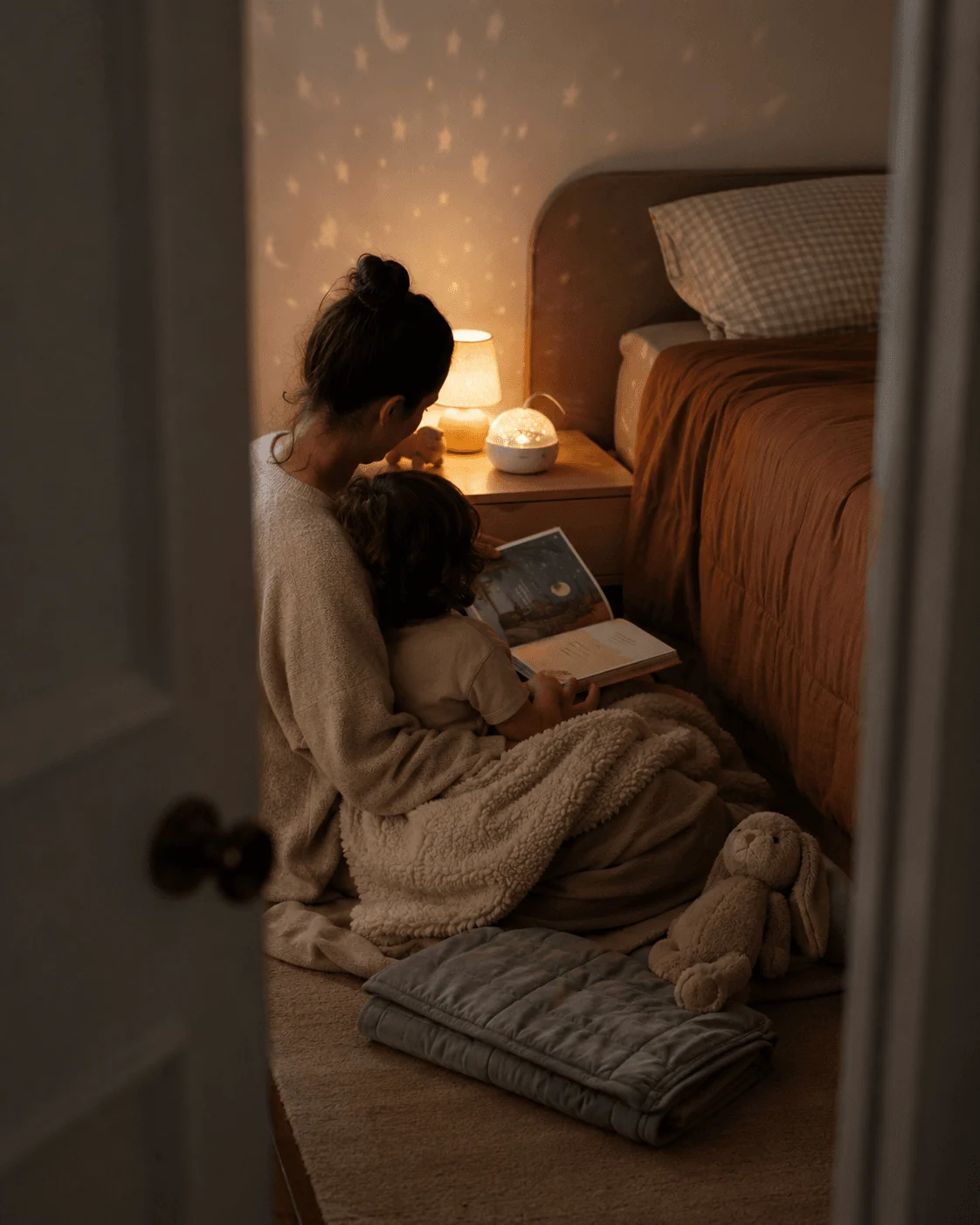
Walk your place with this one question: where is there already a chair, a rug edge, or a section of floor nobody walks through twice a day? One parent, writing on Generation Mindful’s blog about exactly this problem, landed on the narrow gap between a closet and the bedroom door and made it work with a mat, a basket, and nothing else. That’s genuinely it. The feel of the spot does the work, not its dimensions.
A few real options that cost no extra square footage: the far corner of a shared bedroom, marked with just a small rug so it reads as “different ground.” The end of a hallway that already has a chair in it. Inside an actual closet, door left open, with a cushion on the floor. The foot of a bed, if that’s the only floor going spare.
When a shared room makes it trickier
Two kids, one room, one gap of floor. It still works, it just needs a rule rather than a redesign: the corner belongs to whoever asked for it first, and the objects live in a basket that moves, not a fixed shelf that only one of them can reach. Some families rotate it by time of day instead of by whoever got there first, which sidesteps most of the arguing.
Start with the spot, not the shopping list
Pick the gap before you pick a single object. Stand in your actual apartment and point at the spot, today, even if it’s just a cushion by the radiator. Everything else is genuinely optional.
Frequently asked questions
No. It needs to be the same spot every time, whether that’s a whole room or a cushion in a closet gap. Consistency of location is what makes it work, not the amount of space it takes up.
A two-foot-square gap is plenty: a closet with the door open, the end of a hallway, or the foot of a bed. What matters is that it’s reachable without moving furniture and it’s the same spot each time.
Yes, with one adjustment: keep the calming objects in a basket that can move between them rather than on a fixed shelf, and agree on a simple turn-taking rule up front so it doesn’t become its own argument.
Three to five items that need no floor space of their own: a wall-mounted sensory panel, a small set of feeling-naming plush toys in a basket, and a soft, flameless light. Anything that needs a shelf or a table is optional, not required.
Check whether it’s ever been used as a consequence, even once. That single association can quietly kill it. Otherwise, sit with them there a few times so the spot gets linked to your calm presence before you expect them to go alone.
Leave the first comment
Share your thoughts

I'm for the parent mid-meltdown - theirs or the kid's. I write from the actual floor of it: the crying that won't stop, the dinner thrown, the bedtime that unravels. Blunt because I respect you too much to pretend it's easy. Just what tends to work.
More from NourWhat's the one thing that calmed the chaos in your house?
No right answers here - tell us how it went. Someone reading needs to hear it.
Join the conversation