
The Flyer Says Diwali, and Your Second-Grader Wants the Whole Story
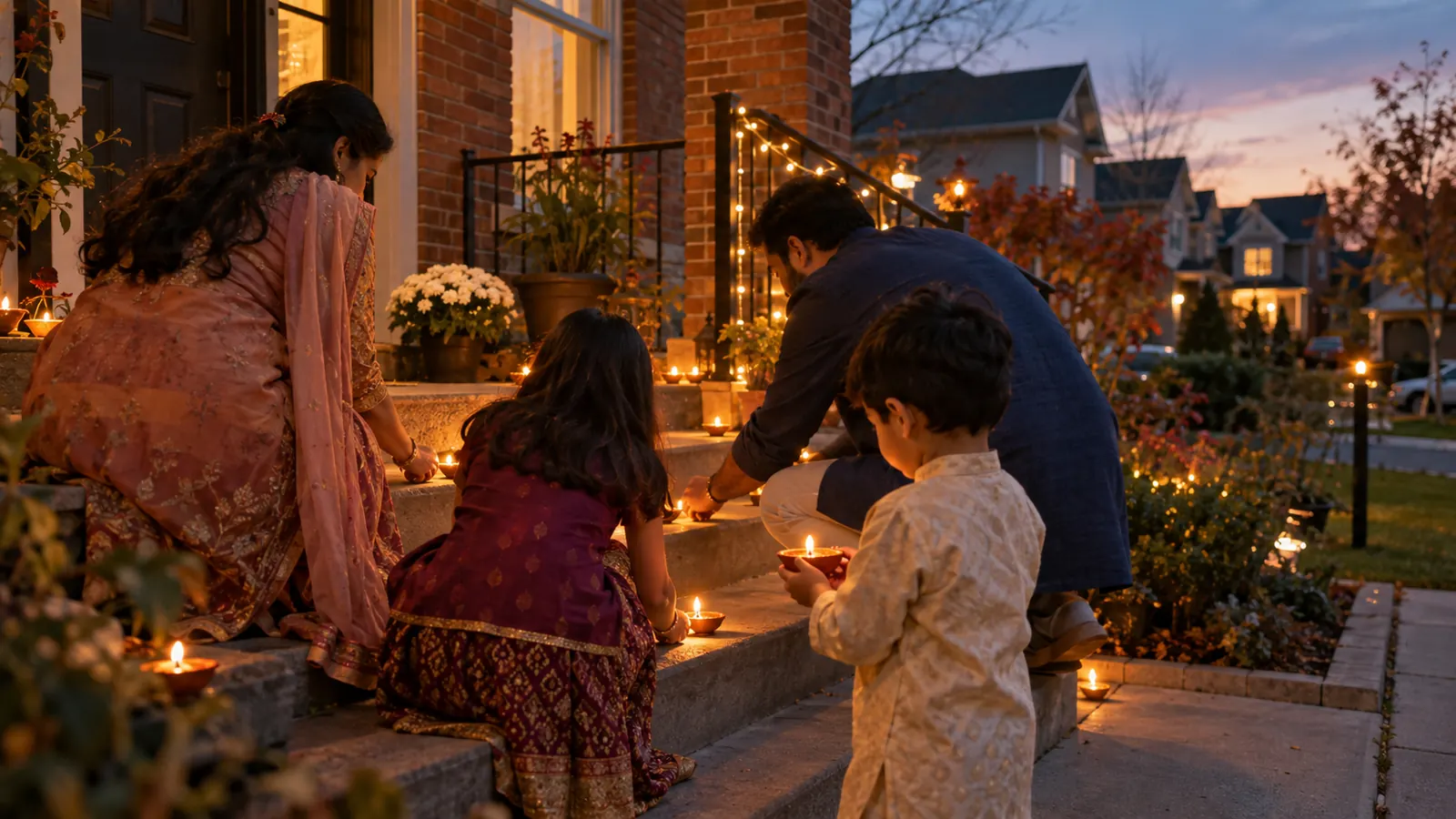
The flyer came home folded in quarters at the bottom of a backpack. It has a clay lamp on it, a string of marigolds, and one word in gold letters: Diwali. Your second-grader wants to know what it is, who celebrates it, and whether it would be rude to ask her friend.
You know lamps are involved. Past that, your details go soft, and you would rather not guess out loud at dinner.
The basics fit on an index card.
What is Diwali, and who celebrates it?
Diwali, also spelled Deepavali, comes from Sanskrit and means “row of lights,” the Hindu American Foundation (HAF) explains. Families light diyas, which are small clay oil lamps, and many add candles, string lights and fireworks. The lights stand for good over evil. HAF’s page also has a two-minute animated video you can watch together.
The date moves each year because the holiday follows the lunar calendar, and the main night lands on a new moon, the darkest night of the lunar month.
Who keeps it? HAF lists Hindus, Jains, Sikhs, Buddhists, and people of Indian and non-Indian heritage. Each group has its own reason. Many Hindu families remember Rama’s return home, while others tell of Krishna defeating a demon king. Sikhs mark Bandi Chhor Divas for the freeing of Guru Hargobind from prison, and Jains remember Mahavira reaching nirvana. Some Buddhists mark the day Emperor Ashoka took up Buddhism as his faith.
What are the five days of Diwali?
Most calendars count five days. For 2026, the Old Farmer’s Almanac puts them from Friday, November 6 to Tuesday, November 10, though a family’s own calendar can differ by a day.
- Friday, November 6, Dhanteras. Many families clean the house, make rangoli, shop and cook sweet and savory treats.
- Saturday, November 7, Chhoti Diwali. The name means “small Diwali.” Homes get rangoli and clay lamps, and some families call it Naraka Chaturdashi.
- Sunday, November 8, Diwali. This is the main night. People wear new clothes, pray to Lakshmi and Ganesha, light diyas and eat with family.
- Monday, November 9, Annakut, or Govardhan Puja. It recalls Krishna sheltering people from storms under a hill. In some regions it also starts the new year.
- Tuesday, November 10, Bhai Dooj. Siblings and cousins get together and share a meal.
HAF’s web page lists six named days, and Arizona State University’s guide says Hindus usually celebrate over three, so counts vary by region and family. If a friend keeps different days, theirs are the right ones.
What is the Diwali story for kids?
In northern India, the story traditionally told is Rama’s return. It comes from the Ramayana, an epic the Smithsonian’s National Museum of Asian Art dates to about two thousand years ago. Here is a version to read aloud.
Rama is a prince of Ayodhya who is about to become king. A jealous stepmother sends him into the forest for fourteen years. His wife, Sita, and his brother Lakshman go with him. A powerful king named Ravana takes Sita away to his island kingdom. Rama and Lakshman set out to bring her back, with help from Hanuman and an army of monkeys. They defeat Ravana and free Sita. The fourteen years are over, and they head home to Ayodhya.
By the time Rama arrives, the whole city looks like a row of lights. HAF says that is part of the reason for the name Festival of Lights.
December brings its own candle holidays, and each has its own story. Our guides to the Hanukkah story and to Kwanzaa tell them on their own terms.
What Diwali crafts and rangoli can kids make?
Start with a diya. The Asian Art Museum’s salt-dough recipe takes a cup of flour, half a cup of table salt and half a cup of water. Knead it for five minutes and rest it for fifteen. Shape a small bowl with a dip for the light. Bake it at 200°F for two hours, or let it air-dry for a couple of days, then paint it. Skip self-rising flour, which makes the dough puff. A flameless candle does the lighting. The museum says lamps go on windowsills and by the door, so that is the next job.
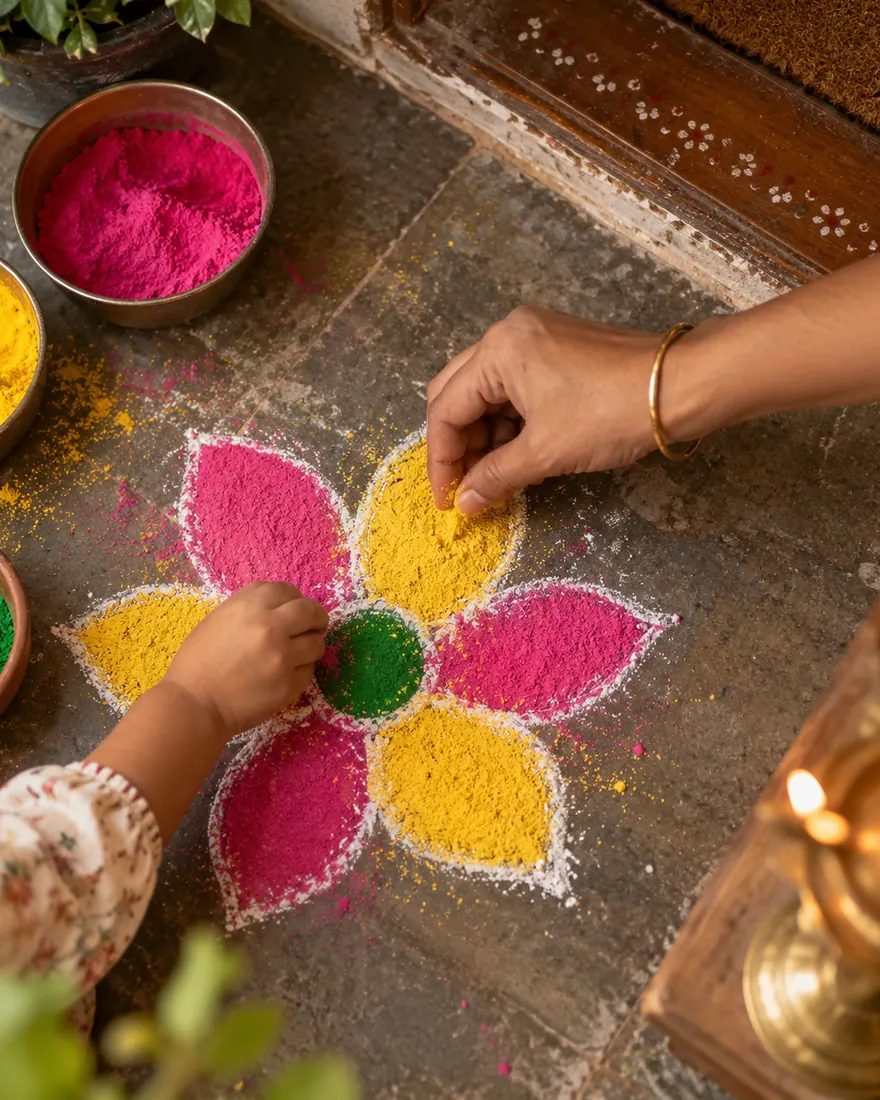
Rangoli comes next. HAF describes rangoli as colored patterns of flowers, powder, rice or sand on the floor, often at the door to welcome guests. For a child’s version, put half a cup of rice flour in a zip-top bag. Mix two tablespoons of water with a drop of food dye, pour it in, zip the bag and shake. Use one bag per color, then pinch the colors onto big paper. Sidewalk chalk works on a driveway. Many Hindus sweep away an old rangoli and start fresh, HAF says, so a smudge costs nothing.
A two-year-old can press stickers onto a paper diya. Our fall crafts for toddlers have more ideas sized for small hands.
Diwali is also a time for giving, HAF’s toolkit says, and feeding the hungry is one way. Our guide to food bank volunteering with kids covers what each age can do.
What do you say or bring if a classmate’s family invites you?
HAF’s executive director wrote in 2020 that Diwali is a day when doors are thrown open to friends, family and unexpected guests.
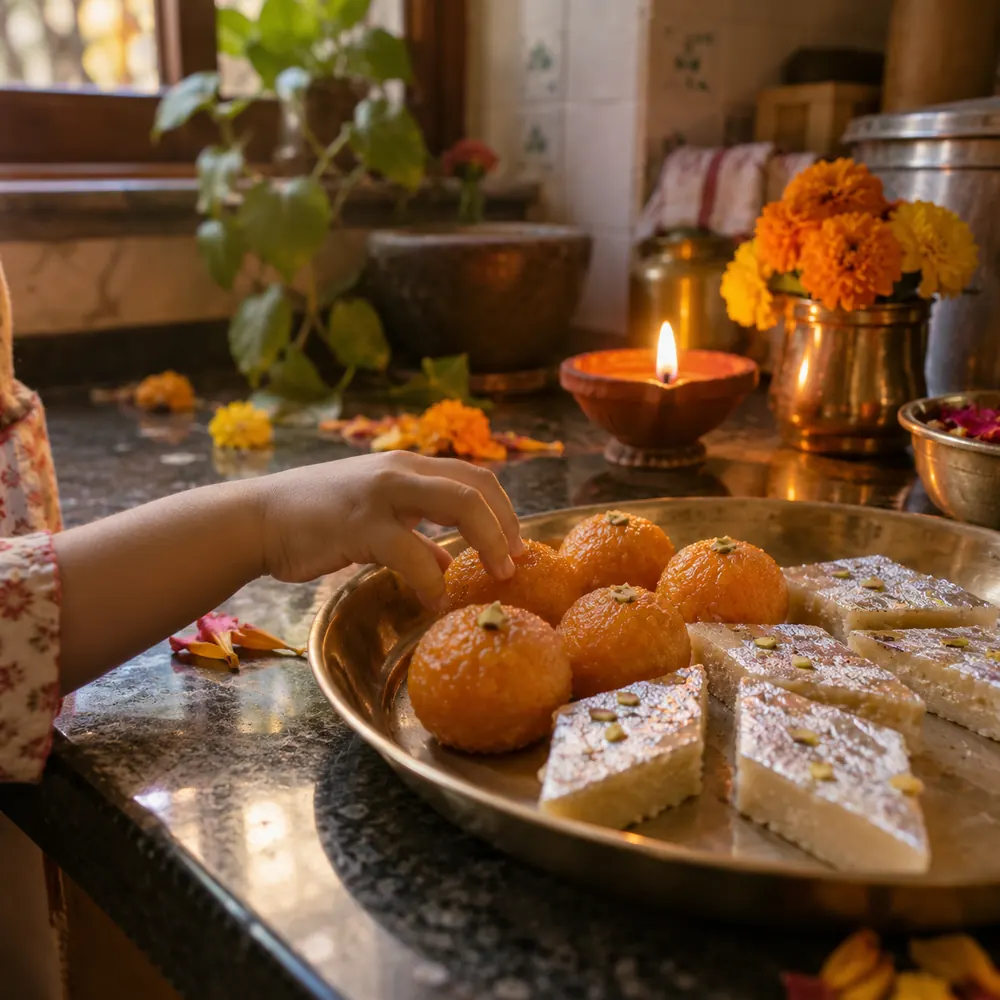
Bring a box of sweets. Arizona State University’s guide names ladoos, barfi, kaju katli and rasgulla, and it lists handmade cards and painted lamps as gifts. A card your child makes fits, and our ideas for homemade gifts kids can make will help.
Teach one sentence: “Happy Diwali.” HAF’s executive director uses that greeting too. Ask before you guess how the family keeps the days. A University of Toronto guide advises against assumptions, since not every Hindu, Jain or Sikh observes in the same way.
Food differs by region, HAF’s toolkit says, so let the host lead. If your child has a food allergy, ask what is in a sweet before the first bite.
How do you keep diyas and fireworks safe around kids?
A diya is a small open flame, so the U.S. Fire Administration’s candle advice fits. Use stable holders and place them where they cannot be knocked over easily. Keep them at least 12 inches from anything that burns, and blow them out when you leave the room.
The agency also suggests battery-operated flameless candles. Steps are where small feet go, so set the real flames along a wall and hand your child a flameless one to carry.
Paint one diya this weekend
Pick one thing from this page and do it before November 8. Paint a diya, or fill a chalk rangoli on the driveway. If she asks whether Diwali is like Christmas, tell her it has its own stories, and let her friend say more.
Leave the first comment
Share your thoughts
Frequently asked questions
Diwali is the festival of lights, and its name means “row of lights.” Families light small clay lamps called diyas to show light winning over darkness. Hindus, Sikhs and Jains celebrate it, and some Buddhists do too, each for their own reasons. Many families also share sweets, make rangoli and gather with relatives.
In northern India, the story traditionally told is Rama’s return to Ayodhya after fourteen years in the forest. Rama and his brother free his wife, Sita, from a king named Ravana. The people of Ayodhya light lamps so the travelers can find their way home. Families in other regions tell other stories, such as Krishna’s victory over Narakasura.
Kids can paint a salt-dough or clay diya, draw a rangoli on paper with crayons, or fill a chalk rangoli on the driveway. Colored rice flour works too: shake rice flour with a little water and food dye in a zip-top bag, then pinch it into a pattern. Keep real flames for adults.
Toddlers can press stickers onto a paper diya, paint with a fat brush, or pour colored rice into a tray while you steady it. Hand them a plate of sweets to pass around. Leave matches, real lamps and sparklers to adults, and stay within arm’s reach of anything with a flame.
It depends on the family and the region. Many families share sweets such as ladoos, barfi and kaju katli, plus sweet and savory snacks. HAF’s toolkit says celebratory foods vary with local traditions and ingredients. If your child has a food allergy, ask the host what is in a sweet first.

I started Decoded Kids because the calm, straight answer I needed at 2 a.m. just didn't exist. I'm a parent of two, still figuring it out - and I hold this whole place to one promise: real help, in plain language, with no one talked down to.
More from MayaWhat's the one thing that calmed the chaos in your house?
No right answers here - tell us how it went. Someone reading needs to hear it.
Join the conversation