
The Handwriting Is the Gift. The Rest Is Packaging.

Open the drawer in most grandparents’ houses and there is a stack of them. Handprint reindeer, a pasta necklace, a photo frame with the glitter mostly gone. Some of it has been there for fifteen years.
And somewhere in the same house there is a shelf with three of these things on it, out where people can see them. Those three are not the best made. They are different in a way worth understanding before you start.
That is not sentiment. It is the difference between the shelf and the drawer, and once you have seen it you cannot make one of these the old way again.
Why the wonky one is worth more
There is a well known piece of research on this. Michael Norton, Daniel Mochon and Dan Ariely published The IKEA Effect: When Labor Leads to Love in the Journal of Consumer Psychology in 2012. Across four studies where people assembled boxes, folded origami and built Lego sets, they found that labor alone can be enough to make someone value the result more.
The effect is about the maker, not the receiver. Which is the first useful thing to know here: your child will love the thing they made more than the person receiving it does, and that is fine, and it is a good reason to let them make it badly.
The second useful thing follows from it. If an adult does most of the work, the child gets none of that, and the object gets none of the meaning that was supposed to justify it. A neat craft made by a parent is just a worse version of a store bought gift.
The ones that get kept
A jar of something, with a label the child wrote. Hot chocolate mix, cookie ingredients in layers, bath salts. It gets used, it gets finished, and the label often gets kept afterwards.
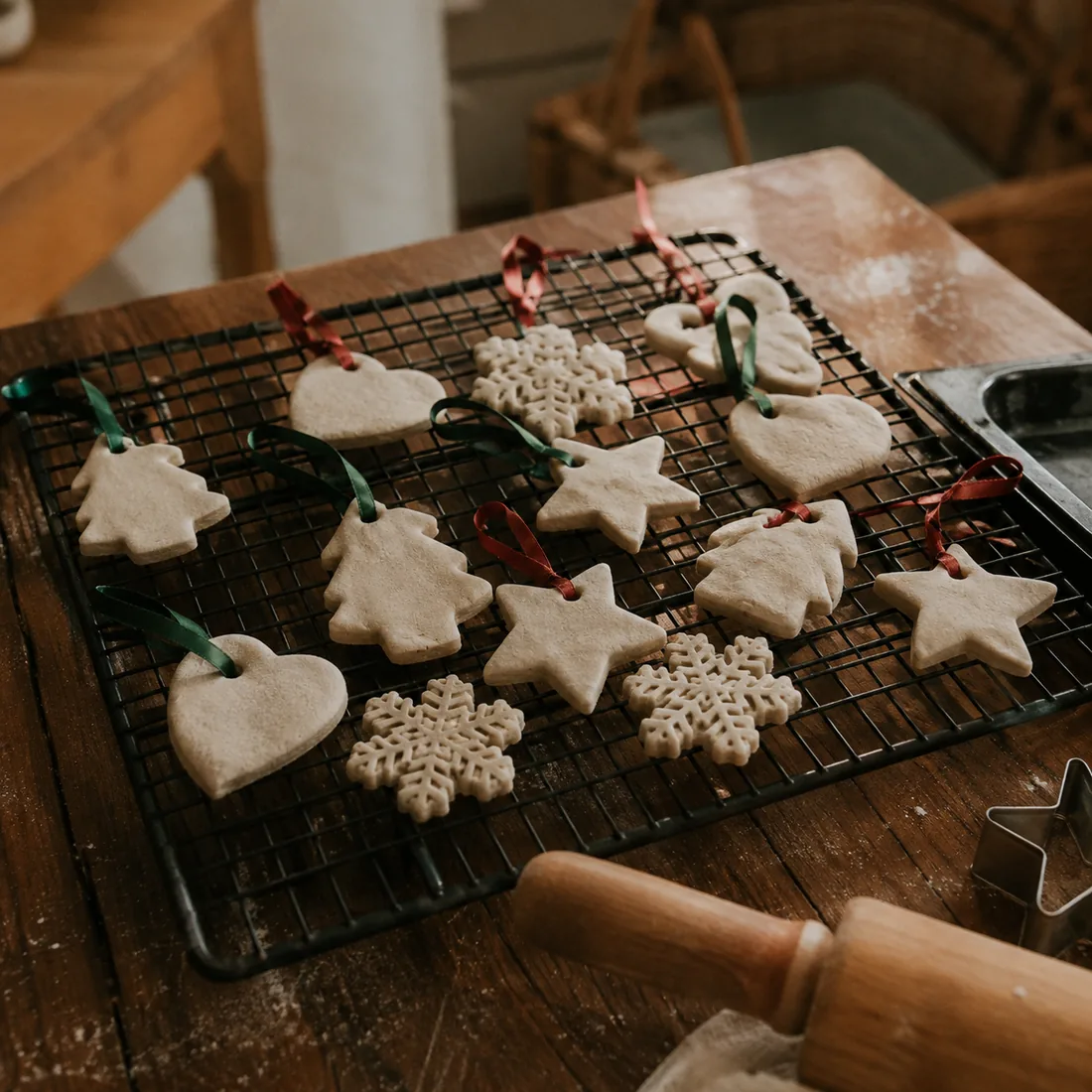
Salt dough ornaments with the year pressed into the back. Flour, salt, water, a low oven. The date is what makes it survive, because in nine years somebody will pick it up and know exactly which Christmas it was.
A recipe card in their handwriting for something they like eating. Grandparents cook it. Then they tell people about it, which is the highest honor a homemade gift can receive.
A photograph the child took themselves, printed and framed. Not one you took of the child. One they took, of whatever they thought was worth photographing, which is usually the dog.
A drawing of a specific memory rather than a general picture. The day at the beach. Grandad’s shed. A specific thing anchors it to a year.
And a coupon book, if the child is old enough to honor it. Ten jobs, one per page. It works when the child is genuinely going to turn up, and it is embarrassing when they are not.
Making it survivable for you
Pick one project for all the recipients rather than a different one each. Six of the same jar is one afternoon. Six different crafts is December ruined.
Do it in November. The whole appeal of a homemade gift disappears on the twentieth of December when you are doing it under time pressure at nine at night.
Set a stopping point before you start. Forty minutes, then it is finished, whatever state it is in. A craft with no ending is where the adult takes over.
And put the child’s name and the year on the back of everything, in their writing if they can, in yours if they cannot. This is the step everyone skips and the only one that matters in ten years.
Take one photograph of the child holding the finished thing before it is wrapped. It costs nothing, and it is the picture the grandparent puts next to the object on the shelf. Half the time the photo outlives the gift.
And let them wrap it themselves, badly, with too much tape. A package that was clearly wrapped by a six year old is already halfway to being the thing that gets kept.
What to do with the previous fifteen
Grandparents cannot keep everything and mostly feel guilty about it. You can make that easier by giving them something with a natural life. A jar gets used up. A card gets recycled in February and nobody minds. Not everything has to be permanent.
If the drawer is genuinely full, one good move is to photograph the old ones together and put the photos in a small album, then let the objects go. The album takes up less room than a single reindeer and gets looked at more.
The same logic applies at your own house, where the volume problem is usually worse, and we made that argument properly in why more things stop working.
When a child would rather buy something
Some children want to buy a real present with real money, and that is a legitimate thing to want. Being the only person at a family gathering who did not choose anything is a strange position for an eight year old.
Give them a small budget and let them choose badly. The gift will be wrong. That is not the part that matters, and any grandparent worth the name knows it.
What holds up in either version is the same. Something the child decided on, with their name on it, given by them rather than handed over on their behalf. Everything else is decoration, and the decoration is the bit that ends up in the drawer.
Leave the first comment
Share your thoughts
Frequently asked questions
The ones with the child's own handwriting on them, a date somewhere, and a use. A labeled jar, a dated salt dough ornament, a recipe card in their writing.
A jar of hot chocolate mix with a written label, salt dough ornaments, or a photograph they took themselves and you printed.
No. The uneven one is what proves a child made it, and that proof is the entire point of a handmade gift.
November. The appeal disappears on the twentieth of December when it is being done under time pressure at nine at night.
Give them a small budget and let them choose badly. Choosing it themselves is the part that matters, not whether the gift is right.

I'm for the parent standing in the bookshop, overwhelmed. I read them all - the wise, the smug, the single good idea stretched to 240 pages - so your nightstand stack stays short. I'll point you to what's truly worth it, and kindly, what to put back.
More from MeiWhat's the one thing that calmed the chaos in your house?
No right answers here - tell us how it went. Someone reading needs to hear it.
Join the conversation