
The Hill Looks Fine From the Top. Walk to the Bottom First.
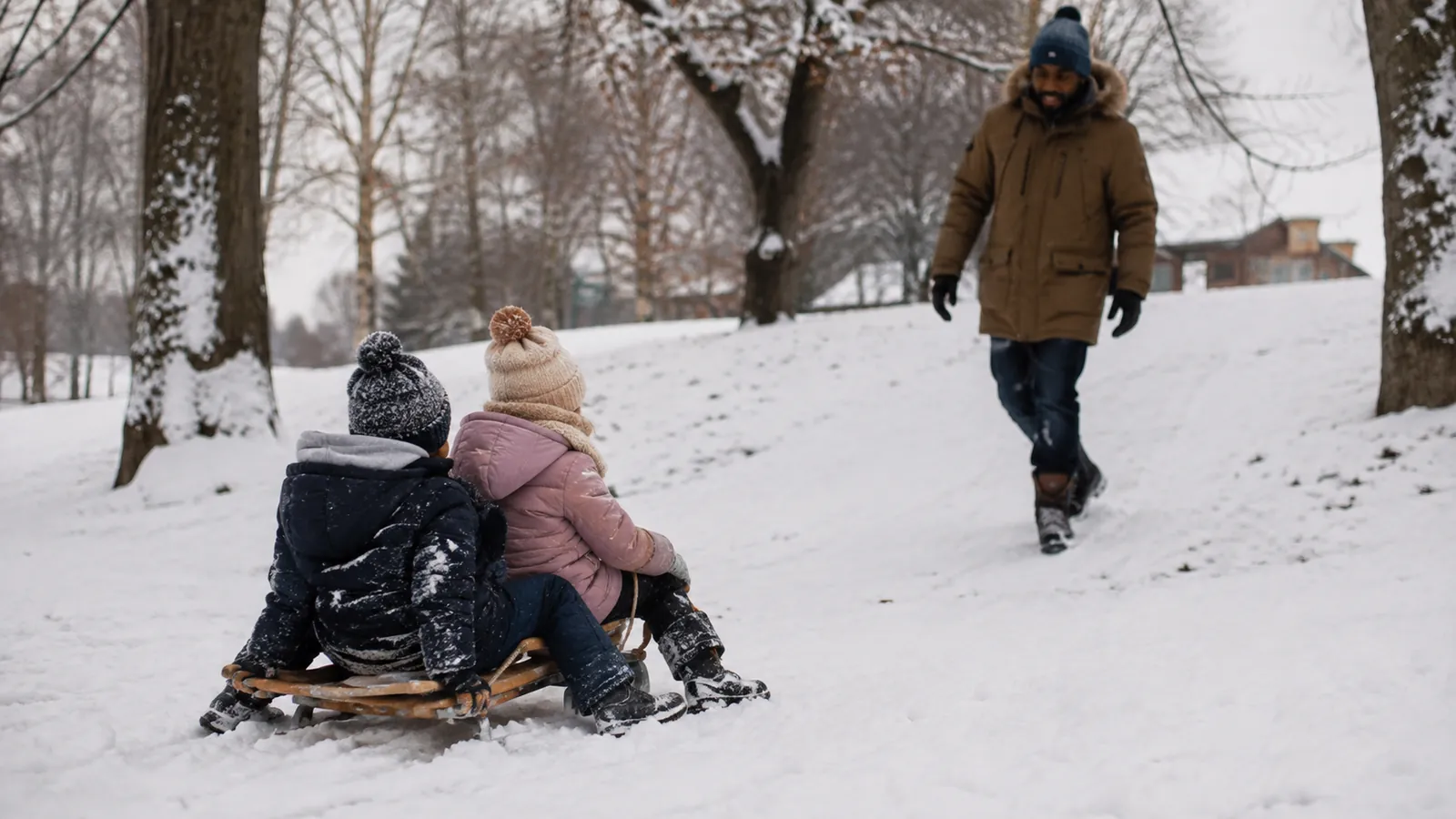
Your son is already flat on his stomach on the sled, boots hanging off the back, ready to push off. He has looked at the snow. He has not looked at what is past the first bend, where the hill runs out onto a path that meets a plowed street.
That is the part almost nobody checks. You look at the slope, maybe the snow depth, and call it good. The bottom of the hill is where a lot of sledding trips go wrong, not the middle of the ride down.
A walk to the bottom before the first run takes about ninety seconds. It is the cheapest safety step of the whole afternoon, and it is the one that gets skipped.
What makes a hill safe?
A safe hill has three parts, and only one of them is the part your kid cares about. The slope matters. Pediatric safety guidance generally puts the limit around 30 degrees, since anything steeper turns an ordinary ride into one nobody can control.
The runout at the bottom matters just as much, and it is the part that gets skipped when a kid is already begging to go. Walk the whole path, not only the top of it. Look for a road, a parking lot, a fence line, a stand of trees, or a pond, frozen or not. One pediatric health system sums up the whole rule in one line: never sled toward a road or pond. If the hill ends near either one, skip it.
The same instinct applies here. We walk a backyard playground for loose bolts and hard landing zones before a kid climbs on it, and a sledding hill deserves that same five-minute pass, especially during the week off school, when every hill nearby gets busy at once.
Snow condition matters too. Packed, icy snow means nobody can steer or stop. If the hill has gone icy, find a different hill.
Feet first beats headfirst, every time
Here is why that one line matters more than it sounds like it should. In a decade of emergency department data on sledding injuries, nearly 82 percent of the children treated had an injury to the head. In an earlier ten-year study, the head was still the single most commonly injured body part, at 34 percent, ahead of arms, legs, or anything else.
Collisions are the reason. Hitting a tree, another sledder, or the ground caused 63 percent of sledding injuries in the newer data and 51 percent in the older study. Collisions were also more likely to cause a brain injury than any other way of getting hurt. A kid riding headfirst on their stomach puts their skull first in line for exactly that kind of hit.
Sitting up, feet pointed downhill, changes what gets hit first if something goes wrong. It costs nothing and takes one reminder before the first push.
Why only one kid goes down at a time
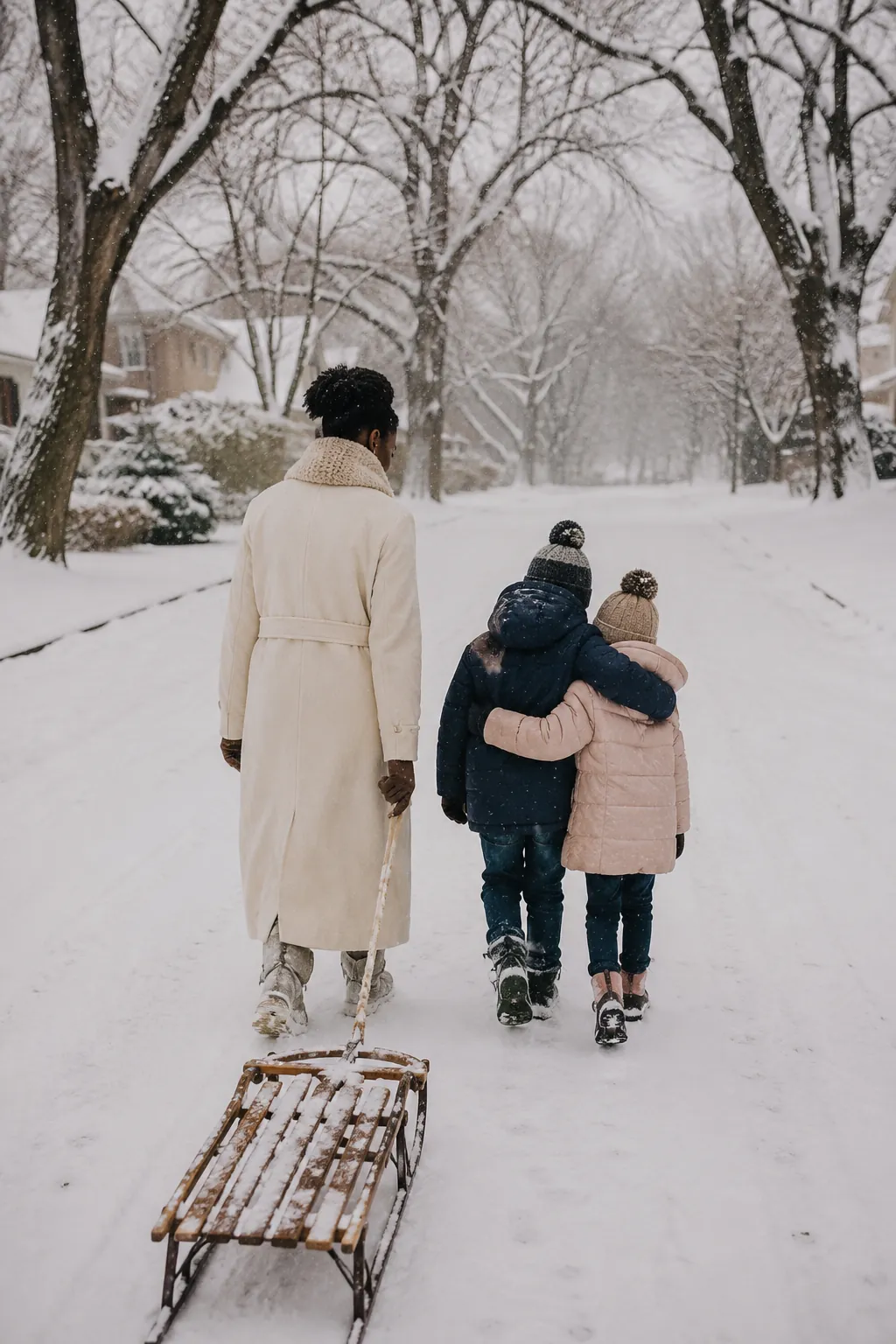
Two kids on one sled feels efficient. It also means neither one can bail cleanly if the sled starts to spin or clips something. The second body adds weight and speed that neither kid can control alone.
Pediatric guidance is specific here. Children under 12 should always be supervised while sledding. Young kids, preschool age especially, should be kept separate from older kids and teens sharing the same hill.
One rider at a time also means a kid can roll off a sled that will not stop, a skill worth having before it is ever needed. Bundle the ones waiting their turn the way you would for any long stretch of standing around in the cold. The kid watching from the bottom of the hill is often the one who gets cold first.
Take turns, one at a time, down a cleared path. It is a boring rule. It is also the one that keeps a pile-up from turning into a head injury.
Which sled keeps kids safest?
Steerable sleds, the old-fashioned kind with metal runners and a rope or a bar to aim them, are what pediatric safety guidance keeps coming back to. A wooden sled with flexible metal runners, built for kids roughly 6 to 12, gives a rider some real say over where the sled goes and how fast.
Saucers and inner tubes do not work that way. They are round and symmetric. No fixed edge grips the snow harder than any other point, so once one starts to turn, nothing about its shape stops it. That is why a tube ride so often ends up facing backward or sideways. There is no runner, no keel, nothing biting into the snow to hold a straight line. Pediatric guidance names both as the sleds to skip, pointing to their speed and lack of steering control.
Before the first run of the season, check the sled itself too. Splintered wood or a stiff, rusted steering bar means it is time to retire it, not repair it.
What does the research say about helmets and sledding safety for kids?
The official language here is softer than a lot of parents expect. The American Academy of Pediatrics says to consider a helmet for sledding. It does not say a child must wear one, and there is no dedicated sled-helmet standard the way there is for bikes.
Look at what is actually getting hurt, and the case makes itself. Head injuries show up in roughly a third to four-fifths of sledding cases, depending on the study. A helmet built for winter sports protects the body part most likely to take the hit. A bike helmet works too, if that is what is already in the closet. One children’s hospital puts it plainly: many head injuries happen because kids often ride headfirst. A helmet and the feet-first rule work together. Neither one replaces the other.
When cold, wet, or dusk means it is time to go in
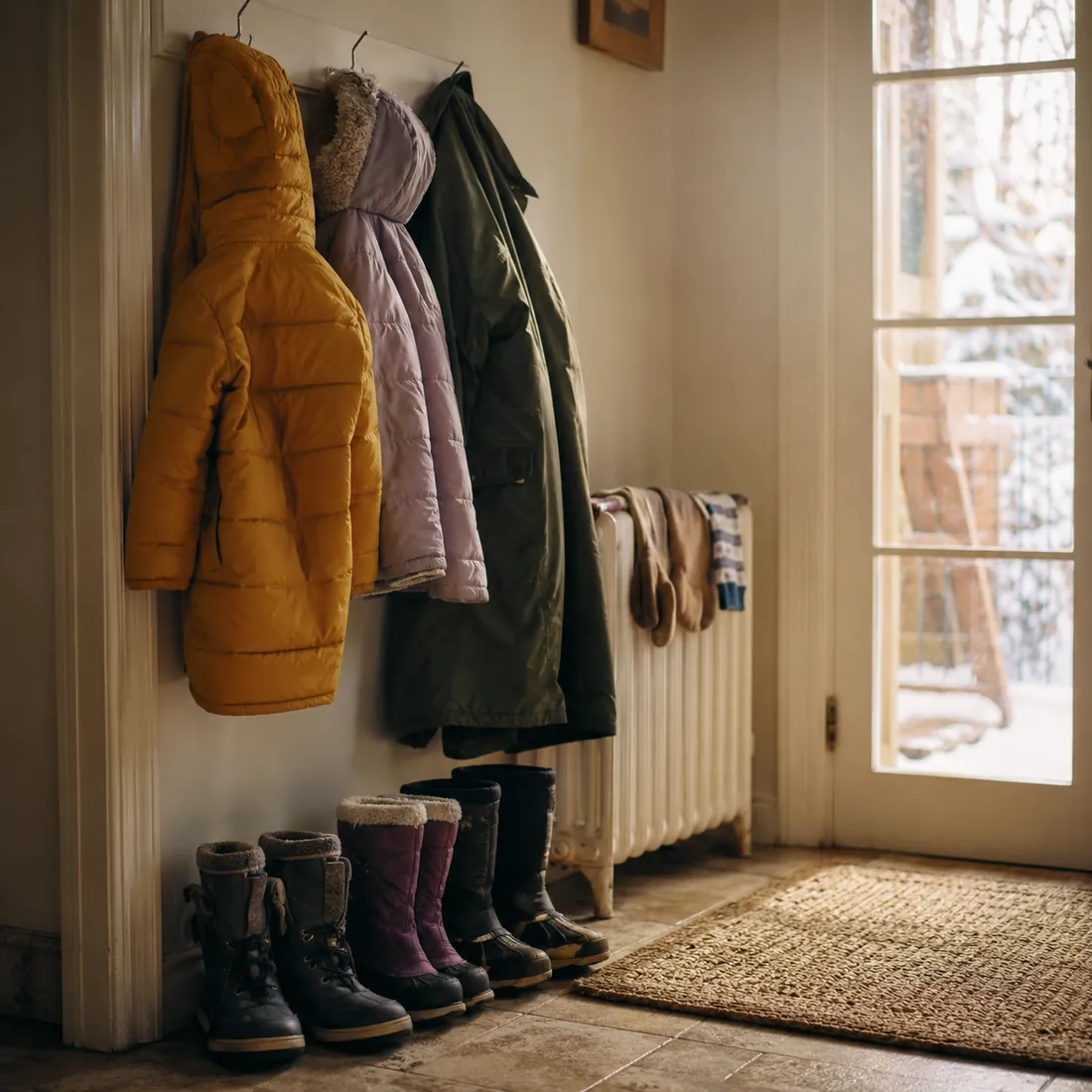
Pediatric guidance sets an outdoor limit: skip outside play once the temperature or wind chill drops below negative 15 degrees Fahrenheit. Short of that line, the practical signal is usually gloves. Once they are soaked through, a kid cannot grip a sled rope or brace for a fall. That is when to call it, before anyone asks for one more run. Back at the car, that same puffy coat has to come off before anyone clicks into a car seat for the ride home.
Light matters just as much. Sledding after dark or in flat, fading light makes it hard to see a bump, a rock, or another kid until it is too late to steer around it. If the light is going, the hill is done for the day, even if nobody feels tired yet.
Walk the hill before anyone sits down on it. That is the step that gets skipped when a kid is already halfway up with the sled under one arm, and it is the one that matters most.
Leave the first comment
Share your thoughts
Frequently asked questions
Most pediatric guidance treats sledding as fine once a child can sit up steadily and follow a simple instruction, often around age 2 to 3, always on an adult’s lap or right beside them. Children under 12 should be supervised the whole time, and preschoolers should stay off hills shared with older, faster kids.
The American Academy of Pediatrics says to consider a helmet, since it is not a strict requirement the way bike helmets often are. Given how often head injuries show up in sledding cases, a winter-sports helmet, or a bike helmet as backup, is a reasonable, easy step for kids of any age.
A steerable sled, the classic wooden kind with metal runners and a rope or bar, gives a child some control over speed and direction. Saucers, snow disks, and inner tubes spin freely with no way to steer, which is why pediatric safety guidance recommends steerable sleds for most children.
Walk the entire hill, including the runout at the bottom, before the first ride. Look for a clear, flat stopping area with no road, fence, pond, or trees nearby, a slope under about 30 degrees, and snow that is not packed into ice. If any of those are missing, find another hill.
Pediatric guidance suggests skipping outdoor play once the temperature or wind chill drops below negative 15 degrees Fahrenheit. Above that line, watch gloves and boots instead of the thermometer. Once mittens are soaked through or feet feel numb, it is time to head inside, regardless of the temperature.

I'm for the parent whose mornings keep falling apart. I didn't train in ADHD - I lived it with three kids, then read the actual studies, so what you get here holds up in a real kitchen at 7:50 a.m. Specific, tested at home, never preachy.
More from MarcusWhat's the one thing that calmed the chaos in your house?
No right answers here - tell us how it went. Someone reading needs to hear it.
Join the conversation