
The ADHD Parenting Books Worth Buying

You’re probably not after the prettiest shelf. You want the best ADHD books for parents that help when your child is under the table, the school bag is still empty, and your voice is getting sharper than you meant it to.
So this list stays short. (Shopping for the child rather than the parent? We keep a separate shelf of books to give kids for Christmas.) Four books, not a library, plus one practical tool, because sometimes the problem isn’t another chapter, it’s that time is invisible and the morning has already started sliding sideways.
\n
New to all this and not sure where to start? Here’s how to choose a parenting book without wasting $20.
I wouldn’t buy them all at once. ADHD parenting comes with enough open tabs in your head already. Start with the problem you’re living inside this week: understanding ADHD, mornings and homework, meltdowns, or your own nervous system being cooked by 7:40am.
Which book should you start with?
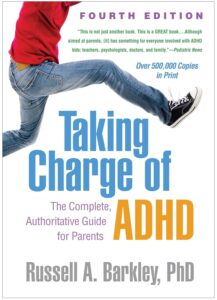
If you’re new to all of this, begin with Taking Charge of ADHD. It hands you the map. You won’t agree with every line and it isn’t the warmest book in the pile, but it stops the nonsense advice from sounding convincing.
If you already know the basics and your real pain is daily life, go to Smart but Scattered: the one for the kid who understands the instruction, agrees to the plan, then still can’t find the left shoe, the worksheet, or the beginning of the task. Before you decide something is missing, check what these skills look like at each age.
If your house is stuck in explosions and repair conversations, The Explosive Child earns the first slot. It’s not a magic wand. It’s more like someone gently lifting the blame-boulder out of your hands for a minute.
The best ADHD books for parents, four ways in
These aren’t ranked like a race. They solve different moments. Pick by the pain point you’re living with, not by the hype. And when no single label fits your child, Child Decoded is the one written for that exact mess. Star ratings are current Amazon averages.
Barkley explains ADHD in plain, firm language: what’s happening in the brain, why rewards and reminders matter, and why “just try harder” is such a useless family plan. Not a cozy read, but it’s the one you’ll want on the shelf when everyone has opinions and nobody’s helping. As an Amazon Associate, Decoded Kids earns from qualifying purchases. Price checked live on Amazon.Taking Charge of ADHD · Russell A. Barkley
Built around executive function, so it speaks straight to planning, starting, remembering and finishing. You can lift one small piece and try it tomorrow, exactly what a tired parent needs instead of a 12-week program.
Greene’s core idea (kids do well if they can) sounds simple until you try it on a Tuesday after school and feel how much blame you’d been carrying. Especially useful if your child gets rigid, panicky or volcanic around demands.
The gentlest voice in the stack: less command center, more nervous-system reset. I wouldn’t make it the only ADHD book, but I’d keep it close for the days you need to stop parenting on pure adrenaline.
How they compare
The quick version, for the moment you don’t want another tab open. Pick by the pain point, not the rating.
The four, side by side
Same goal, four very different doors in. Ratings are current Amazon averages. Swap your final links any time.
The tool no book replaces
Books are good at changing how you understand your child. Tools change what happens in the kitchen at 7:28. Less deep, sure. But honestly, less friction at the counter can feel like therapy with toast crumbs.
ADHD often makes time feel foggy, and “five more minutes” stays invisible until it becomes a fight. A visual timer gives your child something to see so you’re not the human alarm clock for every transition: shoes on, screen off, homework start, lights out soon-ish.
A book can explain time blindness; this puts it on the counter. For ADHD kids that matters, because the disappearing clock is what turns “five more minutes” into a standoff. The small, boring, genuinely useful thing I’d pair with whichever book you pick first.
How to make any of them stick
Don’t read these like you’re cramming for an exam. Read like a parent who might be interrupted in seven minutes: skim, underline one sentence, try one thing, leave the rest for later.
A decent rule: one idea a week. Maybe a visual checklist from Smart but Scattered, maybe asking “what skill is missing here?” from The Explosive Child, maybe letting the timer do the nagging while you stand there quietly, which is harder than it sounds. If the mess is mostly mornings, this pairs well with why school can feel so much harder with ADHD.
Frequently asked questions
For most families, Taking Charge of ADHD is the strongest first book: it explains what ADHD is and what helps, so you get the map before you start buying every strategy on the internet.
Smart but Scattered is the most practical for executive-function struggles (starting, planning, remembering and finishing), especially when the same routine falls apart every single day.
The Explosive Child is the best fit when rigidity, big reactions and demand-related meltdowns are the main problem. It helps you look for the missing skill underneath the behavior.
No. Pick the one book that matches the problem you’re living with this month, then pair it with one practical routine tool if you need it. One used idea beats a perfect shelf.
Leave the first comment
Share your thoughts

I'm for the parent standing in the bookshop, overwhelmed. I read them all - the wise, the smug, the single good idea stretched to 240 pages - so your nightstand stack stays short. I'll point you to what's truly worth it, and kindly, what to put back.
More from MeiWhat finally made your child's focus click - even a little?
No right answers here - tell us how it went. Someone reading needs to hear it.
Join the conversation