
Weighted Lap Pads for Kids: Which Weight, Which Size, and When It Does Nothing
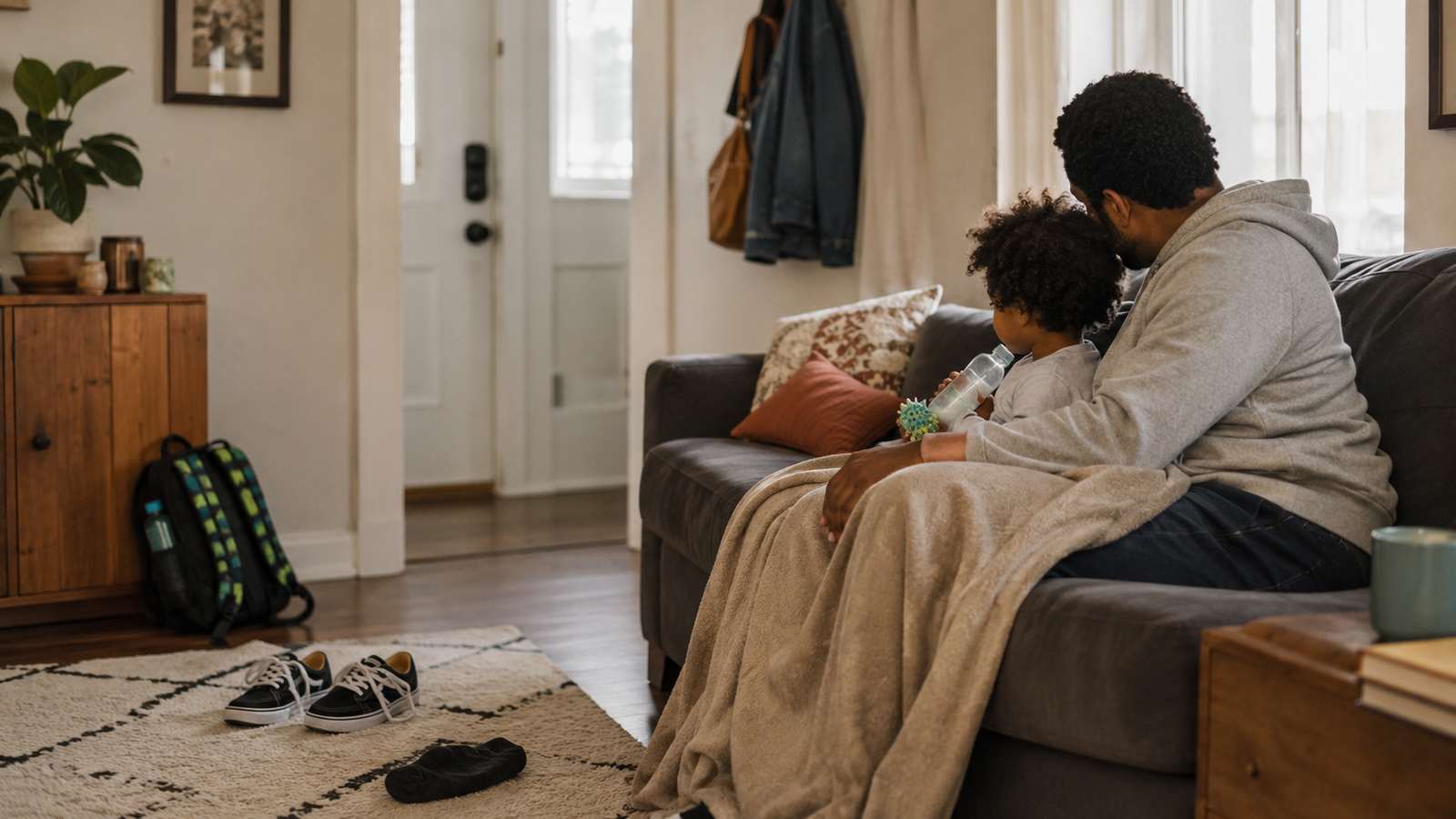
A weighted blanket is a bedtime object. A lap pad is a daytime one, and that is the whole difference.
It sits on the thighs while a child is upright and busy: at the dinner table, at a desk, in the back of the car, in a waiting room. It is small, it is cheap next to a full blanket, and a child can push it off without asking anyone. That last part matters more than the fabric.
We looked at the lap pads that parents in our niche actually end up buying, and picked five that do genuinely different jobs. One of them we would not buy for most homes, and we say which and why.
What a lap pad is doing

The idea is deep pressure. Steady, even weight across the legs gives a restless body something constant to register, and for a lot of children that quietens the low hum of needing to move. It is the same principle behind a weighted blanket, applied to the part of the day when lying down is not an option.
Two honest limits. The effect is usually immediate or absent: if a child is calmer within a minute or two, the pad is working, and if they are wriggling out from under it, no amount of persistence will change that. And it is a support, not a treatment. It does not address why a child is dysregulated, it just makes sitting more possible while you work on the rest.
If you are still deciding between formats, we compared the two main ones in weighted blanket or weighted vest. A lap pad is the third, smaller option, and it is the one we would try first because it is the easiest to abandon if it does not suit.
How we chose these
Scores are ours. They come from those three criteria plus how clearly the seller states weight and dimensions, which is where cheap listings tend to go vague.
The five, compared
| Lap pad | Weight | Best for | Rating |
|---|---|---|---|
| Top pick Weighted Lap Pad 5 lb, 20 x 23 in | 5 lb | The standard desk and table size | 4.7 (872) |
| yescool Weighted Lap Pad 2 lb | 2 lb | Small children, or a first try | 4.7 (1,763) |
| ODOXIA Weighted Lap Pad 5 lb | 5 lb | Children who want something soft to hold | 4.6 (565) |
| Sequin Weighted Lap Pad 5 lb | 5 lb | Hands that need something to do | 4.7 (16) |
| Skil-Care Gel Weighted Lap Pad | Gel filled | Spills, clinics, shared use | 4.1 (104) |
The order below is the order we would buy in, not the order of the ratings.
Weighted Lap Pad 5 lb, 20 x 23 in
Top pick
Get it if
- Your child is roughly 40 to 70 lb and sits at a table or desk
- You want the size that covers both thighs
- You would rather buy once than work up through weights
Skip it if
- Your child is under four or very slight, where 5 lb is too much
- You need something a child can carry around the house easily
- Machine washing is a deal breaker, as covers vary by seller
This is the plain one, and plain is why it wins. Twenty by twenty three inches is the size that stays put across both legs instead of sliding off one, and 5 lb sits inside the 10 percent guideline for most elementary school children. Nearly 900 reviews at 4.7 is a solid base to judge from. There is nothing clever here, which is exactly what you want in the first one you buy.
yescool Weighted Lap Pad, 2 lb
The safe first try
Get it if
- Your child is a toddler or small for their age
- You are not sure yet whether weight helps at all
- You want something light enough for a car seat or a stroller
Skip it if
- Your child already uses a weighted blanket happily, as 2 lb will read as nothing
- You need full thigh coverage at a desk
Two pounds is the honest entry point. It is enough for a three or four year old to notice and light enough that nobody gets stuck under it. With over 1,700 reviews at 4.7 this is the most reviewed pad on our list, which matters when you are spending small money on an unknown. If it works, you will know within a week and can size up.

ODOXIA Weighted Lap Pad, 5 lb
The soft one
Get it if
- Your child seeks out soft textures and holds things while they settle
- You want it to look like a comfort object rather than equipment
- It will live on the sofa as much as at the table
Skip it if
- Your child dislikes plush or fuzzy fabric, which is common and rarely negotiable
- It will be used where food is, since soft covers hold stains
Same weight as our top pick, different surface. For a child who strokes fabric or wants something to squeeze while they sit, the plush side does a second job. For a child who cannot stand fuzzy textures it is a wasted purchase, and that is worth knowing before you order rather than after.
Sequin Weighted Lap Pad, 5 lb
Weight plus fidget
Get it if
- Your child needs their hands busy as well as their legs still
- You are already buying a fidget and would rather buy one thing
Skip it if
- You want proof it lasts, as it has only 16 reviews so far
- Sequins in a classroom would pull attention rather than settle it
The two way sequin surface turns the pad into something to draw on with a finger. That is a real advantage for a child whose hands never stop, and a real distraction for one who is already looking for a reason to look away. We rate it lower than the plain 5 lb pad only because 16 reviews is not enough to tell how the sequins hold up after a hundred washes. If your child is a sequin child, you already know.
Skil-Care Gel Weighted Lap Pad
The wipe clean one
Get it if
- Meals, paint or spills are guaranteed and washing is not practical
- More than one child will use it, at home or in a setting
Skip it if
- You want it to feel like a blanket, because this feels like equipment
- Comfort matters more than hygiene, as the vinyl surface is cool and firm
This is the clinical option and it is priced and built like one. The gel filling and wipeable cover mean it survives things a fabric pad does not, which is why it turns up in therapy rooms. At home most children prefer fabric, and the 4.1 rating reflects that: people who wanted a cozy pad were disappointed, people who wanted a hygienic one were not. Buy it for the second reason only.
When a lap pad does nothing
There is a group of children it reliably fails, and it is worth naming them before you spend the money.
The first is the child who is looking for movement rather than pressure. They want to spin, climb, crash and swing. Weight asks a body to settle. That child is asking to be moved, and a pad on the legs reads as a lid. We wrote about the difference between the two kinds of nervous system in why a calm down corner works for one child and not another, and the same split decides whether a lap pad lands.
The second is the child who is hungry, tired or already past the point of talking. No sensory tool works there. The third is the child who has watched an adult decide, on their behalf, that they need calming. Offer it once, name what it is, and let them take it or leave it.
Give it a week. If nobody has reached for it by then, put it in the car and use it on journeys instead. Twelve dollars of unused fabric is a small loss. Arguing about it every night is not.
Getting the weight right
The guideline most therapists work from is about 10 percent of body weight, and lower is safer than higher. A 45 lb child lands near 4 to 5 lb. A 25 lb toddler lands near 2 lb, which is why the light pad exists. The pad should rest on the thighs and never on the chest or shoulders, and a child should always be able to lift it off alone. If they cannot, it is too heavy, whatever the chart says.
Where it earns its money is the seated part of the day. If dinner is the battle in your house, the wider set of fixes is in what helps a child who will not sit through dinner, where the pad is one of nine things and not always the first one to try.
Leave the first comment
Share your thoughts
Frequently asked questions
Aim for roughly 10 percent of your child’s body weight and round down. That puts most four to six year olds at 2 to 3 lb and most seven to ten year olds at 5 lb. If you are between two sizes, take the lighter one. A pad that is slightly too light still helps, while one that is too heavy gets pushed away and never used again.
For as long as they want it on, provided they can remove it themselves. Twenty to thirty minutes is a common stretch, which covers a meal, a homework block or a car ride. There is no need to ration it, but if a child leaves it on all day and still seems unsettled, the pad is probably not the thing that is helping.
They do different jobs. A blanket is for lying down and mostly for sleep. A lap pad is for sitting upright and awake, at a table, a desk or in a car seat. If you are testing whether weight helps your child at all, the lap pad is the cheaper and lower risk place to start, and it is easier to take somewhere.
Often yes, and many teachers welcome it because it is quiet and takes up no space. Ask first, keep it plain rather than eye catching, and agree who decides when it comes off. A pad the child controls is a support. A pad the adult places is something else, and children read that difference instantly.

I'm for the parent watching a feeling they can't name and wondering if it's normal. I've spent years close to the child-mental-health research and the specialists behind it, and I carry the heavy parts into plain language. I won't diagnose your child - I'll help you see what you're looking at, and say honestly when it's time to ask someone in person.
More from SofiaWhat finally made your child's focus click - even a little?
No right answers here - tell us how it went. Someone reading needs to hear it.
Join the conversation