A Decoded Kids guide · Free to read
Built in one evening, mostly with things you already own. Six screens of what works, two people from our team who live it, and the poster that does the talking.
8 min read · By the Decoded Kids team · Reviewed for accuracy · Updated July 2026
The one rule
A calm corner is a co-regulation tool, not a time-out with fairy lights.
Chapter 01
Two predictable failure modes. First: the corner becomes a softer time-out. “Go to your corner” sounds gentler than “go to your room,” but to a flooded child it lands the same way: you are being sent away.
Second: it gets built for the wrong child. A sensory seeker needs something to push and squeeze. An avoider needs less light, less sound, less everything. Same corner, opposite shopping lists. If your cozy nook made things worse, this is probably why. Watch one week of hard moments and ask: is my child seeking more input, or less?
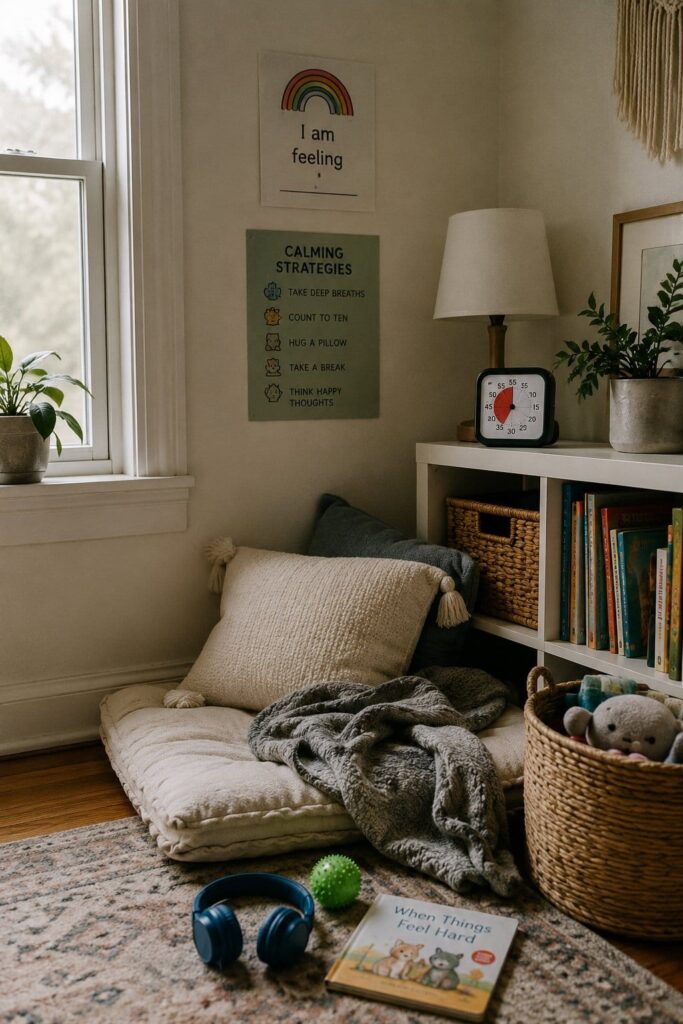
The spot · do vs don’t


Chapter 02
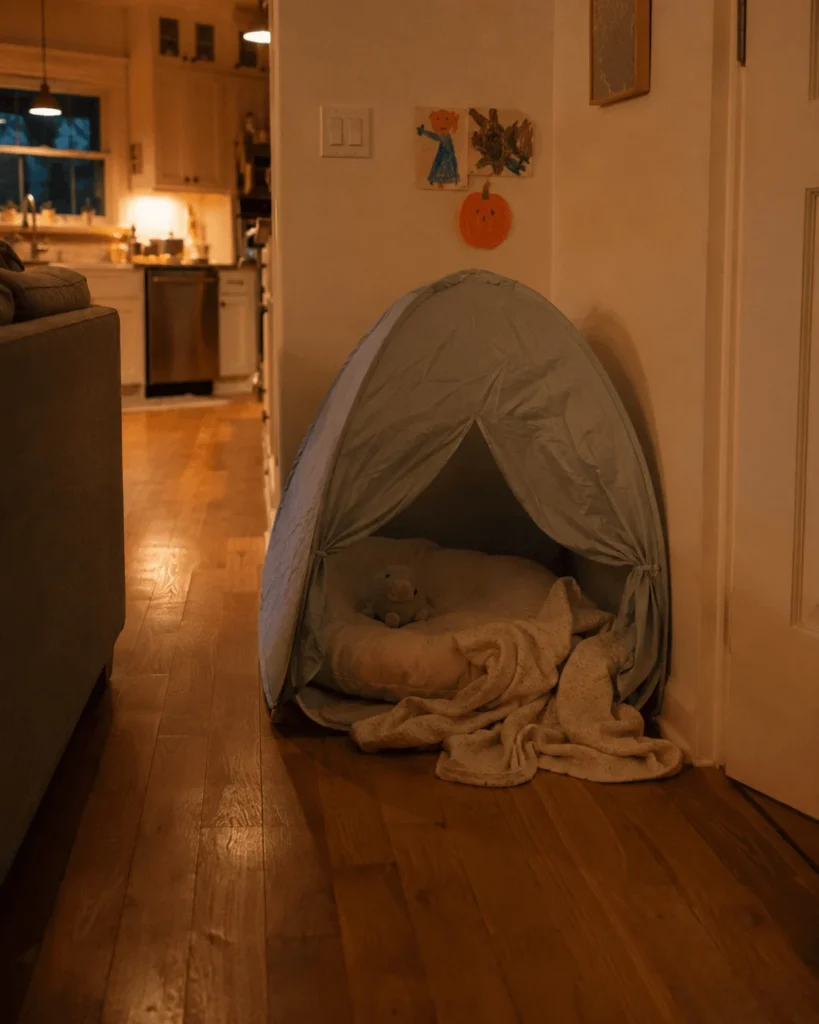
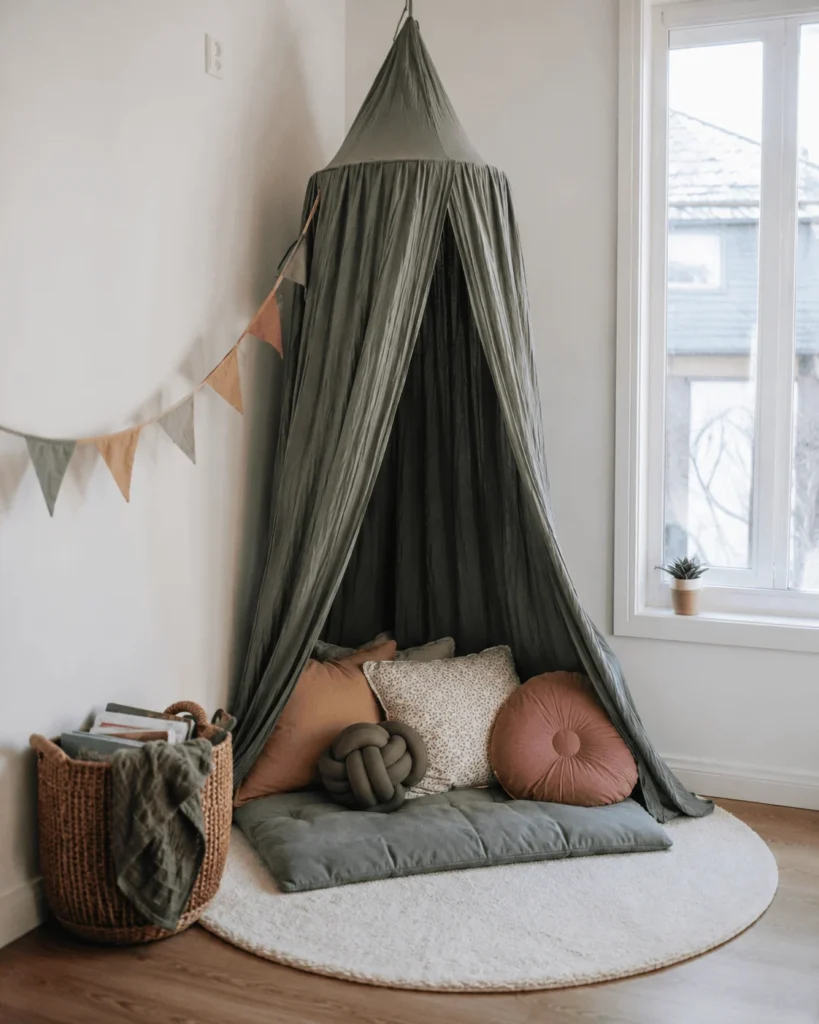
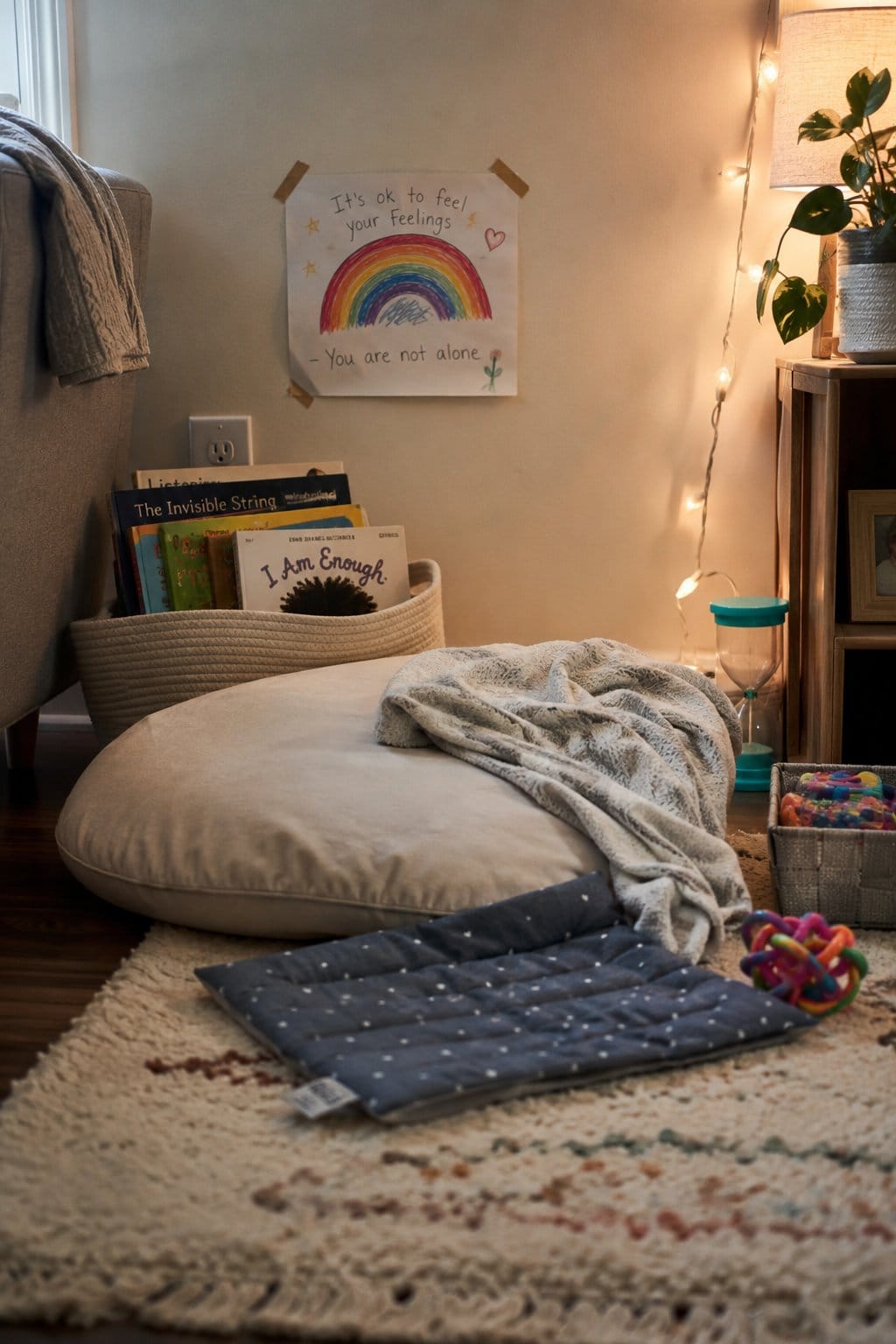
Three things make a spot work: it sits on their daily route, it offers visual shelter (the side of a bookcase, a draped blanket, a pop-up tent), and it is not their bed. No spare corner at all? A closet gap works. We built one in a rented apartment with zero spare rooms; the cave feeling mattered more than the size.


From our homes
Ours lives in the hallway between the kitchen and the couch. Not pretty, always passed. My youngest walks himself there now, mid-wobble, because it was his idea before it was mine. That is the whole secret.
Nour El-Rashidi · Parenting Writer
Chapter 03
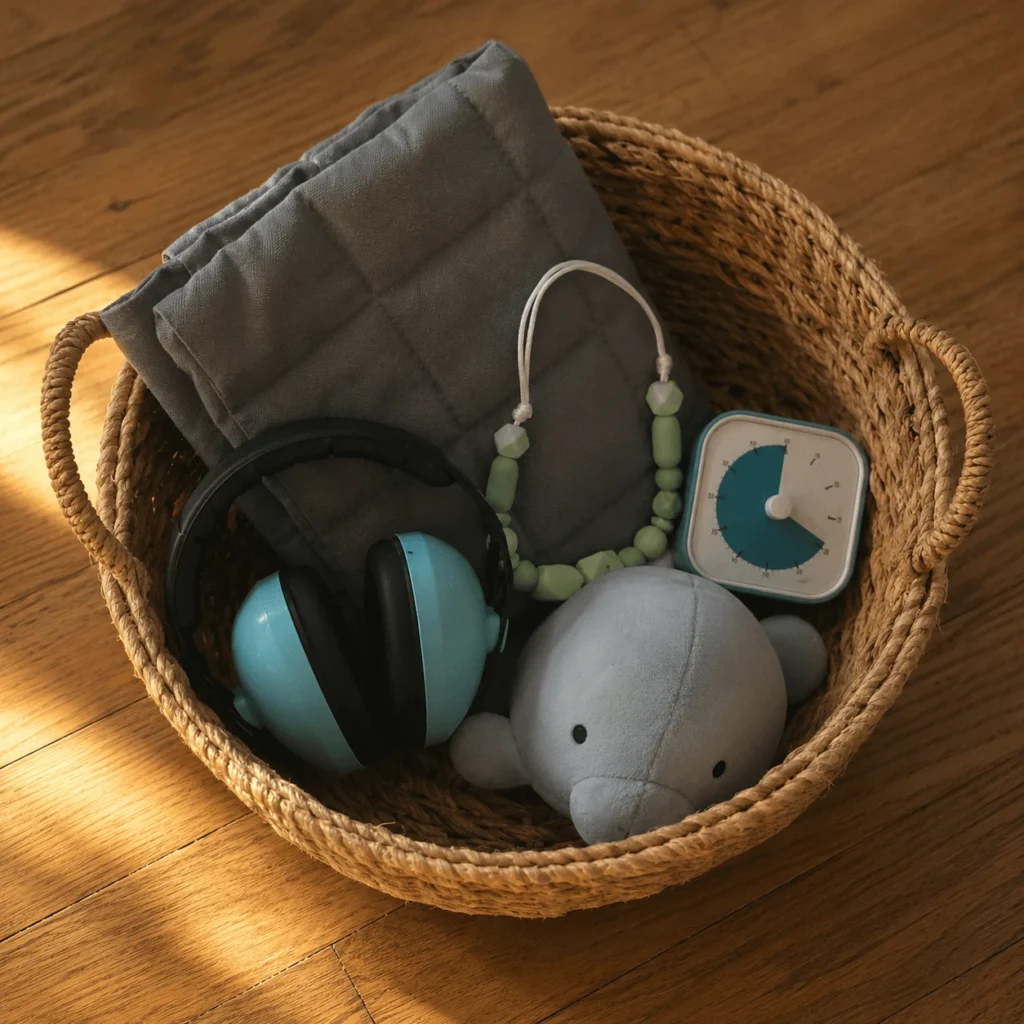
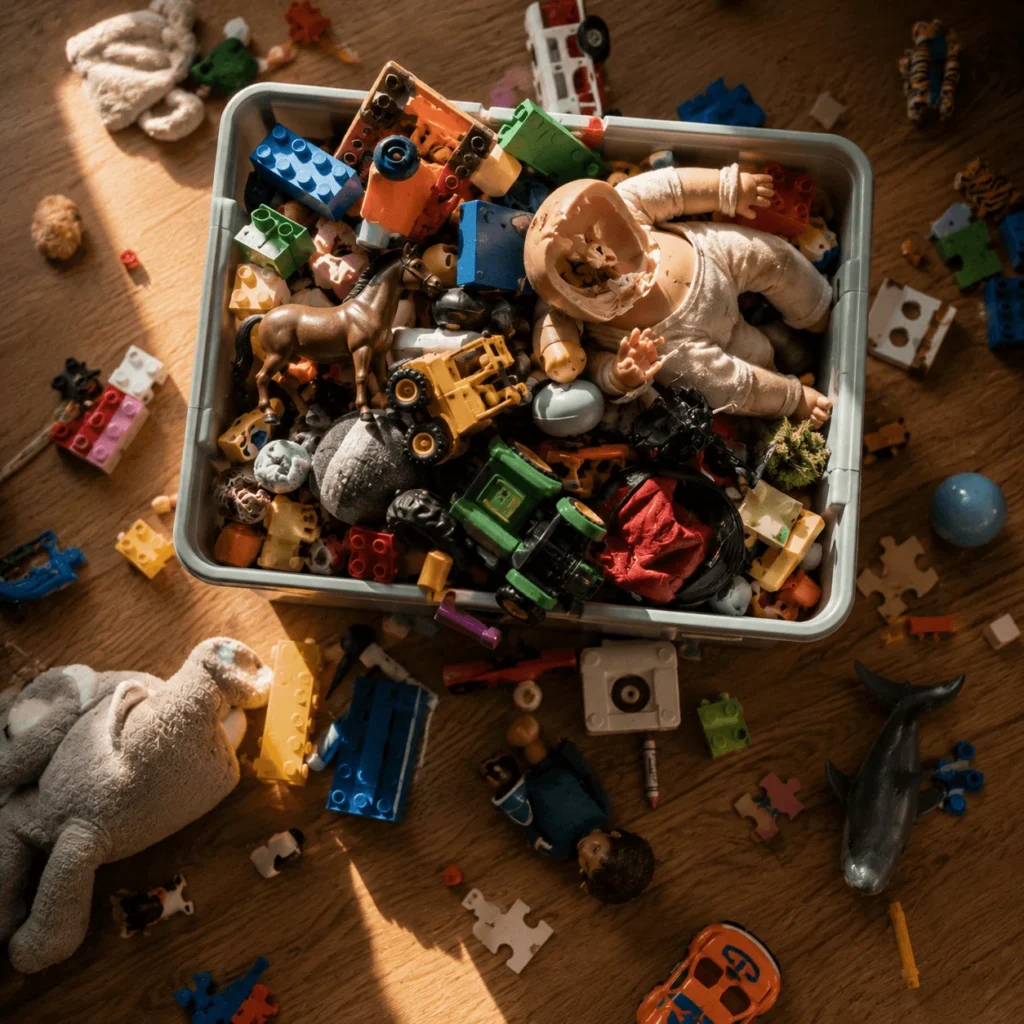
Skip the thirty-piece kit; a full bin reads as toys. Match the tools to the currency: sound gets ear defenders, pressure gets a lap pad or blanket burrito, busy hands get one chewy and one squishy, movement gets floor space, not another object. A visual timer earns its spot too. Buying instead of building? See the kits worth it and the tools that survived daily use.
The basket · do vs don’t

From our homes
I tested a thirty-piece sensory bin so you don’t have to. Three things survived the month: the ear defenders, one chewy, and the timer. Everything else was clutter with good marketing.
Tyler Brooks · Tools & Apps Editor
Chapter 04
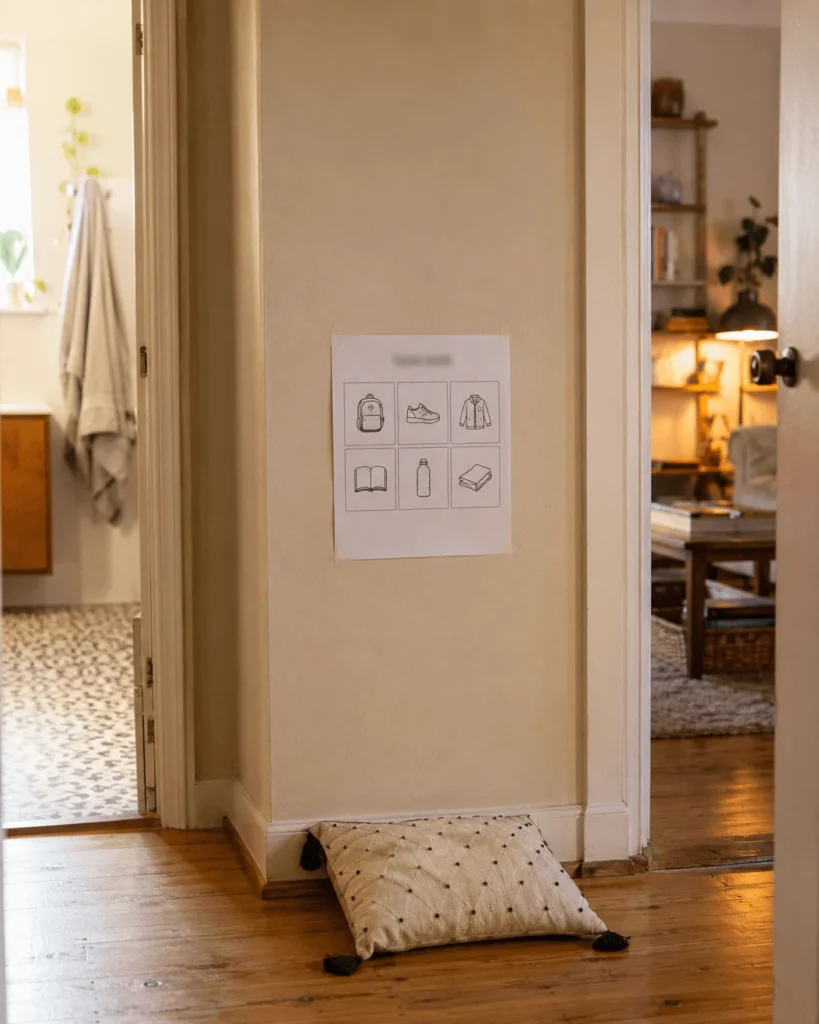
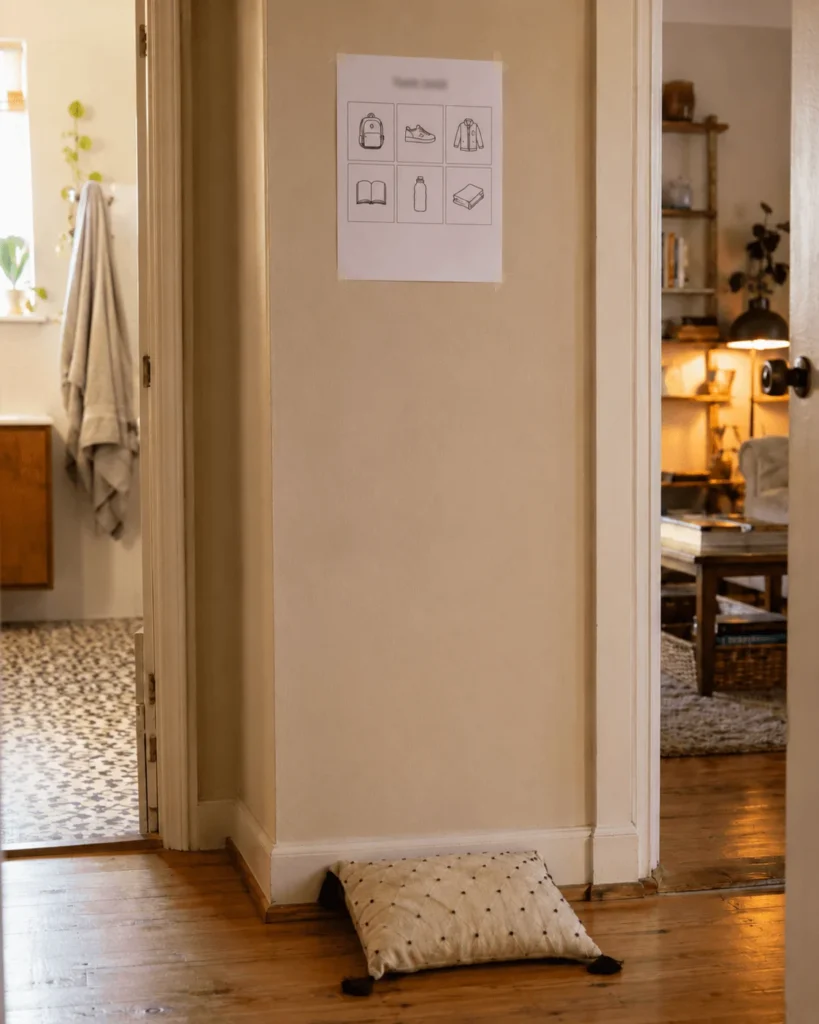
Mid-meltdown, every word is more input for a brain that is already full. So the corner gets one piece of paper: six things a child can do with their body, drawn simply enough to follow without reading. Practice them together when everyone is calm, like a fire drill.
The poster · do vs don’t


The poster from this guide
Print it free. Tape it up tonight.
Get the free posterOne page. No email, no catch. Prints fine in black and white.
Chapter 05
Get yourself calm first; your child’s nervous system borrows its settings from yours. Then almost no words: one short line, repeated softly. “I’m here. You’re safe.” More words make it worse. Save the talking for hours later, never during. If the corner gets used four times a month, it is working. It is a pressure valve, not a cure.

The part nobody sells you
You are the calm corner. The space just gives your calm somewhere to happen.
Before you call it done
Before the next storm
Ready when the next big feeling hits.
Get the free posterOne page. No email, no catch. Done before bedtime.
Keep reading
Read nextThe Calm Down Corner Poster Your Kid Will Actually Look At Twice
Or keep building: the DIY corner you probably already own · seeker or avoider, getting it right